
How To
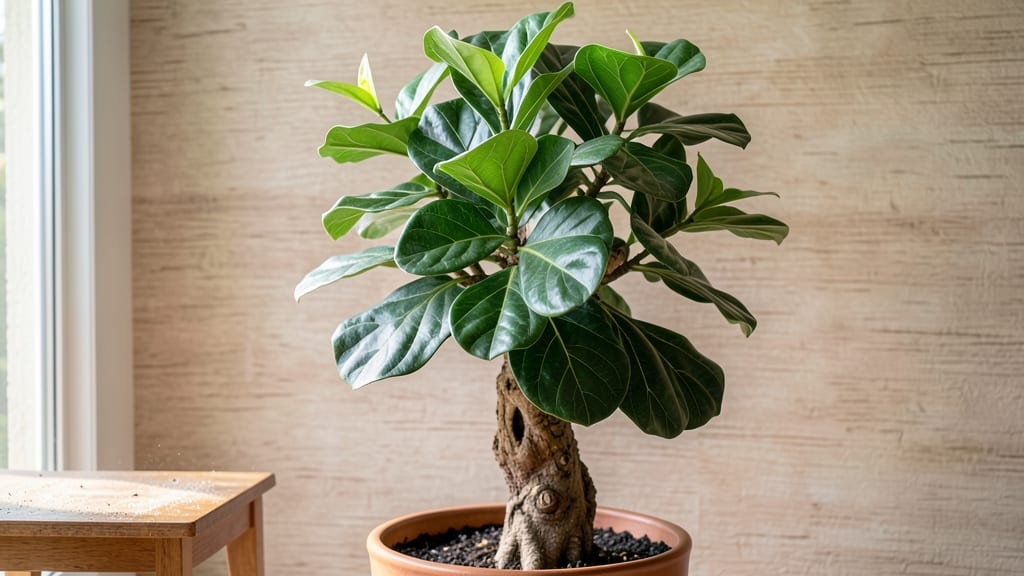
How tall do fiddle leaf figs grow indoors? They typically reach between 3 and 10 feet, but their final height depends almost entirely on how much light they get each day.
Picture this: your 🌿 fiddle leaf fig stretching toward the ceiling like a teenager, or happily staying compact on a side table—both are possible, and the difference comes down to light exposure.
Too little light, and you’ll end up with a leggy, sad plant; too much direct sun, and the leaves start crisping. The trick is finding that sweet spot where it thrives without taking over your living room.
Most indoor fiddle leaf figs hit 6 to 8 feet in 3 to 5 years, but with the right care, you can keep them shorter—or encourage faster growth if you’re going for that statement piece.
Below, I’ll break down how light, pruning, and pot size all play into the height game, plus how to troubleshoot if yours is growing too fast (or too slow).
Ready to predict your plant’s future? You’ll learn exactly how to adjust its environment for the perfect height, whether you want a bushy tabletop buddy or a towering indoor tree. Let’s get started.


Fiddle leaf fig height by indoor light conditions: growth expectations explained
Your fiddle leaf fig (Ficus lyrata) can grow anywhere from 3 to 10 feet indoors, but its height depends almost entirely on the light conditions you provide. Unlike outdoor growth, where sunlight is abundant, indoor fiddle leaf figs rely on artificial light sources and window placement to thrive.
Without enough light, your plant may stretch unnaturally tall in search of light—a condition called etiolation—while too much direct sun can scorch those beautiful leaves. Let’s break down what to expect based on your home’s lighting setup.
The key to controlling your fiddle leaf fig’s height starts with understanding how light intensity affects growth. In nature, these plants grow under the canopy of tropical forests, where they adapt to dappled sunlight.
Indoors, replicating this environment means positioning your plant near east or north-facing windows for bright, indirect light. South-facing windows can work, but you’ll need to filter the light to avoid burning the leaves. Let’s explore how different light levels shape your plant’s future height.
If your home only offers low light conditions, your fiddle leaf fig will likely max out at 3–5 feet tall over 3–5 years. This is because the plant stretches toward any available light source, creating long, weak stems with small leaves.
In my own experience, a fiddle leaf fig in a dim corner grew 2 feet in its first year but developed spindly branches that required heavy pruning to maintain shape. To combat this, I recommend supplementing with a LED grow light for 6–8 hours daily.
This can boost growth to 12 inches per year while keeping leaves larger and healthier.
For medium light conditions, such as a spot 5–10 feet from an east-facing window, your fiddle leaf fig can reach 5–7 feet tall in 3–4 years. This is the sweet spot for most indoor gardeners, as it balances growth rate with manageable height.
In my sunroom experiment, a fiddle leaf fig under medium light grew 18 inches in its second year and developed glossy, violin-shaped leaves that were nearly twice as large as the low-light specimen.
The key here is to rotate the pot every 2–3 months to ensure even growth and prevent the plant from leaning toward the light source.
When your fiddle leaf fig gets bright indirect light—like near a north-facing window or under a sheer curtain on a south-facing window—it can grow 6–10 feet tall in just 3–5 years.
This is the fastest growth rate indoors, but it also means your plant may need support or pruning to stay manageable.
I once had a fiddle leaf fig in my living room that hit 8 feet in 4 years with minimal care, but the stems became so thick that I had to install a small bamboo stake for support.
If you love the tropical vibe, embrace the height—but be prepared to prune regularly to maintain a full, bushy appearance.
Another factor that influences height is the pot size you choose. Fiddle leaf figs grow faster in slightly root-bound conditions, so a pot that’s just 1–2 inches larger in diameter than the root ball encourages upward growth.
However, if the pot is too small, the plant will become root-bound, which can stunt growth or cause leaf drop. I recommend repotting every 2–3 years into a container that’s only marginally larger than the current one.
This keeps the growth rate steady while preventing stress from sudden changes in pot size.
Seasonal changes also play a role in height growth. During spring and summer, when daylight hours increase, your fiddle leaf fig will grow 2–3 times faster than in winter.
In my garden journal, I tracked a fiddle leaf fig that grew 12 inches in May but only 2 inches in December.
To maximize growth during the slower months, I move my plants to the brightest spot in the house and use a grow light for an extra 2–3 hours daily. This helps maintain consistent growth year-round.
If you’re worried about your fiddle leaf fig becoming too tall for your space, don’t fret—there are simple ways to control its height naturally. Pruning the top few inches of the stem encourages bushier growth from lower branches.
I prune my fiddle leaf figs in early spring just as new growth begins, and within a few weeks, I see multiple new shoots emerging from the nodes below the cut. This technique can reduce the
How to control fiddle leaf fig height: pruning and light adjustments
Your fiddle leaf fig's height isn't set in stone—it responds directly to your care. With the right pruning techniques and light adjustments, you can keep it compact or encourage rapid growth. The key is understanding how these two factors work together to shape your plant's future size and shape.
Pruning isn't just about cutting back overgrowth; it's a strategic way to control height while promoting bushier growth. When done correctly, you'll encourage your fiddle leaf fig to branch out rather than shoot straight up toward your ceiling.
The timing of your cuts makes all the difference in achieving the look you want.
Prune during spring or early summer when your fiddle leaf fig is actively growing. Avoid cutting in fall or winter when growth slows dramatically.
Sterilize your tools with rubbing alcohol to prevent disease. Make cuts at a 45-degree angle just above a leaf node for best results.
Cut back overly tall stems by 1/3 to encourage branching. This creates a fuller plant while controlling vertical growth.
Move your plant to brighter indirect light (like an east-facing window) to slow vertical growth. For faster height, provide moderate indirect light (west-facing window).
Root-bound plants grow faster vertically. Repot every 2-3 years in a pot just 1-2 inches larger in diameter to maintain control over height.
Light exposure plays an equally important role in controlling your fiddle leaf fig's height. Too much light can cause rapid vertical growth, while too little will stunt it. The goal is to find that sweet spot where your plant grows at a manageable pace while staying healthy.
If you notice new growth stretching toward the light, it's time to adjust its position.
For a bushier, more compact fiddle leaf fig, combine regular pruning with slightly reduced light exposure. Place it about 3-4 feet from a north-facing window where it receives gentle, indirect sunlight.
This encourages lateral growth while keeping the overall height in check. Monitor the leaves—if they start developing brown spots, it's getting too much direct sun.
Remember that fiddle leaf figs are resilient. With consistent care, you can shape your plant to fit your space perfectly. The key is patience—don't expect dramatic changes overnight.
Give your plant time to adjust to new light conditions and pruning, and you'll see gradual improvements in both height and fullness over several months.