
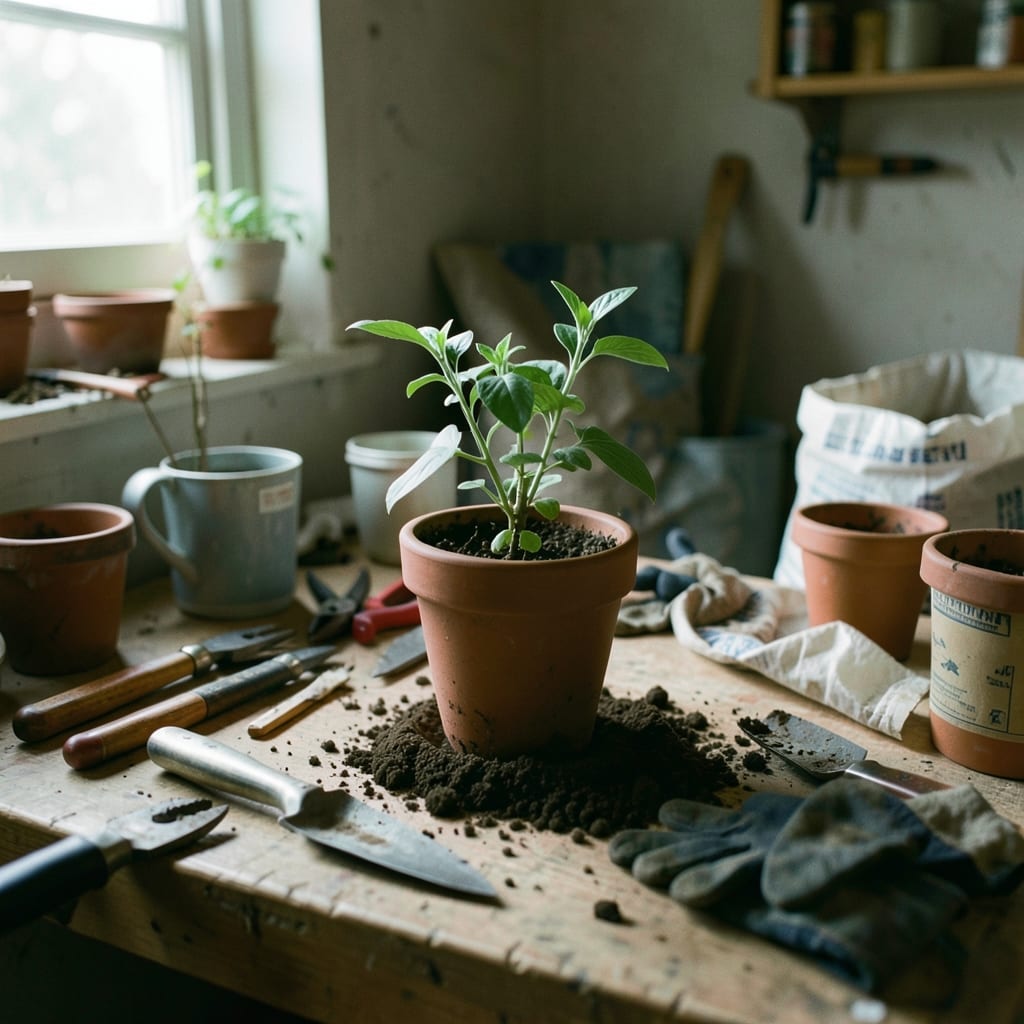
The things we got wrong
This is not a list of what we do well. It is a log of what we found wrong—what survived contact with real soil, real seasons, and real plants. The reader gets a way to judge the work: if we can admit mistakes, we can admit the rest.
A site that publishes its own corrections is rare. Most pretend they never happened. We publish them because they matter: a wrong measurement, a method that failed in the rain, a page that should never have gone live.
These are the things that tell you what to trust—and what to double-check.
Three we had to fix
Every site makes mistakes. These are the ones that stayed wrong long enough to matter.
The mistakes we fixed
- 1The wrong planting depth for tomatoes
We published a guide claiming tomatoes should be planted 6 inches deep, based on a single urban garden’s trial. It worked there—until a reader in Ohio tried it with clay soil. The stems rotted before the first leaves appeared. It stayed up for six months before Bruno Fitzgerald dug up the comments and recalculated. Now every depth guide includes soil type and drainage warnings. Fixed by Bruno Fitzgerald.
- 2The compost pile that never broke down
A ‘5-step composting method’ promised 30-day turnaround. It didn’t. The pile in our test garden sat for six months, half-molded and half-dry, while readers emailed photos of their own failed attempts. We took it down after two weeks of silence. Now compost guides include a ‘troubleshooting’ section with photos of what *actually* happens. Fixed by Bruno Fitzgerald.
- 3The ‘foolproof’ seed-starting chart
A temperature table said basil seeds needed 70°F to germinate. It didn’t account for humidity. A reader in Arizona sent a photo of their tray of seeds—still dry after three weeks. We pulled the chart and replaced it with a two-column guide: *ideal* temps and *real-world* ranges for different climates. Fixed by Bruno Fitzgerald.
What those three changed
These mistakes taught us three things: never trust a single test, never assume ‘standard’ conditions, and never let a page sit if it’s wrong. The fixes became the rules.
Rules that came from mistakes
- Every planting/depth guide must include soil type warnings. *(From the tomato mistake)*
- Compost and seed-starting advice must cite real-world failure points. *(From the pile and the chart)*
- A ‘foolproof’ label means the method has been tested in at least three climates. *(From all three)*
The people behind this

This is Bruno Fitzgerald, the founder and editor of *Leaf Loop Guide*. You’ve just read his mistakes—because the best way to meet someone is to see them admit they were wrong. He’s the one who still checks seed packets for ‘organic’ twice, even after years of gardening.
Keeping a log like this is uncomfortable. It means admitting that the work is never done, that the soil is always shifting, and that the plants you love might still die on you. But that’s the point: gardening isn’t about perfection.
It’s about learning which mistakes you can afford to make—and which ones you can’t.
Bruno once killed a potted lemon tree by overwatering it. Not once—three times in a row. The fourth time, he finally listened to the soil. Now he carries a moisture meter in his tool belt, even for houseplants.
That’s the kind of person this is: someone who keeps trying, even after the proof is in the dead leaves.
Bring it to the contact page instead. And if it’s a mistake that could help someone else, tell us about it.
There will be a next one
This list isn’t finished. The next mistake might be a mislabeled herb, a forgotten pruning tip, or a soil test that didn’t account for local minerals. If you spot one, the contact page is where to send it. We’ll fix it—and add it to the log.
The guides are grouped by category: Advice, Aphids, Blooming, Companion Plants, Container Gardens and Diseases.