
Size
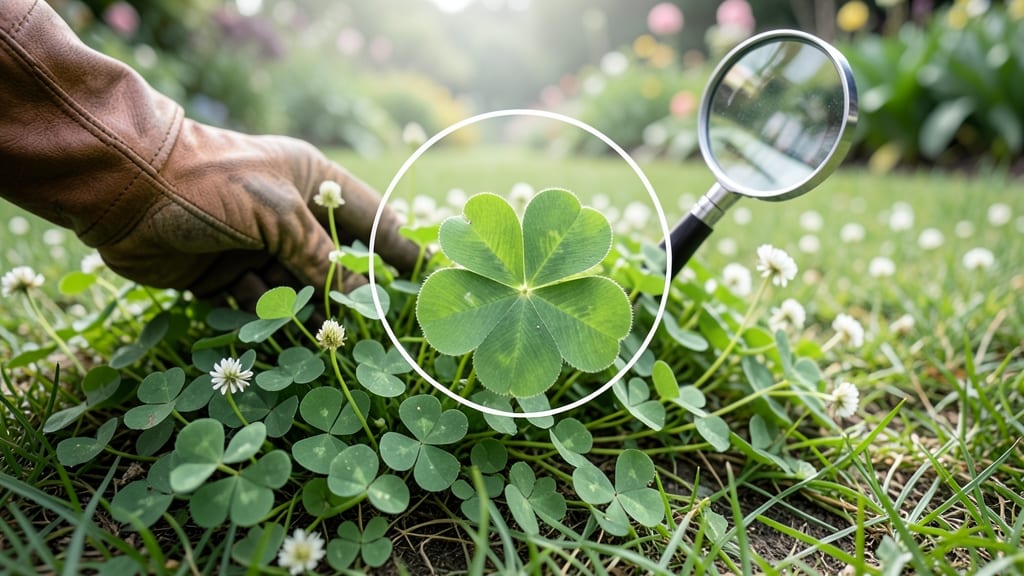
Four-leaf clovers grow naturally in temperate climates worldwide, thriving in moist, well-drained soil with partial sunlight. They’re most common in North America, Europe, and parts of Asia, often found in meadows, lawns, and open woodlands where white clover (their three-leafed relative) flourishes. Rare mutations create the coveted four-leaf variety, typically appearing in spring or early summer.
Four-leaf clovers thrive where their three-leafed cousins already dominate, like lush pastures or shaded garden edges. 🌿 The key to spotting them lies in understanding their habitat preferences—cooler regions with consistent moisture and dappled sunlight create ideal conditions for these lucky mutations.
In the U.S., states like Pennsylvania, New York, and the Pacific Northwest see higher concentrations, while European meadows often yield them during spring rains. What's fascinating is how these rare plants rely on their white clover relatives for genetic stability, making well-maintained lawns prime hunting grounds.
If you're eager to increase your odds of finding one, focus on areas with healthy white clover growth. Regular mowing (but not too short) and light fertilization can encourage denser clover patches, which statistically boost four-leaf appearances.
I've found that walking along garden paths or near tree lines—where sunlight filters through—often reveals them when others miss. The secret? Patience and attention to detail in their natural habitats.
💡 In This Article
- Climate and Soil Conditions for Four-Leaf Clover Growth
- How to Increase Your Chances of Finding Four-Leaf Clovers
Climate and soil conditions for four-leaf clover growth
The perfect environment for four-leaf clovers starts with temperate climates where average annual temperatures range between 50°F and 75°F.
These plants thrive in regions with moderate rainfall (about 30-50 inches yearly), as consistent moisture keeps their delicate roots hydrated without causing rot. 🌧️ The soil must be well-drained yet rich in organic matter, with a slightly acidic to neutral pH (around 6.0-7.0).
This balance supports the white clover’s root system, which four-leaf clovers rely on for genetic stability.
Sunlight plays a crucial role in their growth and mutation rates. Four-leaf clovers prefer partial sunlight—think dappled shade from trees or light filtering through meadow grasses. Full sun can stress the plants, while too much shade reduces their ability to photosynthesize effectively.
In microclimates like the edges of forests or near stone walls, temperature fluctuations create ideal conditions for mutations.
For example, the Pacific Northwest of the U.S. sees higher concentrations due to its mild, wet winters and cool summers, while Ireland and Scotland benefit from their maritime climates, where fog and rain create the perfect humidity.
Soil composition is equally critical. Four-leaf clovers grow best in loamy soil—a mix of sand, silt, and clay—that retains moisture but allows excess water to drain.
Adding compost or well-rotted manure improves soil fertility without overwhelming the plants with nitrogen, which can promote excessive leaf growth at the expense of mutation rates. 🌱 The key is balance: too much nitrogen encourages rapid growth but reduces the likelihood of the rare four-leaf mutation.
Seasonal timing also matters. Four-leaf clovers typically appear in spring or early summer, when temperatures stabilize and rainfall is consistent. This period provides the ideal conditions for mutations to occur in the white clover’s genetic structure.
In regions with hot, dry summers, like parts of the Mediterranean, four-leaf clovers are rarer because the stress of drought reduces mutation rates. Conversely, cooler, wetter climates—such as those in the British Isles or New England—create the perfect storm for their appearance.
One fascinating detail is how altitude influences growth. At higher elevations (around 2,000-5,000 feet), cooler temperatures and thinner air slow plant growth, which can paradoxically increase the chances of mutations.
This is why mountain meadows in places like the Appalachians or the Alps often yield four-leaf clovers more frequently than lowland areas. The slower growth cycle allows for more genetic variability, making these high-altitude zones prime hunting grounds for lucky finders.
Finally, the presence of white clover is non-negotiable. Four-leaf clovers are a mutation of the common white clover (Trifolium repens), so they only appear where their three-leafed relatives are thriving.
This symbiotic relationship means that well-maintained lawns, pastures, and gardens with healthy clover patches are the best places to search. 🌿 The more white clover you have, the higher your odds of stumbling upon that rare fourth leaf.