
Pests and Diseases
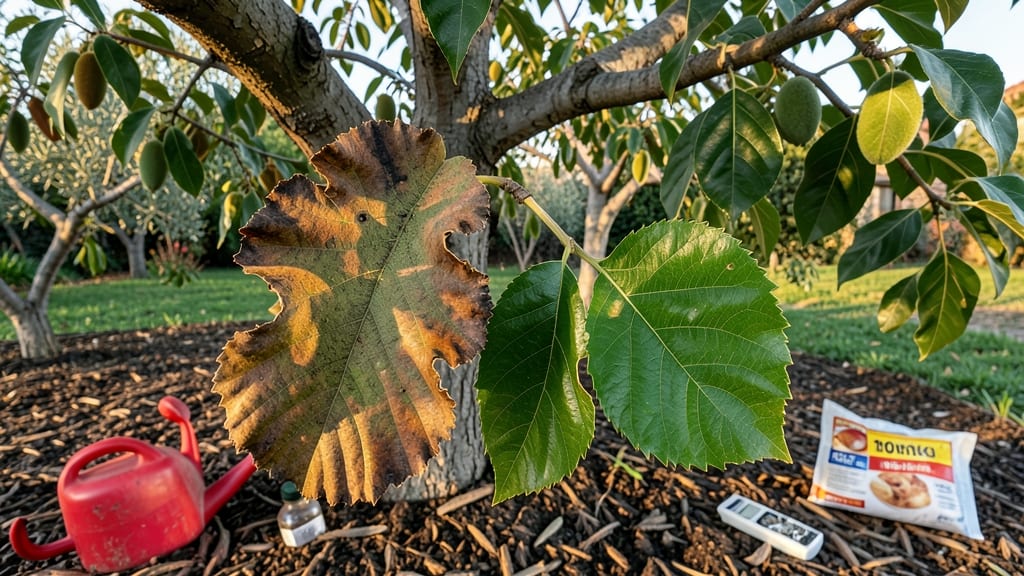
Those crispy brown edges on your almond leaves—a classic case of almond leaf scorch—aren't just unsightly—they're a cry for help. 🌿 I've seen this exact problem turn healthy trees into sad, stunted shadows, but the organic copper spray fix works like a charm when applied correctly.
The issue? Often a mix of fungal pressure, stress from drought, or even sunscald when new growth gets too much sun too fast.
Copper spray tackles the fungal side while giving your tree a chance to recover from stress. You'll need a 3-pound copper fungicide (like copper sulfate or copper hydroxide), a sprayer, and a calm evening to apply it when leaves are dry.
The key is consistency—spray every 7-14 days during high-risk periods (spring and summer), and you'll see fresh green growth pushing out within weeks.
What you're really fixing is the tree's ability to photosynthesize properly. Those brown edges block sunlight, so the tree struggles to feed itself. With regular copper treatments, you'll restore that vibrant green, and the tree will start producing energy for next year's harvest.
The best part? Your almonds won't taste metallic or anything—just normal, delicious nuts.
For long-term prevention, focus on watering deeply 1-2 times per week (not daily light sprinkles) and giving young trees afternoon shade if your climate gets intense afternoon sun. Mulch helps too—keep that soil moist and cool.
This isn't just a quick fix; it's about giving your tree the support it needs to stay healthy season after season.
📚 In This Guide
- What you need
- Instructions
- Tips and common mistakes
- Wrapping up and next steps
What you need
- ● Copper fungicide (organic): Choose a copper sulfate or copper hydroxide spray (e.g., Bordeaux mixture or copper-based fungicides labeled for organic use). Aim for 2–4 lbs of copper per 100 gallons of water (follow product instructions for exact ratios).
- ● Garden sprayer: A hose-end sprayer (for large trees) or a handheld pump sprayer (for precision). Ensure it holds at least 1–2 gallons of liquid.
- ● Water: Clean, non-chlorinated water (chlorine can harm plants). Use rainwater or let tap water sit for 24 hours to dissipate chlorine.
- ● Protective gear: Nitrile or rubber gardening gloves (copper can irritate skin).
- ● Long-sleeved shirt and closed-toe shoes (prevents copper exposure).
- ○ Safety goggles (optional but recommended for spray applications).
- ● Pruning shears: Sterilized with rubbing alcohol or a 10% bleach solution (to avoid spreading disease).
- ● Plastic sheeting or tarp: 4x6 ft (to lay under trees if heavy spraying is needed).
- ● Baking soda solution: Mix 1 tbsp baking soda + 1 tsp horticultural oil + 1 gallon water (can be used as a preventative spray alongside copper).
- ● Neem oil: 1 tsp per gallon of water (adds antifungal properties; mix with copper spray).
- ● pH test strips: To check water pH (ideal range for copper spray is 5.0–7.0).
- ● Labeling tape: To mark treated trees (avoids over-application).
How to treat almond leaf scorch with organic copper spray
Here’s how I fix brown, crispy edges on almond leaves—naturally and without harsh chemicals.
🌿 Step 1: Identify and Confirm the Problem
First, check the pattern of browning. True leaf scorch from copper spray (or fungal infections) starts at leaf edges and works inward, often with a slightly curled or wilted appearance. If the damage is only on the tips and the rest of the leaf stays green, it’s likely scorch. Avoid treating if you see black spots or powdery residue—those could signal other issues like fungal diseases.
I like to examine leaves in the morning when they’re fully hydrated. Hold a leaf between your fingers and gently flex it—healthy tissue should snap back, while scorched edges will stay brittle. This helps me confirm whether the damage is superficial or deeper.
💧 Step 2: Water Deeply Before Applying Spray
Water your almond tree thoroughly 24 hours before applying the copper spray. This ensures the roots are hydrated and the plant can absorb any residual moisture from the spray. Focus on the root zone, giving it a deep soak until water runs out the bottom of the pot or drains into the soil around the tree.
Don’t water again immediately after spraying. The goal is to let the copper solution sit on the leaves for 6-8 hours before rain or dew washes it off. If you’re treating in the evening, plan to water lightly the next morning to rinse away any excess.
☀️ Step 3: Mix and Apply Organic Copper Spray
Combine 1 tablespoon of organic copper fungicide (like copper sulfate or copper hydroxide) with 1 gallon of water in a clean sprayer. Stir well until fully dissolved—undissolved particles can clog your sprayer nozzle or damage leaves. I add a drop of mild liquid soap to help the solution stick to the leaves, but avoid harsh detergents.
Spray evenly on both the top and bottom of leaves until they glisten with moisture. Focus on the edges first, where scorch typically starts. Avoid spraying when temperatures exceed 90°F—the solution can burn leaves faster in direct sunlight. Early morning or late afternoon is ideal for application.
✂️ Step 4: Prune Damaged Leaves and Monitor Progress
Use clean, sharp pruners to trim off any severely scorched leaves. Cut just above a healthy bud or branch to encourage new growth. Don’t remove more than 20% of the foliage at once—this keeps the tree from stressing further. Bag and discard the pruned leaves to prevent spreading any potential pathogens.
After spraying, watch for new leaf growth in 7-10 days. Healthy new leaves should emerge with smooth, vibrant edges. If you notice yellowing or wilting after treatment, reduce watering slightly—overhydration can stress the tree and slow recovery.
⏰ Step 5: Repeat and Prevent Future Scorch
Apply the copper spray every 10-14 days for 3-4 weeks to fully address the scorch. After that, switch to preventive measures: water deeply 2-3 times per week (adjust for your climate) and mulch around the base with 2-3 inches of organic mulch to retain moisture.
I also recommend avoiding overhead irrigation—water at the base instead. If you live in a hot, dry climate, consider adding a light shade cloth during peak afternoon sun to reduce stress on the leaves. This combo of hydration, shade, and copper treatments keeps almond trees lush and scorch-free.
Tips & tricks for treating almond leaf scorch
These practical steps will help you revive your almond tree's leaves and keep them healthy for years to come.
Timing is Everything: The 24-hour hydration period before spraying is crucial—it ensures your tree is properly hydrated and ready to absorb the copper treatment. I've found that watering in the early morning of the day before application gives roots enough time to soak up moisture without stressing the plant. This preparation step makes all the difference in how well the treatment works.
Solution Preparation: When mixing your 1 tablespoon of organic copper fungicide with 1 gallon of water, use a clean sprayer to avoid contamination. I recommend stirring the solution for at least 2 minutes to ensure complete dissolution—undissolved particles can clog your nozzle or even cause additional damage to leaves. For extra adhesion, add just a drop of mild liquid soap, but avoid anything harsh that could irritate the foliage.
Leaf Inspection Technique: In Step 1, when examining leaves for scorch, look for the classic "V" pattern starting at the edges. I've learned to gently flex leaves between my fingers—healthy tissue snaps back immediately, while scorched edges stay brittle. This simple test helps distinguish between scorch and other potential issues like fungal infections, which often show different patterns like black spots or powdery residue.
Post-Treatment Care: After applying the copper spray, avoid watering for the full 6-8 hours to allow the solution to work. If you're treating in the evening, schedule a light watering the next morning to rinse away any excess. I've also noticed that reducing watering slightly after treatment helps prevent overhydration, which can stress the tree and slow recovery. Watch for new leaf growth in 7-10 days as your first sign of success.
Pro Tips for Almond Leaf Scorch
- These practical steps will help you revive your almond tree's leaves and keep them healthy for years to come.
- Timing is Everything: The 24-hour hydration period before spraying is crucial—it ensures your tree is properly hydrated and ready to absorb the copper treatment.
- Solution Preparation: When mixing your 1 tablespoon of organic copper fungicide with 1 gallon of water, use a clean sprayer to avoid contamination.
Frequently asked questions
What exactly causes almond leaf scorch, and is it contagious?
Almond leaf scorch is primarily caused by Xanthomonas arboricola bacteria, often spread by wind, rain, or pruning tools. It’s not contagious to humans or other plants, but it can spread rapidly within your orchard if left unchecked. Poor sanitation (like reusing infected pruners) speeds up the process.
How long does it take for organic copper spray to work?
You’ll typically see improvements within 2–4 weeks of consistent spraying (every 7–14 days during active growth). Copper acts as a preventative, so early intervention is key. For severe cases, combine sprays with pruning infected branches (sterilize tools with rubbing alcohol between cuts!) to stop the spread.
Is copper spray safe for bees and beneficial insects?
Copper sprays are low-toxicity to bees and pollinators if applied correctly. To minimize risks:
- Spray early morning or late evening when bees are less active.
- Avoid blooming trees—wait until flowers fall.
- Use organic copper formulations (like copper hydroxide) labeled for edible crops.
Can I reuse last year’s copper spray, or do I need fresh?
Nope! Copper sprays degrade over time, especially when exposed to sunlight or moisture. Always use freshly mixed batches for maximum effectiveness. Store unused portions in a cool, dark place, but discard if it changes color or smells off. Pro tip: Label your spray bottles with the mix date to stay organized!
Are there any organic alternatives if I can’t use copper?
While copper is the gold standard for leaf scorch, you can try these supportive organic methods:
- Baking soda spray: Mix 1 tbsp baking soda + 1 tsp dish soap + 1 gallon water (spray on undersides of leaves).
- Neem oil: Acts as a mild fungicide/bactericide (use only in early stages).
- Compost tea: Boosts plant immunity but won’t cure active infections.
My tree has scorch, but the edges are also yellow—what’s going on?
Yellowing plus brown edges often signals double trouble:
- Yellow = Possible nutrient deficiency (e.g., nitrogen or magnesium) or overwatering.
- Brown = Leaf scorch or fungal/bacterial stress.
Test your soil (pH should be 6.0–7.5 for almonds) and adjust watering. If yellowing persists, amend soil with compost or Epsom salt (for magnesium). Treat scorch with copper and fix the underlying issue.
Wrapping up and next steps
Almond leaf scorch may seem daunting, but with the right approach—like using organic copper spray—you can restore your trees to health and prevent future damage. Remember, early action and consistency are key to keeping your almond grove thriving. 🌱
Ready to take the next step? Start by inspecting your trees weekly and applying your copper spray at the first sign of stress. For extra peace of mind, consider testing your soil’s copper levels or consulting a local arborist. Your hard work will pay off with lush, resilient trees!