
Diseases
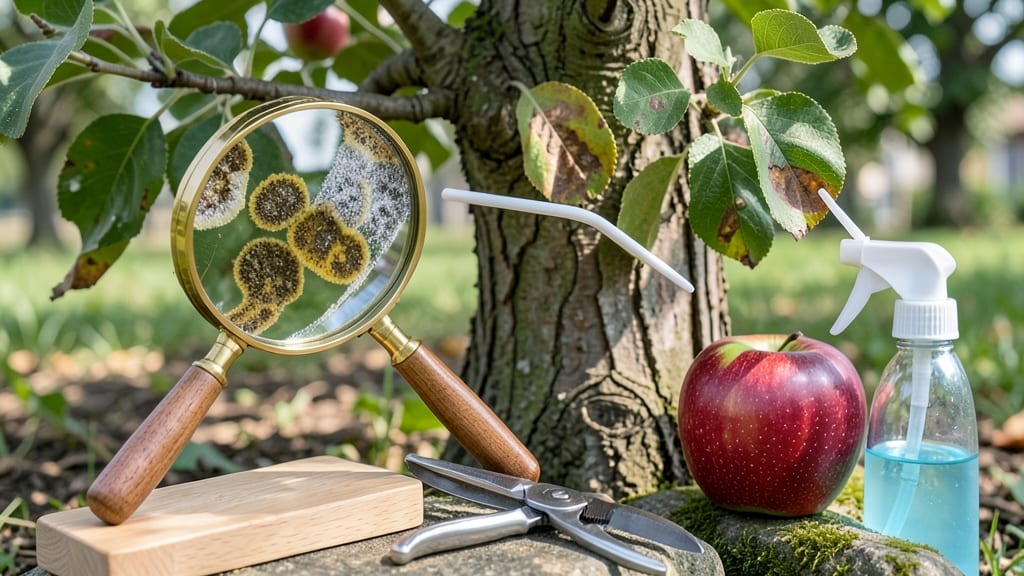
Apple tree leaf diseases can turn your orchard into a patchwork of spots and stains—unless you catch them early. 🍏 I’ve seen healthy trees go from vibrant green to a sad, speckled mess in just weeks, but the right diagnosis and treatment can bring them back to life.
The key is knowing what you’re dealing with: fungal spots, bacterial blights, or viral infections all look different up close.
Most of these problems start with tiny specks on the leaves—black, brown, or yellow—that spread if ignored. The good news? Many are fungal and can be managed with simple organic sprays or pruning.
We’ll cover the 10 most common diseases, how to spot them, and the best ways to stop them before they ruin your harvest. Grab a magnifying glass and let’s get started!
📚 In This Guide
- What you need
- Instructions
- Tips and common mistakes
- Wrapping up and next steps
What you need
- ● Hand lens or magnifying glass – 10x magnification to inspect leaf details closely.
- ● Pruning shears – Sharp, sterilized shears (disinfect with rubbing alcohol between uses).
- ● Gloves – Durable, long-sleeved gardening gloves to protect your skin.
- ● Fungicide spray – Copper-based or sulfur-based (e.g., Neem Oil or Bordeaux Mixture), 1–2 gallons for medium-sized trees.
- ● Spray bottle or backpack sprayer – 1–2 quart capacity for targeted applications.
- ● Plastic bags or paper envelopes – 5–10 bags for collecting and transporting diseased leaves.
- ● Rubbing alcohol (70% isopropyl) – Small bottle for sterilizing tools.
- ● Field guide or smartphone app – For apple tree leaf disease identification (e.g., PlantVillage or iNaturalist).
- ● Watering can or hose with nozzle – For rinsing leaves before inspection.
- ● Soil pH test kit – To check if nutrient imbalances are contributing to disease.
- ● Compost or mulch – To improve tree health and reduce fungal spread.
- ● Disposable camera or phone – Capture close-ups of symptoms for expert advice.
- ● Tree-specific fungicide – Like Myclobutanil or Propiconazole for stubborn infections.
Instructions for diagnosing and treating apple tree leaf diseases
Here's how I identify and manage the most common fungal leaf spots before they spread.
🌿 Step 1: Inspect Leaves for Early Symptoms
Start by examining leaves for small dark spots or yellowing patches—these are the first signs of trouble. I check the undersides of leaves first because many fungal spores hide there. Look for raised black dots (fruit bodies) or powdery white coatings (mildew).
Compare affected leaves to healthy ones nearby. Notice the difference in color, texture, and size? Healthy leaves feel firm and smooth, while diseased ones may have irregular edges or premature browning. Early detection is key—wait until you see widespread damage, and you've lost control of the disease.
🔍 Step 2: Identify the Specific Fungal Spot
Most apple tree leaf diseases fall into three common categories: black spot, powdery mildew, or rust. Black spot (Venturia) shows as dark, circular spots with gray centers, often surrounded by yellow halos. Powdery mildew appears as white, powdery patches that spread rapidly in humid conditions.
Rust diseases create orange or reddish pustules on leaf undersides. I use a hand lens to check for these details—it's the only way to tell them apart accurately. If you're unsure, take a photo and compare it to online resources. Misidentifying the disease means you'll treat it wrong, and that's a waste of time and money.
💧 Step 3: Remove and Dispose of Infected Leaves
Collect all diseased leaves and place them in a sealed plastic bag. Do not compost them—the spores will survive and reinfect your tree next season. I double-bag them and dispose of them in the trash, not the yard waste bin. This step is critical because it removes the source of the infection.
Wear gloves when handling infected leaves to avoid spreading spores to healthy parts of the tree or to your hands. After removing leaves, clean your tools with a 10% bleach solution (1 part bleach to 9 parts water) to kill any lingering spores. This prevents cross-contamination when you move to the next part of the tree.
✂️ Step 4: Apply Fungicide at the Right Time
Once you've identified the disease, apply a copper-based fungicide or neem oil solution according to label instructions. I spray in the early morning or late evening when temperatures are below 85°F—this reduces the risk of burning leaves. Focus on the undersides of leaves, as that's where spores often hide.
Reapply every 7-14 days or after heavy rain, which washes fungicides away. Consistency is key—one treatment won't cure an established infection. If you see new spots appearing, you're not applying the fungicide frequently enough. This is where most gardeners fail, so don't skip this step.
☀️ Step 5: Improve Airflow and Reduce Humidity
Thin out crowded branches to improve airflow around the tree. I prune in late winter or early spring to remove dead, crossing, or diseased branches. This reduces humidity levels near the leaves, which fungal spores thrive in. Aim for 6-8 feet of space between trees to prevent overcrowding.
Water at the base of the tree in the early morning to allow foliage to dry quickly. Avoid overhead watering, which keeps leaves wet longer and encourages fungal growth. Mulch around the base with 2-3 inches of organic mulch to retain moisture in the soil while keeping the foliage dry.
Tips & tricks for managing apple tree leaf diseases
These practical strategies will help you tackle fungal spots like a pro—before they take over your orchard.
Timing Matters for Fungicide: The early morning or late evening spray schedule in Step 4 isn't just about avoiding leaf burn at temperatures below 85°F—it's also the perfect time to catch spores before they spread. I've found that spraying when dew is still present on leaves actually helps the fungicide adhere better. Just be sure to avoid spraying if rain is forecasted within 24 hours, as it'll wash away your hard work.
Disease Detection Shortcut: In Step 1, when comparing healthy and diseased leaves, look for another telltale sign: diseased leaves often feel slightly thicker and leathery to the touch. This happens because the plant tries to compartmentalize the infection. I keep a small notebook by my tree to track which leaves show this texture change first—it helps me spot new outbreaks early.
Pruning Precision: When you're thinning branches in Step 5, aim to create a "dome" shape rather than a flat canopy. This improves airflow at the center of the tree where branches cross. I mark branches for removal with colored flags during the growing season so I can easily identify them during winter pruning. This prevents accidental removal of healthy branches.
Tool Sanitation Strategy: The 10% bleach solution mentioned in Step 3 works wonders, but I've found that adding a few drops of dish soap to the mix helps break down organic matter on tools better. After cleaning, I rinse tools thoroughly and let them air dry completely before storing. This prevents rust and keeps them ready for next season's pruning.
Pro Tips for Apple Tree Leaf Diseases
- These practical strategies will help you tackle fungal spots like a pro—before they take over your orchard.
- Timing Matters for Fungicide: The early morning or late evening spray schedule in Step 4 isn't just about avoiding leaf burn at temperatures below 85°F—it's also the perfect time to catch spores before they spread.
- Disease Detection Shortcut: In Step 1, when comparing healthy and diseased leaves, look for another telltale sign: diseased leaves often feel slightly thicker and leathery to the touch.
Frequently asked questions
What are the first signs of apple tree leaf disease?
Look for spots, discoloration, or unusual patterns on leaves—like dark dots (black spot), yellow rings (apple scab), or powdery white residue (powdery mildew). Check the undersides of leaves too, as some fungi start there. Act fast if you spot these early warnings!
When is the best time to treat apple tree leaf diseases?
Timing is key! Treat before symptoms appear—ideally in early spring (before buds swell) or after harvest. For severe cases, a second treatment in late spring may be needed. Always follow the fungicide label’s instructions for best results.
Can I use natural remedies instead of chemicals?
Yes! Try neem oil, baking soda spray (1 tbsp + 1 quart water + a drop of dish soap), or copper fungicide. For powdery mildew, improve airflow by pruning dense branches. Pro tip: Remove and dispose of infected leaves to prevent spread.
Will my apple tree recover if I treat the disease late?
It depends! Early treatment improves recovery odds, but severe infections may still weaken the tree. Prune affected branches, thin fruit to reduce stress, and fertilize to boost health. Note: Chronic issues may require replacement if the tree declines.
Can leaf diseases affect the apples I harvest?
Yes—they can! Fungal spots on leaves often mean fruit rot, scab, or sooty mold on apples. Warning: Avoid eating severely infected fruit. Treat leaves aggressively to protect your harvest and ensure safe, high-quality apples.
Wrapping up and next steps
Identifying and treating apple tree leaf diseases doesn’t have to be overwhelming—with the right knowledge, you can keep your trees thriving! 🌿 From cedar apple rust to powdery mildew, early action and preventive care are your best tools.
Stay vigilant, prune regularly, and use organic or chemical treatments as needed to protect your harvest.
Ready to take action? Start by inspecting your trees this week—catching issues early makes all the difference! Need more help? Bookmark this guide or consult a local arborist for personalized advice.