
Pests and Diseases
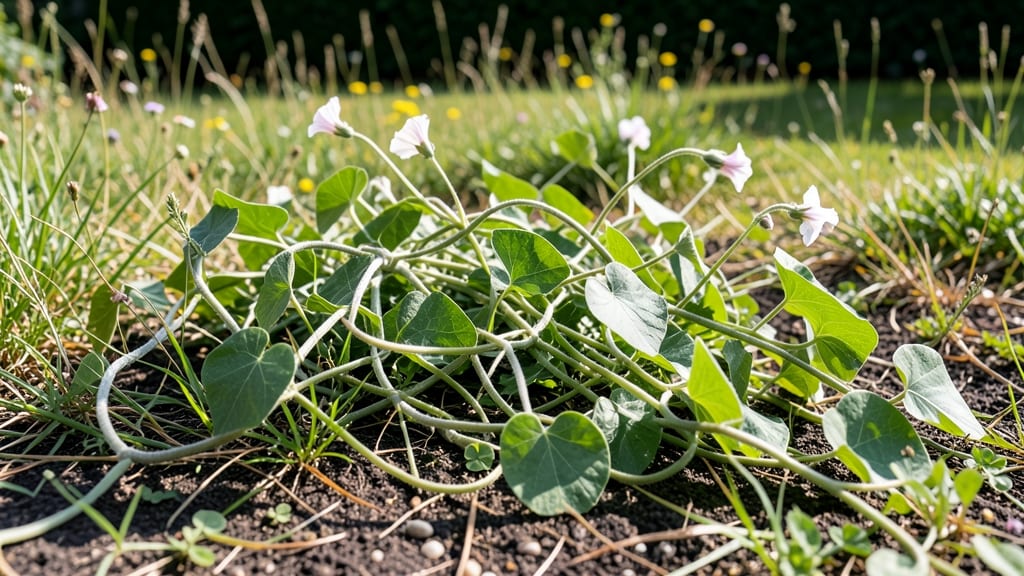
The shape of the bindweed leaf—its arrowhead-like form—is the first clue this vine is invading your garden. 🌱 The moment I spotted those glossy, pointed leaves twisting around my roses, I knew I had a persistent battle ahead—but identifying it early gave me the upper hand.
These leaves grow in pairs along the stem, with a distinctive heart-shaped base that sets them apart from morning glories or sweet peas.
The real giveaway is how the vines climb and twine, forming dense mats that strangle other plants. Bindweed flowers appear in late spring, with delicate white or pink blossoms that look almost innocent, but by summer, the vines can smother entire garden beds.
Recognizing these marks early means you can tackle it before it becomes a full-blown infestation.
Once you know what to look for, removal becomes easier. Pulling young plants by hand or using a vine cutter on mature growth prevents seeds from spreading. The key is persistence—bindweed roots can run deep, but consistent effort pays off in a garden that stays clear of these tenacious invaders.
This guide will walk you through the visual cues, from leaf shape to vine structure, so you can spot bindweed before it takes over. Early identification is your best weapon against this garden menace, and knowing these details puts you ahead of the game.
What Triggers Leaf Shape Shifts
Bindweed (Convolvulus arvensis) leaves are famous for their heart-shaped, arrowhead-like structure—but sometimes, their shape can twist, warp, or even deform. These changes aren’t random; they’re usually a plant’s way of responding to stress, disease, or environmental pressures.
Understanding the root causes helps gardeners and ecologists spot problems early and take action. Here’s why bindweed leaves might not look like the textbook version.
Bindweed is a highly adaptable weed with vast genetic diversity. While most leaves follow the classic sagittate (arrowhead) shape, some plants may produce slightly lobed, asymmetrical, or even deeply indented leaves due to:
- Hybridization: Cross-pollination between different bindweed strains (e.g., Calystegia species) can produce offspring with irregular leaf shapes. This is common in areas where multiple bindweed types grow nearby.
- Mutations: Random genetic mutations can alter leaf morphology, leading to twisted or malformed edges. These traits may persist if the plant thrives in its environment.
- Clonal Differences: Bindweed spreads via deep rhizomes, creating genetically identical clones. However, over time, slight variations can emerge due to environmental pressures, resulting in subtle shape differences.
Actionable Tip: 🔍 If you notice bindweed plants with consistently odd-shaped leaves in a specific area, it may indicate a localized genetic quirk rather than a broader issue.
Bindweed leaves aren’t just shaped by genetics—they’re also under siege from microscopic invaders. Common culprits include:
- Fungal Infections:
- Alternaria or Cercospora leaf spots can cause irregular brown patches or distortions, making leaves appear crumpled or warped.
- Powdery Mildew (Erysiphe) coats leaves with a white, powdery film, stunting growth and leading to twisted, stunted leaves.
- Viral Attacks:
- Viruses like Bindweed Mosaic Virus (transmitted by aphids) can cause mottling, stunting, and leaf deformation. Infected plants may produce smaller, asymmetrical leaves.
- Insect Damage:
- Aphids, spider mites, or beetle larvae feeding on leaf tissue can create jagged edges or holes, mimicking (or worsening) genetic deformities.
Actionable Tip: 🌡️ Inspect leaves for signs of pests (tiny webs, chewed edges) or fungi (discoloration, mold). Treat with neem oil or fungicides if needed—though bindweed’s resilience means prevention (like crop rotation) is key.
Bindweed is tough, but extreme conditions can still push its leaves out of shape. Key stressors include:
| Factor | Effect on Leaf Shape | Example |
|---|---|---|
| Water Stress | Leaves may curl, shrink, or develop thickened edges to conserve moisture. | Drought or poor soil drainage. |
| Nutrient Deficiency | Nitrogen starvation causes pale, small leaves; phosphorus deficiency leads to dark, twisted growth. | Compacted or depleted soil. |
| Extreme Temperatures | Heat stress can scorch leaf edges, while cold snaps may cause stunted, irregular growth. | Sudden frost or summer heatwaves. |
| Soil Toxicity | High salinity or heavy metals (e.g., lead) distort cell development, leading to lobed or lobster-claw-like leaves. | Industrial runoff or over-fertilized areas. |
Actionable Tip: ✨ Monitor soil health with a pH test and amend as needed. Mulching retains moisture, while avoiding chemical overuse prevents toxicity.
Bindweed’s reputation as a "no-kill" weed stems from its ability to survive herbicide exposure—but not without consequences. Sublethal doses or misapplied chemicals can:
- Cause cupping or curling (e.g., glyphosate drift damaging new growth).
- Trigger chlorosis (yellowing) and stunted, lobed leaves (common with synthetic auxin herbicides like 2,4-D).
- Lead to necrotic edges (dead tissue) if herbicides are applied during hot, dry conditions.
Actionable Tip: 🎯 If you’re treating bindweed, use targeted methods (like vine-specific herbicides) and avoid overspray. Always follow label instructions to minimize collateral damage.
Fixing Twisted Bindweed Vines
Bindweed’s signature leaf shape—those heart-shaped, arrowhead-like leaves with twisted vines—can be a frustrating sight in gardens. But with the right approach, you can manage and even prevent its spread. Below are practical, step-by-step solutions tailored to the most common causes of bindweed’s distorted growth, from physical removal to long-term prevention.
If bindweed is already twisting through your garden, physical removal is often the fastest way to stop its spread.
🍳 Dig It Out (Best for Small Patches)
- Wait for the right time – Early spring or after rain makes the soil softer, making roots easier to extract.
- Grab the base – Use gloves and a trowel to dig at least 12 inches deep—bindweed roots can extend far below the surface.
- Twist and pull – Wrap the vine around a stick or your gloved hand, then twist sharply to break the root before pulling upward.
- Check for remnants – Even small root fragments can regrow, so inspect the soil for leftover pieces.
✨ Pro Tip: Soak the area with vinegar or boiling water a day before digging to weaken the roots.
👨🍳 Smothering (For Large Infestations)
If bindweed covers a big area, cutting off sunlight can weaken it over time. 1. Mow or trim vines – Reduce foliage to starve the plant.
- Cover with thick mulch – Use cardboard + 4+ inches of mulch (straw, wood chips) to block light.
- Reapply mulch – Refresh every few months, especially if new shoots appear.
⚠️ Warning: Smothering takes 1-2 seasons—be patient!
For stubborn bindweed, glyphosate-based herbicides (like Roundup) can help—but use them strategically.
🥘 Spraying the Right Way
- Choose a sunny day – Herbicides work best when leaves are dry and fully exposed.
- Apply to leaves, not soil – Spray only the bindweed (not desirable plants) to avoid drift damage.
- Reapply as needed – Bindweed may regrow; repeat every 2-4 weeks until the plant dies.
- Follow up with digging – Even after spraying, pull remaining roots to prevent regrowth.
💡 Pro Tip: Mix 1 tbsp dish soap per gallon of herbicide—it helps the solution stick to leaves better.
⚠️ Safety Note: Wear gloves, goggles, and avoid spraying near edible plants or water sources.
The best defense? Stopping new growth before it twists through your garden.
🎯 Early Detection & Vigilance
- Inspect new plants – Bindweed often mimics desirable vines (like morning glories). Check for heart-shaped leaves with silver streaks.
- Remove seedlings immediately – Young bindweed is easier to pull than established plants.
🌡️ Soil & Garden Maintenance
- Improve soil health – Bindweed thrives in poor, compacted soil.
Add compost or organic matter to encourage strong, competitive plants. - Plant ground covers – Dense plants like clover, creeping thyme, or hostas outcompete bindweed for space. - Avoid tilling – Disturbing the soil can spread root fragments. Use hand-pulling or mulching instead.
🔥 Long-Term Barriers
- Landscape fabric – Install thick fabric under mulch to block light and roots.
- Regular mowing – Keeps bindweed from flowering and spreading seeds.
| Season | Action |
|---|---|
| Spring | Dig out emerging shoots, apply pre-emergent herbicide if needed. |
| Summer | Monitor for regrowth, smother with mulch, or spot-spray herbicide. |
| Fall | Pull remaining vines before they go dormant. |
| Winter | Cover bare soil with thick mulch to prevent seed germination. |
By combining manual removal, smart chemical use, and preventive care, you can reduce twisted bindweed vines—and keep your garden looking its best. 🌿💪
Frequently asked questions
Why do bindweed leaves sometimes look different from the classic arrowhead shape?
Bindweed leaves can vary due to genetics, environmental stress, or pests. Hybridization between species or random mutations may create lobed or asymmetrical leaves, while drought, poor soil, or fungal infections (like powdery mildew) can warp their shape. Even herbicide drift can cause cupping or curling.
How can I tell bindweed apart from morning glory or sweet peas just by the leaves?
Bindweed leaves are heart-shaped with pointed tips (sagittate), often with silver streaks along the veins. Morning glories have arrowhead-shaped leaves with rounded bases, while sweet peas have feather-shaped, fern-like foliage. Bindweed also climbs clockwise, unlike morning glories (counterclockwise).
Will cutting off bindweed flowers stop it from spreading?
Yes! Bindweed spreads via both seeds and deep rhizomes, so removing flowers prevents seed production. Snip off blossoms as they appear, but remember—this alone won’t kill established roots. Combine with digging or herbicide for best results.
Can I use vinegar to kill bindweed, and how strong should it be?
Yes, but use full-strength white vinegar (5% acetic acid) mixed with dish soap for better adhesion. Spray directly on leaves (not soil) on sunny days. Repeat every 3-5 days until the plant dies—it’s slower than glyphosate but organic. For stubborn roots, follow up with manual removal.
Why does bindweed keep coming back even after I pull it out?
Bindweed’s roots can stretch 15+ feet deep and fragment easily. Even tiny root pieces regrow! Dig at least 12 inches deep, then soak the area with vinegar or boiling water. For severe cases, combine with targeted herbicide and monitor for new shoots.