
Diseases
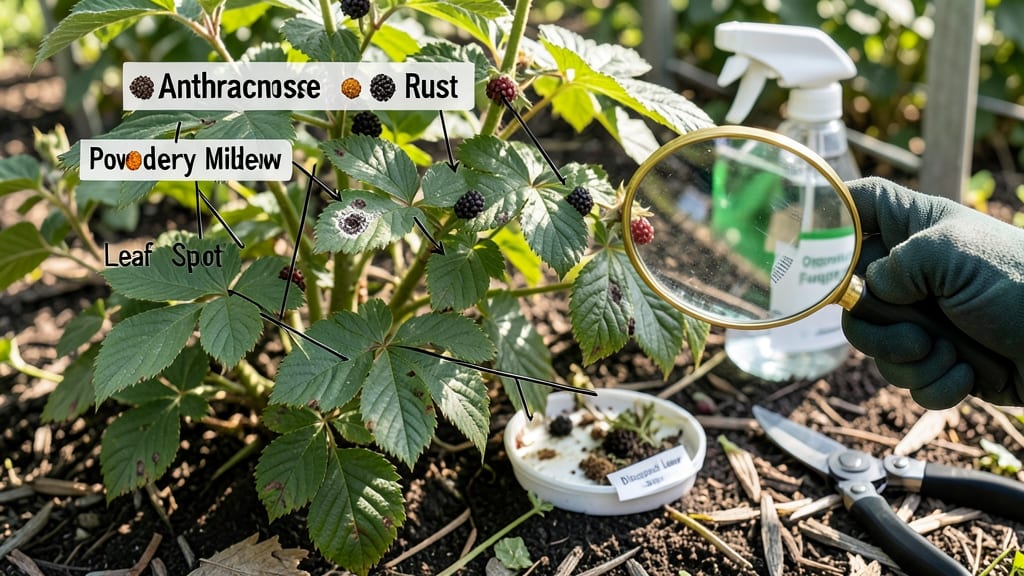
Blackberry leaf diseases turn vibrant foliage into a sad, spotted mess—🌿 and I’ve seen it ruin entire harvests. The key to saving your bushes starts with knowing exactly what’s attacking them: anthracnose’s dark, sunken spots, rust’s orange pustules, or powdery mildew’s white coating.
Without quick action, these fungi spread fast, weakening plants and slashing fruit quality.
Most problems start with poor airflow or wet leaves—too much shade, dense canes, or overhead watering create the perfect fungal buffet. I learned that the hard way when my blackberries developed rust after pruning too late in the season.
The good news? Organic sprays like neem oil or copper fungicide can stop the spread, but timing matters—apply at the first sign of trouble.
You’ll spot healthier plants with fewer diseased leaves and stronger canes by summer’s end. The secret’s in prevention: prune for airflow, water at the base, and choose disease-resistant varieties like ‘Chester’ or ‘Natchez.’ These small steps add up to fewer headaches and more berries.
Works for home gardeners and small farms alike—just adjust sprays based on severity. Let’s get those leaves back to their best before next season.
Root Causes Of Blackberry Leaf Damage
Blackberry leaf diseases rarely strike out of nowhere—they thrive when specific conditions align, often tied to environmental stress, microbial activity, or poor plant health. Understanding the why behind these issues is the first step to stopping them before they spread.
Below, we break down the most common culprits, from fungal invaders to cultural mistakes, and explain how they trigger leaf decay.
Fungi are the #1 cause of blackberry leaf diseases, and they exploit weak spots in your plants. Here’s how they take hold:
- High Humidity + Warmth = Fungal Feast
Most blackberry fungi—like Elsinoë veneta (anthracnose) or Phomopsis—spread rapidly in temperatures between 70–85°F (21–29°C) with high humidity or leaf wetness (think foggy mornings or overhead watering). Spores land on leaves, germinate, and penetrate through natural openings like stomata or wounds.
💡 Pro Tip: Fungi need moisture to survive. If your blackberries are in a low-lying area where water pools, you’re creating the perfect breeding ground.
- Weakened Plant Defenses
Stressed blackberries (from drought, nutrient deficiencies, or physical damage) have thinner cell walls, making them easier targets. For example, Botrytis cinerea (gray mold) thrives on tired, overcrowded canes with poor airflow.
🌡️ Key Trigger: Nitrogen deficiency weakens leaves, while potassium deficiency reduces disease resistance. Test your soil—imbalances invite fungal attacks.
- Dormant Season Carryover
Some fungi, like Xanthomonas (bacterial leaf spot), survive on old plant debris or infected canes over winter. When spring arrives, they reactivate and spread via wind, rain, or pruning tools.
✨ Prevention Hack: Remove and destroy (don’t compost!) diseased leaves and canes in fall. Sterilize pruners with a 10% bleach solution to stop cross-contamination.
Blackberries are tough, but extreme or inconsistent conditions force them to divert energy away from disease resistance. Here’s how:
- Poor Air Circulation
Tightly packed canes or thick mulch trap moisture, creating a greenhouse effect. Fungi like Septoria love this environment, leading to dark, circular lesions. Solution: Prune aggressively to open the canopy and space plants 3–4 feet apart.
- Overwatering or Underwatering
- Too much water: Soggy soil weakens roots, making leaves susceptible to Phytophthora (root rot) and foliar diseases.
- Too little water: Drought-stressed plants produce smaller, thinner leaves that crack easily—perfect entry points for pathogens.
💧 Ideal Fix: Water deeply 1–2 times per week (depending on climate) and avoid wetting foliage. Drip irrigation or soaker hoses keep roots happy without splashing leaves.
- Extreme Temperature Swings
Blackberries hate sudden shifts. Cold snaps followed by warm spells shock the plant, reducing its ability to fight off infections. For example, Alternaria (a common blackberry pathogen) flourishes when nights dip below 50°F (10°C) after a hot day.
🛡️ Shield Your Plants: Use row covers in early spring/fall to moderate temperature fluctuations.
Even the best-grown blackberries can fall prey to preventable habits:
- Ignoring Pruning Hygiene
Cutting canes with dirty tools spreads fungal spores like wildfire. Monilinia (mummy berry fungus) hitches rides on contaminated blades, infecting new cuts.
🔪 Step-by-Step Fix:
- ✅ Sterilize pruners with rubbing alcohol or bleach between cuts.
- ✅ Remove only last year’s canes (they’re more prone to disease).
- ✅ Prune in dry weather to let wounds heal faster.
- Over-Fertilizing (Especially Nitrogen)
Too much nitrogen = soft, lush growth that’s delicious to fungi. The trade-off? Rapid new growth is less resistant to pathogens like Guignardia (bitter rot).
📊 Balanced Ratio: Use a 10-10-10 or 5-10-10 fertilizer (N-P-K) and side-dress with compost for slow-release nutrients.
- Planting in Contaminated Soil
If previous crops (like raspberries or strawberries) had fungal diseases, the soil may still harbor spores. Didymella (a blackberry leaf spot) can lie dormant for years.
🌱 Reset the Soil:
- 🔥 Solarize soil in late summer (cover with clear plastic for 4–6 weeks).
- 🍄 Add Trichoderma fungus (a natural soil biocontrol) to outcompete pathogens.
Most blackberry leaf diseases are opportunistic—they wait for the right moment to strike. By addressing these root causes, you’ll make your plants too tough for fungi to handle. Next up: How to Spot These Diseases Before They Wreck Your Harvest.
Quick Fixes for Blackberry Leaf Troubles
When your blackberry bushes show signs of stress, acting fast can save your harvest—and your plants! Below are practical, step-by-step solutions tailored to common leaf diseases, plus prevention tips to keep your berries thriving. 🌱🛡️
Fungi thrive in damp, shady conditions, so pruning and airflow are your first line of defense.
🔥 Remove Infected Leaves Immediately
- How: Snip off yellowed, spotted, or powdery leaves with sterilized pruners (wipe with rubbing alcohol between cuts).
- Why: Fungal spores spread fast—don’t compost infected plant debris. Bag and trash it instead.
- Pro Tip: 💡 Remove at least 3–4 inches below the infected area to prevent reinfection.
🍳 Apply Fungicidal Sprays (Organic & Chemical Options)
| Disease | Recommended Treatment | How Often |
|---|---|---|
| Anthracnose | Copper fungicide (e.g., Copper Soap) or baking soda spray (1 tsp baking soda + 1 quart water + a drop of dish soap) | Every 7–10 days until new growth appears |
| Powdery Mildew | Neem oil (1 tbsp per quart of water) or potassium bicarbonate spray (2 tbsp per gallon) | Weekly in humid conditions |
| Rust | Sulfur-based fungicide (follow label rates) or hydrogen peroxide spray (1 tbsp 3% H₂O₂ per quart of water) | Every 2 weeks until symptoms fade |
🌡️ Improve Air Circulation & Reduce Moisture
- Prune thick canes to open up the bush—aim for 6–12 inches between branches.
- Water at the base (not overhead) and early in the day so leaves dry quickly.
- Mulch properly: Use 2–3 inches of straw or wood chips (not thick layers, which trap moisture).
Pests weaken leaves, making them vulnerable to secondary infections. Here’s how to kick them out fast.
👨🍳 Blast Off Pests with Natural Sprays
- Spider Mites: Spray with soapy water (1 tsp mild dish soap + 1 quart water) or neem oil.
- Japanese Beetles: Handpick (drop into soapy water) or use kaolin clay spray (repels adults).
- Thrips: Apply insecticidal soap or horticultural oil (follow label instructions).
🔪 Introduce Beneficial Predators
- Ladybugs (eat aphids/thrips) or lacewings (devour mites/beetles) can be ordered online or attracted with dill or fennel plants nearby.
⏰ Prevent Future Infestations
- Install fine netting (1/4-inch mesh) over bushes to block beetles.
- Rotate sprays to avoid resistance—never use the same treatment twice in a row.
If leaves look pale, curled, or stunted, your blackberries might be hungry or thirsty.
📊 Soil Test & Amendments
- Test your soil (kits from garden centers work) for pH (5.5–6.5 ideal) and nutrient levels.
- Fix deficiencies fast:
- Yellow leaves? → Iron deficiency → Spray with chelated iron or add compost tea.
- Purple stems? → Phosphorus deficiency → Work in bone meal (follow package rates).
- Weak growth? → Nitrogen boost → Use blood meal or fish emulsion.
💧 Watering Adjustments
- Overwatering? → Reduce frequency and let soil dry 2 inches deep between waterings.
- Underwatering? → Deep water 1–2 times per week (1–1.5 inches per session).
Once you’ve treated the issue, keep it from coming back with these easy habits:
✨ Sanitize tools before and after pruning (rubbing alcohol or bleach solution). ✨ Rotate crops—don’t plant blackberries in the same spot every year (fungi linger in soil). ✨ Plant resistant varieties (e.g., ‘Natchez’ or ‘Triple Crown’ tolerate diseases better). ✨ Monitor regularly—check leaves weekly (especially after rain) for early signs.
Remember: The key to healthy blackberries is consistency. Treat early, prevent often, and your bushes will reward you with juicy, disease-free berries all season! 🍇🌿
Frequently asked questions
How can I tell if my blackberry leaves have anthracnose vs. rust?
Anthracnose shows as dark, sunken spots with yellow halos on leaves, while rust creates orange pustules on undersides. Anthracnose often appears first on lower leaves, while rust spreads across both sides. For confirmation, examine spots under magnification—anthracnose has tiny black centers, while rust pustules look powdery.
Will pruning help prevent blackberry leaf diseases?
Pruning 30-50% of old canes in late winter improves airflow and sunlight penetration, both critical for disease prevention. Remove only last year's canes (they're most disease-prone) and always sterilize tools between cuts with rubbing alcohol. Proper spacing (3-4 feet between plants) also reduces humidity buildup that fuels fungal growth.
Can I use household items like baking soda to treat fungal diseases?
Yes! A baking soda spray (1 tsp baking soda + 1 quart water + a drop of dish soap) works well for powdery mildew and early anthracnose. Spray both leaf surfaces every 7-10 days during humid conditions. For more severe infections, combine with copper fungicide. Always test sprays on a small area first to check for leaf burn.
Why do my blackberry leaves get yellow even when I'm watering regularly?
Yellowing leaves often signal nutrient deficiencies rather than water issues. Check for iron deficiency (yellow between veins) or nitrogen deficiency (pale yellow overall). Test soil pH (ideal 5.5-6.5) and amend with compost or chelated iron. Overwatering can also cause yellowing by suffocating roots—ensure soil drains well and water only when top 2 inches are dry.