
Leaf Blower
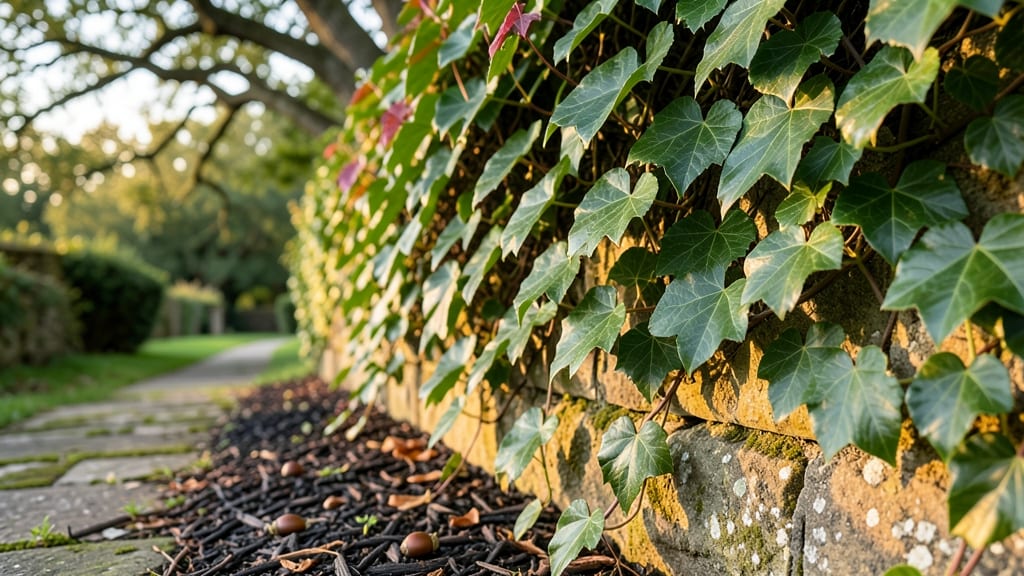
Identifying Boston ivy leaf means spotting its glossy, dark green foliage with 3-5 pointed lobes that cluster along woody vines. These leaves mimic maple shapes but stay smaller, and their vibrant red-purple autumn hues cling tightly to walls and trees.
Boston ivy leaves stand out because their palmate lobes create a distinct maple-like silhouette, though their 3-5 pointed segments are more compact. 🌿 Unlike poison ivy's smooth edges or Virginia creeper's blue-black berries, Boston ivy's leaves grow in dense clusters along stiff, angled vines that cling aggressively to surfaces.
This climbing habit and autumn color transformation make it a favorite for ornamental use in gardens.
The plant thrives in full sun to partial shade, adapting well to various soil types as long as drainage is adequate. In colder climates (USDA zones 4-9), its hardiness ensures year-round identification, especially when the leaves shift from spring's deep green to fiery fall shades.
Many confuse it with English ivy, but Boston ivy's woody vines and five-lobed leaves are unmistakable once you know what to look for.
💡 In This Article
- Distinguishing Boston Ivy Leaves from Similar Climbing Plants
- Seasonal Changes and Ideal Growing Conditions for Boston Ivy
Distinguishing Boston ivy leaves from similar climbing plants
The key to identifying Boston ivy lies in its unique leaf structure and vine anatomy. Unlike Virginia creeper, which has 7-9 leaflets arranged in a fan shape, Boston ivy features 3-5 pointed lobes that create a palmate pattern resembling a miniature maple leaf.
The lobes are typically 2-4 inches long and have serrated edges, while Virginia creeper's leaflets are smooth and more elongated. 🌿
Texture and attachment points also set Boston ivy apart. Its leaves have a leathery, waxy surface that feels slightly rough when touched, unlike the softer, almost velvety texture of English ivy.
The petiole (leaf stalk) attaches directly to the vine at a sharp angle, creating a distinctive "V" shape when viewed from below, while poison ivy's leaves grow in clusters of three with smooth edges and no lobes.
Another telltale sign is the vine structure. Boston ivy develops woody, aerial roots that cling tightly to surfaces, forming a dense mat over walls and trees. This aggressive climbing habit contrasts with English ivy's more delicate, trailing vines that lack the same structural rigidity.
The bark on mature Boston ivy vines also develops a brown, fibrous texture that's easily identifiable up close.
Color differences appear year-round but become most striking in autumn. While Virginia creeper turns a deep purple, Boston ivy's leaves transform into a vibrant red-purple hue that remains vivid even in frost.
This autumn display is one of its most recognizable features, especially when compared to poison ivy's dull yellow-green or English ivy's muted brown tones. 🍂
For a quick field test, examine the leaf arrangement and vine attachment. Boston ivy leaves grow in opposite pairs along the vine, while Virginia creeper's leaves alternate in a spiral pattern.
The combination of lobed leaves, woody vines, and autumn color makes Boston ivy instantly recognizable once you know these distinguishing traits.
Consider these key differences when comparing plants:
- Leaf Shape: Boston ivy has 3-5 lobes vs. Virginia creeper's 7-9 leaflets
- Vine Texture: Boston ivy is woody and rigid while English ivy is flexible and trailing
- Autumn Color: Boston ivy turns bright red-purple vs. poison ivy's yellow-green
The most reliable identification comes from examining all three factors together: leaf structure, vine attachment, and seasonal color changes. This comprehensive approach eliminates confusion with similar climbing plants. 🔍