
Pests and Diseases
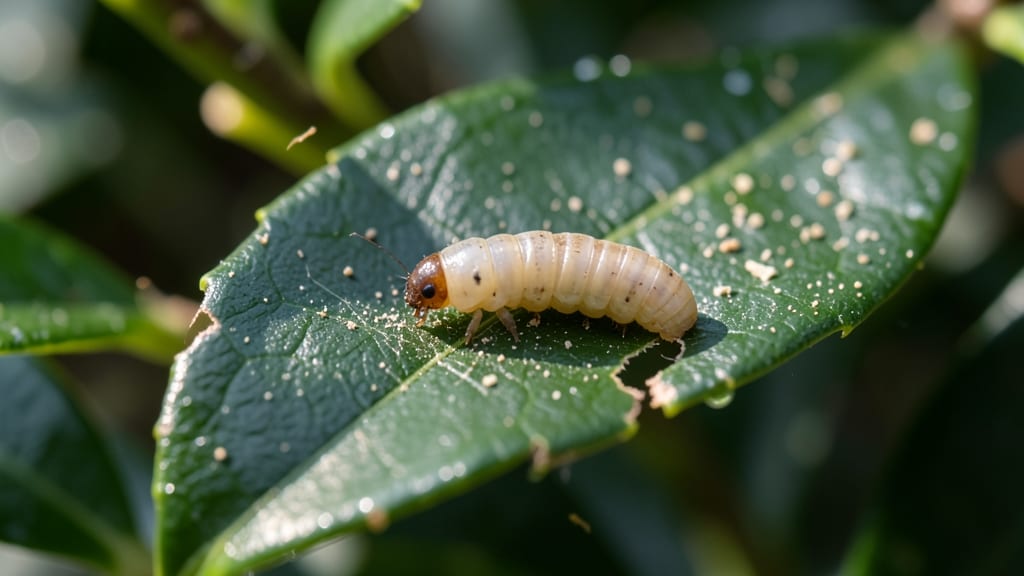
Boxwood leaf borer turns your perfectly manicured shrubs into sad, sawdust-spewing husks. 🌿 I’ve watched this pest strip entire hedges bare in just a few weeks—until I learned the organic tricks that actually work to revive them.
The key is catching it early, when you spot those telltale frass piles or wilting branches that refuse to bounce back.
This isn’t about spraying toxic chemicals—it’s about outsmarting the borer with natural predators, pruning strategies, and soil fixes that make your boxwoods less appealing to these wood-boring pests.
I’ve saved plants that looked doomed by combining neem oil sprays, introducing parasitic wasps, and fixing drainage issues that invite infestations in the first place.
By the time you’re done, your boxwoods will be thriving again—dark green, dense, and resistant to future attacks. The secret lies in understanding their life cycle and hitting them at the right moment, not just slapping on a quick fix that masks the problem.
Whether you’re dealing with a single infested shrub or an entire hedge, these methods scale—and they’ll give you the confidence to tackle this pest without resorting to harsh chemicals. Let’s get those boxwoods back to their healthy, glossy best.
Root Causes of Leaf Damage
Understanding why boxwood leaf borers target your plants starts with their lifecycle and the environmental factors that make your shrubs an irresistible buffet. These tiny pests don’t just appear out of nowhere—they’re drawn to specific conditions that create the perfect storm for infestation.
Let’s break down the science behind their behavior and how your garden might be unknowingly inviting them in.
Boxwood leaf borers, scientifically known as Cydia funebrana, are opportunistic pests. They zero in on plants that are already stressed or compromised, making them easier targets. Here’s why your boxwoods might be sending out a distress signal:
- Nutrient Deficiencies: Plants low in nitrogen, phosphorus, or micronutrients like magnesium (a classic symptom of yellowing leaves) are more vulnerable. Borers detect these deficiencies through volatile organic compounds (VOCs) emitted by struggling foliage—basically, a chemical "help, I’m weak" signal.
- Water Stress: Overwatering or drought can disrupt a plant’s natural defenses. Xylem sap (the plant’s water transport system) becomes less effective, making it harder for boxwoods to repel pests. Borers exploit this by tunneling into stems where resistance is low.
- Physical Damage: Previous pruning wounds, hail marks, or even bird pecking create entry points. Borers use their mandibles (mouthparts) to chew through these vulnerable spots, bypassing the plant’s outer protective layer.
💡 Pro Tip: Conduct a soil test to check nutrient levels and adjust your fertilization routine. Aim for a balanced 10-10-10 NPK (nitrogen-phosphorus-potassium) blend in early spring to bolster your boxwoods’ resilience.
Boxwood leaf borers thrive in specific environmental conditions that align with their biological needs. If your garden matches their preferences, you’re essentially rolling out the welcome mat:
| Factor | Borers’ Preferred Range | Why It Matters |
|---|---|---|
| Temperature | 70–85°F (21–29°C) | Larvae and adults are most active in warm, stable temperatures. Cooler climates (<50°F or 10°C) slow their development, while heatwaves (>90°F or 32°C) can kill them—but only if sustained. |
| Humidity | 60–80% relative humidity | High humidity keeps their eggs from drying out and accelerates larval growth. Dry conditions (<40% humidity) can stunt their lifecycle. |
| Shelter | Dense foliage or mulch piles | Adult moths seek shaded, protected areas to lay eggs. Thick mulch or overgrown ground cover provides perfect hiding spots. |
🌡️ Actionable Fix: Monitor your local weather and adjust plant placement. If your area frequently hits borer-friendly temps, consider pruning for airflow—thin out dense branches to reduce humidity pockets where pests lurk.
The boxwood leaf borer’s lifecycle is a finely tuned machine, with each stage triggered by specific cues. If you’re seeing an infestation, chances are your garden is providing all the right conditions for their survival:
- Egg Stage (Spring):
- Females lay eggs in slits they chew into leaves or stems.
- Eggs hatch in 7–10 days when temperatures rise above 60°F (15°C).
- Trigger: Freshly pruned or damaged foliage emits jasmonic acid, a chemical that attracts egg-laying females.
- Larval Stage (Summer):
- Larvae bore into stems, creating frass (sawdust-like waste) that clogs vascular tissue.
- They pupate inside the stem, emerging as moths in 4–6 weeks.
- Trigger: Overwatered or nutrient-rich stems provide ideal food and moisture for rapid growth.
- Adult Stage (Fall/Winter):
- Moths emerge and seek mates, with a lifespan of 10–14 days.
- They don’t feed but focus on reproduction, laying up to 100 eggs each.
- Trigger: Windbreaks or nearby host plants (like other Buxus species) help them navigate to your boxwoods.
✨ Early Intervention: The key to breaking the cycle is disrupting the egg stage. Inspect plants in early spring for tiny slits in leaves—these are egg-laying sites. Remove and destroy infested leaves immediately to starve the larvae before they hatch.
By addressing these root causes—stress, climate, and lifecycle triggers—you’re not just treating symptoms but cutting off the borers’ supply chain. The next step? Organic eradication tactics to reclaim your boxwoods’ health.
Effective Treatments for Leaf Damage
Now that you understand why boxwoods fall prey to leaf borers, let’s tackle the problem with practical, organic solutions. The key is acting fast—these pests thrive when ignored! Below, we’ve mapped out fixes based on the root causes, from early intervention to long-term prevention.
If you’ve caught the issue early, pruning is your first line of defense. Borers start small, so inspect branches closely for:
- Sawdust-like frass (borer poop!) near entry holes.
- Wilting or yellowing leaves on one side of a branch.
- Small holes (1/8” wide) in leaves or stems.
How to fix it: 🍳 Step 1: Cut it out! Use sterilized pruners (wipe with rubbing alcohol) to remove and dispose of infested branches in a sealed trash bag. Never compost them—eggs or larvae could survive.
👨🍳 Step 2: Inspect the cut surface. If the borer has burrowed deep into the stem, you may need to prune back further to healthy wood. Aim for a clean cut at a 45-degree angle just above a leaf node.
🥘 Step 3: Seal the wound. Dab the cut with organic pruning sealant (like beeswax or tree wound paste) to prevent secondary infections.
⏰ When to do it: Late winter or early spring (before borers emerge) or immediately if you spot fresh damage.
Weak plants attract pests. Strengthen your boxwoods to make them less appealing to borers.
How to fix it: 💡 Pro Tip: Healthy soil = happy plants.
- Test your soil (pH 6.0–7.0 is ideal for boxwoods). Amend with compost or aged manure if it’s too sandy or compacted.
- Mulch properly: Use 2–3 inches of organic mulch (wood chips, straw) but keep it 6 inches away from the trunk to avoid moisture buildup (which borers love).
- Water deeply but infrequently—borers target stressed plants. Aim for 1 inch of water per week (including rain).
🌡️ Feed smartly:
- Apply a balanced organic fertilizer (like fish emulsion or bone meal) in early spring to encourage new growth.
- Avoid high-nitrogen fertilizers in summer—they promote soft, borer-loving foliage.
Once borers are established, physical and biological controls are your best bets. Skip the chemicals—these methods work without harming beneficial insects or your plants.
🔪 Manual Removal (For Small Infestations)
🍳 Step 1: Find the larvae. Peel back the bark or split open infested stems to locate white, worm-like larvae. They’ll be 1–1.5 inches long with a brown head.
👨🍳 Step 2: Drown or dispose. Drop larvae into soapy water (1 tsp dish soap per gallon) or seal them in a bag for trash pickup.
🥘 Step 3: Repeat weekly until no more larvae are found.
✨ Pro Tip: Do this early in the morning when larvae are sluggish and easier to spot.
🐝 Biological Controls
🐞 Parasitic Wasps (Best Long-Term Fix)
- How it works: Tiny braconid wasps lay eggs inside borer larvae, killing them from within.
- How to attract them: Plant dill, fennel, or yarrow nearby—they love these flowers.
- When to expect results: 2–4 weeks after release.
🦋 Beneficial Nematodes
- How it works: Microscopic Steinernema carpocapsae nematodes paralyze and kill borer larvae in the soil.
- How to apply:
- Mix 1–2 lbs per 100 sq ft with water in a spray bottle.
- Apply in the evening (they’re sensitive to sunlight) to soil around the base of the plant.
- Water lightly afterward to help them move into the soil.
- Best time: Late spring or early fall (when soil temps are 50–85°F).
🌿 Natural Sprays (For Active Infestations) 🍳 Neem Oil Spray (Knocks Out Adults & Eggs)
Recipe: Mix 1 tbsp neem oil + 1 tsp mild soap + 1 quart water.
Add a drop of horticultural oil for better adhesion. - How to apply: Spray thoroughly (top and bottom of leaves, stems) every 7–10 days for 3–4 weeks. - When to use: Late spring (when adults emerge) or fall (to prevent overwintering).
🍳 Spinosad (Derived from Soil Bacteria)
- Why it works: Targets caterpillar-like larvae (including borers) without harming bees.
- How to apply: Follow label instructions for foliar spray (reapply every 7–14 days).
- Best for: Severe infestations when neem isn’t enough.
🌡️ Pro Tip: Always spray early morning or late evening to avoid burning leaves in sunlight.
An ounce of prevention is worth a pound of cure! Here’s how to future-proof your boxwoods.
🌿 Plant Selection & Placement
- Choose resistant varieties: Some boxwoods (like ‘Green Velvet’ or ‘Winter Gem’) are less attractive to borers.
- Space plants properly: Borers spread via overcrowded, shaded areas.
Aim for 3–4 feet between boxwoods for airflow. - Avoid stress: Drought or root competition from nearby plants weakens defenses.
🕵️♂️ Regular Scouting
- Inspect monthly during growing season (April–October).
- Look for early signs: Tiny holes, frass, or sap oozing from stems.
- Act fast: The sooner you catch borers, the easier they are to remove.
🌱 Soil & Habitat Management
- Reduce thatch: Over-thatched lawns or mulch traps moisture, inviting borers. Keep grass 3 inches tall max near boxwoods.
- Encourage predators: Birds, toads, and ground beetles eat borer larvae.
Add a small water feature or native plants to attract them. - Rotate controls: Don’t rely on one method—combine pruning, nematodes, and neem oil for best results.
Final Reminder: Patience is key! Some infestations take 2–3 seasons to fully resolve, but with consistent care, your boxwoods will bounce back stronger. 🌿✨
Frequently asked questions
What does boxwood leaf borer damage look like?
Look for sawdust-like frass (borer waste) near tiny holes in leaves or stems, and branches that wilt suddenly on one side. The larvae create tunnels inside stems, causing dark streaks when you cut open affected areas. Early signs include yellowing leaves or sticky sap oozing from entry points.
Can I save a boxwood heavily infested with leaf borers?
Yes, but act fast! Prune out all visibly damaged branches (don’t compost them), then treat with neem oil or beneficial nematodes. For severe cases, cut back to healthy wood and apply organic fertilizer to help recovery. Expect regrowth in 4–6 weeks if the root system remains intact.
Are there boxwood varieties less prone to leaf borers?
Yes! Varieties like ‘Green Velvet’ or ‘Winter Gem’ show natural resistance. These cultivars have thicker leaves that deter egg-laying moths. Also, dwarf boxwoods (‘Nana’) are less appealing due to their compact growth habit, reducing borer access points.
How often should I apply neem oil for leaf borers?
Spray every 7–10 days for 3–4 weeks during active seasons (spring/fall). Mix 1 tbsp neem oil + 1 tsp soap + 1 quart water and apply in the evening to avoid leaf burn. For best results, combine with parasitic wasps or beneficial nematodes for long-term control.