
Shrubs
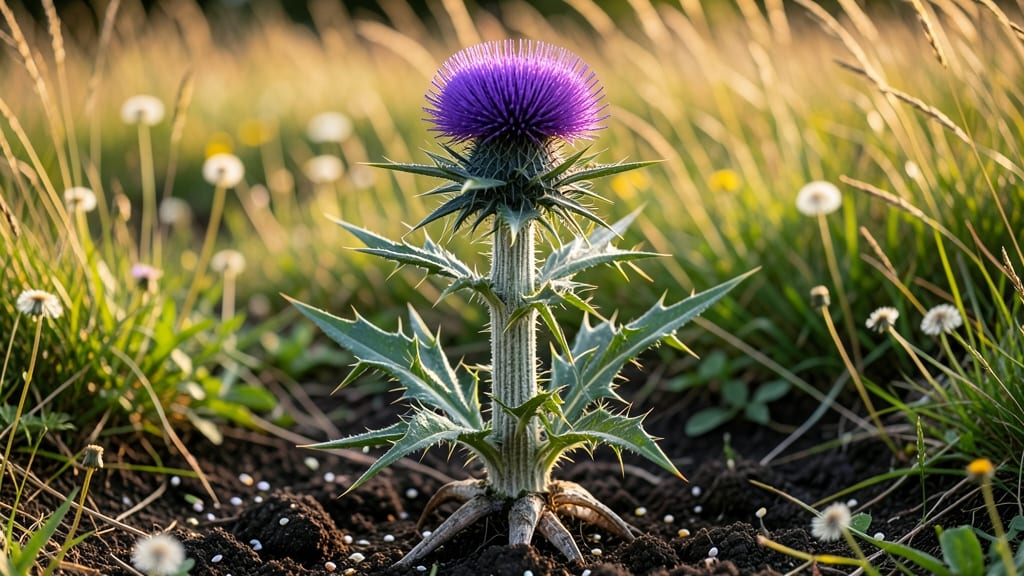
Those razor-sharp thorns make broadleaf weeds like multiflora rose and brambles the gardening equivalent of a minefield. 🌿 I’ve wrestled with these spiky invaders for years—until I discovered the right tools and timing to remove them without chemicals or injuries.
The key? Patience, the right gear, and knowing exactly when to strike.
Most gardeners grab gloves and pull, only to get sliced or leave stubborn roots behind. Instead, I use long-handled pruners for thick stems, a digging fork for deep roots, and a tarp to smother regrowth.
Season matters too—spring or fall, when weeds are actively growing but not yet seeding, is prime time. Even the toughest brambles can’t survive when you attack them this way.
By the time you’re done, your yard won’t just look cleaner—it’ll feel safer. No more dodging thorns while mowing, no more hidden roots popping up later. The best part?
This method works for multiflora rose, blackberry brambles, and even bull thistle, without a single harmful chemical. Just elbow grease and the right technique.
Works in any yard, from suburban lawns to wild edges. Here’s the step-by-step plan to reclaim your space—thorn-free and chemical-free.
Root Causes Of Thorny Weeds
Thorny broadleaf weeds like Cirsium (thistles) or Rubus (blackberries) don’t just pop up randomly—they thrive because of specific ecological and human-driven factors. Understanding these causes helps you tackle them strategically. Let’s break down why these pesky invaders take over your yard or garden.
Thorny weeds often dominate because they’re adapted to disturbed or nutrient-poor soils. Unlike lawn grasses, which need fertile, well-drained soil, many broadleaf weeds with thorns prefer compacted, rocky, or depleted ground. Here’s why:
- Low organic matter: Weeds like Centaurea solstitialis (yellow starthistle) thrive in soils lacking compost or mulch, where competition from desirable plants is weak.
- High clay or sand content: These weeds spread easily in soils that retain too much moisture (clay) or drain too quickly (sand), creating stress for grass but not for them.
- Acidic pH: Some thorny species, such as Rubus (brambles), favor slightly acidic soils (pH 5.0–6.5), where turfgrass struggles to establish roots.
Actionable fix: Test your soil and amend it with compost or peat moss to improve structure and fertility. Over time, this discourages weeds while helping grass or ground covers outcompete them.
Thorny weeds are opportunistic colonizers. They exploit any disruption in the soil—whether from construction, tilling, or even foot traffic. Their seeds lie dormant in the soil bank for years, waiting for the right moment to sprout.
- Construction or landscaping: Exposing bare soil (e.g., after installing a patio or digging a trench) gives weeds a head start. Seeds from Urtica dioica (stinging nettle) or Dipsacus fullonum (teasel) germinate rapidly in these conditions.
- Over-tilling gardens: Frequent tilling buries weed seeds deeper, but it also brings them closer to the surface where moisture and light trigger germination.
- Erosion or heavy foot traffic: Compacted paths or slopes create gaps where thorny weeds like Rosa multiflora (multiflora rose) can establish roots.
Actionable fix:
- ✅ Mulch bare soil with wood chips or straw to block light and suppress weeds.
- ✅ Avoid tilling—instead, use smothering techniques like cardboard or landscape fabric.
- ✅ Plant ground covers (e.g., clover or creeping thyme) to outcompete weeds naturally.
When your lawn or garden lacks dense, healthy vegetation, thorny weeds fill the void. They outcompete weaker plants by:
- Fast growth rates: Weeds like Convolvulus arvensis (field bindweed) grow up to 2 inches per day in ideal conditions, smothering slower-growing grasses.
- Deep root systems: Some thorny species (e.g., Echium vulgare, or viper’s bugloss) send roots 6+ feet deep, tapping into water and nutrients that shallow-rooted plants miss.
- Aggressive seed dispersal: Brambles and thistles spread via wind, animals, or even hitchhiking on clothing. A single plant can produce thousands of seeds per season.
Actionable fix:
- 💡 Thicken your lawn with dense grass varieties like tall fescue or perennial ryegrass.
- 💡 Use competitive ground covers in flower beds (e.g., Ajuga reptans or Lamium galeobdolon) to block weed sunlight.
- 💡 Hand-pull weeds early before they seed—even a small patch can become a major infestation.
While some weeds tolerate drought, many thorny broadleaf species love excess moisture. Poor irrigation practices create the perfect conditions for their spread:
- Frequent, shallow watering: Encourages weed seeds to germinate near the surface (e.g., Plantago major, or broadleaf plantain).
- Splash irrigation: Sprinklers can fling weed seeds from mulch or soil onto bare patches.
- Poor drainage: Weeds like Persicaria maculosa (ladysthumb) thrive in soggy areas where grass roots suffocate.
Actionable fix:
- 🌡️ Water deeply but infrequently (1–1.5 inches per week) to encourage deep grass roots.
- 🌡️ Fix drainage issues with sand or gravel amendments in low spots.
- 🌡️ Use drip irrigation to avoid wetting weed seeds on mulch or soil.
By addressing these root causes—soil health, disturbance, competition, and water management—you can starve out thorny weeds without relying on harsh chemicals. The key is prevention through smart landscaping and maintenance!
Tackle Thorny Broadleaf Invaders Naturally
Dealing with spiky broadleaf weeds can feel like battling an overgrown fortress—but with the right strategies, you can reclaim your garden without resorting to harsh chemicals. Below, we’ve mapped out practical solutions tailored to the root causes of these stubborn plants, from physical removal to preventive measures.
Each method is designed to be effective, eco-friendly, and easy to implement, whether you’re a weekend gardener or a seasoned green thumb.
Cause: New growth hasn’t established deep roots yet. Fix:
- 🔥 Hand-Pulling (Best for Small Patches)
- Wait for soil to be moist (after rain or watering) to loosen roots.
- Grasp the weed at the base and pull upward with a firm tug—don’t twist, or you’ll snap the stem and leave roots behind.
- Pro Tip: Wear gloves! Thorns can be as sharp as a cactus’s. A pair of gardening clippers or long-nose pliers can help grip stubborn stems.
- ✨ Bonus: Use a weed torch (for non-flammable areas) to singe young shoots—just be cautious around dry grass or wood.
- 🍳 Vinegar Spray (For Targeted Zaps)
- Mix 1 gallon of white vinegar (20% acetic acid) with 1 oz. of dish soap (as a surfactant) in a spray bottle.
- Spray directly on leaves (avoid desirable plants—vinegar kills everything it touches).
- Reapply every 2–3 days until the weed wilts and dies (usually 1–2 weeks).
- 💡 Warning: Works best on sunny days; rain can dilute the solution. Test on a small area first.
Cause: Mature weeds have spread roots or underground runners. Fix:
- 👨🍳 Digging Out the Tough Guys
- Use a dandelion digger or weeding knife to slice through thick roots at the soil line.
- For taprooted weeds (like thistle or burdock), dig deep—at least 6–8 inches—to avoid regrowth.
- 🔪 Mulch the Area: After removal, cover the soil with cardboard + wood chips or straw mulch to block sunlight and prevent regrowth.
- 🥘 Boiling Water or Saltwater (For Sidewalks & Driveways)
- Pour 1–2 gallons of boiling water directly over the weed’s base. The heat kills the plant instantly.
- For saltwater: Dissolve 2 cups of kosher salt in a gallon of water and apply—this dehydrates the plant over time.
- ⏰ Timing: Do this on a dry, wind-free day to avoid spreading salt to nearby plants.
Cause: Favorable growing conditions (sun, poor soil, or disturbed ground). Fix:
- 🌡️ Block the Sunlight
- Lay down black plastic sheeting or landscape fabric before planting to smother weeds. Secure edges with rocks or soil.
- 💡 Long-Term: Plant dense ground covers (like clover or creeping thyme) to outcompete weeds naturally.
- 🎯 Improve Soil Health
- Weeds thrive in nutrient-poor or compacted soil. Amend with compost or well-rotted manure to encourage grass/shrubs to outgrow them.
- 🌱 Overseed Bare Spots: Fill empty patches with grass seed or native plants to create a weed-resistant barrier.
- 🔄 Regular Maintenance
- Mow high (3–4 inches) to shade out weed seeds.
- 🕒 Schedule: Pull weeds weekly—small weeds are easier to remove than established ones!
Remember: Consistency is key. Thorny broadleaf weeds won’t vanish overnight, but with these methods, you’ll weaken their grip on your garden—without the need for toxic chemicals. Start small, stay persistent, and soon you’ll enjoy a yard that’s as prickle-free as it is picturesque!
Frequently asked questions
How do I safely remove thorns without getting pricked?
Wear thick, long-sleeved gloves and use long-handled tools like pruners or a weeding fork. For stubborn thorny weeds like brambles, cut stems at the base with loppers—never pull by hand. Always work in pairs so someone can help if you get snagged. After removal, dispose of weeds in sealed bags.
Will vinegar kill thorny weeds like multiflora rose?
Yes, but it requires consistency. Use 20% acetic acid vinegar (not household vinegar) mixed with dish soap as a surfactant. Spray directly on leaves on sunny days, repeating every 2-3 days until the plant wilts. Test on a small area first—vinegar kills everything it touches, including nearby plants.
Can I use boiling water on thorny weeds in my garden?
Pour 1-2 gallons of boiling water directly onto the weed's base. The heat kills the plant instantly. For large patches, use a weed torch (in non-flammable areas) for faster results. Do this on dry, wind-free days to avoid spreading heat to desirable plants.
Why do thorny weeds keep coming back after removal?
Most likely, you missed roots or seeds. Thorny weeds like brambles have extensive root systems—dig 6-8 inches deep to ensure complete removal. After pulling, cover the area with cardboard + mulch to block sunlight and prevent regrowth. Regular maintenance (weekly checks) is key!
Are there any thorny weeds that are actually beneficial?
Yes! Some thorny plants have ecological value. Blackberry brambles provide wildlife habitat and edible fruit, while hawthorn supports birds and pollinators. If you want to keep them, prune aggressively to control spread. Otherwise, remove only the most invasive species like multiflora rose.