
Leaf Blower
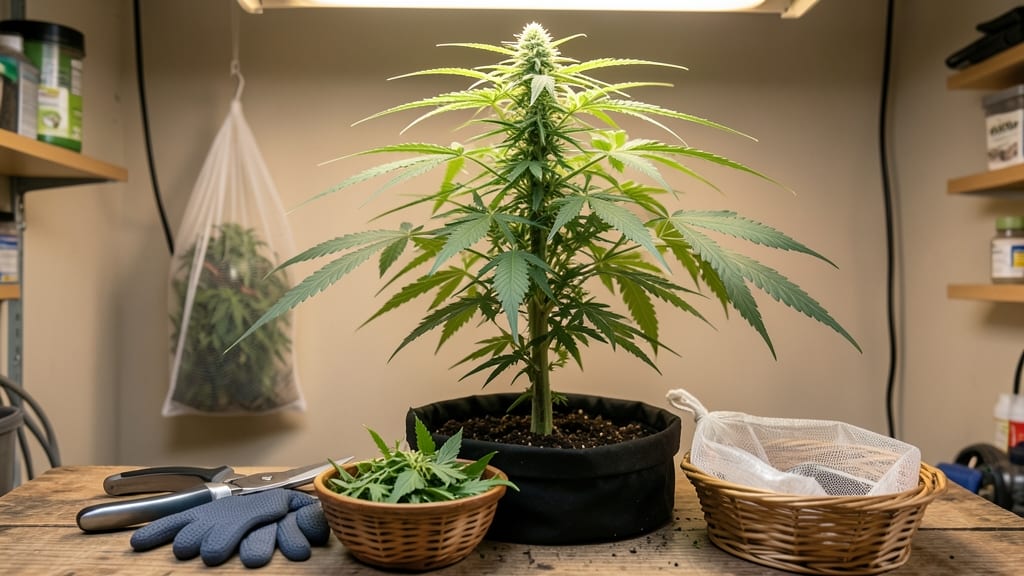
Making cannabis leaf tea means steeping dried cannabis leaves in hot water to create a calming herbal drink that contains minimal THC and no psychoactive effects. For best results, use organic leaves, follow proper brewing techniques, and consume in moderation.
This herbal infusion focuses on the plant's natural compounds like CBD and terpenes, which are known for their potential stress-relieving properties.
Unlike traditional marijuana tea that relies on THC for effects, cannabis leaf tea taps into the plant's full spectrum without the high. 🌿 I've found that using freshly dried leaves and steeping them in water just below boiling—around 195°F—helps preserve these beneficial compounds while minimizing bitterness.
The key difference lies in the preparation: while marijuana tea often involves decarboxylation to activate THC, cannabis leaf tea skips this step to maintain its non-psychoactive profile.
Many people turn to this method for its gentle approach to relaxation, especially those who want to avoid THC entirely or limit its presence.
💡 In This Article
- How Cannabis Leaf Tea Differs From Marijuana Tea
- Step-by-Step Guide to Brewing Safe Cannabis Leaf Tea
How cannabis leaf tea differs from marijuana tea
The core difference between cannabis leaf tea and traditional marijuana tea lies in their cannabinoid profiles. Cannabis leaf tea focuses on preserving the plant's natural CBD (cannabidiol) and minor cannabinoids like CBG or CBN, while marijuana tea prioritizes THC (tetrahydrocannabinol) for psychoactive effects.
When you steep leaves for tea, you're primarily extracting water-soluble compounds—cannabinoids bind weakly to water, so only trace amounts of THC (typically <0.3%) transfer, creating a non-intoxicating experience. In contrast, marijuana tea often involves decarboxylation (heating to activate THC) and longer steeping times to maximize psychoactive potency.
Botanically, the leaves used matter significantly. Hemp-derived leaves (CBD-rich) contain 0.3% THC or less, making them ideal for tea preparation. These leaves are harvested from the upper growth of the plant where CBD concentrations peak.
Marijuana tea, however, uses THC-rich buds or leaves that undergo heating processes to convert THCA (the acidic precursor) into psychoactive THC. The terpene profile also differs—cannabis leaf tea retains more of the plant's aromatic compounds like myrcene (earthy) and limonene (citrusy), which contribute to its calming effects without the "high."
Extraction methods create another critical distinction. Cannabis leaf tea relies on simple infusion: dried leaves steeped in hot water (195-205°F) for 5-10 minutes to release beneficial compounds. This cold-process approach preserves delicate cannabinoids and terpenes that would degrade under higher heat.
Marijuana tea, however, often requires baking or vaporizing the plant material first to activate THC, a process that significantly alters the chemical composition. The result? A beverage that's either subtly relaxing (leaf tea) or noticeably euphoric (marijuana tea).
What most people don't realize is how the preparation affects your body's endocannabinoid system. Cannabis leaf tea primarily interacts with CB1 and CB2 receptors through CBD's indirect modulation, promoting homeostasis without altering perception. The lack of THC means no dopamine surge—just gentle stress relief through serotonin enhancement and anti-inflammatory pathways.
This makes it particularly appealing for those seeking therapeutic benefits without cognitive impairment. The sensory experience differs too: leaf tea offers earthy, herbal notes with floral undertones, while marijuana tea often carries a more resinous, pungent aroma.
Consider these key factors when choosing between the two:
- Desired effect: Cannabis leaf tea for relaxation without psychoactivity; marijuana tea for euphoria or pain relief
- Preparation time: Leaf tea requires 5-10 minutes of steeping; marijuana tea needs 1-2 hours of decarboxylation
- Legal considerations: Leaf tea from hemp is federally legal in the U.S. (CBD <0.3% THC); marijuana tea may be restricted
- Flavor profile: Leaf tea tastes herbal and floral; marijuana tea has stronger, resinous notes
The science behind these differences lies in cannabinoid solubility. THC is fat-soluble, meaning it binds better to oils and butter than water—which is why traditional marijuana tea often uses alcohol or fat-based extraction. CBD, however, has better water solubility, making it ideal for tea preparation.
This chemical behavior explains why cannabis leaf tea can deliver therapeutic benefits through simple infusion while marijuana tea requires more complex extraction methods to achieve its effects.
For those new to cannabis beverages, starting with cannabis leaf tea offers a gentler introduction. The non-psychoactive nature makes it perfect for daytime use or those sensitive to THC. I've found that using organic, pesticide-free leaves and a 1:10 leaf-to-water ratio yields the most balanced flavor and cannabinoid extraction.
The key is patience—letting the leaves steep just long enough to release their beneficial compounds without becoming bitter.