
Diseases
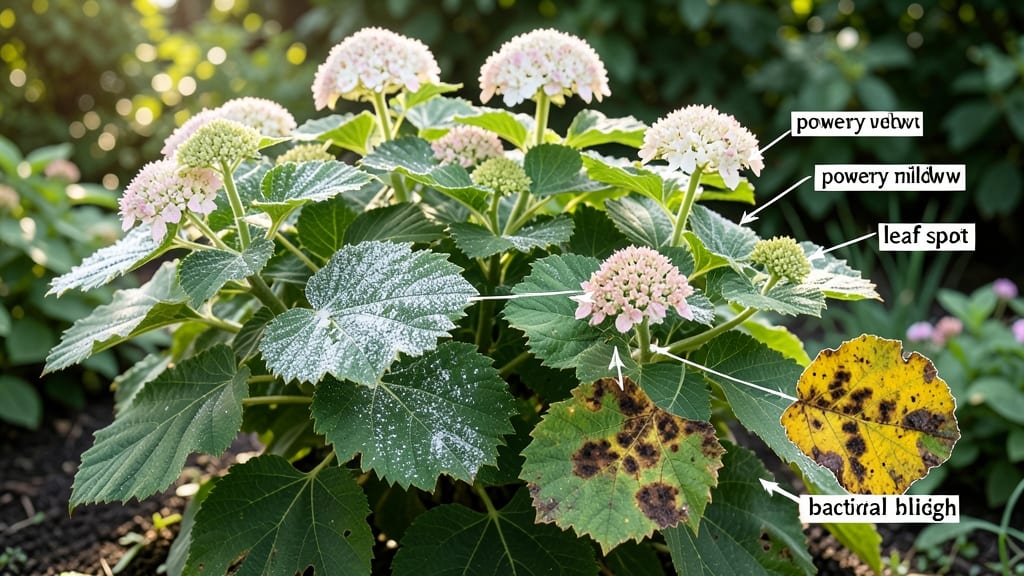
Oakleaf hydrangeas turn your yard into a fiery autumn masterpiece—but those stunning leaves can vanish fast if diseases take hold. 🌿 I’ve watched powdery mildew turn my plants into ghostly white skeletons and leaf spot create unsightly craters in the foliage, and the key to saving them is acting before the damage spreads.
These problems thrive in humidity, but with the right moves, you can keep your hydrangeas thriving through every season.
The most common culprits are fungal infections like powdery mildew and leaf spot, often triggered by poor airflow, overwatering, or wet foliage. Symptoms start small—white dust on leaves or tiny brown spots—but if ignored, they’ll weaken your plant and ruin that showstopping fall color.
The good news? Most fixes are simple: prune for airflow, adjust watering, and apply organic sprays like neem oil or baking soda mix when you spot the first signs.
With early action, you’ll restore those glossy leaves and vibrant blooms in just a few weeks. I’ve saved plants that looked doomed by mid-summer, and the difference in their resilience by fall is shocking.
The secret is checking your hydrangeas every two weeks during peak growing season—because catching these issues early means your plant fights back, not fights for survival.
Climate matters here: humid regions need extra vigilance, while drier areas can focus on watering habits. If your plant keeps struggling despite your best efforts, it might be time to consult a local extension service—they can help rule out less common issues.
But for 90% of cases, these steps will have your oakleaf hydrangea looking like new in no time.
Root Causes Behind Hydrangea Woes
Oakleaf hydrangeas (Hydrangea quercifolia) are prized for their stunning foliage and vibrant blooms, but like all plants, they’re vulnerable to diseases when conditions tip out of balance. Understanding why these issues arise is the first step to prevention and treatment.
Let’s break down the key culprits—from fungal invaders to environmental stressors—and why your hydrangea might be sending up distress signals.
Fungi thrive in moist, shaded conditions, making oakleaf hydrangeas—especially those planted in dense, humid gardens—a prime target. Here’s how these pathogens exploit your plant:
🌡️ Overhead Watering & Poor Airflow
Fungal spores (like those causing powdery mildew or leaf spot) splash onto leaves during overhead irrigation or rain. Without proper airflow, spores linger and germinate. Oakleaf hydrangeas, with their broad leaves, trap moisture longer than other varieties, creating the perfect fungal buffet.
- Why it happens: Water droplets on leaves create a film that blocks sunlight and raises leaf humidity to 90%+, ideal for fungal growth.
- Actionable fix: Aim water at the soil, not the foliage, and prune to improve airflow between stems.
🌱 Stress from Overcrowding
When hydrangeas are planted too closely together, leaves brush against each other, spreading spores like wildfire. Botrytis blight (gray mold) often flourishes in these conditions, turning leaves brown and mushy.
- Why it happens: Crowded plants compete for nutrients, weakening their natural defenses. Damaged leaves (from rubbing or pests) also provide entry points for fungi.
- Actionable fix: Space plants 3–5 feet apart and remove debris (like fallen leaves) where spores hide.
🌡️ Temperature & Humidity Swings
Fungi like Phytophthora root rot love cool, soggy soil (below 60°F). If your hydrangea sits in a low-lying area where water pools after rain, roots suffocate, and fungal hyphae feast on decaying tissue.
- Why it happens: Poor drainage + high humidity = anaerobic conditions (no oxygen), which weakens roots and invites rot.
- Actionable fix: Amend soil with compost or perlite to improve drainage and avoid planting in depressions.
Insects don’t just munch on leaves—they injure plants, creating wounds where bacteria and fungi slip in. Here’s how pests pave the way for bigger problems:
🐜 Scale & Aphids: Sap-Sucking Menaces
These tiny pests pierce leaves and stems, exuding sticky honeydew that attracts sooty mold—a black, fuzzy fungus. Sooty mold blocks sunlight, stunting growth and leaving hydrangeas vulnerable to secondary infections.
- Why it happens: Honeydew is a sugar-rich feast for mold spores, which germinate within 24–48 hours of infestation.
- Actionable fix: Blast pests off with water or use neem oil (a natural fungicidal soap).
🐛 Japanese Beetles: Leaf Skeletons
These metallic-green beetles devour leaf tissue, leaving lace-like patterns. The physical trauma disrupts the plant’s protective cuticle, making it susceptible to bacterial leaf spot.
- Why it happens: Beetles salivate as they feed, introducing bacteria into wounds.
- Actionable fix: Handpick beetles into soapy water or use milky spore (a natural predator).
Even without pathogens, oakleaf hydrangeas can decline when their basic needs aren’t met. These factors weaken immunity, making them easy targets for disease:
☀️ Too Much or Too Little Sun
Oakleaf hydrangeas prefer partial shade (4–6 hours of sun). Too much sun causes leaf scorch (brown, crispy edges), while deep shade reduces photosynthesis, leaving plants nutrient-starved and prone to fungal attacks.
- Why it happens: Stressed leaves lose chlorophyll, making them 30% less resistant to pathogens.
- Actionable fix: Monitor light exposure and mulch heavily to protect roots from temperature extremes.
💧 Watering Mismanagement
Both overwatering and drought stress trigger disease. Overwatering drowns roots (inviting rot), while drought causes wilting, which disrupts nutrient transport and opens doors for infections.
- Why it happens: Wilting plants close stomata (pores), trapping heat and creating ideal fungal conditions on the leaf surface.
- Actionable fix: Water deeply 1–2x per week (1 inch total) and use drip irrigation to avoid wetting foliage.
🌱 Poor Soil Health
Compacted or nutrient-poor soil starves hydrangeas, weakening their cell walls. This makes them more permeable to fungal hyphae and bacterial invaders.
- Why it happens: Low calcium and potassium levels reduce cuticular wax production, the plant’s first line of defense.
- Actionable fix: Test soil pH (aim for 4.5–5.5) and amend with compost or aged manure.
💡 Pro Tip: The key to prevention is consistency. Hydrangeas thrive when their environment mimics their native southeastern U.S. habitat: moist but well-draining soil, partial shade, and moderate humidity. Small tweaks—like adjusting watering schedules or pruning for airflow—can dramatically reduce disease risk.
Quick Fixes for Oakleaf Hydrangea Ailments
When your oakleaf hydrangea shows signs of distress, acting fast can save its stunning foliage and blooms. Below are practical, step-by-step solutions tailored to the most common diseases, along with prevention tips to keep your plant thriving.
Think of this as your hydrangea’s first-aid kit—easy to follow and packed with actionable advice!
Fungal diseases thrive in damp, shaded conditions, but they’re beatable with the right care.
🔥 Step 1: Prune Infected Areas - 👨🍳 Snip it out: Use sterilized pruners (wipe with rubbing alcohol between cuts) to remove yellowed, spotted, or powdery leaves.
Dispose of them in the trash—not the compost! - ✂️ Target: Focus on lower leaves first, as fungi often spread upward.
🌿 Step 2: Boost Airflow & Sunlight - 🌡️ Thin the canopy: If your hydrangea is overcrowded, trim back some branches to improve airflow.
Aim for 6–12 inches of space between plants. - ☀️ Move it (if possible): Even a few extra hours of morning sun can dry out fungal spores faster.
💡 Step 3: Apply Fungicide (Organic or Chemical) - 🌱 Organic options: - Neem oil spray (1 tsp neem oil + 1 tsp mild soap + 1 quart water).
Spray every 7–10 days until symptoms fade. - Baking soda mix (1 tbsp baking soda + 1 quart water + a drop of soap) for powdery mildew. - 🧪 Chemical options: If the infection is severe, use a copper-based fungicide (like Bordeaux mixture) or myclobutanil (follow label instructions).
🛡️ Prevention Tips
- 💡 Water wisely: Avoid overhead watering—use a drip irrigation system or water at the base in the early morning so leaves dry quickly.
- 🌿 Mulch properly: Keep mulch 2–3 inches away from the stem to prevent moisture buildup.
- 🌡️ Space plants: Ensure 3–4 feet of clearance between hydrangeas for better airflow.
Tiny invaders can weaken your hydrangea, but they’re no match for these tactics.
🔪 Step 1: Blast Them Off - 💦 Strong water spray: Hold your hose 6–12 inches away and spray forcefully on the undersides of leaves where pests hide.
Repeat every 3–4 days for aphids. - 🕷️ For spider mites: Wipe leaves with a damp cloth or use a soft brush to dislodge webs.
🍳 Step 2: Introduce Natural Predators
- 🐞 Ladybugs or lacewings: Release beneficial insects (available at garden centers) to eat aphids and mites.
- 🐝 Encourage bees: Healthy hydrangeas attract pollinators, which help control pests naturally.
💡 Step 3: Use Insecticidal Soap or Oil - 🧼 Insecticidal soap: Mix 2.5 tbsp castile soap + 1 quart water, spray directly on pests.
Reapply every 5–7 days. - 🛢️ Horticultural oil: Apply in early spring or fall (when temps are 50–85°F) to smother scale insects.
🛡️ Prevention Tips
- 🌿 Inspect regularly: Check new growth weekly for early signs of pests.
- 🌱 Keep it healthy: Strong plants resist pests better—fertilize in early spring with a balanced 10-10-10 formula.
- 🚫 Avoid over-fertilizing: Too much nitrogen attracts soft-bodied pests like aphids.
Bacteria can spread quickly, but sanitation and quick action can stop them.
⏰ Step 1: Act Fast
- ✂️ Remove infected parts immediately: Cut off wilting or blackened leaves with sterilized tools. Do not compost—bag and trash them.
- 🚫 Avoid pruning in wet weather: Wait for a dry day to prune.
🧼 Step 2: Clean Up Debris
- 🧹 Remove fallen leaves: Bacteria love hiding in plant debris. Rake up all litter around the base.
- 🧽 Sterilize tools: After pruning, soak tools in 1 part bleach to 9 parts water for 10 minutes, then rinse.
💡 Step 3: Improve Drainage
- 💧 Check soil moisture: Bacteria thrive in soggy soil. Ensure your hydrangea has well-draining soil (amend with compost or perlite if needed).
- 🚰 Adjust watering: Water deeply but infrequently—1–1.5 inches per week is ideal.
🛡️ Prevention Tips
- 🌱 Rotate crops: If you grow hydrangeas in containers, replace soil annually to avoid bacterial buildup.
- 🌿 Space for airflow: Crowded plants trap humidity—keep 3+ feet between plants.
- 🧪 Use copper spray: As a preventative, spray a copper fungicide (like copper sulfate) every 4–6 weeks in wet climates.
- 🌿 Feed it right: After treating, give your hydrangea a balanced fertilizer (like 10-10-10) to boost immunity.
- 🌡️ Monitor temps: If nights are below 50°F, move potted hydrangeas to a sheltered spot to prevent stress.
- 📅 Prune strategically: Late winter/early spring is the best time to prune—avoid cutting in fall, as it invites disease.
Remember: The key to happy hydrangeas is prevention + quick action. Once you spot a problem, isolate the plant, treat it, and keep your tools clean to stop the spread.
With these fixes, your oakleaf hydrangea will bounce back stronger—and you’ll be the hero of your garden! 🌿✨
Frequently asked questions
What are the most common diseases affecting oakleaf hydrangeas?
The top issues include powdery mildew (white dusty coating), leaf spot (brown circular marks), and root rot (yellowing leaves and wilting). Fungal infections like these thrive in humid conditions, while bacterial leaf spot appears as water-soaked patches. Early detection is key—check leaves weekly during growing season!
How do I tell if my hydrangea has powdery mildew vs. leaf spot?
Powdery mildew looks like a white, chalky dust on leaf surfaces, while leaf spot shows as dark brown or black spots with yellow halos. The key difference? Mildew stays on top of leaves, while spots often appear on both sides. Use a magnifying glass if needed—early identification saves your plant!
Can I save my hydrangea if it already has severe disease symptoms?
Yes, but act fast! Prune infected leaves immediately with sterilized tools, then apply neem oil or a copper fungicide. For root rot, improve drainage by amending soil with compost or perlite. Severe cases may need 3-4 weeks of consistent care—monitor daily and remove any new infected growth. Patience is key!
Why does my hydrangea get diseases more in humid climates?
High humidity creates the perfect environment for fungal spores to germinate and spread. Oakleaf hydrangeas' broad leaves trap moisture, while poor airflow in dense gardens worsens the problem. The solution? Space plants 3-4 feet apart, water at soil level, and prune for better circulation. A simple fan on hot days can also help!
When should I prune to prevent diseases?
Prune in late winter or early spring (before new growth appears) to remove dead/diseased wood. Avoid fall pruning—it leaves wounds vulnerable to winter infections. Always use sterilized tools and clean up fallen leaves to eliminate spore hiding spots. This timing gives your hydrangea a fresh start for the growing season!