
Flowers
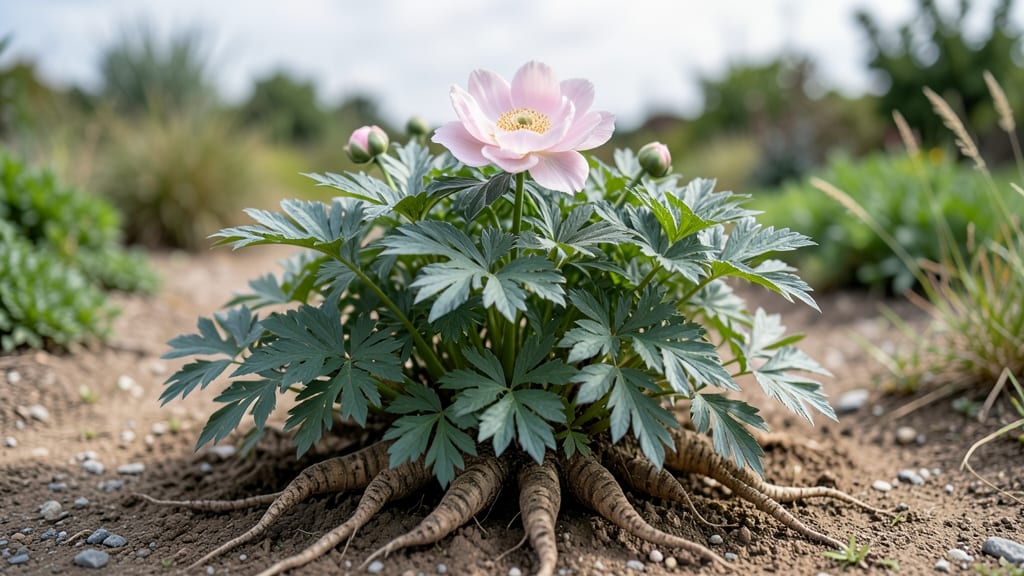
Fern leaf peony roots need the right timing and care to bloom like the lush, fragrant giants they promise. 🌿 I've learned that planting them in early fall—when soil temps hit 50°F—gives roots time to establish before winter, leading to first blooms by June.
The secret isn't just the season, though; it's how you handle those delicate roots from the moment you dig them up.
Start by soaking roots in water for 20-30 minutes to revive them, then trim any mushy or damaged sections with clean pruners. Space them 3-4 feet apart in well-draining soil, with the "eyes" (buds) 2 inches below the surface.
Overcrowding is the fastest way to stunted growth, so don't rush—give them room to thrive. Mulch heavily after planting to protect roots from temperature swings.
After planting, water deeply but avoid soggy soil—fern leaf peonies hate wet feet. Within 3-4 weeks, you'll see new shoots pushing through the soil, and by next spring, those shoots will transform into vibrant, bushy plants covered in blooms.
The key is patience: it takes 2-3 years for established roots to reach their full, dramatic potential.
For herbaceous types, divide clumps every 3-4 years in early fall to rejuvenate blooms, while tree peonies can wait 5+ years. Both varieties reward careful handling with longer stems, bigger flowers, and fewer floppy blooms. The payoff? A garden corner that smells like spring all summer long.
📚 In This Guide
- What you need
- Instructions
- Tips and common mistakes
- Wrapping up and next steps
What you need
- ● Fern leaf peony roots: Healthy, dormant tubers (3–5 inches in diameter). Pro tip: Look for firm, plump roots with no soft spots or mold! 🌡️
- ● Well-draining potting mix: 50% garden soil, 30% perlite, and 20% compost (or a pre-mixed peony-specific blend). Quantity: Enough to fill a container 12–18 inches deep.
- ● Containers: Pots with drainage holes (12–18 inches wide and deep) or a raised garden bed.
- ● Organic fertilizer: Balanced 10-10-10 or peony-specific fertilizer (follow package rates).
- ● Watering can or hose with a gentle spray nozzle.
- ● Garden trowel or spade (for planting and soil prep).
- ● Pruning shears (to trim any damaged roots or foliage before planting).
- ○ pH test kit (optional but helpful—peonies thrive in slightly acidic soil, pH 6.0–7.0).
- ● Mulch (straw or shredded bark) (to retain moisture and regulate soil temperature).
- ● Gloves (to protect your hands while handling roots and soil).
- ● Sunlight: Full sun (6–8 hours daily) or partial shade (if in hot climates).
- ● Temperature: Plant in early spring (after the last frost) or fall (for cooler climates). Roots need chilling (40–50°F) to break dormancy.
- ● Water source: Access to water for consistent (but not soggy) moisture.
- ● Root stimulator (like mycorrhizal fungi or seaweed extract) to boost early growth.
- ● Soil thermometer (to monitor temperature for optimal planting times).
- ● Drip irrigation system (for hands-off watering consistency).
- ● Epsom salt (1 tablespoon per gallon of water monthly for magnesium boost).
How to germinate fern leaf peony roots for rapid, lush growth
Here's my foolproof method for coaxing these prized roots into vigorous growth—no waiting months for blooms.
🌱 Step 1: Select and Prepare Healthy Roots for Planting
Choose firm, plump roots with at least 3-4 buds (eyes) per section—these are your growth points. I always look for roots that feel dense and weigh noticeably in my hand; soft or shriveled roots won't perform. Cut roots into 2-3 inch sections, ensuring each piece has at least one bud. Let them air-dry for 24 hours to prevent rot—this is critical for preventing fungal issues later.
While they dry, prepare your planting site. Fern leaf peonies thrive in well-draining soil with a pH between 6.5 and 7.5. Amend heavy clay soil with 2-3 inches of compost and a handful of perlite to improve aeration. The key here is avoiding soggy conditions—the roots rot faster than they grow.
💧 Step 2: Plant Roots at the Correct Depth and Water Strategically
Dig holes 6 inches deep and space them 3-4 feet apart—this gives mature plants room to spread without crowding. Place each root section horizontally with the buds facing upward, about 2 inches below the soil surface. Cover lightly with soil, leaving the top of the root exposed. This prevents burial too deep, which can cause rot.
Water immediately after planting with 1 gallon of lukewarm water per root section. Use a soaker hose or drip irrigation to avoid disturbing the soil. The goal is to moisten the soil evenly without creating puddles. After watering, let the soil settle for 24 hours before adding a 2-inch layer of mulch to retain moisture and regulate temperature.
☀️ Step 3: Provide Ideal Light and Temperature Conditions
Fern leaf peonies need full sun (6-8 hours daily) but tolerate partial shade in hot climates. I've found that morning sun with afternoon shade produces the most vibrant foliage. If planting in a hot region, provide afternoon shade during the first 6 weeks to reduce stress. The roots establish faster when protected from intense afternoon heat.
Temperature is the real game-changer for fast germination. Keep soil temperatures between 65-75°F—this is where roots activate quickly. Use a soil thermometer to monitor; if temps drop below 50°F, cover the area with a frost blanket. You'll see the first signs of growth—tiny green shoots—within 4-6 weeks under ideal conditions. Patience here pays off; rushing leads to weak stems.
⏰ Step 4: Monitor Moisture and Fertilize for Vigorous Growth
Water deeply once a week during the first 8 weeks, ensuring the soil is moist to a depth of 6 inches. Check moisture by inserting your finger—if the top 2 inches feel dry, it's time to water. Overwatering is the #1 killer of young peony roots, so always let excess water drain away. A well-draining site prevents the roots from suffocating.
After 6 weeks of growth, apply a balanced 10-10-10 fertilizer at half-strength. I use a slow-release granular fertilizer for steady nutrition without burning the roots. Reapply every 4-6 weeks during the growing season. The goal is to encourage strong root development before the first blooms appear—this sets the stage for years of lush growth.
🌿 Step 5: Prune and Support for Long-Term Lushness
Once foliage reaches 12-18 inches tall, prune back by one-third to encourage bushier growth. Remove any yellowed or damaged leaves immediately—they drain energy from the plant. I always use clean, sharp pruners to avoid tearing stems. This step is non-negotiable for preventing disease and promoting airflow.
Install 3-4 inch tall supports (like small stakes or rings) around each plant as the stems grow. Fern leaf peonies can get top-heavy, and supports prevent flopping. Mulch annually with 2-3 inches of organic matter to retain moisture and suppress weeds. With consistent care, you'll see the first blooms by year two—and they'll be worth the wait.
Tips & tricks for perfect fern leaf peony germination
These insider secrets will help you bypass the common pitfalls and get your peony roots growing like a pro—no waiting around for months.
Root Selection Insight: When choosing your roots, look for those with plump, firm buds that feel slightly resistant to pressure—these are your growth engines. I've found that roots with at least three buds per section establish faster because each bud has the potential to produce a new shoot. If you're unsure about quality, weigh them in your hand: healthy roots should feel noticeably dense, almost like a small stone. This density indicates stored energy for rapid germination.
Soil Preparation Strategy: The 2-3 inches of compost mentioned in Step 1 isn't just filler—it's about creating the perfect microbial environment. Mix in a handful of perlite to create air pockets that prevent waterlogging, which is especially critical for peony roots that rot faster than they grow. I like to test my soil's drainage by filling a container with the amended mix and pouring water through it. If water drains within 10-15 minutes, you're good to go.
Temperature Troubleshooting: Maintaining soil temperatures between 65-75°F is non-negotiable for fast germination, but achieving this can be tricky. If you're planting in early spring or late fall when soil temps drop below 50°F, consider using black plastic mulch to absorb heat. I've had success with this method in cooler climates—it can raise soil temperatures by 5-10°F and accelerate growth by 2-3 weeks. Just remember to remove it once temps stabilize.
Watering Technique: The 1 gallon of lukewarm water per root section is designed to moisten the soil evenly without shocking the roots. I've learned that using a soaker hose or drip irrigation isn't just about gentle watering—it's about consistency. Set up your irrigation system to deliver water slowly over 30-45 minutes rather than all at once. This mimics natural rainfall patterns and prevents soil compaction that can suffocate young roots.
Pro Tips for Fern Leaf Peony Roots
- These insider secrets will help you bypass the common pitfalls and get your peony roots growing like a pro—no waiting around for months.
- Root Selection Insight: When choosing your roots, look for those with plump, firm buds that feel slightly resistant to pressure—these are your growth engines.
- Soil Preparation Strategy: The 2-3 inches of compost mentioned in Step 1 isn't just filler—it's about creating the perfect microbial environment.
Frequently asked questions
Got questions about growing fern leaf peony roots? You’re not alone!
Here are answers to the most common queries—from timing to troubleshooting—so you can cultivate stunning blooms with confidence.
When is the best time to plant fern leaf peony roots?
Plant fern leaf peony roots in early spring (just as new growth emerges) or early fall (4-6 weeks before the first frost). Avoid planting in summer heat or winter freezes—roots need time to establish before extreme temperatures hit. For container growing, spring planting works best!
How long does it take for fern leaf peony roots to germinate and bloom?
Germination can take 2-4 weeks if conditions (moisture, warmth, and shade) are ideal. Blooms typically appear in the second year, though some vigorous roots may surprise you with flowers in their first season. Patience pays off—healthy roots = bigger, showier blooms!
Can I grow fern leaf peony roots from cuttings, or do I need the whole root?
While you can propagate from cuttings (using healthy stems with nodes), fern leaf peonies thrive best when planted as whole roots or divided clumps. Cuttings may take longer to establish. If buying, opt for roots with 3+ eyes (buds) for faster, stronger growth.
Why aren’t my fern leaf peony roots blooming? Troubleshooting tips!
No blooms? Check these fixes:
- Age: First-year roots focus on root growth—blooms often appear in year 2.
- Light: Too much shade? Move to full sun (6+ hours/day).
- Fertilizer: Over-fertilizing (especially nitrogen) = lush leaves, no flowers. Use a low-nitrogen, high-phosphorus feed in early spring.
- Stress: Overcrowded roots or recent transplanting can delay blooms.
What’s the best soil mix for fern leaf peony roots?
Fern leaf peonies love well-draining, slightly alkaline soil (pH 6.5–7.5). Mix garden soil with compost and coarse sand (or perlite) to prevent soggy roots. For containers, use a blend of potting soil + 20% grit. Avoid heavy clay—it smothers roots and causes rot!
Wrapping up and next steps
Growing fern leaf peony roots into stunning, vibrant blooms is entirely within your reach—with the right techniques and a little patience! 🌱 By selecting healthy roots, preparing the soil properly, and mastering the timing of planting and care, you’ll unlock a garden bursting with color and elegance.
Whether you’re a seasoned gardener or just starting out, these secrets will set you up for success.
Now that you’re armed with the knowledge, roll up your sleeves and get planting! Start with a small batch to test your soil and conditions, then expand as your confidence grows. Happy gardening—your future peony paradise awaits! 🌸