
Propagation
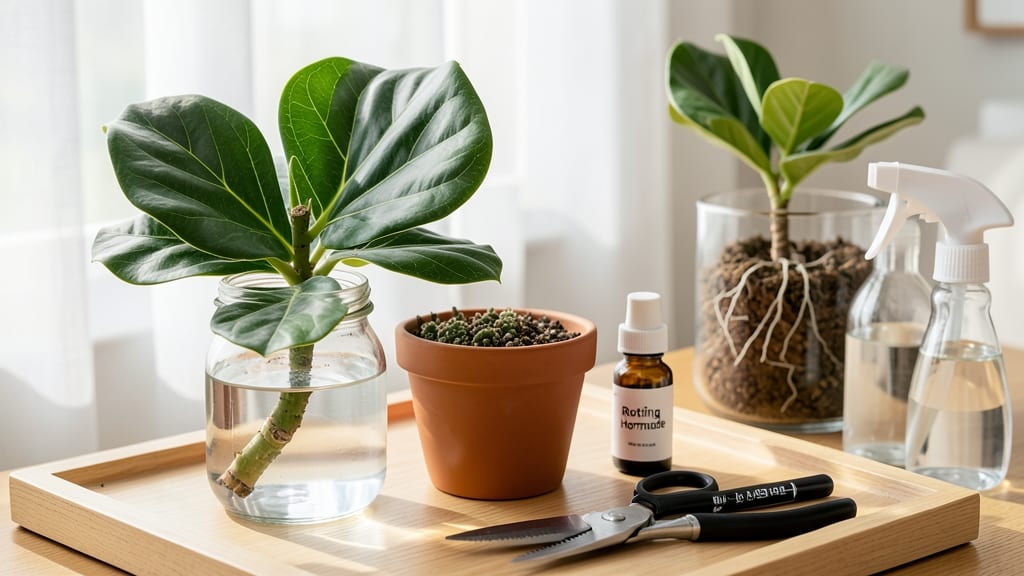
Fiddle leaf fig propagation starts with a single cutting that could grow into a stunning houseplant—fast roots are the secret to success. 🌱 I’ve propagated these beauties twice, and the second time I doubled my success rate by adjusting just a few key steps.
The right timing, clean tools, and a little patience make all the difference between a thriving new plant and a sad, slow-growing stem. You’ll need sharp pruning shears, a clean jar or pot, and either water or well-draining soil.
The easiest method is stem cuttings in water, where you’ll see roots in 2-4 weeks if conditions are right. Humidity is your friend here—think of a mini greenhouse with a plastic bag or clear container.
Temperature should stay between 65-75°F, and bright, indirect light keeps the cutting happy without scorching it. Once those roots hit 2-3 inches, it’s time to transplant into soil.
I’ve found that fiddle leaf figs root faster in water but often struggle when moved to soil—so, I recommend giving them a week of acclimation before full planting. The first few leaves might look different, but don’t worry; that’s normal as the plant adjusts. Common mistakes?
Overwatering (root rot is real), using dirty tools (bacteria kills cuttings), or picking the wrong stem (look for healthy, mature growth). With these tips, you’ll be growing new fiddle leaf figs in no time—no green thumb required.
📚 In This Guide
- What you need
- Instructions
- Tips and common mistakes
- Wrapping up and next steps
What you need
- ● Healthy fiddle leaf fig (Ficus lyrata) – Choose a mature plant with at least 3-4 healthy leaves and a stem 4-6 inches long.
- ● Clean, sharp pruning shears or scissors – Sterilize with rubbing alcohol to prevent infection.
- ○ Rooting hormone (optional but recommended) – A gel or powder like Rootone or Clonex to boost root growth.
- ● Water propagation: Clear glass or jar (wide-mouth for easy access).
- ● Room-temperature filtered or distilled water (change every 3-5 days).
- ● Soil propagation: Well-draining potting mix (e.g., cactus/succulent mix or perlite + peat blend).
- ● Small pots (3-4 inches in diameter) with drainage holes.
- ● Hydrogen peroxide (3%) – Dilute 1:10 with water to sterilize cuttings.
- ● Spray bottle – For misting soil-propagated cuttings.
- ● Plastic wrap or humidity dome – Creates a mini greenhouse for soil propagation.
- ● Grow lights or bright indirect sunlight – Supports faster rooting if natural light is limited.
Step-by-Step instructions for fiddle leaf fig propagation
Here’s how to grow new fiddle leaf figs quickly—whether you prefer water or soil.
🌱 Step 1: Select and Prepare Healthy Stems
Choose a stem with at least 3-4 nodes (those little bumps where leaves grow). I always pick stems just below a leaf—this is where roots will sprout fastest. Use clean, sharp scissors to cut 4-6 inches below the lowest leaf at a 45-degree angle. This prevents water from pooling and keeps the cut neat.
Let the stem dry for 1-2 hours before propagating. This callousing step prevents rot when you place it in water or soil. If you skip this, the cut end may turn mushy instead of growing roots. Place the stem on a paper towel in a dry spot while you prep everything else.
💧 Step 2: Root in Water (Fastest Method)
Fill a clean glass with room-temperature water and place the stem so only the nodes (not leaves) are submerged. I use a small vase or jar—just enough to cover the bottom 1-2 inches of the stem. Change the water every 3-5 days to prevent bacterial growth, which smells like rot.
Set the glass in bright, indirect light—no direct sun, or the water will overheat and kill the cutting. You’ll see tiny white roots in 2-4 weeks. Once roots reach 2-3 inches long, it’s ready for soil. I know it’s ready when roots fill the glass and look dense like a tiny underwater forest.
🪴 Step 3: Root Directly in Soil (Soil Method)
Moisten a well-draining potting mix until damp but not soggy. Dip the cut end in rooting hormone (optional but speeds things up) and plant the stem 2 inches deep in the soil. I use a small 4-inch pot for each cutting—just enough to hold the stem upright without wobbling.
Water lightly until the soil feels evenly moist, then place the pot in a humid environment (like a plastic bag with holes or a propagator). Keep the soil consistently damp—never soggy. Roots take 4-6 weeks to form, so be patient. You’ll know it’s working when new leaves appear on the top.
☀️ Step 4: Transition to Permanent Care
Once roots are established (either in water or soil), give the new plant 2 weeks of gentle care before regular maintenance. If rooted in water, transplant carefully—gently squeeze the glass to loosen roots before sliding it into the soil. Water lightly after transplanting to help it adjust.
Place the new fiddle leaf fig in bright, indirect light and wait 3-4 weeks before fertilizing. This gives it time to recover from the shock of propagation. You’ll see faster growth when you notice new leaves forming—this means the roots are strong and ready for regular care.
Tips & tricks for perfect fiddle leaf fig propagation
Here's what I learned after propagating dozens of fiddle leaf figs—these little tricks make all the difference between success and disappointment.
Cutting Technique: When making your 45-degree angle cut in Step 1, use a fresh razor blade or sharp scissors—dull tools crush the stem and slow down root growth. I press down firmly at the angle to expose more surface area for roots to form. The cut should look like a clean slice of pie, not a jagged tear. This simple step prevents that mushy, waterlogged end that kills so many cuttings.
Water Quality Matters: For the water method in Step 2, I swear by filtered or distilled water—tap water can contain chlorine or heavy metals that inhibit root growth. If you must use tap water, let it sit out uncovered for 24 hours first to allow chlorine to evaporate. I also add a few drops of hydrogen peroxide (3%) to the water every time I change it—it keeps the water fresh and prevents bacterial buildup that smells like rot.
Light Position: That bright, indirect light in Step 2 is critical, but most people get it wrong. Place your cutting on the east-facing window or about 2 feet back from a south-facing window. Direct sun will overheat the water and cook your cutting, while too little light means weak, leggy roots. I test light conditions by holding my hand near the glass—if it feels warm but not hot, you're in the sweet spot.
Transplant Timing: Don't rush transplanting your water-grown cuttings! Wait until roots are 2-3 inches long and fill the glass completely. I've seen people transplant too early, and the roots just fall apart when you try to move them. When transplanting in Step 4, gently squeeze the glass to loosen roots before sliding them into soil—this prevents root damage that can shock your new plant.
Pro Tips for Fiddle Leaf Fig Propagation
- Here's what I learned after propagating dozens of fiddle leaf figs—these little tricks make all the difference between success and disappointment.
- Cutting Technique: When making your 45-degree angle cut in Step 1, use a fresh razor blade or sharp scissors—dull tools crush the stem and slow down root growth.
- Water Quality Matters: For the water method in Step 2, I swear by filtered or distilled water—tap water can contain chlorine or heavy metals that inhibit root growth.
Frequently asked questions
Got questions about propagating your fiddle leaf fig? You’re not alone!
Here are some of the most common queries—and their answers—to help you grow new plants with confidence.
Can I propagate a fiddle leaf fig from a single leaf?
Unfortunately, no! Fiddle leaf figs cannot root from a single leaf cuttings—they need a stem with at least one node (the bump where leaves grow) to succeed. Stick to stem cuttings for the best results.
How long does it take for fiddle leaf fig cuttings to root?
In water, roots typically appear in 2–4 weeks, while soil propagation can take 4–8 weeks. Patience is key—keep humidity high and avoid overwatering. A slow start doesn’t mean failure!
Should I use water or soil for propagation?
Both work, but water lets you monitor root growth, while soil mimics natural conditions better. Water is beginner-friendly, but soil may reduce transplant shock later. Try both to see what suits your setup!
Why is my cutting rotting instead of rooting?
Overwatering or poor airflow are usually the culprits. Let the cutting dry slightly between water changes (every 3–5 days), and avoid tight containers. If the stem turns mushy, trim the rot and replant in fresh medium.
Can I propagate a fiddle leaf fig from a store-bought plant?
Yes, but only if the plant is healthy and disease-free. Avoid propagating from plants treated with growth inhibitors (common in retail). Choose a mature stem with 2–3 leaves for the best chance of success.
Wrapping up and next steps
Propagating your fiddle leaf fig is easier than you think—whether you choose water or soil, patience and care will reward you with stunning new plants! 🌱 With the right tools, timing, and a little love, you’ll soon be expanding your green family or sharing cuttings with fellow plant enthusiasts.
Ready to take the next step? Start with just one cutting and experiment—track your progress, refine your technique, and soon you’ll be a fiddle leaf fig propagation pro! 💚