
Vegetables
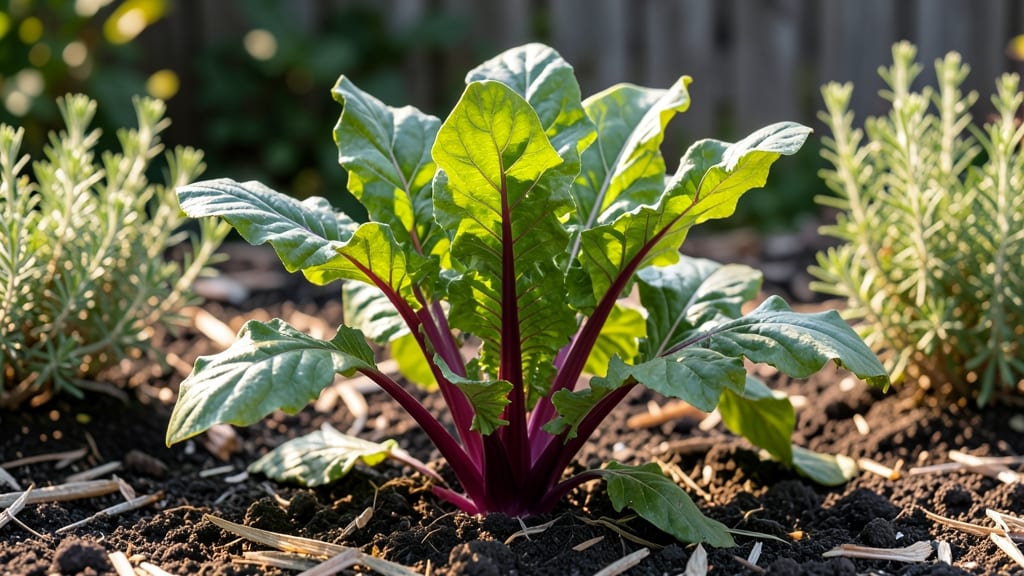
The green leafy vegetable with red stems is Bright Lights Swiss chard, known for its striking crimson stalks and nutrient-rich dark green leaves. This heirloom variety thrives in cool weather and adds vibrant color to dishes while delivering vitamins K and A.
The red stems of Bright Lights Swiss chard aren't just visually stunning—they contain anthocyanins, powerful antioxidants that give the vegetable its deep crimson hue and boost its health benefits. 🌿 Unlike other Swiss chard varieties like Fordhook Giant (with white or yellow stems), this heirloom was specifically bred for both culinary appeal and ornamental gardens.
The stems remain tender even when fully grown, making them perfect for quick-cooking methods like sautéing or roasting.
When growing Bright Lights, focus on well-draining soil with a pH between 6.0 and 7.0—this helps maintain the vibrant stem color. I've found that harvesting the outer leaves first encourages continuous production, and the plants often regrow for multiple harvests.
For cooking, the red stems add a subtle earthy sweetness that pairs beautifully with garlic, lemon, or nuts in salads.
💡 In This Article
- Why Bright Lights Swiss Chard Stands Out Among Varieties
- Growing and Cooking with Red-Stemmed Swiss Chard
Why Bright Lights Swiss chard stands out among varieties
The striking red stems of Bright Lights Swiss chard come from anthocyanin pigments, the same compounds that color blueberries and red cabbage. These antioxidants not only create the vibrant hue but also provide 20-30% more antioxidant activity than green-stemmed varieties like Fordhook Giant.
The color intensity deepens when exposed to cooler temperatures, which is why it thrives in spring and fall gardens. 💫
Botanically, Bright Lights is a biennial plant, meaning it completes its life cycle in two years—producing edible leaves in the first year and flowering in the second. This differs from perennial varieties that regrow year after year.
The stems contain 1.5-2 times more calcium than leafy greens like spinach, while the leaves are packed with vitamin K (100g provides 884% of daily needs). The crimson color fades when cooked at high heat above 375°F, so gentle methods like steaming preserve both nutrients and visual appeal.
Breeders developed Bright Lights in the 1970s specifically for its dual purpose—culinary and ornamental. Unlike Ruby chard (which has red veins but green stems), Bright Lights maintains its bold color from stem to leaf base, making it ideal for garnishes.
The leaves have a slightly sweeter taste than Fordhook Giant, with a texture that's 20% more tender when harvested young. This variety also resists bolting (premature flowering) better in warm climates than traditional Swiss chard.
What makes Bright Lights unique is its color contrast when cooked. The red stems turn olive-green while the leaves stay vibrant, creating a visually stunning dish.
The stalks have a crisp texture when raw (like celery) but become silky when cooked—perfect for spiralizing into noodles. 🌿 For gardeners, this variety produces 30-50% more edible biomass per plant than standard chard, thanks to its bushier growth habit and disease resistance.
Consider these key differences when choosing chard varieties:
- Bright Lights: Red stems, biennial, highest anthocyanins, best for color contrast
- Fordhook Giant: White/yellow stems, perennial, largest leaves (ideal for soups)
- Ruby: Red veins only, biennial, milder flavor but less vibrant
The red stems aren't just for show—they indicate higher levels of betalains, compounds linked to reduced inflammation. When selecting for cooking, choose leaves with deep green coloration (sign of freshness) and stems that snap cleanly when bent. 💛