
Pruning
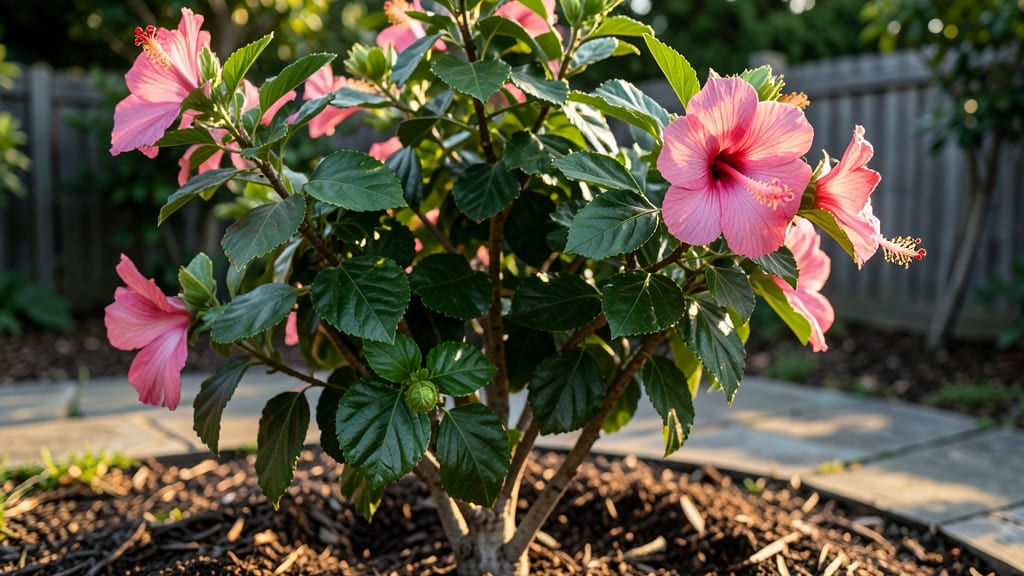
The hibiscus Rose of Sharon’s leaf tells the story of its health—yellowing, spots, or wilting mean it’s time to prune with purpose. ✂️ I’ve spent years watching these shrubs transform from ragged to vibrant green after a strategic trim, and the secret isn’t just cutting branches—it’s understanding why leaves behave the way they do.
The key is timing: prune late winter to early spring before new growth starts, or lightly after blooming to shape the plant. Diseased leaves? Snip them off immediately and sterilize your tools. Yellowing from overwatering? Let the soil dry between waterings.
These adjustments keep your Hibiscus thriving through hot summers and cold winters. By summer’s end, you’ll see shiny, disease-free foliage and bushier growth. The plant’s natural resilience kicks in when you remove stressed leaves, redirecting energy to strong new stems.
Think of pruning as a reset button for your Rose of Sharon’s health. Works for zones 4-9, though southern gardeners may need extra shade in peak heat. Here’s how to spot the difference between healthy and struggling leaves—and what to do about it.
📚 In This Guide
- What you need
- Instructions
- Tips and common mistakes
- Wrapping up and next steps
What you need
- ● Pruning shears: Bypass pruners (sharp, 6–8" blades) for clean cuts on small stems.
- ● Loppers: 20–24" bypass loppers for thicker branches (½"–1" diameter).
- ● Hand saw: Pruning saw with curved blade for stubborn, thick branches (1"–2"+).
- ● Disinfectant: 70% isopropyl alcohol or bleach solution (1 part bleach : 9 parts water) to sterilize tools between cuts.
- ● Garden gloves: Heavy-duty, cut-resistant gloves (e.g., Mechanix or leather) to protect hands.
- ○ Pruning sealant (optional but helpful): Tree wound dressing (like Tanglefoot Tree Wound Pruning Seal) for large cuts.
- ● Twine or zip ties: 4–6mm diameter to secure branches during pruning if needed.
- ● Bucket or trash bag: For collecting pruned leaves/branches (Rose of Sharon leaves can be composted!).
- ● Extension pole: For hard-to-reach branches (e.g., 6–10 ft telescoping pole with pruner attachment).
- ● Ladder: Sturdy, non-slip ladder (3–4 ft tall) for taller bushes (5+ ft).
- ● Marking spray: Non-toxic paint (e.g., Fiskars Bright Green) to mark cuts before pruning.
- ● Pruning saw with ratchet: For extra-large branches (2"+ diameter).
- ● Work vest or apron: To keep tools and hands organized.
- ● ✅ Know your Rose of Sharon’s age: Young plants (light pruning; mature bushes (>3 years) can handle hard pruning.
- ● ✅ Check the weather: Prune on a dry, cloudy day (avoid extreme heat or frost).
- ● ✅ Gather safety gear: Long sleeves/pants to avoid thorns and scratches.
- ● ✅ Review pruning goals: Decide if you’re shaping, rejuvenating, or removing dead wood.
Step-by-step pruning guide for Hibiscus 'Rose of Sharon' leaves
Here’s how I keep my Hibiscus syriacus thriving with strategic cuts—no guesswork, just results.
✂️ Step 1: Time Your Pruning for Maximum Growth
Prune Rose of Sharon in late winter or early spring, just as new buds form but before leaves emerge. This ensures you’re cutting back old growth while stimulating vigorous new shoots. I always wait until after the last frost date in my zone—cold snaps can stress fresh cuts.
If you miss the spring window, a light summer trim (after flowering) can still encourage bushier growth, but avoid heavy cuts then. The plant’s energy is focused on blooms, not recovery. Watch for swollen buds along stems—that’s your cue the plant’s ready for action.
✂️ Step 2: Remove Dead or Damaged Wood First
Start by inspecting each branch for brown, brittle, or hollow stems—these won’t recover. Use clean, sharp pruners (sterilized with rubbing alcohol) to make 45-degree cuts just above a healthy bud or lateral branch. I avoid cutting flush with the trunk; leaving a tiny stub prevents water from pooling and rotting the wound.
Look for suckers (shoots growing from the base) and crossing branches—these compete for energy. Remove them entirely at the base. If a branch is thicker than your thumb, it’s a candidate for thinning to improve airflow and sunlight penetration.
✂️ Step 3: Shape the Plant for Airflow and Light
Step back and visualize the plant’s natural form. Rose of Sharon blooms on current year’s growth, so I prune to open the center—this prevents dense, shaded interiors where diseases fester. Cut back one-third of the oldest stems to the ground to encourage fresh, flowering wood.
For a multi-stemmed shrub, aim to keep 3-5 strong branches per plant. If a branch is growing inward, trim it back to redirect energy outward. You’ll see new shoots emerging from the base within weeks—that’s your reward for thinning properly.
✂️ Step 4: Encourage Bushier Growth with Strategic Cuts
After removing dead wood, shorten the remaining branches by one-third to encourage branching. Cut just above a leaf node (the bump where leaves attach) to promote lateral growth. Avoid leaving stubs longer than ¼ inch—they invite disease.
For flowering stimulation, focus cuts on non-flowering stems—this redirects energy to produce more blooms next season. If your plant looks leggy, prune the top third of the tallest stems to force bushier growth lower down. You’ll notice new leaves forming within 2-3 weeks if conditions are right.
✂️ Step 5: Clean Up and Protect Wounds
After pruning, sterilize your tools again to prevent spreading pathogens. Remove all clippings and debris from the base—this reduces hiding spots for pests and fungi. I like to dip larger cuts in pruning sealant (optional but helpful in humid climates) to speed healing.
Water the plant deeply after pruning to reduce stress. Avoid fertilizing immediately—let the plant focus on root and shoot recovery for 4-6 weeks before adding nutrients. You’ll know it’s thriving when new growth appears within 3-4 weeks of pruning.
Tips & tricks for pruning Hibiscus 'Rose of Sharon'
Between us, these little details make all the difference between a struggling shrub and a showstopper. Here's what nobody tells you about pruning Hibiscus 'Rose of Sharon' like a pro.
Timing is Everything: The late winter/early spring window is non-negotiable for serious blooms. I've learned this the hard way after seeing plants struggle when pruned too early—wait until those swollen buds appear, but before leaves emerge. This precise timing ensures you're cutting back old growth while preserving energy for new shoots. If you miss spring, that light summer trim after flowering is your safety net, but don't go heavy—think "haircut" not "makeover."
Tool Prep Matters: Your pruners aren't just tools—they're your plant's health partners. Sterilize them with rubbing alcohol before AND after pruning to prevent spreading diseases between cuts. I use a small bottle of 70% isopropyl alcohol and wipe them down between every major cut. Also, make sure your blades are sharp—dull tools crush stems instead of making clean cuts, which invites infection. A quick test: if you're struggling to cut through a pencil with your pruners, they need sharpening.
Visual Cues for Perfect Cuts: When making those 45-degree cuts above buds, look for the "bud eye" (the tiny bump where new growth will emerge). The cut should be just above this, leaving a small stub that's less than ¼ inch. For thicker branches, aim to cut at a slight angle to prevent water from pooling. I like to visualize an imaginary line from the bud eye to the branch—this helps me position the cut perfectly every time. The goal is to encourage outward growth while maintaining the plant's natural shape.
Recovery Strategy: The 4-6 week recovery period after pruning is sacred—don't rush it. I've seen gardeners eager to fertilize immediately, only to stress their plants further. Instead, focus on deep watering and proper cleanup. Remove ALL clippings and debris from the base—these can harbor pests and diseases. In humid climates, consider that optional pruning sealant for larger cuts, but only after everything else is clean and dry. You'll know you've done it right when you see those first fresh leaves emerging within 3-4 weeks.
Pro Tips for Hibiscus Rose Of Sharon Leaf
- Between us, these little details make all the difference between a struggling shrub and a showstopper.
- Timing is Everything: The late winter/early spring window is non-negotiable for serious blooms.
- Tool Prep Matters: Your pruners aren't just tools—they're your plant's health partners.
Frequently asked questions
Got questions about keeping your Hibiscus syriacus (Rose of Sharon) thriving with the right leaf care and pruning? Here are some of the most common queries—plus quick answers to keep your plant happy!
When is the best time to prune Rose of Sharon leaves for optimal growth?
The ideal window is late winter or early spring (before new growth starts) to remove dead or weak branches. You can also do a light pruning in summer to shape the plant—but avoid heavy cuts then, as it may stress the shrub. Pro tip: Never prune in fall, as it can encourage tender new growth that won’t survive winter!
How do I know if I’m over-pruning my Rose of Sharon’s leaves?
Watch for yellowing leaves, sparse blooms, or stunted growth—these are red flags! If you’ve cut back more than 1/3 of the plant’s foliage in one session, you’ve likely gone too far. Rose of Sharon is resilient but benefits from gradual shaping. Fix it: Skip pruning for a year and focus on watering/fertilizing to recover.
Can I use Rose of Sharon leaves for tea, or are they safe to consume?
While the flowers are edible (and delicious in teas!), the leaves contain mild toxins (like cyanogenic glycosides) and aren’t recommended for consumption. Stick to floral teas or culinary uses—like hibiscus flower in drinks—and admire the leaves for their glossy green beauty!
Why are my Rose of Sharon leaves turning brown or crispy at the edges?
Brown, crispy edges usually signal underwatering or low humidity. Check soil moisture (it should be evenly moist but not soggy), and mulch the base to retain moisture. If pests (like spider mites) are the culprit, spray with water or use neem oil. Bonus: A light layer of mulch also protects roots in winter!
What’s a good alternative if I don’t want to deal with pruning Rose of Sharon leaves?
If maintenance feels high, consider low-maintenance shrubs like:
- Butterfly Bush (Buddleia) – Drought-tolerant and blooms prolifically.
- Spirea (Spiraea) – Hardy, colorful, and thrives with minimal pruning.
- Abelia – Glossy leaves and fragrant flowers with easy upkeep.
Wrapping up and next steps
Mastering the art of pruning your Hibiscus Rose of Sharon ensures vibrant blooms and a thriving plant year after year! 🌿 With the right tools, timing, and techniques—like selective pruning and deadheading—you’ll keep your shrub lush and healthy.
Remember, patience and consistency are key, especially when tackling those thorny stems or winter prep.
Ready to take your gardening skills to the next level? Grab your pruners, mark your calendar, and start with a small section this weekend. Your Rose of Sharon will thank you with stunning flowers and effortless growth!