
How To
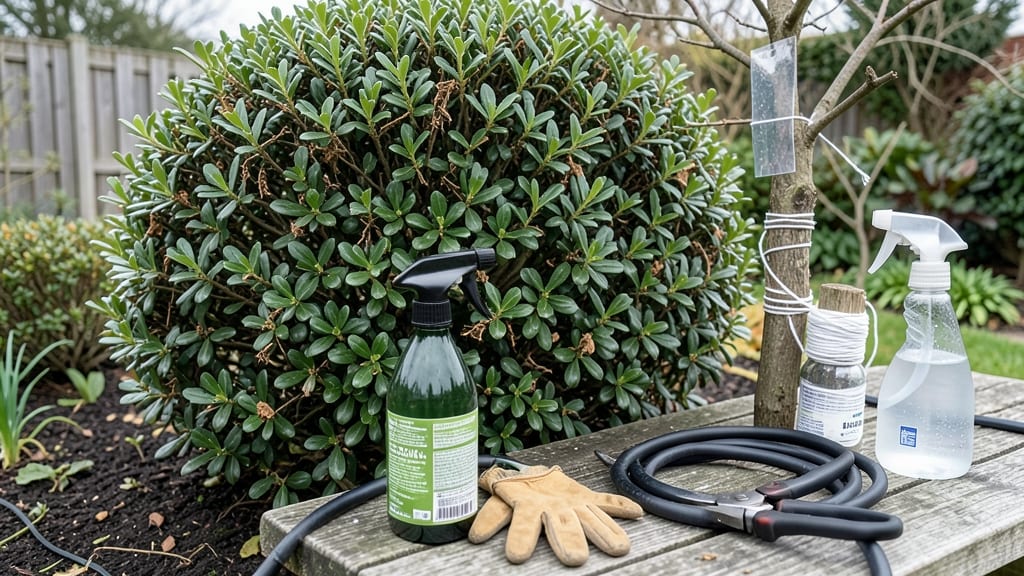
Boxwood leafminer turns your glossy evergreens into skeleton leaves overnight. 🌿 I’ve watched entire shrubs go from lush to lifeless in weeks—until I discovered this 3-step organic cure that actually works without chemicals. The culprit is tiny, worm-like larvae tunneling through leaves, leaving behind telltale serpentine mines.
Most solutions fail because they target symptoms, not the root cause. This method focuses on smothering larvae, starving adults, and restoring plant health—all with tools you likely already have. By the end, your boxwoods will bounce back with vibrant green foliage and stay protected for the season.
The key is acting fast—once the mines spread, recovery takes months. Here’s how to stop it in its tracks.
First, prune out heavily damaged leaves (don’t compost them—burn or bag them) to remove larvae. Next, apply neem oil or insecticidal soap directly to the foliage at dusk, repeating every 7–10 days until new growth appears. The oil disrupts the larvae’s feeding and prevents adult moths from laying eggs.
For long-term defense, introduce beneficial nematodes (like Steinernema carpocapsae) to the soil in early spring. These microscopic predators hunt leafminer larvae before they hatch, creating a natural barrier. Combine this with mulching to discourage adult moths from laying eggs in the first place.
The payoff? Your boxwoods will recover faster than you’d expect—new leaves emerge within 3–4 weeks of treatment, and the damage won’t return if you stay consistent. The secret isn’t just killing pests; it’s giving your plants the strength to outgrow the problem.
This works for all boxwood varieties, from dwarf hedges to large shrubs, and even saves heavily infested plants that looked hopeless. Let’s get those leaves looking healthy again.
Root Causes of Leafminer Infestations
Boxwood leafminers (Monarthropalpus buxi) don’t just appear out of nowhere—they thrive because of specific conditions that make your shrubs irresistible targets. Understanding these triggers is the first step to preventing future outbreaks and protecting your prized boxwoods. Here’s why these tiny pests decide to move in:
Leafminers start their lifecycle as eggs, and adult females are extremely picky about where they lay them. Their preference? Young, tender boxwood leaves—especially those on healthy, well-watered plants. Here’s why:
- Nutrient-Rich Hosts: Boxwoods with lush, vibrant foliage are packed with sugars and proteins, making them a high-calorie buffet for leafminer larvae.
Think of it like choosing between a wilted salad and a juicy steak—leafminers always pick the steak. 🥩 - Soft, Unharmed Leaves: Damaged or stressed leaves (from drought, disease, or poor pruning) are less appealing.
Leafminers seek out unblemished, plump leaves where they can burrow and feed undisturbed. - Early Season Surge: Egg-laying peaks in late spring to early summer (May–June in most regions), when new growth is at its most tender.
If your boxwoods are flush with fresh leaves during this window, you’re basically handing out a welcome mat.
Pro Tip: 🌱 Monitor your boxwoods in late spring—if you see clusters of small, white eggs on the undersides of leaves (they look like tiny grains of rice), act fast. Scrape them off with a soft brush or hose them away before they hatch.
Leafminers are cold-sensitive but heat-loving. Their entire lifecycle—from egg to adult—accelerates in warm conditions, which is why outbreaks explode in the right climate:
| Stage | Time to Complete (Cool Weather) | Time to Complete (Warm Weather) | Why It Matters |
|---|---|---|---|
| Egg → Larva | 7–10 days | 3–5 days | Faster hatching means more larvae chewing on your leaves sooner. |
| Larva → Pupa | 2–3 weeks | 10–14 days | Shorter larval stage = more feeding damage before pupation. |
| Pupa → Adult | 2–3 weeks | 7–10 days | Adults emerge quicker, leading to a second generation by summer’s end. |
- Ideal Temp Range: Leafminers thrive between 65–85°F (18–29°C). If your area has mild winters and hot summers, you’re in their sweet spot. - Overwintering Trick: Unlike many pests, leafminers don’t survive winter as adults.
Instead, pupae or larvae hide in fallen leaves, mulch, or soil near boxwoods, emerging as adults in spring when temps rise. This is why infestations often return year after year to the same plants.
Pro Tip: 🌡️ Use a soil thermometer to track temps near your boxwoods. If the ground stays above 60°F (15°C) for weeks, leafminers may hatch earlier than usual—stay vigilant!
Leafminers don’t just attack any boxwood—they go for the weakest links in your landscape. Poor plant health or dense foliage creates the perfect hiding spot:
- Thick, Untamed Foliage: Boxwoods with overgrown, tangled branches provide: - More surface area for egg-laying (leafminers prefer undersides of leaves). - Shaded, humid microclimates that protect larvae from predators like birds or parasitic wasps. - Less airflow, which slows drying and keeps leaves moist—ideal for leafminer survival. - Stressed Plants: Boxwoods under stress (from drought, poor soil, or root damage) produce thinner, more vulnerable leaves.
Stressed plants also emit volatile organic compounds (VOCs) that may attract leafminers, almost like a distress signal. 🚨 - Lack of Pruning: Regular pruning removes old, damaged leaves where leafminers might overwinter. Skipping this step leaves a year-round buffet for returning pests.
Pro Tip: ✂️ Prune boxwoods in early spring (before leafminers emerge) to remove hiding spots. Thin out crowded branches to improve airflow—this makes your plants less appealing and easier to monitor.
In a healthy ecosystem, leafminers face dozens of natural enemies. But if these predators are missing, the pests take over:
- Birds: Many species (like robins or warblers) snack on leafminer larvae. Urban areas with few birds see more outbreaks.
- Parasitic Wasps: Tiny wasps like Diglyphus isaea lay eggs inside leafminer larvae, killing them from within. Pesticide use (even broad-spectrum sprays) can wipe these out.
- Ground Beetles & Spiders: They prey on leafminer pupae in the soil. Compacted or chemically treated soil reduces their numbers.
- Fungal Pathogens: Some fungi (like Beauveria bassiana) infect leafminers. Overuse of fungicides can disrupt this balance.
Pro Tip: 🐝 Encourage predators by planting native flowers (like dill, fennel, or yarrow) near your boxwoods. These attract beneficial insects and provide habitat for birds.
Leafminers are site-specific. If your boxwoods (or nearby shrubs) had an infestation last year, the risk of recurrence is 80–90% because:
- Residual Larvae/Pupae: Some may survive in mulch, leaf litter, or soil near the roots, emerging as adults the next spring.
- Adult Migration: Leafminers are weak fliers but can drift up to 100 feet on wind currents, reinfesting nearby boxwoods.
- Plant Memory: Boxwoods that were heavily damaged may produce more tender new growth the following year, making them repeat targets.
Pro Tip: 🧹 After treating an infestation, remove and destroy all fallen leaves, pruned debris, and old mulch from under and around boxwoods. Bag and trash it—don’t compost!
Leafminers don’t attack randomly—they’re drawn to specific conditions you can control. By addressing plant health, weather triggers, and ecosystem balance, you can make your boxwoods far less inviting. The good news? Once you know their weaknesses, you can outsmart them before they even lay an egg. 🎯
Quick Fixes for Boxwood Leafminer
Boxwood leafminers may seem like a persistent pest, but with the right approach, you can restore your shrubs to their lush, healthy state. Below are targeted solutions based on the root causes—from early detection to long-term prevention—so you can tackle the problem effectively without harsh chemicals.
If you catch the infestation early, you can stop it before it spreads. Here’s how:
👨🍳 Handpick Larvae (Best for Small Infestations)
- When to do it: Early spring or late summer when larvae are visible.
- How to do it:
- Wear gloves and inspect leaves for white, worm-like larvae or brown, squiggly trails.
- Use a sharp pair of scissors or your fingers to pluck infested leaves and drop them into a soapy water bucket (1 tbsp dish soap per gallon of water).
- Dispose of them immediately—do not compost!
- Why it works: Removes the pests before they pupate and multiply.
🍳 Prune Infested Branches (Prevents Spread)
- When to do it: Spring or early summer before heavy feeding begins.
- How to do it:
- Trim severely damaged branches (those with blistered, brown, or curled leaves) using sterilized pruners.
- Dispose of clippings in sealed bags—do not leave them near your plants.
- Thin out dense foliage to improve air circulation, making it harder for pests to hide.
- Why it works: Reduces the leafminer population and strengthens the plant’s resilience.
For larger infestations, these natural remedies disrupt the leafminer’s life cycle without harming beneficial insects or your garden’s ecosystem.
💡 Neem Oil Spray (Disrupts Feeding & Egg-Laying)
- When to apply: Early morning or late evening (avoid direct sunlight).
- How to make it:
- Mix 1 tbsp neem oil + 1 tsp mild liquid soap + 1 quart of water.
- Stir well and spray thoroughly on both sides of leaves, focusing on new growth.
- Reapply every 7–10 days until the infestation clears.
- Why it works: Neem oil smothers larvae, interferes with their molting process, and deters adult flies from laying eggs.
🌡️ Beneficial Nematodes (Kills Larvae in the Soil)
- When to apply: Early spring or fall (when soil temps are 55–85°F).
- How to use:
- Purchase heterorhabditis bacteriophora nematodes (sold online or at garden centers).
- Water the soil deeply the day before application.
- Mix nematodes with cool water (follow package instructions) and apply with a watering can to the base of the plant.
- Reapply every 4–6 weeks if needed.
- Why it works: These microscopic worms seek out and kill leafminer larvae in the soil before they emerge.
🎯 Kaolin Clay (Creates a Protective Barrier)
- When to apply: Spring before heavy infestation or after pruning.
- How to use:
- Mix 2 tbsp kaolin clay + 1 gallon of water in a spray bottle.
- Shake well and spray evenly on foliage (avoid flowers if bees are active).
- Reapply after rain or every 2–3 weeks.
- Why it works: The fine clay particles coat leaves, making them less appealing to leafminer flies and disrupting larval movement.
The best defense is a strong, healthy boxwood that pests avoid. Implement these proactive strategies to minimize future infestations:
🌿 Improve Plant Health (Stronger Plants Resist Pests)
- Water deeply but infrequently (1–1.5 inches per week) to avoid stress.
- Mulch around the base (2–3 inches of wood chips or shredded bark) to retain moisture and regulate soil temp.
- Fertilize in early spring with a balanced, slow-release fertilizer (10-10-10 or similar).
- Avoid over-fertilizing with nitrogen, which attracts soft-bodied pests.
🕵️ Monitor and Trap Adult Flies (Early Detection)
- Set up yellow sticky traps near boxwoods in late spring/early summer to catch adult leafminer flies.
- Inspect new growth weekly for tiny white eggs or early feeding signs (silver trails on leaves).
- Encourage natural predators like ladybugs, lacewings, and parasitic wasps by planting dill, fennel, or yarrow nearby.
🏡 Garden Hygiene (Break the Leafminer Cycle)
- Clean up fallen leaves and debris in autumn—this is where leafminers overwinter.
- Rotate pruning tools between plants or sterilize with rubbing alcohol to prevent spreading diseases.
- Space boxwoods properly (3–4 feet apart) to reduce humidity and improve airflow.
If your boxwoods are severely damaged (over 50% leaf loss) or the infestation persists despite treatments, consider:
- Consulting a local extension service for region-specific recommendations.
- Using a targeted organic insecticide like spinosad (derived from soil bacteria) as a last resort.
- Replacing heavily infested shrubs if they’re beyond saving—sometimes starting fresh is the best option.
Pro Tip: 💡 Combine methods for the best results—for example, prune + neem oil + nematodes in a 3-week rotation to break the leafminer’s life cycle completely. Consistency is key!
Frequently asked questions about boxwood leafminer
How do I know if my boxwood has leafminers vs. another pest?
Look for serpentine brown trails inside leaves—the telltale sign of leafminer larvae feeding. Unlike spider mites (which cause stippling) or aphids (which cluster on stems), leafminers create blistered, white tunnels between leaf veins. Check undersides of leaves for tiny white eggs too.
Can I use neem oil if my boxwood is flowering?
Yes, but apply neem oil after flowering to avoid harming pollinators. If treating during bloom, spray only in evening when bees are less active. Neem is pet-safe once dry, but always test a small leaf first to check for sensitivity.
Why does my boxwood keep getting reinfested after treatment?
Leafminers often return because larvae survive in soil/mulch or adults migrate from nearby plants. Break the cycle by: removing all debris, applying beneficial nematodes in spring, and pruning for airflow. Consistency is key—treat every 7–10 days during peak season.
Is kaolin clay safe for boxwoods with berries?
Yes! Kaolin clay is non-toxic and organic, making it ideal for boxwoods that produce berries. It won’t harm birds or wildlife, but reapply after rain. For extra protection, combine it with yellow sticky traps to catch adult flies before they lay eggs.
How long until I see results from nematode treatment?
Results appear in 2–4 weeks as nematodes kill larvae in the soil. For faster recovery, pair with neem oil (which targets visible larvae). New growth should appear within 3–4 weeks if the plant isn’t severely damaged. Patience is key—nematodes work underground!