
Vegetables
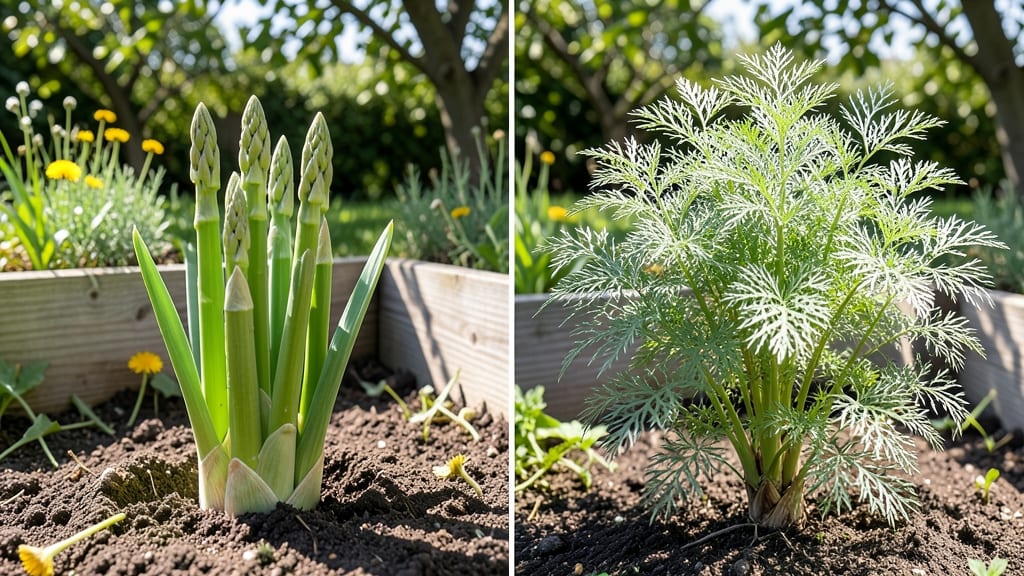
Asparagus isn't classified as a leafy green—it's a flowering perennial shoot with edible stems, not leaves. Its botanical structure as Asparagus officinalis sets it apart from true leafy vegetables like spinach or kale.
Asparagus belongs to the lily family, where its edible parts are actually the spear-shaped shoots that emerge from the ground before leaves develop. 🌱 Unlike leafy greens that provide broad, flat surfaces for photosynthesis, asparagus stores nutrients in its thick stems.
This distinction matters in cooking too—while spinach wilts in minutes, asparagus holds its shape when roasted or grilled. Many home gardeners confuse the two because both grow in spring, but their growth habits reveal their true botanical identities.
For example, when you harvest asparagus, you're cutting the stem just above the soil line, while leafy greens are picked by removing entire leaves. This fundamental difference affects how they're prepared and their place in meals—think of asparagus as a hearty side rather than a salad base.
Understanding this helps you pair it correctly with dishes that complement its unique texture and flavor profile.
💡 In This Article
- Botanical Classification: Why Asparagus Isn’t a Leafy Green
- Nutritional and Culinary Comparison: Asparagus vs. Leafy Greens
Botanical classification: why asparagus isn’t a leafy green
Asparagus belongs to the Asparagaceae family, specifically the species Asparagus officinalis, and its edible parts are actually immature shoots rather than leaves. These shoots emerge from the ground in spring, growing upward toward sunlight before leaves appear.
The thick, fibrous stems store nutrients like starch and fiber, giving asparagus its firm texture and slightly woody bite when overcooked. True leafy greens, like spinach or kale, have broad, flat leaves designed for maximum photosynthesis, while asparagus prioritizes vertical growth to reach light quickly. 🌱
The key difference lies in their growth patterns: asparagus is a geophyte, meaning it stores nutrients underground in rhizomes (thick roots) before shooting upward. This is why harvesting asparagus involves cutting the stem just above soil level—you're removing the shoot, not leaves.
Leafy greens, however, grow horizontally, spreading their leaves to capture sunlight. Even when asparagus develops leaves later in the season, they're small and scale-like, not the broad, nutrient-rich leaves of greens like Swiss chard.
Botanically, asparagus is classified as a vegetable because its edible portion is the stem, not the leaf. This distinction matters in cooking: asparagus requires higher heat (400-450°F) to soften its fibrous structure, while leafy greens wilt at 350°F or less.
The plant's entire lifecycle—from underground rhizomes to above-ground shoots—reflects its evolutionary adaptation to thrive in temperate climates where rapid spring growth is essential for survival. 🌿
Another clue is asparagus's perennial nature: it regrows from the same root system year after year, unlike annual leafy greens that complete their lifecycle in one season. This persistence explains why asparagus fields can produce harvests for decades, while greens like arugula must be replanted annually.
The plant's classification as a monocotyledon (like lilies) further separates it from dicotyledon leafy greens, which have two seed leaves rather than one.
For home gardeners, this botanical difference affects cultivation: asparagus requires 2-3 years to establish before full harvest, while leafy greens like lettuce mature in 30-60 days. The shoots' upward growth also means they need staking or support to prevent snapping in wind, a trait absent in sprawling leafy greens.
Understanding these structural differences helps explain why asparagus behaves so differently in the kitchen and garden. ✨
Consider this visual comparison: when you snap asparagus, you'll see the hollow center where nutrients were transported upward. Leafy greens, by contrast, have vascular bundles spread throughout their broad leaves. This internal structure is why asparagus holds its shape when roasted, while greens collapse into a pile of wilted leaves.
The botanical truth is clear—what we call "asparagus" is a shoot, not a leaf. 🌟