
Trees
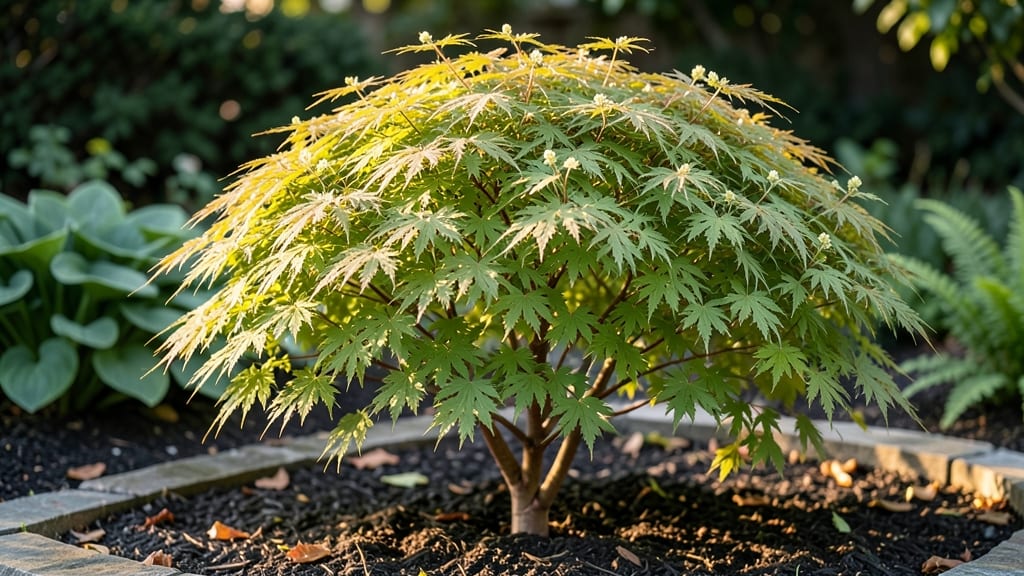
The Japanese maple laceleaf’s delicate, feathered foliage turns every garden corner into a living watercolor. 🌿 I’ve grown mine for five years now, and its ethereal branches—even in winter—make it the star of my shade garden.
The secret to its success? Mimicking its natural woodland habitat with the right soil, water, and light balance.
This tree thrives in partial shade, where morning sun warms the leaves gently but afternoon shade prevents leaf scorch. Well-draining, slightly acidic soil (think 6.0–6.5 pH) keeps roots happy, while consistent moisture—especially in the first two years—prevents brittle branches.
Mulch helps retain moisture and insulates roots during cold snaps, which is critical for hardiness zones 5–8.
Pruning becomes a creative act in late winter or early spring, shaping its lace-like branches to cascade dramatically. A light hand avoids stressing the tree, and removing dead wood keeps it vibrant.
With proper care, your laceleaf will reward you with spring’s pink blush, summer’s chartreuse glow, and fiery autumn hues—all without the high-maintenance fuss of some ornamentals.
Cold hardiness is its only real challenge: young trees need winter protection in zones 5–6, while mature specimens handle frost beautifully. The payoff? A tree that feels like a living sculpture, transforming your garden into a serene Japanese-inspired retreat year-round.
📚 In This Guide
- What you need
- Instructions
- Tips and common mistakes
- Wrapping up and next steps
What you need
- ● Japanese Maple Laceleaf Tree: 1–3 saplings (depending on desired spacing; minimum 6–10 feet apart for mature growth)
- ● Size: 1–3 gallon containers (for established trees) or bare-root seedlings (for new plantings)
- ● Well-draining soil: Mix of 50% acidic loam (pH 5.0–6.5) + 50% organic matter (compost, peat moss, or leaf mold)
- ○ Optional: Add 1–2 inches of pine bark fines for extra acidity and aeration.
- ● Mulch: 2–3 inches of wood chips or pine straw (keeps roots cool and retains moisture)
- ● Fertilizer: Slow-release acidic fertilizer (e.g., 10-10-10 or 8-3-9 with micronutrients like iron and manganese)
- ● Application: Sprinkle ½ cup per tree in early spring and fall.
- ● Planting tools: Trowel or small shovel
- ● Garden gloves (to protect hands from thorns on some cultivars)
- ● Watering can or hose with a gentle spray nozzle
- ● Location prep: Sunlight: Partial shade (4–6 hours of dappled sun/day); avoid harsh afternoon sun.
- ● Space: 10–15 feet of clearance for mature height (some varieties reach 20+ feet!).
- ○ Optional (but helpful!): Staking kit (for young trees in windy areas)
- ● Pruning shears (for shaping and removing dead branches)
- ● pH test kit (to monitor soil acidity)
How to grow and care for a Japanese maple laceleaf tree
This stunning tree thrives with the right conditions—here’s how to nurture its delicate foliage year after year.
🪴 Step 1: Choose the Perfect Planting Spot
Japanese maple laceleaf (Acer palmatum 'Dissectum') needs partial shade—morning sun and afternoon shade in hot climates, or dappled light all day in cooler regions. Avoid full sun, which scorches its delicate leaves, or dense shade, which weakens growth. I always test the spot by observing how other shade-loving plants like hostas or ferns thrive there.
Dig a hole twice as wide as the root ball but only as deep as the container’s drainage holes. The tree’s root flare (where roots meet the trunk) should sit 1-2 inches above ground level—burying it too deep suffocates the roots. Amend the native soil with 2-3 inches of organic compost mixed into the bottom of the hole for better drainage.
☀️ Step 2: Plant with Gentle Care and Mulch Properly
Remove the tree from its container and loosen any circling roots with your fingers—Japanese maples hate root-bound stress. Place it in the hole so the root flare is visible, then backfill with native soil mixed with compost. Water deeply to settle the soil, then top with 3-4 inches of mulch (avoid wood chips near the trunk to prevent rot).
I like to water immediately after planting, then again in 3-5 days to encourage root establishment. The soil should feel moist but not soggy—think of a wrung-out sponge. Avoid heavy foot traffic around the area for at least 2 weeks to let roots acclimate without disturbance.
💧 Step 3: Water Deeply but Infrequently
Japanese maples are drought-tolerant once established, but young trees need consistent moisture—about 1 inch of water per week during the growing season. Water deeply at the base (not overhead) to encourage deep root growth. I use a soaker hose for 20-30 minutes to avoid wetting the foliage, which can invite fungal diseases.
Check moisture by sticking your finger 2 inches into the soil—if it’s dry, water again. Overwatering is worse than underwatering; yellowing leaves often signal root rot. In winter, reduce watering to once every 2-3 weeks unless temperatures drop below 10°F, then keep soil slightly moist to prevent desiccation.
✂️ Step 4: Prune for Structure and Health
Prune in late winter or early spring before new growth begins, removing dead, crossing, or weak branches first. Japanese maples respond well to shaping, so I lightly trim leggy stems to encourage bushier growth. Always use clean, sharp pruners and sterilize them with rubbing alcohol between cuts to prevent disease.
Avoid heavy pruning—never remove more than 25% of the canopy in one season. The laceleaf’s delicate branches are prone to sunburn if exposed too suddenly. After pruning, apply a balanced fertilizer (10-10-10) in early spring to support new growth, but skip fertilizing in fall or winter.
🌿 Step 5: Protect and Maintain Year-Round
In winter, wrap young trees (under 3 years old) with burlap or frost cloth to shield them from harsh winds and salt spray if you live in a coastal area. Mature trees handle cold well but may need snow removal from branches to prevent breakage. I gently brush off accumulation with a broom, never shake the tree.
Watch for pests like aphids or spider mites, which love the tender new growth. Spray with neem oil if you spot sticky residue (honeydew) or webbing. The laceleaf’s vibrant foliage is its signature—if leaves turn dull or yellow, it’s often a sign of iron deficiency, which you can correct with a chelated iron supplement applied in early spring.
Tips & tricks for perfect Japanese maple laceleaf care
Real talk: The difference between a thriving laceleaf maple and one that struggles often comes down to these small but critical details I wish I'd known sooner.
Soil Preparation: The 2-3 inches of organic compost in Step 1 isn't just about drainage—it's about creating the perfect air-to-soil ratio these delicate roots crave. I've seen laceleafs planted in pure native soil wither because the roots couldn't breathe properly. For clay-heavy soils, mix in 1 part perlite to 3 parts compost to improve aeration without compromising moisture retention. The key is making that planting hole feel like a cozy nest for the roots.
Mulching Strategy: That 3-4 inches of mulch in Step 2 serves two purposes: temperature regulation and moisture retention. I've learned the hard way that wood chips too close to the trunk can trap moisture and cause rot—always maintain a 2-inch gap between mulch and trunk. For extra protection in winter, I top the mulch with a 1-inch layer of straw to insulate against temperature swings. This simple layer can mean the difference between winter survival and spring revival.
Watering Wisdom: The 20-30 minutes with a soaker hose in Step 3 isn't arbitrary—it's about achieving 6-8 inches of moisture penetration per watering. I test this by pushing a long screwdriver into the soil after watering; if it comes out dry, I extend the time. The 2-inch soil check is your best friend—if you're watering more frequently than needed, you're likely creating the perfect conditions for root rot rather than proper hydration.
Pruning Precision: When pruning in Step 4, I focus on making cuts just above a leaf node at a 45-degree angle—this encourages faster healing and reduces the risk of disease entry. For the 25% canopy rule, I mentally divide the tree into quadrants and never remove more than one quadrant's worth of growth in a single session. The laceleaf's branches are more fragile than they appear, and aggressive pruning can lead to sunburned foliage that looks like it's been scalded.
Pro Tips for Japanese Maple Laceleaf
- Real talk: The difference between a thriving laceleaf maple and one that struggles often comes down to these small but critical details I wish I'd known sooner.
- Soil Preparation: The 2-3 inches of organic compost in Step 1 isn't just about drainage—it's about creating the perfect air-to-soil ratio these delicate roots crave.
- Mulching Strategy: That 3-4 inches of mulch in Step 2 serves two purposes: temperature regulation and moisture retention.
Frequently asked questions
Got questions about your Japanese Maple Laceleaf? You’re not alone! Here are answers to the most common queries—from planting to pruning and everything in between.
How fast does a Japanese Maple Laceleaf grow?
Acer palmatum ‘Dissectum’ grows at a moderate pace, typically adding 12–24 inches per year under ideal conditions. In the wild, it may take 10–20 years to reach maturity (15–25 feet tall), but container-grown specimens grow slower. Patience pays off—its delicate foliage is worth the wait!
Can I plant a Japanese Maple Laceleaf in full sun?
While it tolerates morning sun, this variety thrives best in partial shade (4–6 hours of filtered light daily). Full sun can scorch its thin leaves, especially in hot climates. For optimal color and health, plant it where it gets dappled shade (e.g., under taller trees or on the east side of your home).
How cold-hardy is the Japanese Maple Laceleaf?
This cultivar handles USDA Zones 5–8, surviving winter temps as low as -20°F (-29°C). However, its delicate branches may suffer damage in harsh winters. To protect it:
Prune in late winter or early spring (before bud break) to avoid sap loss. Use sharp, sterilized tools and make cuts just outside the branch collar. Avoid heavy pruning—this tree’s beauty lies in its natural, airy form. For shaping, focus on:
If your area lacks shade or has hot summers (Zones 9+), consider these low-maintenance alternatives with similar elegance:
For dry climates, group your laceleaf with mulch and drip irrigation to retain moisture.
When and how should I prune a Japanese Maple Laceleaf?
What are some alternatives if my climate is too hot or dry?
Tree
Why It Works
Care Level
Japanese Maple ‘Bloodgood’
Darker foliage, more heat-tolerant, and upright growth.
Moderate
Katsura Tree (Cercidiphyllum)
Fragrant foliage, handles heat better, and has a weeping habit.
Low
Smokebush (Cotinus)
Drought-resistant, colorful foliage, and thrives in full sun.
Very Low
Wrapping up and next steps
The Japanese Maple Laceleaf isn’t just a tree—it’s a living masterpiece that brings artistic beauty and seasonal charm to any garden. Whether you’re drawn to its delicate foliage, vibrant fall colors, or graceful form, this tree promises year-round inspiration with minimal fuss.
Ready to transform your outdoor space? Start by selecting the perfect spot, gathering your supplies, and planting with care—your future shimmering canopy awaits! 🌿✨
- Next step: Sketch a planting plan or browse nurseries for your ideal Japanese Maple Laceleaf variety.
- Pro tip: Tag a friend who loves gardening—they’ll thank you for the eye-catching addition!