
Vegetables
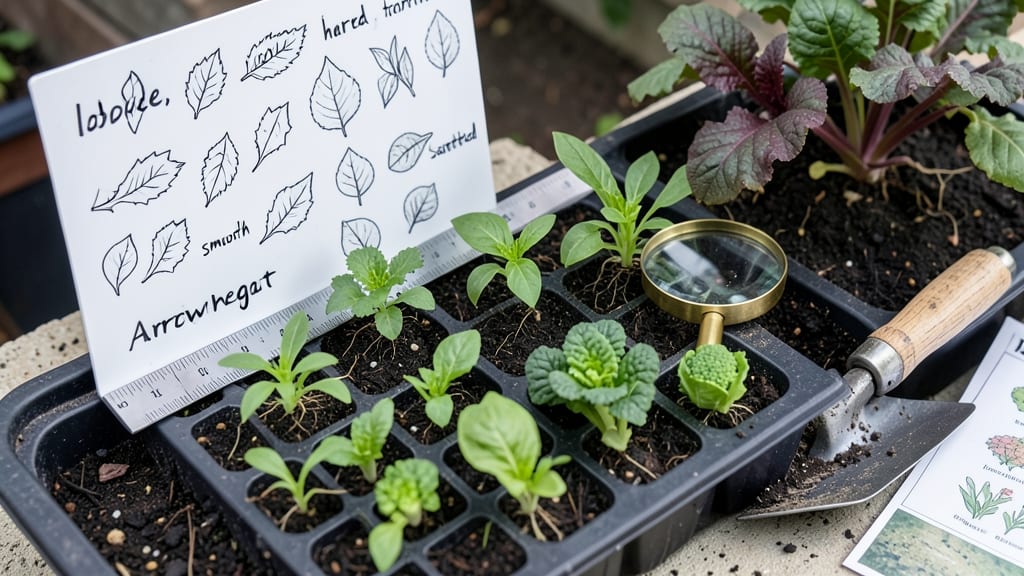
The leaf shape vegetable seedling identification saves you from yanking out the wrong plants—something I’ve done more times than I’d like to admit. 🌱 The first few weeks are all about those tiny leaves, where serrated edges, lobed shapes, or smooth outlines tell you exactly what you’re growing (or mis-growing).
Take basil and peppers, for example: basil leaves are round with jagged teeth, while pepper seedlings have smooth, pointed leaves that look almost like miniature versions of the mature plant. Confusing them leads to disappointed transplanting, so I’ve memorized these early clues to avoid costly mistakes.
With just a quick glance, you’ll spot the differences between lettuce’s ruffled edges, tomato’s jagged lobes, or carrot’s feathery foliage. This skill turns your seedling tray into a puzzle you can solve before they even hit the ground.
Master this, and you’ll transplant with confidence, knowing exactly what’s going where. No more guesswork—just healthy starts ready to thrive in your garden.
📚 In This Guide
- What you need
- Instructions
- Tips and common mistakes
- Wrapping up and next steps
What you need
- ● Vegetable seedlings: 5–10 young plants (or more if comparing multiple varieties). Ensure they’re at least 2–4 inches tall for clear leaf shape visibility.
- ● Magnifying glass or loupe: A 10x magnification tool to examine fine details in leaf veins, edges, and textures.
- ● Notebook or digital device: For sketching or photographing leaf shapes. A ruled notebook or tablet with a drawing app works best.
- ● Ruler or measuring tape: To document leaf length and width (preferably in inches or centimeters).
- ● Field guide or printed reference chart: A vegetable seedling ID guide (digital or physical) with labeled leaf shapes (e.g., lobed, serrated, smooth).
- ○ Gloves (optional but recommended): Lightweight gardening gloves to protect hands from dirt or sap.
- ● Camera with macro lens: For high-resolution photos of leaf details. A smartphone with a 10x zoom can work in a pinch!
- ● Leaf press or herbarium sheets: To preserve samples for later reference (great for avid plant enthusiasts!).
- ● Color-coded labels or flags: To mark seedlings in your garden for easy tracking (e.g., red flags for tomatoes, blue for peppers).
- ● Grow lights or sunny windowsill: If seedlings are indoors, ensure they get 12–16 hours of light daily for healthy growth.
Quick visual guide to distinguish young vegetable seedlings
Here’s how to tell your seedlings apart in seconds—no guesswork, just leaf shapes.
🌱 Step 1: Spot the First True Leaves
The first pair of leaves (called cotyledons) look similar across most seedlings, but the second set of leaves—the "true leaves"—reveal everything. Wait until these appear before identifying. True leaves are usually smaller, serrated, or lobed, depending on the plant. I always check under a bright light or magnifying glass if the shapes are unclear.
Look for these key traits: leaf edges (smooth, jagged, or lobed), leaf arrangement (alternate or opposite), and whether the leaves are broad or narrow. For example, tomato seedlings have deeply lobed leaves that look like tiny maple leaves, while pepper seedlings have smooth, egg-shaped leaves with a pointed tip.
🌿 Step 2: Compare Leaf Shapes to Common Vegetables
Start with the easiest to spot: basil seedlings have oval leaves with serrated edges and a slightly fuzzy texture. Carrot seedlings, on the other hand, have finely divided, fern-like leaves that look almost lacey. If you’re growing brassicas like cabbage or broccoli, their first true leaves are rounded with smooth edges and a slightly waxy appearance.
For a quick reference, snap a photo of each seedling’s leaves and compare them to a printed guide. I keep a laminated cheat sheet on my desk—it saves time when seedlings look identical at first glance. Pay attention to the leaf veins: pea seedlings have a distinctive feather-like pattern, while bean seedlings have broad, heart-shaped leaves with prominent veins.
✂️ Step 3: Check Stem and Growth Habits
Leaf shape isn’t the only clue—stem thickness and growth patterns matter too. Seedlings like cucumbers and squash grow vining stems early on, while tomatoes and peppers develop sturdy, upright stems. If a seedling’s stem is hairy or slightly fuzzy, it’s likely a nightshade (tomato, pepper, or eggplant).
Watch how the leaves attach to the stem: alternate (one leaf per node, like tomatoes) or opposite (pairs at each node, like basil). This can be a game-changer when seedlings look similar. I also check for compound leaves—like those of peas or beans—which have multiple leaflets attached to a single stem. If you see this, you’re dealing with a legume.
💧 Step 4: Verify with Seed Packet or Planting Records
Even with leaf shapes, mistakes happen. Cross-reference your observations with the seed packet labels or your planting records. If you’re still unsure, let the seedlings grow a few more days—their next set of leaves will be more distinct. I’ve had cases where a seedling’s first true leaves looked like one plant, but the second set revealed its true identity.
Don’t panic if you misidentify a seedling early. Most vegetables are hardy enough to handle a little confusion, and you can always transplant them later. Just keep a notebook nearby to jot down observations—it’ll make future identifications faster. Real talk: I’ve had to pull up a few "mystery seedlings" that turned out to be weeds, but that’s a small price for learning.
☀️ Step 5: Use a Light Source for Clarity
Hold each seedling up to a bright window or grow light to see leaf details more clearly. Shadows can hide textures or edge patterns, so angle the light to highlight the veins and margins. If you’re working in low light, a small handheld magnifying glass (or even a phone with a 10x zoom) works wonders.
This is where patience pays off. Rushing the identification process leads to mistakes, especially with seedlings that look similar in early stages (like lettuce and spinach). Take your time—you’ll spot the differences that make all the difference. Once you’ve mastered this, you’ll be identifying seedlings faster than you can say "true leaves."
Tips & tricks for quick seedling identification
Confession: I've pulled up perfectly good seedlings thinking they were weeds—until I took the time to really study their shapes. These tricks will help you avoid that mistake and become a seedling detective in no time.
Leaf Arrangement Matters: Pay special attention to how leaves attach to the stem in Step 3. Alternate leaves (one per node, like tomatoes) are more common, while opposite leaves (pairs at each node, like basil) are a dead giveaway. I've seen beginners miss this detail completely—it's often the difference between a tomato and a pepper seedling when other traits are similar.
Texture Can't Be Ignored: In Step 2, don't just look at shapes—run your fingers over the leaves. Basil seedlings have that signature fuzzy texture, while brassicas like cabbage have smooth, almost waxy surfaces. I learned this the hard way when I mistook fuzzy basil for parsley until I touched them. The texture gives you that extra confirmation when shapes are ambiguous.
Growth Habits Reveal Secrets: The way a seedling grows in Step 3 tells you volumes. Vining stems (like cucumbers) are obvious once you see them, but even upright stems can be telling. Nightshades like tomatoes and peppers often have slightly fuzzy stems, while beans develop a distinctive woody texture as they mature. Watch for these subtle clues—they're often the final piece of the identification puzzle.
Document Your Findings: Keep a simple notebook or digital record of what you observe. Note the leaf shape, arrangement, texture, and growth habit for each seedling. When you're unsure, compare your notes to reliable sources. I've saved myself from transplanting weeds by keeping this record—it's become my go-to reference when seedlings look identical at first glance.
Pro Tips for Leaf Shape Vegetable Seedling Identification
- Confession: I've pulled up perfectly good seedlings thinking they were weeds—until I took the time to really study their shapes.
- Leaf Arrangement Matters: Pay special attention to how leaves attach to the stem in Step 3.
- Texture Can't Be Ignored: In Step 2, don't just look at shapes—run your fingers over the leaves.
Frequently asked questions
Got questions about identifying vegetable seedlings by leaf shape? You’re not alone!
Here are some of the most common queries—and their answers—to help you navigate the early stages of your garden with confidence.
Why do some seedlings look identical even if they’re different vegetables?
Many young seedlings, like basil and mint or kale and collard greens, share similar leaf shapes early on. Their true identities often reveal themselves as they mature—look for subtle differences in leaf texture, vein patterns, or growth habits. If unsure, check the seed packet or use a seedling identification app for a second opinion!
How young can I reliably identify a seedling by leaf shape?
Most vegetable seedlings can be identified confidently once they have 2–4 true leaves (not just the initial seed leaves). True leaves are smaller versions of the adult plant’s foliage and appear after the seed leaves drop. For tricky pairs (e.g., cabbage vs. broccoli), wait until the third or fourth leaf emerges for accuracy.
What’s the best way to tell apart cabbage and broccoli seedlings?
Here’s a quick cheat sheet:
Feature
Cabbage Seedling
Broccoli Seedling
Leaf Shape
Smooth-edged, rounded, or slightly lobed
Serrated (toothed) edges, more elongated
Growth Habit
Forms a tight rosette
Leaves grow upright, less compact
Color
Often deep green or purple-tinged
Lighter green, sometimes with a waxy sheen
Pro tip: Broccoli seedlings may also show tiny flower buds earlier than cabbage!
Can I use leaf shape to identify herbs like cilantro vs. dill?
Herbs often have distinct leaf patterns even as seedlings. Cilantro leaves are lacy and finely divided, while dill seedlings have feather-like, ferny leaves with a stronger aroma. If you’re still unsure, snap a photo and compare it to a herb seedling guide—or plant both to test!
What should I do if my seedling looks diseased or deformed?
First, isolate the plant to prevent spreading. Check for pests (aphids, slugs), fungal spots (black/yellow marks), or stunted growth. Common fixes:
- Pests: Spray with soapy water or neem oil.
- Fungal issues: Improve airflow and avoid overhead watering.
- Leggy seedlings: Transplant deeper or add grow lights.
If the problem persists, it might be a misidentified seedling—double-check your seed packet or consult a local gardening forum.
Wrapping up and next steps
Mastering leaf shape vegetable seedling identification turns gardening from guesswork into confidence! 🌱 By focusing on key traits like leaf edges, veins, and arrangement, you’ll effortlessly tell your kale from your collard greens—even as tiny sprouts.
This skill not only boosts your garden’s success but also helps you nurture plants with precision.
Ready to put your new knowledge to work? Grab your magnifying glass and start identifying seedlings today—your future harvest depends on it! 🌿 For extra practice, try snapping photos of your garden’s early stages and compare them to your notes. Happy growing!