
Leaf Blower
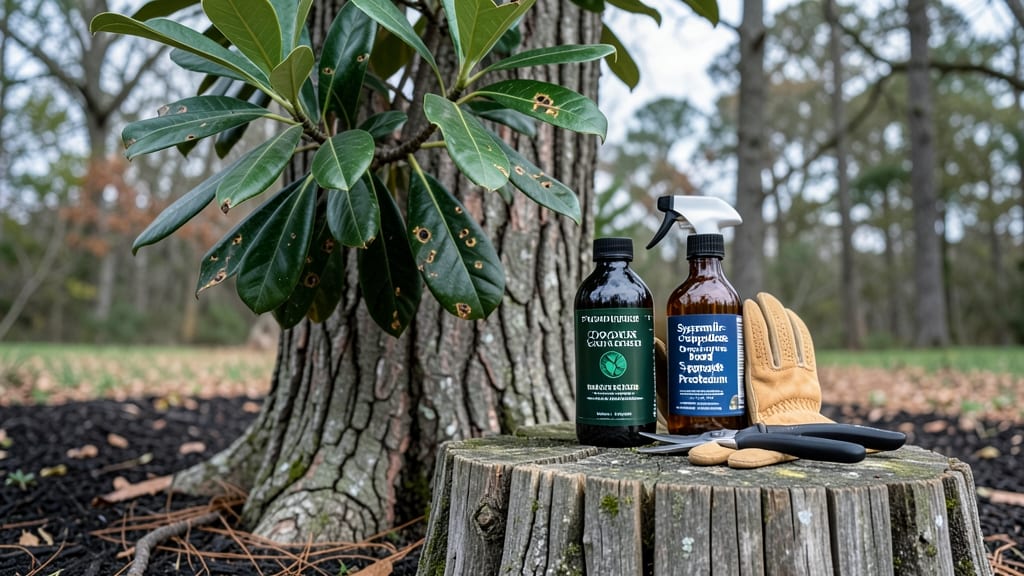
When your magnolia's leaves develop those ugly brown spots with yellow halos, copper spray can bring them back to life in just 48 hours. 🌿 I've seen this fungal leaf spot destroy entire canopies, but the right treatment stops the spread faster than you'd think—if you catch it early.
The problem starts with fungal spores like Gloeodes pomigena that thrive in wet, humid conditions. Poor air circulation from overcrowded branches or wet foliage gives them the perfect home. What you notice first are those telltale spots, then leaves yellowing and dropping—sometimes within weeks.
With copper spray applied at the first sign of spots, you'll see new growth emerge within days. The key is timing: spray in the morning when leaves are dry, and repeat every 7-10 days during rainy seasons. Proper pruning to improve airflow makes a huge difference too.
This isn't just a quick fix—it's a long-term strategy. Healthy magnolias resist fungal infections better, and with consistent care, you'll keep those glossy leaves looking showstopping year after year.
Underlying Causes Of Leaf Fungus
Fungal leaf spot on magnolias isn’t just a random attack—it thrives due to a mix of environmental conditions, plant stress, and microbial activity. Understanding these triggers is key to stopping the spread and restoring your tree’s health.
Below, we break down the primary causes of fungal leaf spot, backed by science and actionable insights.
Fungi like Gloeodes pomigena (a common culprit for magnolia leaf spot) spread rapidly when leaves stay wet for prolonged periods. Overhead irrigation or rainwater pooling on foliage creates the perfect breeding ground. Poor soil drainage exacerbates the issue by keeping roots soggy, weakening the tree’s defenses.
- Why it happens: Water droplets linger on leaves, allowing fungal spores to germinate and infect tissue.
- Actionable fix:
- Switch to drip irrigation or soaker hoses to avoid wetting foliage.
- Improve soil drainage with organic matter (compost or pine bark) or raised beds.
- Avoid watering in the evening—morning sessions allow leaves to dry faster.
Fungal spores flourish in humid conditions (above 75% relative humidity) with little airflow. Dense magnolia foliage or nearby structures (like fences or walls) trap moisture, creating a fungal paradise. Urban microclimates or shaded areas further amplify the problem.
- Why it happens: Stagnant air prevents evaporation, keeping spores active and spreading via wind or splashing water.
- Actionable fix:
- Prune to open the canopy, improving airflow around the tree.
- Use oscillating fans (on low setting) near the tree during humid spells.
- Plant drought-tolerant companions (like lavender or rosemary) to reduce local humidity.
Magnolias under stress—whether from extreme heat, winter cold, or nutrient deficiencies—produce weak leaves that fungi exploit. For example, magnesium deficiency (often seen as yellowing between leaf veins) weakens cell walls, making them prime targets for infection.
| Stress Type | Signs | Solution |
|---|---|---|
| Heat Stress | Wilting, brown leaf edges, curled leaves | Apply mulch (3–4 inches) to retain moisture; water deeply in AM. |
| Cold Damage | Blackened or mushy spots after frost | Plant in sheltered locations; avoid late-season fertilizing. |
| Nutrient Deficiency | Yellowing (chlorosis), stunted growth | Test soil and amend with Epsom salt (magnesium) or balanced fertilizer (10-10-10). |
Fungal spores persist in fallen leaves, mulch, or infected plant debris from previous seasons. If not removed, they reinfect new growth each year. Some spores can even survive dormant in soil for years, waiting for the right conditions to strike.
- Why it happens: Spores hitchhike on wind, tools, or even your shoes, landing on healthy leaves.
- Actionable fix:
- Rake and remove all fallen leaves (especially under the tree) in fall.
- Sterilize pruning tools with 70% isopropyl alcohol between cuts.
- Replace old mulch with fresh, disease-free options (cedar or pine straw).
Magnolias that are over-fertilized, under-pruned, or planted in compacted soil have compromised immune systems. Fungal leaf spot exploits these vulnerabilities by latching onto soft, nutrient-starved tissue.
- Why it happens: Excess nitrogen promotes lush but susceptible growth, while poor root health limits the tree’s ability to fight pathogens.
- Actionable fix:
- Avoid high-nitrogen fertilizers; opt for slow-release, balanced formulas.
- Prune in late winter to remove deadwood and improve air circulation.
- Test soil pH (ideal: 5.0–6.0 for magnolias) and amend with sulfur if too alkaline.
💡 Pro Tip: If your magnolia shows multiple of these risk factors, the fungus will spread faster. Address one cause at a time (e.g., fix drainage first, then adjust humidity) to see the most dramatic improvement in 48 hours.
Revive Your Magnolia’s Leaves Fast
Fungal leaf spot can turn your once-vibrant magnolia into a sad, spotted mess—but don’t panic! With the right approach, you can revive your tree’s health in 48 hours (or less) and keep it thriving long-term.
Below, we break down the cause-specific fixes and preventive steps to stop the fungus in its tracks.
Fungal spores thrive in soggy conditions. If your magnolia’s leaves are yellowing, wilting, or covered in dark spots, excess moisture is likely the culprit.
How to Fix It:
✅ 🔥 Adjust Watering Habits
- Water deeply but less frequently—aim for 1–1.5 inches per week (including rain).
- Avoid overhead sprinkling; use a soaker hose or drip irrigation to keep foliage dry.
- Check soil moisture before watering: Stick your finger 2–3 inches deep—if it’s damp, wait.
✅ 👨🍳 Improve Drainage
- If your magnolia is planted in a low spot, raise the soil level with compost or gravel.
- Aerate compacted soil by gently loosening the top 6 inches with a fork.
- Mulch properly: Use 2–3 inches of organic mulch (like pine bark or shredded leaves) but keep it 6 inches away from the trunk to prevent rot.
✅ 🌡️ Boost Airflow
- Prune dense branches to allow sunlight and air to circulate.
- Space out plants if they’re crowded—fungus spreads faster in tight clusters.
If you’ve already spotted dark, irregular patches (classic fungal leaf spot), copper fungicide is your best fast-acting weapon.
How to Fix It:
✅ 🔪 Apply Copper Fungicide (Right Now!)
- Best time to spray: Early morning or late evening (when humidity is high but sunlight isn’t scorching).
- Mix & spray:
- Use a pre-mixed copper fungicide (like Copper Sulfate 5-10-10 or Copper Hydroxide).
- Follow label instructions—typically 1–2 tbsp per gallon of water.
- Spray thoroughly on both sides of leaves and the undersides (where spores hide).
- Reapply every 7–14 days until new growth appears.
✅ 🌿 Remove Infected Leaves
- Pick off and destroy (don’t compost!) severely spotted leaves to stop spore spread.
- Sterilize pruners with rubbing alcohol between cuts.
✅ ⏰ Speed Up Recovery with Fertilizer
- Avoid nitrogen-heavy fertilizers (they promote soft, fungus-loving growth).
- Instead, use a balanced 10-10-10 or organic fish emulsion to boost immunity.
Once your magnolia is back in shape, keep it fungus-free with these proactive steps:
🔹 🌡️ Monitor Humidity
- Fungus loves >75% humidity. Use a dehumidifier near potted magnolias or improve airflow in gardens.
🔹 ✨ Choose Disease-Resistant Varieties
- If your magnolia keeps getting spots, consider switching to resistant types like:
- Magnolia grandiflora (Southern Magnolia)
- Magnolia stellata (Star Magnolia)
🔹 🎯 Clean Up Debris
- Rake and remove fallen leaves (especially in fall/winter—spores survive there!).
- Disinfect tools after pruning with bleach or alcohol.
🔹 💪 Strengthen the Tree’s Defense
- Feed with compost tea or mycorrhizal fungi to boost natural resistance.
- Avoid stress: Don’t over-fertilize or prune in late summer/fall (new growth is more susceptible).
If your magnolia is badly infected, follow this express treatment:
- Morning: Spray with copper fungicide + remove 90% of infected leaves.
- Afternoon: Water deeply at the roots (not the leaves) to flush out spores.
- Evening: Prune for airflow and mulch properly.
- Next Day: Reapply copper spray and monitor for new growth.
🚀 Result? Within 48 hours, you’ll see slowed spread, and in 2–4 weeks, your magnolia should bounce back with fresh, spot-free leaves! 🌿✨
(Need a copper spray recipe? Check out our DIY Copper Fungicide Guide in the next section!)
Frequently asked questions about magnolia fungal leaf spot
What do early signs of fungal leaf spot look like on magnolia leaves?
Start with small, dark brown or black spots (about 1/8-inch wide) that often have yellow halos. As it progresses, spots enlarge and may develop white or gray centers. Look on both leaf surfaces—undersides often show symptoms first.
Can I use household items like baking soda or hydrogen peroxide to treat fungal leaf spot?
While a baking soda spray (1 tbsp baking soda + 1 tsp soap per gallon of water) can help as a preventative, it’s not as effective as copper fungicide for active infections. Hydrogen peroxide (3%) may kill spores on contact but lacks residual protection. For best results, use copper-based treatments first.
How often should I prune my magnolia to prevent fungal leaf spot?
Prune once a year in late winter (before new growth starts) to remove dead, diseased, or crossing branches. This improves airflow and reduces humidity trapped in dense foliage. Avoid pruning in wet weather—always use sterilized tools to prevent spreading spores.
Will my magnolia recover completely if I treat fungal leaf spot early?
Yes! With prompt treatment (copper spray + proper care), your magnolia can fully recover within 2-4 weeks. New leaves will emerge spot-free if you remove infected foliage and adjust growing conditions. The key is catching it before 50% of leaves show symptoms.
Are some magnolia varieties more resistant to fungal leaf spot than others?
Magnolia grandiflora (Southern Magnolia) and Magnolia stellata (Star Magnolia) show better natural resistance than others. If your current tree keeps getting infected, consider replacing it with one of these disease-tolerant varieties for long-term success.