
Pests and Diseases
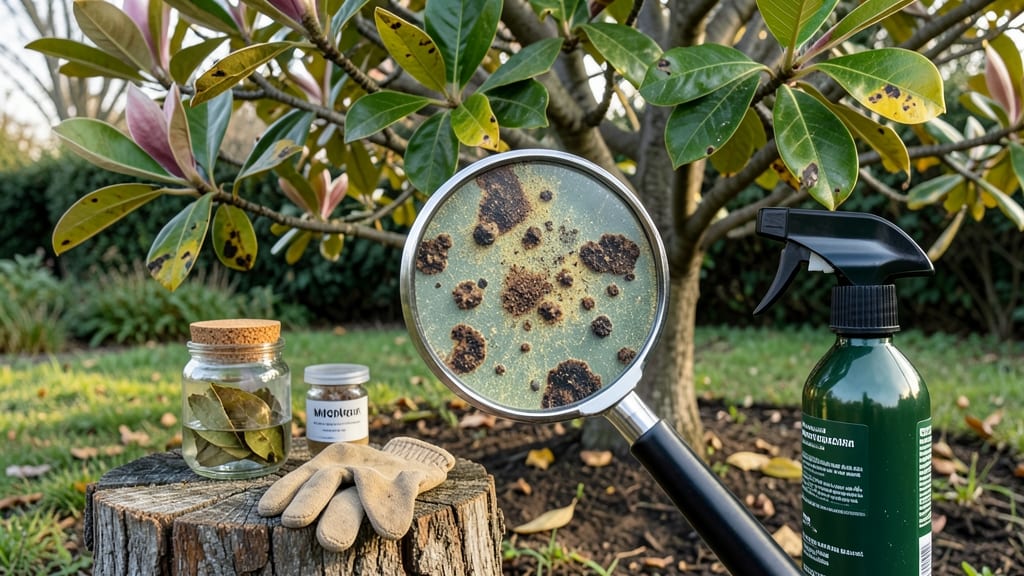
Your magnolia’s once-glossy leaves now look like they’ve been peppered with rust—those dark spots are a classic sign of magnolia leaf disease, and it’s spreading fast. 🌿 The good news?
A simple copper-fungicide blend can reverse the damage before it takes over your tree’s canopy, saving both its appearance and health.
This isn’t just about spraying something random—it’s about targeting the right fungus with the right mix. Copper fungicides work by disrupting the cell walls of pathogens, while adding a mild detergent helps the solution stick to leaves.
Most gardeners see noticeable improvement within 2-3 weeks of consistent treatment, and the best part? It’s safer for nearby plants and pets than harsh chemicals.
You’ll end up with leaves that regain their deep green sheen, fewer spots appearing, and a tree that looks like it did in its prime.
The blend is easy to make at home with basic supplies, and I’ll walk you through the exact ratios and timing to stop the spread in its tracks.
Works for powdery mildew too, and the same principles apply whether you’re dealing with a young tree or a mature giant. Let’s get those leaves healthy again—no more brown spots ruining the view.
Root Causes of Leaf Fungus
Magnolia leaf diseases—especially fungal spots—don’t just appear out of nowhere. They’re the result of a perfect storm of environmental stress, pathogen pressure, and plant vulnerabilities. Understanding why these issues flare up is the first step to stopping them before they spread.
Below, we break down the key culprits behind leaf discoloration, spotting, and decay in magnolias, backed by science and actionable insights.
Fungal pathogens like Gloeodes pomigena (the culprit behind anthracnose) and Cercospora thrive in damp, stagnant air. Here’s why:
- Prolonged leaf wetness: Magnolias with dense foliage trap moisture between leaves, creating a fungal buffet. Even 6–12 hours of leaf wetness can trigger spore germination. 💡 Pro tip: Prune for airflow and avoid overhead watering.
- Poor drainage: Soggy soil (often from clay-heavy or compacted ground) keeps roots waterlogged, weakening the plant’s defenses. Fungal spores in the soil splash onto leaves during rain.
- High humidity (>75%): Fungi spread faster in stagnant, humid air. Coastal or shaded magnolias are especially at risk.
Actionable fix: Improve drainage with organic matter (compost or pine bark), space plants 6–10 feet apart, and water at the base in the early morning for quick evaporation.
A magnolia starved of key nutrients becomes a sitting duck for fungal invaders. The most critical deficiencies linked to leaf disease:
| Nutrient | Symptoms | Why It Matters |
|---|---|---|
| Nitrogen (N) | Yellowing leaves (chlorosis), stunted growth | Weakens cell walls, making leaves susceptible to fungal penetration. |
| Potassium (K) | Brown leaf edges, weak stems | Reduces the plant’s ability to compartmentalize infections (like sealing off a wound). |
| Calcium (Ca) | Blossom end rot (on new growth), distorted leaves | Calcium strengthens cell membranes—low levels let fungi invade easier. |
| Magnesium (Mg) | Interveinal chlorosis (yellow between veins) | Chlorotic leaves photosynthesize poorly, reducing energy for disease resistance. |
Actionable fix: Test soil pH (ideal: 5.0–6.5 for magnolias) and amend with:
- Balanced fertilizer (e.g., 10-10-10) in early spring.
- Epsom salt (magnesium sulfate) for yellowing: 1 tbsp per gallon of water, foliar-sprayed monthly.
- Wood ash (for calcium) or kelp meal (for trace minerals).
Fungal spores are everywhere, but they only cause problems when conditions are right. Here’s how they exploit magnolias:
- Windborne spores: Pathogens like Cercospora hitch rides on wind currents, landing on leaves and germinating within 24–48 hours if moisture is present.
- Splash dispersal: Raindrops act like tiny catapults, flinging soilborne spores (e.g., Phyllosticta) onto lower leaves.
- Inoculum buildup: Old leaf litter or infected debris harbor spores year-round. 💡 Pro tip: Rake and dispose of fallen leaves in fall.
Actionable fix:
- Apply a copper fungicide blend (like copper hydroxide) preventively in early spring (before bud break) and post-harvest (fall).
- Space mulch 3–4 inches away from the trunk to prevent soil splash.
- Use resistant cultivars like Magnolia ‘Little Gem’ or ‘Black Tulip’ if fungal spot is recurrent.
A wounded magnolia is an open invitation for fungi. Common stressors include:
- Pruning wounds: Ragged cuts expose xylem tissue, which fungi like Botryosphaeria colonize within days. ⚠️ Warning: Never prune during wet weather.
- Insect damage: Scale, aphids, or Japanese beetles create entry points for secondary infections. Their honeydew also feeds sooty mold, blocking sunlight and weakening leaves.
- Root disturbance: Construction, transplant shock, or girdling roots stress the entire plant, suppressing its immune response.
Actionable fix:
- Prune with sterilized tools and seal cuts with pruning paint (copper-based).
- Treat pest outbreaks immediately with horticultural oil or neem oil to prevent fungal hitchhikers.
- Mulch heavily (3–4 inches) to protect roots and maintain soil moisture balance.
Key takeaway: Leaf disease in magnolias is rarely a single cause—it’s usually a combination of weak defenses, ideal fungal conditions, and opportunistic pathogens. The good news? Prevention is straightforward once you address these root issues.
Revitalize Your Magnolia’s Health
Fungal infections like magnolia leaf spot can turn your once-lush tree into a sad, spotted mess—but don’t despair! With the right approach, you can nurse your magnolia back to vitality.
Below, we break down targeted fixes based on the root cause, from quick remedies to long-term prevention. Follow these steps to restore your tree’s glory and keep it thriving.
If your magnolia’s leaves are covered in dark brown or black spots with yellow halos, a fungal infection is likely the culprit. Here’s how to tackle it:
🍳 Step 1: Apply a Copper-Fungicide Blend (The Game-Changer)
Copper-based fungicides are highly effective against fungal leaf spots, including those affecting magnolias.
Here’s how to use them properly: - Choose the right product: Look for copper hydroxide, copper sulfate pentahydrate, or Bordeaux mixture (a mix of copper sulfate and hydrated lime). - Timing is key: Apply at the first sign of spots (spring or early summer) and repeat every 2–4 weeks until new growth appears. - Even coverage: Use a sprayer or pump to coat both sides of leaves and the tree’s bark.
Focus on the canopy’s undersides, where fungi often hide. - Safety first: Wear gloves and a mask—copper can irritate skin and lungs. Avoid spraying on windy days to prevent drift onto edible plants or water sources.
> 💡 Pro Tip: For organic gardens, neem oil (1%) or potassium bicarbonate spray can also help, though copper is more potent for severe cases.
👨🍳 Step 2: Prune Infected Leaves & Branches
- Remove affected foliage: Snip off spotted leaves with sterilized pruners (wipe with rubbing alcohol between cuts).
- Thin out dense branches: Improve air circulation by pruning overlapping or crowded branches—fungi thrive in damp, shaded areas.
- Dispose of debris properly: Do not compost infected leaves.
Instead, seal them in a plastic bag and throw them away to prevent reinfection.
🥘 Step 3: Adjust Watering Habits
Overhead watering spreads fungal spores like wildfire.
Switch to: - Drip irrigation or soaker hoses to water at the base of the tree (avoid wetting leaves). - Water in the early morning so foliage dries quickly (fungi love moisture). - Avoid wet mulch: Keep mulch 2–3 inches away from the trunk to prevent rot and fungal growth.
Fungal infections often return if the tree is weakened by stress. Address these factors to lock in recovery:
🎯 Optimize Soil & Nutrition
- Test your soil: Magnolias prefer slightly acidic soil (pH 5.0–6.0). If your soil is alkaline, amend with sulfur or peat moss.
- Fertilize wisely: Use a balanced, slow-release fertilizer (10-10-10 or 8-3-9) in early spring.
Avoid high-nitrogen fertilizers, which promote soft, fungal-friendly growth. - Mulch correctly: Apply 2–4 inches of organic mulch (pine bark or shredded leaves) but keep it away from the trunk.
✨ Boost Tree Resilience
- Improve airflow: Thin out nearby plants or shrubs that block sunlight or airflow around the magnolia.
- Monitor for pests: Scale insects, aphids, or spider mites weaken trees, making them susceptible to fungi.
Treat with horticultural oil if needed. - Avoid over-pruning: Heavy pruning stresses the tree. Limit cuts to 10–15% of the canopy per year.
Once your magnolia recovers, prevent future outbreaks with these low-maintenance habits:
| Prevention Step | How to Do It | When to Do It |
|---|---|---|
| Fungicide spray | Apply copper fungicide (or neem oil) | Spring & early summer |
| Leaf cleanup | Rake & remove fallen leaves | Fall & early spring |
| Soil check | Test soil pH & nutrients annually | Late winter |
| Pruning | Remove dead/diseased branches | Dormant season (winter) |
| Watering upgrade | Switch to drip irrigation | Before planting season |
If your magnolia:
- Shows widespread defoliation (more than 30% of leaves affected).
- Has oozing cankers or dieback (signs of a deeper infection like anthracnose).
- Doesn’t improve after two fungicide treatments.
A certified arborist can diagnose the issue and recommend systemic treatments (like fungicidal injections) for stubborn cases.
With consistent care, your magnolia can bounce back stronger than ever. Stay vigilant, and those vibrant blooms will return—spot-free and stunning! 🌿✨
Frequently asked questions
What are the most common types of magnolia leaf diseases?
Magnolias typically suffer from anthracnose (dark spots with yellow halos), powdery mildew (white fuzzy coating), and leaf spot diseases like Cercospora or Phyllosticta. These fungal infections thrive in damp conditions and often appear as brown or black patches on leaves.
How can I tell if my magnolia has a fungal infection?
Look for dark brown/black spots with yellow borders, white powdery residue (powdery mildew), or leaves dropping prematurely. Check the undersides of leaves first—fungi often start there. If you see these signs, act quickly with a copper fungicide blend.
Is copper fungicide safe for all magnolia varieties?
Yes, copper-based treatments are generally safe for magnolias, including Southern magnolias and star magnolias. However, avoid overapplying—stick to the recommended 2-4 week intervals and always wear gloves. Copper can irritate skin, so rinse off after handling.
Can I use homemade remedies instead of store-bought fungicides?
For mild cases, a neem oil spray (1%) or baking soda mix (1 tsp baking soda + 1 tsp oil + 1 quart water) can help. However, severe infections need stronger copper fungicides. Test any homemade remedy on a small leaf first to check for reactions.
How long does it take to see improvement after treatment?
With consistent copper fungicide applications, you should see noticeable improvement in 2-3 weeks. New leaves should emerge healthier, and existing spots may fade. For stubborn cases, repeat treatments every 2 weeks until the tree recovers completely.