
Companion Plants
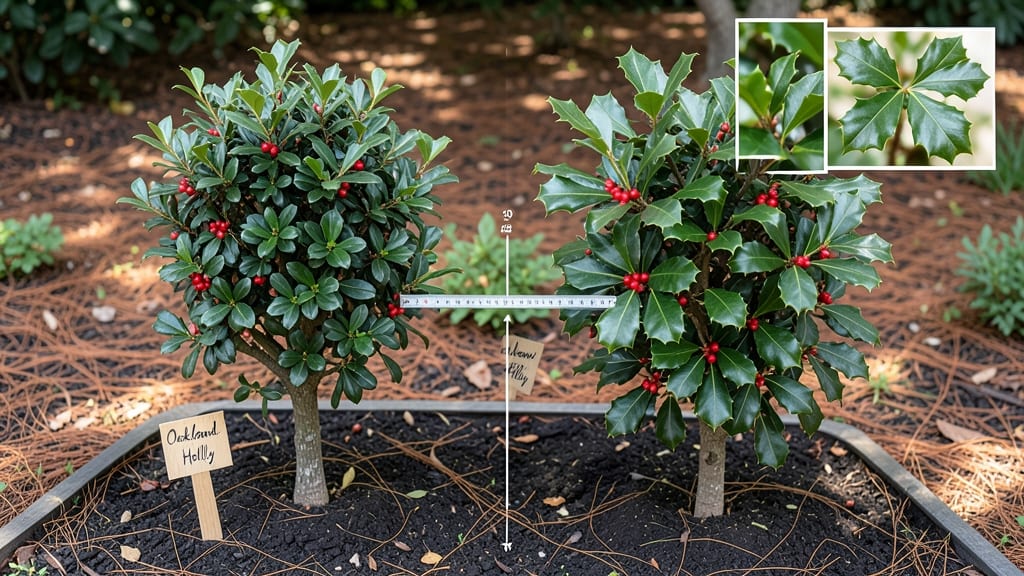
Deciding between Oakland holly and Oakleaf holly means choosing between sharp spines and soft leaves—or maybe both. 🌿 Both deliver stunning year-round foliage, but their habits couldn’t be more different. Oakland’s glossy, spiky leaves create a dramatic hedge, while Oakleaf’s rounded, velvety foliage feels more like a lush carpet.
Oakland holly thrives in full sun, tolerates clay soil, and grows 3-4 feet tall with thorny edges that deter deer. Oakleaf, meanwhile, prefers partial shade, loves well-drained soil, and reaches 10-15 feet with smooth, oak-shaped leaves that turn brilliant red in fall. Neither needs much water once established.
For hedges or privacy screens, Oakland’s dense growth wins. For shade gardens or specimen plants, Oakleaf’s graceful form and fall color take center stage. Both handle drought once rooted, but Oakleaf’s mildew resistance gives it an edge in humid climates.
Prune Oakland in late winter to shape its rigid branches; Oakleaf responds better to light trims in early spring. Plant them side by side—you’ll see why one’s called "holly" and the other "oakleaf" in seconds.
The first product explained
Meet the Oakland Holly (Ilex × 'Oakland')—a standout hybrid holly that blends the best of its parents to deliver year-round drama in your garden! 🌿✨ This evergreen beauty is a favorite among landscapers and home gardeners alike, thanks to its bold glossy leaves, vibrant red berries, and low-maintenance charm. Whether you're a seasoned gardener or a newbie, Oakland Holly is the perfect companion for adding structure, texture, and color to your outdoor space.
📏 Specs & Features
Oakland Holly is a medium-sized shrub that thrives in both sun and partial shade, making it incredibly versatile. Here’s what sets it apart:
- Mature Height: 6–10 feet (prunable to shape)
- Spread: 4–6 feet wide
- Growth Rate: Moderate (12–24 inches per year)
- Leaf Color: Deep green, glossy, and leathery—holds up beautifully in winter
- Berries: Bright red, abundant, and bird-friendly (appears in late fall/winter)
- Hardiness Zone: 6–9 (adapts well to heat and humidity)
- Soil Preference: Tolerates a wide range, but prefers well-draining, slightly acidic soil
🎯 Who’s It For?
Oakland Holly is a crowd-pleaser for:
- Homeowners: Adds privacy screens, hedges, or focal points to landscapes
- Urban Gardeners: Thrives in containers or small yards (dwarf varieties available)
- Wildlife Enthusiasts: Provides food and shelter for birds and pollinators
- Low-Maintenance Lovers: Drought-tolerant once established and resistant to deer
💰 Price Point & Value
Pricing varies based on size and retailer, but you can typically find Oakland Holly plants in the following ranges:
| Size | Price Range (USD) |
|---|---|
| 1-Gallon (1–2 ft tall) | $25–$45 |
| 3-Gallon (2–3 ft tall) | $40–$70 |
| 15-Gallon (4–6 ft tall) | $80–$150+ |
Pro Tip: 💡 Buy in early spring or fall for the best selection and pricing. Plus, many nurseries offer free shipping on larger sizes—score!
The second product explained
Meet the Oakleaf Holly (Ilex opaca), a majestic evergreen that brings a touch of Southern charm to any landscape with its glossy, vibrant foliage and classic red berries.
Often considered the crown jewel of holly varieties, this plant is a favorite among homeowners and landscapers alike for its year-round appeal and low-maintenance nature. Let’s dive into what makes it a standout contender in the Oakland Holly vs. Oakleaf Holly showdown!
🌿 Key Specs & Features
The Oakleaf Holly is a slow-growing but long-lived plant, typically reaching 20–40 feet tall (though dwarf varieties stay under 10 feet) and spreading 15–30 feet wide.
Its leathery, dark green leaves (resembling oak leaves, hence the name) turn a stunning bronze-red in fall, and its bright red berries (produced on female plants) add a festive pop from late fall to winter. Here’s what sets it apart:
- Drought-tolerant once established—perfect for low-water landscapes.
- Deer-resistant, making it a pest-free choice for rural or suburban areas.
- Versatile form: Can be grown as a tree, shrub, or hedge with proper pruning.
- Cold-hardy (USDA Zones 5–9), thriving in hot summers and chilly winters.
🎯 Target Users
The Oakleaf Holly is a top pick for:
- Homeowners seeking elegant, evergreen privacy screens or statement trees.
- Landscapers designing Southern-style gardens or wildlife-friendly yards (birds love the berries!).
- Eco-conscious gardeners who want native, low-maintenance plants that support local ecosystems.
- Holiday decorators—its red berries add a festive touch year-round!
💰 Price Point & Value
Pricing varies based on size and form, but here’s a general breakdown:
| Size/Form | Price Range (USD) | Best For |
|---|---|---|
| Small shrub (3–5 ft) | $30–$70 | Container gardening or small-space landscaping. |
| Medium shrub/tree (6–10 ft) | $80–$150 | Hedges, foundation plantings, or privacy screens. |
| Mature tree (15+ ft) | $200–$500+ | Specimen trees or large property accents. |
Pro Tip: 💡 Buy female plants (often labeled) if you want berries—male plants are needed for pollination but don’t produce fruit. Many nurseries sell pre-pollinated pairs for guaranteed berries!
Head-to-head comparison
Now that you’ve met both Oakland Holly and Oakleaf Holly, let’s dive into a detailed side-by-side comparison to help you decide which holly reigns supreme for your garden or landscape.
Whether you’re prioritizing growth speed, maintenance ease, or visual impact, this breakdown will give you the clarity you need! 🌿✨
🌱 Growth Habit & Size
If you’re dreaming of a towering, dramatic focal point, these two holly varieties offer distinct personalities:
- Oakland Holly:
- 📏 Mature Height: 15–20 ft (4.5–6 m) tall, with a spread of 10–15 ft (3–4.5 m). Perfect for large landscapes or as a privacy screen.
- 🌲 Shape: Pyramidal when young, maturing into a broad, rounded canopy. Ideal for formal hedges or specimen planting.
- 💡 Pro Tip: Prune annually to maintain its neat, structured look—this holly responds well to shaping!
- Oakleaf Holly:
- 📏 Mature Height: 15–25 ft (4.5–7.5 m) tall, with a spread of 10–20 ft (3–6 m). More sprawling than Oakland Holly, making it a wild, natural choice.
- 🌲 Shape: Irregular, multi-stemmed with a loose, airy habit. Thrives in woodland gardens or as a backdrop for shrubs.
- ⚠️ Watch Out: Its sprawling nature can make it harder to fit into small yards or structured landscapes.
🍃 Foliage & Seasonal Interest
Both hollies are evergreen, but their leaves tell different stories:
| Feature | Oakland Holly | Oakleaf Holly |
|---|---|---|
| Leaf Shape | ✅ Spiky, glossy, dark green (2–3 inches long). Classic holly vibes! | ✅ Oval-shaped, leathery, medium green (3–5 inches long). Resembles oak leaves! |
| Fall Color | 🍂 Deepens to a rich green—no dramatic fall show. | 🍁 Turns stunning red or purple in fall! Adds seasonal drama. |
| Winter Hardiness | ❄️ Zone 6–9. Moderate cold tolerance—may need winter protection in colder areas. | ❄️ Zone 5–9. Hardier and more cold-resistant. |
Winner for: Oakleaf Holly if you love fall color and cold resilience. Oakland Holly wins for year-round glossy green.
🌸 Flowers & Berries
Both hollies offer seasonal surprises, but in different ways:
- Oakland Holly:
- 🌼 Flowers: Small, insignificant white blooms in spring (not a showstopper).
- 🍒 Berries: Bright red, glossy (½ inch wide) that persist through winter. Birds love them!
- 💡 Pro Tip: If you want holiday cheer, Oakland Holly’s berries are perfect for festive vibes.
- Oakleaf Holly:
- 🌼 Flowers: Fragrant white in spring—not showy but pleasant.
- 🍒 Berries: Red, smaller (¼ inch), and less conspicuous than Oakland’s. Still bird-friendly!
- ✨ Bonus: The fall foliage often overshadows the berries, but the overall effect is stunning.
Winner for: Oakland Holly if you prioritize bold berries. Oakleaf Holly shines with fragrant flowers + fall color.
🌳 Growth Rate & Maintenance
How fast do you want your holly to fill out? And how much time are you willing to invest?
| Factor | Oakland Holly | Oakleaf Holly |
|---|---|---|
| Growth Rate | 🐢 Moderate (12–24 inches per year). Steady but slower—great for long-term planning. | 🐇 Fast (24+ inches per year). Quick to establish but may need pruning to control spread. |
| Pruning Needs | ✂️ Low to moderate. Prune once a year to shape. Responds well to trimming. | ✂️ Moderate to high. More wild growth—may need regular pruning to keep it tidy. |
| Pest/Disease Resistance | 🛡️ Generally resistant, but watch for scale insects and holly leaf miner. | 🛡️ More susceptible to holly leaf miner and fungal issues in humid climates. |
Winner for:
Which one should you choose?
So, which holly reigns supreme for your garden? The choice between Oakland Holly and Oakleaf Holly depends on your priorities—whether it’s bold drama, low-maintenance elegance, or wildlife-friendly charm. Here’s your tailored verdict to help you plant with confidence! 🌿✨
🌟 Pick Oakland Holly If...
- You crave year-round color: Oakland Holly’s deep green leaves with striking red berries (even in winter!) make it a showstopper. Perfect for bold focal points or privacy screens.
- You want fast growth: If you’re impatient for impact, Oakland Holly grows 2–3 feet per year—ideal for filling space quickly.
- You love versatility: Thrives in full sun to partial shade, tolerates urban pollution, and works as a hedge, specimen, or container plant.
- You’re a bird enthusiast: The bright berries are a magnet for wildlife, especially in winter when food is scarce.
🌿 Pick Oakleaf Holly If...
- You prefer elegant, low-maintenance beauty: Oakleaf Holly’s leathery, oak-like leaves and subtle berries exude sophistication with minimal fuss.
- You need adaptability: Handles dry soil, heat, and drought better than most hollies—ideal for Southern gardens or xeric landscapes.
- You want fall foliage: Its leaves turn rusty red or orange in autumn, adding seasonal interest without extra effort.
- You’re a formal gardener: Its narrow, upright growth habit makes it perfect for tight spaces, borders, or topiary.
💡 Pro Tip for Undecided Gardeners:
Still torn? Plant both! Use Oakland Holly as a dramatic backdrop (e.g., behind a fence or patio) and Oakleaf Holly for structured edges or mixed borders. Their complementary textures and colors create a layered, dynamic look that’s hard to beat. 🌟
Final Thought: No wrong answers here—just personal style! Oakland Holly steals the show with vibrancy, while Oakleaf Holly wins for effortless grace. Choose based on your garden’s vibe, and you can’t go wrong.