
Aphids
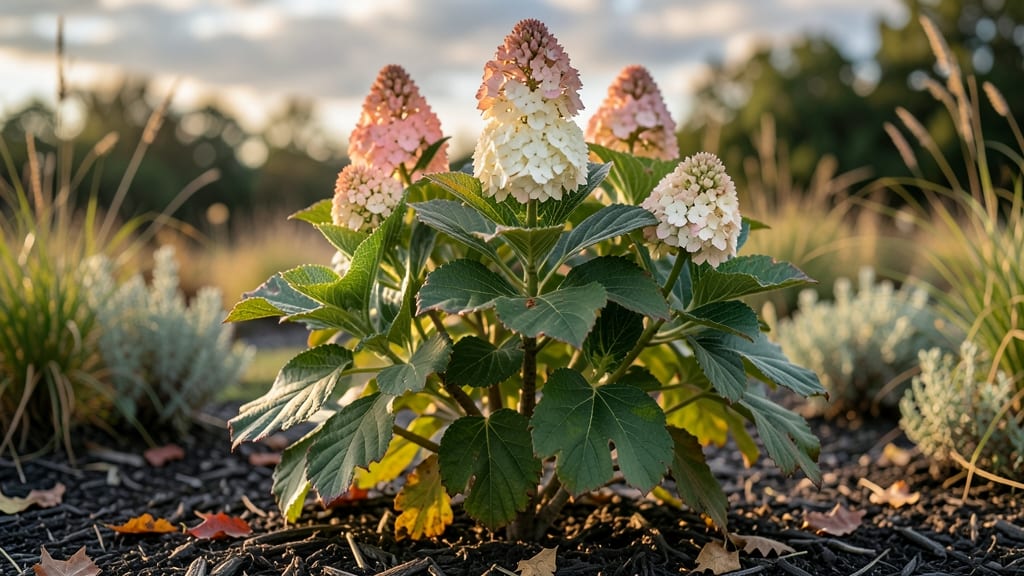
Oakleaf hydrangea colors transform your garden into a living watercolor painting. 🌿 Their foliage starts as vibrant green in spring, then blushes pink, deepens to rich purple in fall, and finally turns fiery red before winter—all on the same plant.
This seasonal magic makes them the ultimate showstopper for any landscape design.
Pair them with silver-blue ornamental grasses like fountain grass or deep burgundy heucheras for contrast that makes their color shifts pop. Plant them near patios or entryways where you’ll see the drama up close—imagine that pink-to-purple progression lighting up your morning coffee ritual.
They thrive in partial shade too, so they’re perfect for under trees or along north-facing walls.
The key to showcasing their colors is layering them with complementary plants that highlight each seasonal hue. In spring, white flowering shrubs like viburnum let the green foliage shine.
By summer, lavender perennials like catmint mirror their pink tones. And in fall, golden foliage from Japanese maples makes their purple glow even more dramatic.
For maximum impact, group three or five together in odd-numbered clusters—this creates movement in your garden and lets each plant’s colors interact beautifully. They’re also low-maintenance, drought-tolerant once established, and attract pollinators year-round. Start with one and watch your garden become a seasonal masterpiece.
📚 In This Guide
- What you need
- Instructions
- Tips and common mistakes
- Wrapping up and next steps
What you need
- ● Oakleaf hydrangea plants: 1-3 mature plants (depending on desired garden size). Choose varieties like 'Pee Wee' or 'Snow Queen' for optimal color shifts.
- ● Well-draining soil: 5-10 bags of garden loam or peat-based potting mix (amend with compost for richer colors).
- ● Organic mulch: 2-3 cubic feet of pine bark nuggets or shredded leaves to retain moisture and enhance foliage vibrancy.
- ● Slow-release fertilizer: 1 lb of balanced 10-10-10 or acid-loving plant food (like Miracle-Gro Azalea, Camellia & Rhododendron).
- ● Garden trowel or spade: 1 medium-sized tool for planting and soil prep.
- ● Pruning shears: 1 pair of sterilized, sharp shears for shaping and deadheading.
- ● Watering can or hose: With a gentle spray nozzle to avoid damaging delicate leaves.
- ○ pH testing kit (optional): To monitor soil acidity (ideal range: 5.0–6.0 for vibrant colors).
- ○ Gloves (optional):strong> 1 pair of gardening gloves for comfort during handling.
- ● A sunny to partially shaded location (4–6 hours of sunlight daily for best color development).
- ● Consistent moisture: Oakleaf hydrangeas thrive in evenly moist (not soggy) soil.
- ● Patience for seasonal shifts: Colors peak in late summer/fall—plan your garden layout accordingly!
How to maximize oakleaf hydrangea's stunning seasonal color shifts
These shrubs are nature's color-changing artists—here's how to coax their full pink-to-purple transformation.
☀️ Step 1: Select the Perfect Planting Location for Sun Exposure
Oakleaf hydrangeas thrive with morning sun and afternoon shade—this balances their need for light while protecting delicate foliage from harsh afternoon rays. I always plant mine where they receive 3-6 hours of direct sun, preferably on the east side of buildings or under high-canopy trees that filter hot afternoon sunlight.
The key is to observe your site's light patterns for a full week before planting. Mark the sunniest and shadiest spots with stakes. Oakleaf hydrangeas will reward you with deeper fall colors when they get this ideal light balance. Too much sun bleaches the foliage, while too little shade prevents the dramatic color shifts you're after.
💧 Step 2: Maintain Consistent Moisture for Vibrant Foliage
These hydrangeas demand consistent moisture but hate soggy roots. Water deeply 2-3 times per week until the top 6 inches of soil feels damp—not waterlogged. I use a moisture meter to check soil conditions, especially during summer droughts. The secret to their bold colors lies in maintaining even moisture throughout the growing season.
Mulch heavily with 3-4 inches of organic mulch (like shredded bark) to retain moisture and regulate soil temperature. The mulch should extend out to the plant's drip line but stay 3 inches away from the trunk. This creates the perfect environment for those stunning seasonal color changes while preventing root rot from overwatering.
✂️ Step 3: Prune Strategically to Encourage Colorful New Growth
Prune your oakleaf hydrangea in late winter or early spring before new growth appears. Remove 1/3 of the oldest stems at ground level to make room for vigorous new growth that produces the most vibrant foliage. I always prune after the last frost date when the ground is workable but before buds swell.
Never prune in fall—this removes next year's flower buds and weakens the plant. The new stems you encourage through proper pruning are where you'll see the most dramatic color shifts from spring's pink foliage to summer's green and finally to fall's deep purple. This selective pruning also improves air circulation, reducing disease risk.
🌿 Step 4: Feed for Optimal Color Development
Apply a balanced 10-10-10 fertilizer in early spring when new growth begins, using ½ the recommended rate. I also top-dress with 2 inches of compost in early spring and again in early summer. The goal is to provide steady nutrients without over-fertilizing, which can lead to excessive leaf growth at the expense of color.
For even more vibrant colors, add a handful of hydrangea-specific color-enhancing fertilizer in early summer. These specialized formulas contain aluminum and other micronutrients that enhance the purple hues. Remember that soil pH affects color—test your soil annually. Oakleaf hydrangeas prefer slightly acidic soil (pH 5.5-6.2) for their best color performance.
⏰ Step 5: Time Your Care for Seasonal Color Transitions
Watch for the first signs of color change in late summer—this is when the magic begins. The leaves start shifting from green to pink, then deepen to purple as fall approaches. I take photos weekly to track the progression. To prolong the color display, avoid heavy pruning in fall and resist the urge to remove colored leaves until early spring.
In winter, the exfoliating bark becomes a stunning feature. The dried leaves provide excellent winter interest. If you notice color fading in subsequent years, it's often a sign of insufficient sunlight or inconsistent moisture. Adjust your care accordingly—these plants will reward you with their spectacular seasonal show when given proper attention throughout the year.
Tips & tricks for perfect oakleaf hydrangea seasonal color
Real talk: the difference between average foliage and show-stopping seasonal color comes down to these often-overlooked details.
Light Pattern Mastery: That 3-6 hour sun window in Step 1 is non-negotiable for color development, but here's what nobody tells you—watch for afternoon shade patterns from nearby structures or trees. I've seen dramatic color shifts just by moving plants 3 feet closer to a building's east wall. Use a simple garden stake and string to map your sun patterns for a full week before planting.
Moisture Consistency Secret: The 2-3 times weekly watering in Step 2 works best when you water at the same time each day—morning is ideal. I've noticed that oakleaf hydrangeas develop more vibrant fall colors when moisture is consistent throughout the growing season. Consider installing a drip irrigation system for automatic, even distribution that prevents both drought stress and waterlogging.
Pruning Precision: When removing 1/3 of oldest stems in Step 3, focus on the thickest, most woody stems first. These are the ones that produce the least vibrant foliage. I always make clean cuts just above a bud or lateral branch using sharp pruners. The new growth from these cuts will give you the most dramatic color shifts from pink to purple.
Soil pH Watch: That pH 5.5-6.2 range in Step 4 isn't just a number—it's the difference between muted colors and vibrant purple. Test your soil annually and adjust with sulfur (to lower pH) or lime (to raise pH) as needed. I've seen oakleaf hydrangeas go from dull green to deep purple just by lowering the pH by 0.5 points in acidic soil.
Pro Tips for Oakleaf Hydrangea Colors
- Real talk: the difference between average foliage and show-stopping seasonal color comes down to these often-overlooked details.
- Light Pattern Mastery: That 3-6 hour sun window in Step 1 is non-negotiable for color development, but here's what nobody tells you—watch for afternoon shade patterns from nearby structures or trees.
- Moisture Consistency Secret: The 2-3 times weekly watering in Step 2 works best when you water at the same time each day—morning is ideal.
Frequently asked questions
Got questions about your oakleaf hydrangea’s stunning color transformations? You’re not alone! Here are answers to the most common queries—from timing to troubleshooting—so you can keep those foliage fireworks blazing all season.
Why do my oakleaf hydrangea leaves change color so dramatically?
Oakleaf hydrangeas (Hydrangea quercifolia) are famous for their seasonal color shifts—from vibrant pinkish-green in spring to deep burgundy, purple, or even orange-red in fall. This happens due to anthocyanin pigments, which develop as cooler temps and shorter daylight trigger stress responses. Think of it as nature’s way of putting on a show! For the boldest hues, ensure your plant gets full sun to partial shade and well-drained soil.
When should I expect the deepest purple or red colors?
The peak color change typically occurs in late summer to early fall (August–October, depending on your climate). Cooler nights (below 60°F/15°C) and shorter days signal the plant to produce anthocyanins. In warmer zones (USDA 7–9), colors may intensify earlier, while colder regions might see delays. Pro tip: If your plant isn’t shifting colors, check for low light or nutrient deficiencies.
Can I make my oakleaf hydrangea turn a specific color?
While you can’t force a particular shade, you can influence the intensity! For deeper purples/reds, plant in full sun to light shade and avoid over-fertilizing with nitrogen (which promotes green growth). For softer pinks, provide more shade and slightly acidic soil (pH 4.5–5.5). Bonus: Mulch with pine bark to enhance acidity naturally!
Why are my oakleaf hydrangea leaves staying green instead of changing?
If your leaves refuse to blush or burn, suspect one of these issues:
- Too much sun: Fades colors by stressing the plant. Move to morning sun + afternoon shade.
- Over-fertilizing: Excess nitrogen = lush green growth. Use a balanced fertilizer (10-10-10) or organic compost.
- Poor drainage: Waterlogged roots can’t trigger pigment changes. Amend soil with perlite or sand.
- Young plant: First-year hydrangeas may not show vibrant fall colors. Be patient!
Quick fix: Prune back 1/3 of the plant in early spring to encourage new growth and better color development.
Are there oakleaf hydrangea varieties with the most intense purple colors?
Yes! If you’re chasing deep purple-black foliage, try these standout cultivars:
Variety
Fall Color
Notes
‘Pee Wee’
Rich burgundy-purple
Compact (3–4 ft), great for containers.
‘Snow Queen’
Deep purple-red
White flowers contrast beautifully with foliage.
‘Alice’
Vibrant purple with orange undertones
Dwarf size (3–4 ft), cold-hardy to Zone 5.
For near-black leaves, ‘Sike’s Dwarf’ or ‘Puryear’ are top picks!
Wrapping up and next steps
The oakleaf hydrangea’s breathtaking color transformations—from vibrant pinks to rich purples—prove that nature’s palette is always evolving. Whether you’re admiring its seasonal shifts or troubleshooting aphid issues, this plant offers both beauty and resilience. Now’s the time to embrace its magic!
Ready to dive deeper? Experiment with pruning techniques or explore companion plants to enhance its vibrancy. Your garden’s next masterpiece could be just a season away! 🌿✨