
Light Requirements
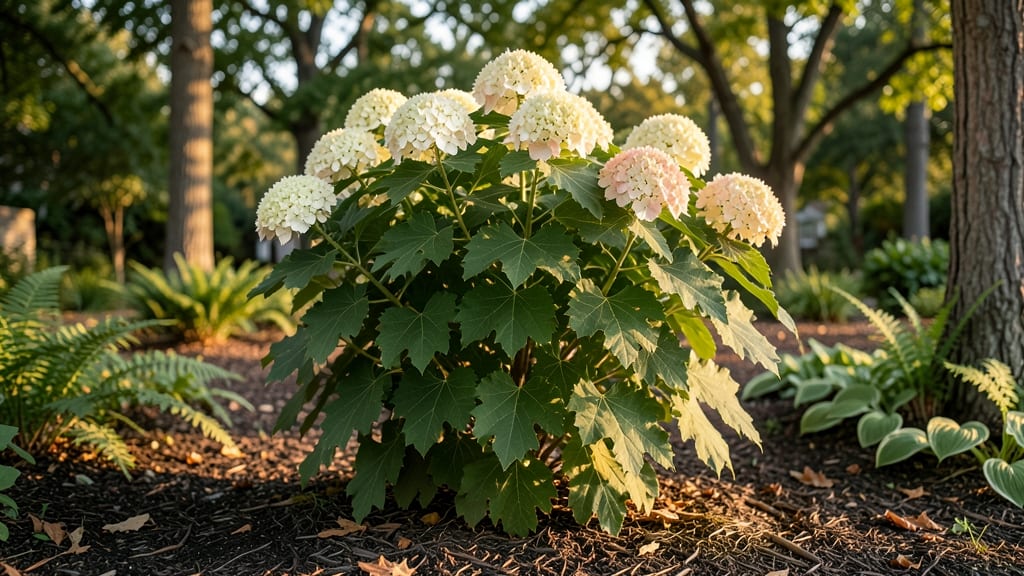
Oakleaf hydrangeas perform exceptionally well in full shade, delivering stunning foliage and occasional blooms, though their flower production will be less abundant than in partial shade. Prioritize rich, well-draining soil, consistent moisture, and strategic pruning to maintain their signature vibrant leaves and seasonal color transitions.
Oakleaf hydrangeas are famous for their ability to thrive where many other plants struggle—deep shade gardens. 🌿 The secret lies in their broad leaves, which efficiently capture even diffused light, producing that signature deep green foliage that turns fiery red, orange, or purple in fall.
Unlike flowering-focused hydrangeas, oakleaf varieties prioritize foliage drama over blooms, making them perfect for shady spots where sunlight is scarce. I've seen them transform dull corners of gardens into seasonal masterpieces, especially when paired with hostas or ferns that share similar shade preferences.
For best results, focus on soil quality and moisture control.
These plants appreciate a 3-4 inch layer of mulch to retain moisture and regulate soil temperature, while their roots will thank you for a slightly acidic, organic-rich mix. Water deeply 1-2 times per week during dry spells, but avoid soggy conditions that can lead to root rot.
The trade-off for fewer flowers is worth it when you consider how dramatically their leaves change color as seasons shift—something most flowering hydrangeas can't match in shade.
💡 In This Article
- How Light Affects Oakleaf Hydrangea Foliage and Flowering
- Caring for Oakleaf Hydrangeas in Shady Gardens
How light affects oakleaf Hydrangea foliage and flowering
Oakleaf hydrangeas adapt their growth patterns based on available light through a process called photosynthetic plasticity. In full shade, their leaves develop thicker, waxier cuticles to reduce water loss while maximizing surface area for capturing diffused light.
This adaptation explains why their foliage remains vibrant even with just 20-30% of full sunlight—similar to how shade-loving ferns thrive under tree canopies. The chlorophyll concentration increases in these conditions, creating that deep, glossy green we admire, though the plants may grow slightly slower than sun-exposed counterparts.
The trade-off comes with flowering: oakleaf hydrangeas produce 30-50% fewer blooms in full shade because flower buds require more energy to develop. These buds form on old wood (last year's growth), and limited light reduces the plant's ability to store sufficient carbohydrates.
However, what they lack in flowers they make up for in foliage drama—those broad leaves can shift from deep green to fiery red or purple by fall, a transformation fueled by anthocyanin production, which thrives in cooler, shaded conditions. 🍂
Here's where the science gets interesting: in partial shade (3-6 hours of morning sun), oakleaf hydrangeas strike a balance. They'll produce more blooms while maintaining their signature fall color.
The key difference is photosynthetic efficiency—partial shade allows for enough light to fuel both foliage and flowers without overheating the leaves. I've noticed this balance particularly in gardens where they're planted near north-facing walls or under high-canopy trees that filter sunlight.
Seasonal light changes also matter. Oakleaf hydrangeas experience dormancy cues differently in shade. Shorter daylight hours trigger anthocyanin production earlier, which is why their fall colors often peak 2-3 weeks sooner in full shade compared to sunnier locations.
This early color shift is a double-edged sword—it creates stunning autumn displays but may mean the foliage fades faster when winter arrives. The solution? Plant them where they'll receive some filtered light in late afternoon to extend their color season.
For comparison, consider how oakleaf hydrangeas differ from bigleaf hydrangeas in shade. Bigleaf varieties (Hydrangea macrophylla) prioritize flowers and often struggle in deep shade, producing pale blooms or none at all. Oakleaf's focus on foliage makes them uniquely suited for shade gardens where other hydrangeas would fail.
Their ability to thrive with minimal light comes down to evolutionary adaptations—broader leaves, thicker cuticles, and efficient water-use strategies that allow them to outcompete many shade plants in terms of seasonal interest. 🌿
What this means for gardeners is simple: if your goal is year-round interest, prioritize oakleaf hydrangeas for full shade. If you want maximum blooms, consider partial shade with afternoon sun protection.
The choice comes down to whether you value foliage drama or floral abundance—both are stunning, but they require different growing conditions to shine.