
Shrubs
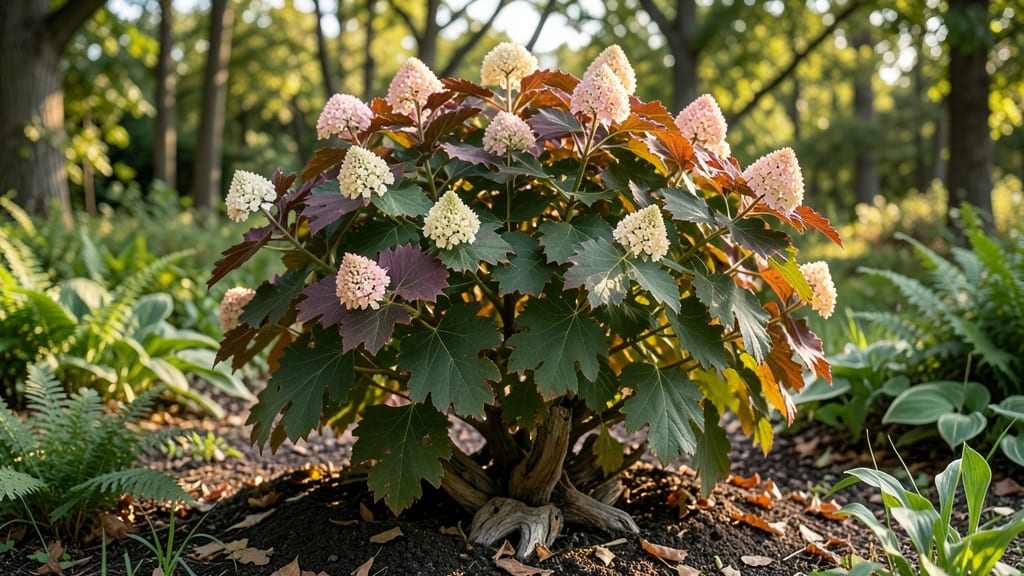
Oakleaf hydrangeas shine brightest where others fade—bold foliage that thrives in shade. 🌿 I’ve grown them under towering pines and along north-facing walls, and they’ve never once complained about the lack of sun.
Their deep green leaves turn fiery red in fall, while their delicate blooms add texture without needing full sun. The secret lies in partial shade—think dappled light or morning sun with afternoon shade. Too much direct sun scorches leaves, while deep shade slows growth.
Amend your soil with compost to improve drainage, and water consistently but avoid soggy roots. Prune in late winter to shape the shrub and encourage fresh growth. By summer, you’ll have a lush, multi-season plant that outshines sun-loving shrubs.
The foliage stays vibrant, blooms last longer, and fall color rivals any maple tree. Even in tough shade spots, these hydrangeas deliver year-round interest with minimal fuss. Works in woodland gardens, under trees, or along shaded fences. Here’s how to keep them thriving where others give up.
📚 In This Guide
- What you need
- Instructions
- Tips and common mistakes
- Wrapping up and next steps
What you need
- ● Oakleaf hydrangea plants: 1–3 nursery-grown specimens (choose mature sizes for quicker impact, or smaller plants for gradual growth). Look for Hydrangea quercifolia varieties like 'Snow Queen,' 'Pee Wee,' or 'Alice.'
- ● High-quality soil amendment: 2–3 bags (20–40 lbs each) of peat moss or compost to improve drainage and fertility in shady soil.
- ● Organic mulch: 2–3 cubic feet of pine bark nuggets or shredded leaves to retain moisture and protect roots.
- ● Slow-release fertilizer: 1–2 lbs of balanced 10-10-10 or acid-loving plant fertilizer (e.g., Miracle-Gro Shake ‘n Feed Azalea, Camellia & Rhododendron).
- ● Garden trowel or spade: For digging planting holes (12–18" wide/deep for mature plants).
- ● Garden gloves: A pair to protect your hands from thorns and soil.
- ● Watering can or hose with nozzle: For gentle, deep watering (aim for 1–2 gallons per plant after planting).
- ○ Pruning shears: Sharp, sterilized shears for trimming dead branches (optional but helpful for shaping).
- ○ pH testing kit (optional): To check soil acidity (ideal range: 5.0–6.0 for oakleaf hydrangeas).
- ○ Soil moisture meter (optional): Ensures you’re keeping roots consistently damp without overwatering.
- ● Shady location: Partial to full shade (2–6 hours of dappled sunlight daily). Avoid deep, dark shadows where soil stays soggy.
- ● Well-draining soil: Oakleaf hydrangeas hate "wet feet." Amend clay soil with compost or sand if needed.
- ● Spacious planting area: Mature plants spread 6–8 feet wide, so space them 5–6 feet apart.
- ● Patience for color: While foliage is stunning year-round, bold blooms appear in late spring/early summer—worth the wait!
Step-by-step guide to planting and caring for oakleaf hydrangeas in shade
Here's how to grow stunning oakleaf hydrangeas that thrive where others struggle.
🌱 Step 1: Choose the Perfect Planting Location
Oakleaf hydrangeas love shade but still need 4-6 hours of dappled sunlight daily. Look for spots with morning sun and afternoon shade—this prevents leaf scorch while allowing enough light for vibrant foliage. Avoid deep, dark corners where air circulation stalls and diseases lurk.
I dig a hole twice as wide as the root ball but only as deep—planting too deep suffocates the roots. Loosen the sides of the hole with your hands or a trowel to encourage root spread. If your soil drains poorly, mix in a handful of organic matter like compost to improve aeration.
☀️ Step 2: Plant at the Right Depth and Water Thoroughly
Place the hydrangea so the top of the root ball sits 1 inch above ground level. Oakleaf varieties have a natural growth habit, so no staking is needed at planting. Backfill with native soil, tamping gently as you go to eliminate air pockets.
Water immediately after planting—1 gallon per plant—to settle the soil and encourage roots to spread. You'll see the soil surface darken slightly as it absorbs moisture. Mulch with 2-3 inches of shredded bark (keep it 6 inches away from the stem) to retain moisture and regulate soil temperature.
💧 Step 3: Maintain Consistent Moisture Without Overwatering
Oakleaf hydrangeas prefer even moisture but hate soggy roots. Water 1-2 times per week, checking the top 2 inches of soil—when it feels dry to the touch, that's your signal. Deep watering encourages strong root growth, while shallow watering leads to weak stems and sparse blooms.
I like to water in the morning so leaves dry quickly, reducing fungal risks. You'll know your watering is right when the soil stays consistently moist but never waterlogged. Yellowing leaves usually mean overwatering, while crispy edges signal underwatering.
✂️ Step 4: Prune for Health and Seasonal Interest
Prune in late winter or early spring before new growth begins. Remove 1/3 of the oldest stems at the base—this rejuvenates the plant and prevents overcrowding. Cut just above a outward-facing bud to encourage bushier growth. Never prune in fall, as new growth won't harden off before winter.
Deadhead spent blooms in summer to encourage more flowers, but leave some seed heads for winter interest. Oakleaf hydrangeas are forgiving—even if you skip a pruning cycle, they bounce back with their stunning fall foliage. I always step back to admire the peeling bark in autumn—it's one of their most unique features!
🌿 Step 5: Fertilize Lightly for Vibrant Foliage
Feed in early spring with a balanced, slow-release fertilizer (10-10-10 works well). Apply 1/2 cup per plant and water thoroughly to distribute nutrients. Oakleaf hydrangeas aren't heavy feeders—too much fertilizer leads to lush foliage but fewer blooms.
I also add a handful of compost around the base in spring to boost soil health naturally. You'll notice richer green leaves and more abundant blooms when the roots have access to organic matter. Avoid high-phosphorus fertilizers—they promote more flowers but can reduce the spectacular fall foliage this variety is known for.
Tips & tricks for perfect oakleaf hydrangea planting
Here’s what nobody tells you about getting these shade-loving beauties off to the right start.
Location is Everything: That 4-6 hours of dappled sunlight is non-negotiable—morning sun gives them energy while afternoon shade prevents leaf burn. I’ve seen oakleaf hydrangeas struggle in spots with less than 4 hours of light, even if they’re technically "shade plants." Test your spot by placing a plant there for a week first if possible. If leaves look pale or leggy after that, move it to a sunnier area.
Root Spread Matters More Than Depth: The hole should be twice as wide as the root ball, but never deeper. I’ve buried plants too deep by accident, and it’s like suffocating them—roots need room to spread horizontally, not be cramped vertically. If your soil is heavy clay, mix in a handful of compost right into the planting hole to improve drainage before adding the plant.
Watering Wisdom: That 1 gallon of water right after planting isn’t just for show—it helps settle the soil and eliminates air pockets. I like to water again in 3-4 days to encourage root establishment. For the 1-2 times per week watering, think "deep and infrequent" rather than light daily sprinkles. The top 2 inches of soil should feel dry to the touch before watering again.
Pruning Pro Tip: When you remove that 1/3 of oldest stems in late winter, look for stems that are thicker than a pencil—they’re the ones that need to go. Cut just above an outward-facing bud (about 1/4 inch above), and make clean cuts with sharp pruners. I always prune on a dry day to prevent fungal issues, and I sterilize my tools with rubbing alcohol between cuts to keep diseases at bay.
Pro Tips for Oakleaf Hydrangea Shade
- Here’s what nobody tells you about getting these shade-loving beauties off to the right start.
- Location is Everything: That 4-6 hours of dappled sunlight is non-negotiable—morning sun gives them energy while afternoon shade prevents leaf burn.
- Root Spread Matters More Than Depth: The hole should be twice as wide as the root ball, but never deeper.
Frequently asked questions
Got questions about growing oakleaf hydrangeas in shade?
You’re not alone! Here are answers to the most common concerns—from planting tips to troubleshooting—so you can enjoy lush, vibrant foliage year-round.
How much shade can oakleaf hydrangeas tolerate?
Oakleaf hydrangeas thrive in partial to full shade, handling as little as 2–4 hours of direct sunlight daily. In hotter climates, morning sun + afternoon shade is ideal. Too much sun can scorch leaves, while deep shade may reduce blooms—but don’t worry, their stunning foliage still shines!
When is the best time to plant oakleaf hydrangeas in shade?
Plant in early spring or fall for optimal root establishment. Avoid summer heatwaves or winter frosts, which stress young plants. If planting in containers, spring is safest—just ensure the pot has drainage and you’re watering consistently. Pro tip: Amend soil with compost to boost nutrient uptake!
Why aren’t my oakleaf hydrangeas blooming in shade?
Shade reduces—but doesn’t eliminate—blooms. Focus on healthy foliage first! If blooms are sparse, try:
- Ensuring 6+ hours of filtered light (e.g., dappled shade under trees).
- Fertilizing with balanced, acid-loving plant food in spring.
- Pruning spent blooms in early spring to encourage new growth.
Do oakleaf hydrangeas need extra care in extreme shade?
Yes! In deep shade (e.g., under dense evergreens), they may need:
- Monthly feeding with acid fertilizer (like coffee grounds or hydrangea-specific food).
- Pruning to open up the canopy for better air circulation.
- Mulching with pine needles or wood chips to mimic acidic forest floors.
What’s a great shade-loving alternative if oakleaf hydrangeas are tricky?
If oakleaf hydrangeas seem high-maintenance, try these low-light superstars:
Plant
Why It Works
Pieris japonica (Andromeda)
Showy white blooms + evergreen leaves; thrives in full to partial shade.
Japanese maple (Acer palmatum)
Stunning fall color and delicate foliage; loves dappled shade.
Hosta (varieties like ‘Blue Angel’)
Bold foliage in silver, gold, or deep green; perfect for deep shade.
Wrapping up and next steps
Transforming your shady garden into a stunning, low-maintenance oasis is easier than you think! Oakleaf hydrangeas bring year-round beauty—from fiery fall foliage to delicate blooms—while thriving where other plants struggle. With the right soil, light, and care, you’ll enjoy bold, lush greenery that’s as resilient as it is eye-catching.
Ready to level up your garden? Grab your gloves, pick a spot, and watch your oakleaf hydrangea shine—no bright sun required! 🌿✨ Start planting today and let nature do the rest.