
Leaf Blower
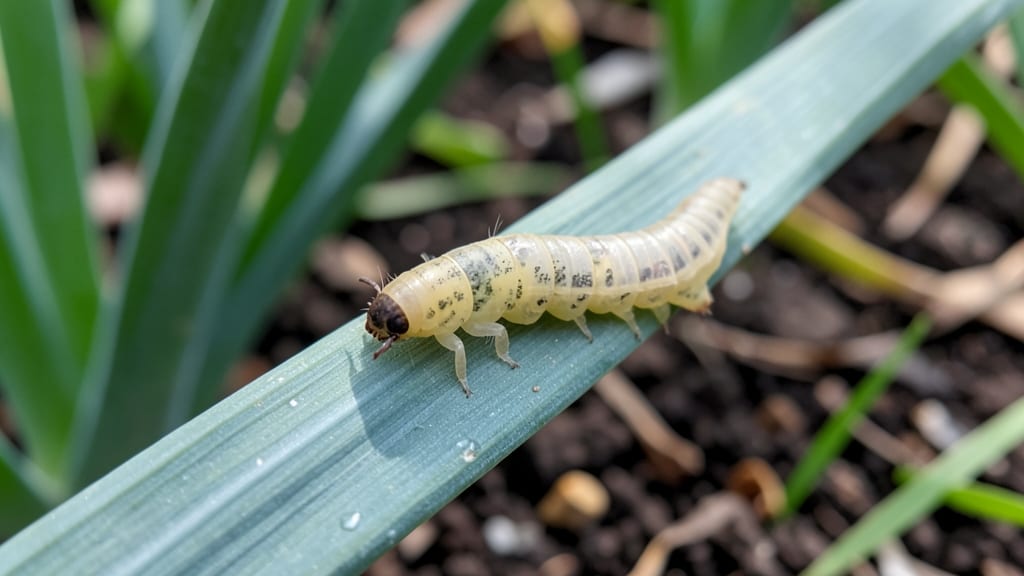
Your onions look like Swiss cheese, and you’re ready to ditch the harsh sprays. 🌱 The onion leaf-eating caterpillar turns healthy greens into skeleton leaves overnight—but there’s a smarter way to stop it without harming bees or your garden’s balance.
These striped caterpillars (often Acronicta lepusculina) target onions, leeks, and garlic, leaving behind ragged edges and chewed foliage. The good news? They’re easy to spot early, and organic fixes like neem oil or Bt spray work better than chemicals. I’ve saved entire beds using these methods—no residue, no guilt.
You’ll learn to handpick them at dawn (they’re sluggish then), attract their natural predators like parasitic wasps, and even use row covers to block them entirely. The key is acting fast—once they pupate, sprays won’t help. Works for home gardens, small farms, and even container-grown alliums.
Let’s get those onions back to full strength!
Root Causes Of Garden Devourers
Understanding why caterpillars target your onion leaves starts with unpacking their natural behaviors, environmental triggers, and plant chemistry. These tiny pests aren’t just random snackers—they’re following a well-honed survival strategy. Let’s break down the key reasons behind their leaf-munching habits.
Caterpillars, including the notorious onion leaf caterpillar (often Acronicta lepusculina or Trichoplusia ni larvae), rely on plant volatiles—chemical signals released by stressed or damaged plants.
Onions, especially when young or under stress (like drought or poor soil), emit sulfur compounds (e.g., allyl sulfides) that act like an all-you-can-eat sign. 🚩
- Stressed plants = stronger scent signals: When onions experience nutrient deficiencies (especially nitrogen or potassium), their leaves release more attractive odors.
- Young shoots are sweeter: New onion growth contains higher sugar levels, making it a caterpillar’s preferred delicacy.
- Damage triggers a feedback loop: The more leaves they eat, the more the plant screams “eat me!” via volatile organic compounds (VOCs).
Actionable fix: Boost plant resilience by watering deeply (1–2 inches per week) and fertilizing with compost to mask the “distress signal.”
Caterpillars are growth machines—they shed their skin 4–5 times as they mature, and each molt requires 20–30x more food than their previous size. 📈 Onion leaves are soft, high in water, and easy to digest, making them an ideal fast-food option.
- First instars (tiny larvae): Start with microscopic bites on leaf edges, testing for safety.
- Later stages (fattening up): Consume entire leaves in hours, preparing for pupation.
- Timing matters: Outbreaks peak in late spring to early summer when moths lay eggs in warm, moist soil near onion beds.
Actionable fix: Monitor egg clusters (tiny yellow dots on leaf undersides) and remove them manually before they hatch.
Caterpillars don’t just find onions—they seek out environments that maximize their survival. Onion gardens often provide the perfect conditions:
| Factor | Why It Attracts Caterpillars | How to Disrupt It |
|---|---|---|
| Moist soil | Eggs need dampness to hatch; larvae love humidity. | Improve drainage with sand/compost mix. |
| Weedy borders | Wild onions, garlic, and chives act as alternative hosts. | Remove weeds within 10 feet of crops. |
| Nighttime activity | Cool evenings = less predator activity. | Use yellow LED lights at night to repel moths. |
Actionable fix: Rotate crops annually and avoid planting onions in the same spot for 3+ years to break the cycle.
Caterpillars aren’t just eating—they’re hiding in plain sight. Their camouflage (green bodies with white stripes) mimics healthy onion leaves, while their nocturnal feeding avoids birds and parasitic wasps. 🕵️♂️
- Regurgitation trick: Some species (like Trichoplusia ni) spit acidic fluid to deter predators.
- Silken shelters: Later-stage caterpillars spin webs between leaves to hide during the day.
Actionable fix: Handpick larvae at dusk (when they’re most active) and drop them in soapy water. 🕊️
Warmer winters and earlier springs extend caterpillar seasons, giving them more time to feast. Here’s how climate plays a role:
- Mild winters: Fewer freeze deaths = larger moth populations next spring.
- Heavy rains: Washes away natural predators (e.g., ground beetles) and softens soil for egg-laying.
- Drought stress: Weakens onions, making them easier targets.
Actionable fix: Mulch with straw to stabilize soil moisture and plant companion flowers (like marigolds) to attract predator insects.
Pro Tip: 💡 Early intervention is key—once caterpillars reach 1 inch long, they’re nearly impossible to control organically. Scout your garden weekly (especially undersides of leaves) to catch them young!
How to Stop Caterpillar Damage Fast
Caterpillars munching on your onion leaves can feel like a nightmare, but the good news is you don’t need harsh chemicals to win this battle. Below are targeted, organic solutions mapped to common causes—plus prevention tips to keep your plants safe long-term.
If you’ve spotted chewed leaves or tiny green worms, these steps will help stop the damage fast without harming your garden’s ecosystem.
🔥 Handpick & Remove Them (Best for Small Infestations)
Why it works: Caterpillars are slow-moving and easy to spot—especially in the early morning when they’re sluggish. How to do it:
- 👨🍳 Wear gloves (some caterpillars have irritating hairs).
- 🕵️♂️ Inspect leaves under the soil and on the undersides of plants.
- 💥 Drop them in soapy water (1 tbsp dish soap + 1 gallon water) to kill them instantly.
- ⏰ Do this daily for 3–5 days to catch any stragglers.
Pro tip: 💡 If handpicking feels tedious, try a drop cloth method—shake plants over a dark sheet, then dispose of the caterpillars.
🍳 Organic Sprays for Heavy Infestations
If the problem is widespread, these non-toxic sprays disrupt caterpillars’ feeding and growth without killing beneficial insects.
| Solution | How to Use | Best For |
|---|---|---|
| Neem Oil Spray | Mix 1 tbsp neem oil + 1 tsp mild soap + 1 quart water. Spray evenly on leaves (avoid blooming plants). Repeat every 3–5 days. | All life stages (eggs, larvae, adults) |
| Bacillus Thuringiensis (Bt) | Sprinkle Bt powder on leaves or mix with water for a spray. Safe for bees but kills caterpillars in 24–48 hours. | Young caterpillars (less effective on older ones) |
| Spinosad Spray | Follow label instructions (usually 1–2 tbsp per gallon). Reapply after rain. | Severe infestations (organic-approved) |
⚠️ Warning: Avoid spraying Bt or spinosad when bees are active—these are safe for humans and pets but can harm pollinators.
🌿 Physical Barriers & Traps
Prevent caterpillars from reaching your plants in the first place with these low-effort tactics.
- 🧶 Row Covers (Floating Fabric): Lightweight floating row covers (like Agribon) block caterpillars while letting sunlight and water through.
Secure edges with bricks or soil. - 🥄 Collar Barriers: Wrap cardboard collars around onion stems (bury 1 inch in soil) to stop crawling pests. - 🍎 Pheromone Traps: Use moth/caterpillar traps (like for cabbage worms) to lure adults away from your garden.
Pro tip: 🌡️ Heat treatment works for small pots—place them in a sunny spot for a few hours to raise temps above 90°F (32°C), which caterpillars can’t survive.
Once you’ve dealt with the current infestation, break the cycle with these long-term strategies:
🌱 Plant Smart & Rotate Crops
- 🥬 Interplant with repellent herbs: Caterpillars dislike dill, mint, or tansy—plant these near onions.
- 🔄 Rotate plant families: Avoid growing alliums (onions, garlic, leeks) in the same spot yearly—this starves soil pests.
- 🌿 Choose resistant varieties: Some onions (like ‘Red Baron’ or ‘Stuttgarter’) are less appealing to caterpillars.
🐝 Encourage Natural Predators - 🦋 Ladybugs, lacewings, and parasitic wasps eat caterpillar eggs.
Attract them with: - 🌼 Native wildflowers (like alyssum or dill). - 🍄 Avoid broad-spectrum pesticides (even organic ones can harm these helpers). - 🐸 Chickens or ducks: If you have backyard poultry, let them free-range near onion beds—they’ll snack on caterpillars!
🌙 Timing & Garden Hygiene
- 🌅 Early planting: Start onions as early as possible—young plants are less attractive to pests.
- 🧹 Clean up debris: Remove chewed leaves and plant waste after harvest to eliminate hiding spots.
- 🌱 Mulch with straw: A 2-inch straw layer confuses caterpillars and retains moisture.
Final thought: 🎯 The key is speed + prevention—act fast when you spot the first signs, then strengthen your garden’s defenses for next season. With these methods, you’ll enjoy healthy, caterpillar-free onions without a single chemical spray!
Frequently asked questions
What do onion leaf-eating caterpillars look like?
These caterpillars are usually green with white stripes or pale green with darker markings, blending into onion leaves. They grow up to 1.5 inches long and often hide along leaf edges or under silken webs during the day.
Are these caterpillars harmful to humans?
Most onion leaf caterpillars are harmless to humans, but some species (like Trichoplusia ni) may cause mild skin irritation if handled without gloves. Always wear protective gear when removing them from plants.
How can I tell if my onions are being eaten by caterpillars vs. slugs?
Caterpillars leave irregular, jagged holes along leaf edges, while slugs create smooth, slime trails and chew larger, ragged patches. Look for tiny green worms during the day—slugs hide in damp areas and are active at night.
Will my onions still grow if the leaves are eaten?
Yes! Onions store energy in their bulbs, so they can survive even with significant leaf damage. Focus on protecting the lower leaves (closer to the bulb) and remove caterpillars early to ensure full bulb development.
Can I use coffee grounds to repel onion leaf caterpillars?
Coffee grounds can help slightly by improving soil health and repelling some pests, but they’re not a reliable solution for caterpillars. For better results, combine them with neem oil sprays or row covers for maximum protection.