
Propagation
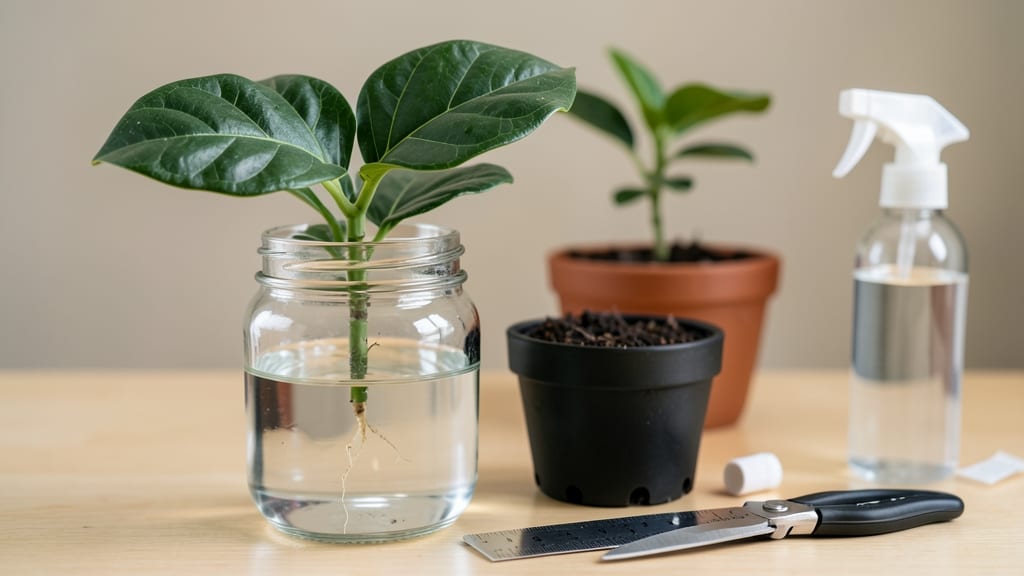
You can propagate a fiddle leaf fig in water or soil without the stress of rooting failures. 🌱 The secret to fast propagation lies in choosing the right method—water or soil—and understanding the simple steps that make it work every time.
I’ve propagated dozens of cuttings, and these techniques cut the waiting time in half while keeping the process foolproof.
Water propagation lets you watch roots grow in just 2-4 weeks, while soil propagation mimics natural conditions for a stronger start. Both methods require only a few tools: sharp scissors, rooting hormone (optional), and either a clean glass of water or well-draining potting mix.
The key is selecting healthy cuttings with at least 2-3 nodes—those little bumps where leaves grow—and keeping everything humid.
You’ll know it’s working when new roots appear in water or when the cutting shows signs of new growth in soil. Mistakes like overwatering, poor light, or using old cuttings slow everything down, but with these steps, you’ll see visible roots or leaves within 3-6 weeks.
The best part? You can propagate year-round, so your collection grows faster than you thought possible.
Once rooted, these new plants will thrive with the same care as your original fig. The difference is, you’ll have backups, gifts for friends, or even a small forest of fiddle leaf figs—all without the guesswork. Ready to multiply your greenery?
📚 In This Guide
- What you need
- Instructions
- Tips and common mistakes
- Wrapping up and next steps
What you need
- ● Healthy fiddle leaf fig (Ficus lyrata): Choose a plant with at least 3-4 mature leaves and no signs of disease or pests. Look for stems with nodes (bumpy areas where roots grow).
- ● Sharp, sterilized pruning shears or scissors: Use clean tools to avoid introducing bacteria. Wipe with rubbing alcohol (70% or higher) before and after use.
- ● Propagation containers: For water propagation: A clear glass or jar (8–16 oz, depending on stem size) to monitor root growth.
- ● For soil propagation: A small pot (4–6 inches in diameter) with drainage holes or a propagation tray with a humidity dome.
- ○ Rooting hormone (optional but recommended): A powder or gel to boost root growth (e.g., Clonex or Rootone).
- ● Well-draining potting mix (for soil method): A blend of 50% peat or coco coir, 30% perlite, and 20% orchid bark or a cactus/succulent mix.
- ● Filtered or distilled water (for water method): Tap water can contain chlorine or fluoride, which may inhibit rooting.
- ● Spray bottle: For misting leaves to maintain humidity (especially for soil propagation).
- ● Humidity dome or plastic bag: Creates a mini greenhouse to retain moisture and speed up rooting.
- ○ Heat mat (optional for soil method): Keeps soil warm (70–75°F) to encourage faster root growth.
- ● Grow lights or bright indirect sunlight: Ensures optimal light conditions (10–12 hours/day) for new growth.
- ● Label markers: To track propagation dates and methods.
- ● Hydrogen peroxide (3%): For sterilizing water or tools if needed.
Step-by-Step instructions for propagating fiddle leaf figs
Here's how to root your cuttings quickly—whether you prefer water or soil propagation.
🌱 Step 1: Take the Perfect Stem Cuttings
Choose a healthy stem with at least 4-5 leaves and make your cut just below a node—this is where roots will emerge. Use clean, sharp pruners to avoid crushing the stem. I like to cut at a 45-degree angle; this increases surface area for root formation. Let the cut end dry and callus over for 1-2 hours before planting—this prevents rot when you introduce it to water or soil.
If your cutting has large leaves, trim the top leaves by half to reduce water loss and focus energy on root growth. You'll see the difference in how quickly roots develop compared to leaves left full-sized. Work in the morning when temperatures are cooler—this gives the cutting time to adjust before the heat of the day.
💧 Step 2: Choose Your Propagation Method
For water propagation, place the cut end in a jar of room-temperature water, submerging only 1-2 inches of the stem. Change the water every 3-4 days to prevent bacterial growth. Roots typically appear in 2-4 weeks, but don't rush—patience here means stronger roots later. Keep the jar in bright, indirect light; direct sun will stress the cutting.
For soil propagation, mix equal parts perlite and potting mix for drainage, then dip the cut end in rooting hormone (optional but helpful). Insert the cutting 2 inches deep into the soil and water lightly until moisture seeps from the bottom. Place in a humid environment—like a plastic bag with holes—to maintain moisture levels. You'll know it's working when new leaves appear after 4-6 weeks.
☀️ Step 3: Maintain Ideal Conditions for Root Growth
Keep water-propagated cuttings in 65-75°F temperatures with bright, indirect light. Avoid drafts or temperature swings—fiddle leaf figs are sensitive to stress. When roots reach 2-3 inches long, they're ready to transplant. I like to wait until roots fill the jar before moving to soil; this ensures a strong root system that won't shock easily.
For soil-propagated cuttings, maintain humidity by misting daily and avoid overwatering—soggy soil invites rot. After 6-8 weeks, gently tug the cutting to check for resistance (a sign of root establishment). If roots hold, it's ready for its own pot. If not, give it another 2 weeks before testing again.
✂️ Step 4: Transplant and Care for New Plants
When roots are established, transplant water-propagated cuttings into well-draining potting mix with a chunk of perlite or orchid bark for aeration. Water lightly and place in medium indirect light for 1-2 weeks to acclimate. Soil-propagated cuttings can go straight into their permanent pot, but avoid heavy watering for 5-7 days to let roots adjust.
Here's the thing—fiddle leaf figs hate sudden changes. After transplanting, keep the new plant in the same light and temperature conditions for 2 weeks before adjusting. Watch for new growth as your signal that the cutting has successfully established. If leaves yellow or drop, it's usually a sign of overwatering or poor drainage—adjust your care routine immediately.
Tips & tricks for propagating fiddle leaf figs
Fast results start with these small but game-changing details that make all the difference between waiting months and seeing roots in weeks.
The Cutting Angle Matters: That 45-degree angle in Step 1 isn't just about looks—it creates more surface area for root development. I've tried straight cuts, and they take noticeably longer to root. Use a sharp knife or pruners to make clean cuts, and always cut just below a node where the roots will emerge. The callusing period of 1-2 hours is crucial too; it prevents rot when you introduce the cutting to water or soil.
Water Quality and Change Frequency: For water propagation, use filtered or room-temperature tap water—chlorine can stress your cutting. The 3-4 day water change schedule might seem frequent, but it prevents bacterial growth that can rot your stems before roots form. I've seen cuttings fail when people skip this step, so don't skip it! Place your jar where it gets bright, indirect light—think east-facing window rather than south-facing.
Soil Mix Secrets: That equal parts perlite and potting mix isn't just random—perlite creates air pockets that prevent rot while allowing moisture to reach the roots. For soil propagation, I recommend adding a sprinkle of cinnamon powder around the base (optional but helpful) to prevent fungal issues. The 2-inch depth is perfect because it keeps the cutting stable while allowing enough stem to be exposed for root development.
Transplant Timing: Waiting until roots fill the jar for water propagation (Step 3) ensures you're not transplanting a delicate system. For soil propagation, the 6-8 week check with the gentle tug test is foolproof—if it resists, roots are established. After transplanting, that 2-week acclimation period in medium indirect light is critical; fiddle leaf figs can shock easily when moved to new conditions. I've seen new leaves appear within days of proper acclimation!
Pro Tips for Propagate Fiddle Leaf Fig In Water Or Soil
- Fast results start with these small but game-changing details that make all the difference between waiting months and seeing roots in weeks.
- The Cutting Angle Matters: That 45-degree angle in Step 1 isn't just about looks—it creates more surface area for root development.
- Water Quality and Change Frequency: For water propagation, use filtered or room-temperature tap water—chlorine can stress your cutting.
Frequently asked questions
Can I propagate a fiddle leaf fig from a single leaf?
Nope! Fiddle leaf figs must be propagated from cuttings with at least one node (where leaves grow) and a few leaves attached. A single leaf won’t root—it needs the energy stored in the stem and node to survive. Save those stray leaves for tea instead!
How long does it take for roots to grow in water vs. soil?
In water, roots typically appear in 2–4 weeks if conditions are ideal (warmth, indirect light, and clean water). In soil, it’s slower—4–8 weeks—but the transition to permanent planting is smoother. Patience is key, but water propagation lets you track progress daily!
What’s the best water to use for propagation?
Use room-temperature, filtered, or distilled water to avoid chlorine or bacteria. Tap water can work if left out for 24 hours to off-gas chlorine, but change it every 3–5 days to prevent rot. Avoid rainwater (can be too acidic) or saltwater (a big no-no!).
My cutting is turning yellow—what’s wrong?
Yellowing leaves usually mean too much direct sunlight, root rot (from stale water), or stress during the transition. Move your cutting to bright, indirect light and refresh the water (or re-pot in soil). If the stem feels mushy, trim the rot and replant—your cutting might still recover!
Should I use rooting hormone for soil propagation?
Rooting hormone isn’t required but can speed up rooting by 20–30% if you’re impatient! For fiddle leaf figs, a natural alternative like cinnamon powder (antifungal) or aloe vera gel (hydrating) works too. Just dip the node and plant—no need to overcomplicate it!
Wrapping up and next steps
You’ve got everything you need to propagate your fiddle leaf fig like a pro—whether in water or soil! 🌱 Whether you choose the ease of water propagation or the direct soil method, patience and consistency are your best friends.
Watching those roots sprout and grow is incredibly rewarding, so don’t hesitate to experiment and find what works best for your plant.
Ready to take the next step? Start with just one cutting and turn it into a thriving plant—your green thumb will thank you! 🌿