
Pruning
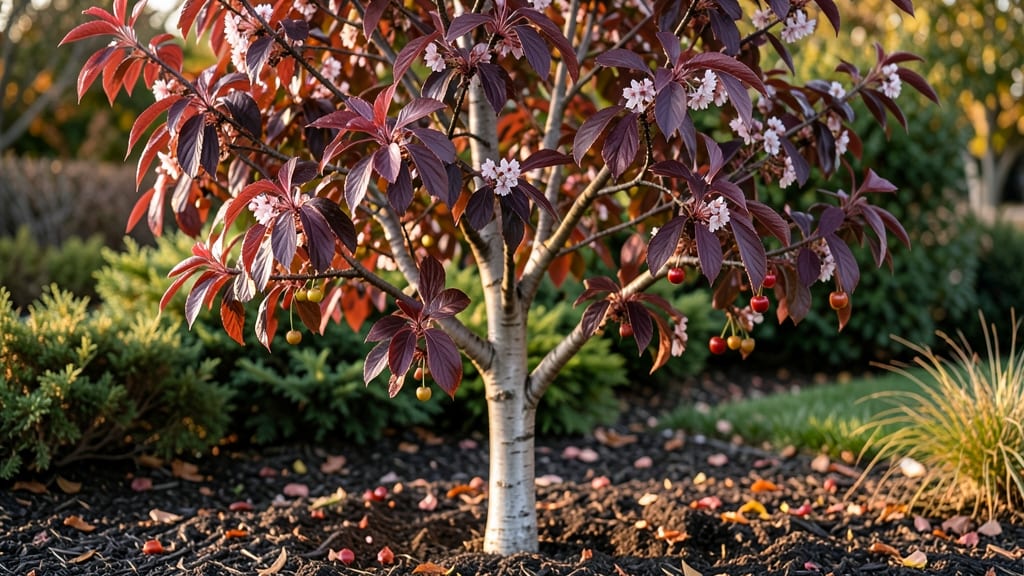
The purple leaf sand cherry tree transforms your landscape with foliage that shifts from deep burgundy to fiery red through every season—if you prune it right. ✂️ I learned the hard way that this tree’s drama depends on precision trimming, not just any old cuts.
The first time I saw my tree’s leaves turn dull brown instead of vibrant purple, I knew I’d missed the mark on timing and technique.
This tree thrives in full sun and well-draining soil, but its real magic happens when you shape it in late winter or early spring. A foolproof approach means cutting back 1/3 of the oldest stems each year to encourage fresh growth and that signature purple hue.
The payoff? A tree that stays lush, compact, and showstopping from spring blooms through winter’s last frost.
You’ll also get those delicate white spring flowers followed by tiny, edible cherries—though most gardeners grow this cultivar for its stunning foliage alone. The key is balancing pruning with patience; rush it, and you’ll end up with leggy branches.
Do it right, and you’ll have a tree that turns heads year-round.
Perfect for small gardens, urban landscapes, or as a specimen plant where its color-changing leaves can be the star. Whether you’re trimming for shape or health, this guide keeps your purple leaf sand cherry looking its absolute best—no guesswork involved.
📚 In This Guide
- What you need
- Instructions
- Tips and common mistakes
- Wrapping up and next steps
What you need
- ● Pruning shears: Bypass pruners (sharp, clean, and disinfected—think rubbing alcohol or bleach solution). Size: 6-8 inches for medium branches.
- ● Loppers: For thicker branches (½–1½ inches in diameter). Quantity: 1 pair (extendable handles help!).
- ● Hand pruners: For precision work on small stems. Quantity: 1 pair (ergonomic grip recommended!).
- ● Pruning saw: For branches >1½ inches thick. Type: Curved blade for clean cuts.
- ● Gloves: Heavy-duty, cut-resistant (protects against thorns and sap). Material: Leather or synthetic blend.
- ● Disinfectant: 1-part bleach to 9 parts water (to prevent disease spread between cuts).
- ● Rag or paper towels: For wiping tools between cuts.
- ○ Ladder or stool: Sturdy and tall enough to reach the tree’s canopy safely. Optional: A helper for stability!
- ● Marking twine or flags: Colored string or small flags to tag branches for removal (helps visualize your vision).
- ● Trash bags: Heavy-duty (for collecting pruned branches). Quantity: 2–3 bags.
- ● Pruning sealant: For large cuts (>½ inch) to prevent sap bleeding (e.g., tree wound dressing).
- ● Extension pole: With a saw attachment for high branches (saves ladder time!).
- ● Camera or sketchpad: To document the tree’s shape before/after pruning (great for planning!).
- ● Mulch: Organic mulch (e.g., shredded bark) to replenish nutrients after trimming.
Step-by-step guide to pruning your purple leaf sand cherry tree
This is how I keep my tree's vibrant foliage thriving year-round with minimal effort.
✂️ Step 1: Time Your First Pruning for Late Winter
Prune your purple leaf sand cherry tree in late winter (February or early March) while it's still dormant. This timing prevents stressing the tree when it's actively growing. Look for bare branches with no buds—these are dead and should be removed completely at the base. I always start by removing any branches that cross or rub against each other, as these create wounds that invite disease.
Use sharp, clean pruning shears to make cuts just outside the branch collar—the swollen area where the branch meets the trunk. Avoid leaving stubs, as they can rot and attract pests. If a branch is larger than ½ inch thick, use a pruning saw instead. This first cut sets the foundation for healthy growth, so take your time and don’t rush.
🌿 Step 2: Shape the Tree in Early Spring
Once new growth begins in early spring, step back and assess the tree’s shape. Purple leaf sand cherry trees naturally grow in an open, airy form, so I aim to maintain that natural structure. Remove any weak or spindly growth that’s growing inward or downward—these branches compete for energy and can block sunlight from reaching the center of the tree.
Focus on thinning out the canopy to improve airflow. I like to keep the outer branches slightly longer than the inner ones to encourage a full, rounded silhouette. Cut back any branches that are growing too close to the ground, as they can become tangled in lawn equipment or block foot traffic. This step ensures your tree stays balanced and continues producing its signature purple foliage.
☀️ Step 3: Maintain Through the Growing Season
During the growing season, do light maintenance pruning as needed. Remove any dead, diseased, or damaged branches immediately to prevent the spread of problems. If you notice branches growing too long or leggy, you can trim them back by ⅓ to ½ of their length to encourage bushier growth. Always make cuts just above a leaf node or bud to promote new growth in the right direction.
Watch for suckers—shoots that grow from the base of the tree or along the trunk. These compete with the main structure for nutrients, so remove them as soon as you spot them. I also check for any branches that are growing too densely and thin them out to keep sunlight reaching all parts of the tree. This ongoing care keeps the tree looking its best and ensures vibrant purple leaves all season.
⏰ Step 4: Prepare for Winter with Light Pruning
In late fall, give your tree a final light pruning to remove any dead or crossing branches before winter sets in. This reduces the risk of damage from heavy snow or ice. Avoid heavy pruning in fall, as it can stimulate new growth that won’t harden off before cold weather. Instead, focus on cleaning up the tree and removing anything that might harbor pests or diseases over the winter.
After pruning, give the tree a deep watering to help it recover and prepare for dormancy. I also apply a 2-3 inch layer of mulch around the base (but not touching the trunk) to protect the roots from freezing temperatures. This final step ensures your purple leaf sand cherry tree stays healthy and ready to burst into color again in spring.
Tips & tricks for perfect purple leaf sand cherry tree care
These simple strategies will help you maintain that stunning purple foliage with confidence.
Tool Prep: Before you start pruning, take 5 minutes to clean and sharpen your tools. I run pruning shears through rubbing alcohol and wipe them dry to prevent spreading disease between cuts. For branches thicker than ½ inch, I use a pruning saw with a fine-tooth blade—dull blades tear wood and create jagged wounds that heal poorly. This small step makes all the difference in your tree's long-term health.
Seasonal Timing Secret: The late winter timing in Step 1 isn't just about avoiding active growth—it's about catching potential problems early. I look for branches that died over winter but weren't obvious until now. These dead branches can harbor pests or diseases that might spread when spring growth begins. Removing them now prevents future issues and keeps your tree's energy focused on healthy growth.
Visual Pruning Guide: When shaping in early spring (Step 2), I use the "open vase" approach. Imagine looking at your tree from above—you want to see light filtering through the center. Cut branches that block this light, even if they look healthy. For reference, I aim to remove about 10-20% of the tree's total foliage each year. This might sound aggressive, but it actually encourages more vibrant purple leaves by improving air circulation and sunlight penetration.
Growing Season Maintenance: During the growing season (Step 3), I make it a habit to do a quick "branch health check" every 4-6 weeks. Tap each branch gently—if it sounds hollow or crumbles, it's dead. For leggy branches, I cut back to just above a leaf node where you see a small bump. This bump is where new growth will emerge, and it's your visual cue for where to make the cut. The ⅓ to ½ length reduction mentioned is actually quite flexible—you can go up to ⅔ if needed, but never cut back more than that in one season.
Pro Tips for Purple Leaf Sand Cherry Tree
- These simple strategies will help you maintain that stunning purple foliage with confidence.
- Tool Prep: Before you start pruning, take 5 minutes to clean and sharpen your tools.
- Seasonal Timing Secret: The late winter timing in Step 1 isn't just about avoiding active growth—it's about catching potential problems early.
Frequently asked questions
Got questions about keeping your purple leaf sand cherry tree looking its best year-round? You’re in the right place! Here are answers to the most common queries—from pruning timing to troubleshooting—so you can master this stunning shrub with confidence.
When is the best time to prune my purple leaf sand cherry tree?
Prune your tree in late winter or early spring (before new growth starts) to avoid removing next year’s vibrant foliage. Light shaping can also be done in summer after flowering, but avoid heavy cuts then—it stresses the plant. Pro tip: Never prune in fall, as new growth won’t harden off before winter!
How much can I trim back my purple leaf sand cherry tree?
You can safely remove up to one-third of the plant’s growth in a single pruning session. For dramatic shaping, spread cuts over 2–3 years to avoid shocking the tree. Warning: Over-pruning risks exposing bare wood or reducing next year’s color intensity. Aim for a balanced silhouette—think “open vase” shape for airflow and light.
Will pruning affect the tree’s berries or purple leaves?
No—pruning won’t harm the tree’s iconic purple foliage or edible (but tart!) sand cherries. The tree prioritizes leaf production, so focus on structural cuts first. However, if you prune too late (after June), you might reduce the current year’s berry crop. Bonus: Pruning encourages brighter purple leaves by improving sunlight penetration!
Why are my purple leaf sand cherry’s leaves turning brown or yellow?
Brown/yellow leaves usually signal overwatering, underwatering, or fungal issues. Check soil moisture—it should stay evenly damp but not soggy. Fungal problems (like powdery mildew) thrive in humid conditions; prune for airflow and apply neem oil if needed. Red flag: If leaves drop early, it’s often root stress—adjust watering or mulch better.
Can I grow a purple leaf sand cherry tree in a container?
Yes! Choose a large pot (at least 20 gallons) with drainage holes and use well-draining soil. Container trees need more frequent watering and winter protection (move indoors or wrap the pot). Size tip: Dwarf cultivars like ‘Montrose’ are ideal for containers—expect 6–8 feet tall with proper pruning.
Does this tree need winter care?
In USDA Zones 5–8, protect young trees with mulch (3–4 inches) and burlap wraps if temps drop below 10°F. Mature trees are hardy but may need light pruning to remove frost-damaged branches in early spring. Pro move: Avoid heavy pruning in winter—wait until late dormancy for best results.
Wrapping up and next steps
The purple leaf sand cherry tree brings vibrant color and texture to your landscape year-round—but its magic lies in the precision of your pruning! With the right tools, timing, and techniques, you’ll keep its foliage lush, its shape refined, and its growth healthy.
Remember, confidence comes with practice, so don’t hesitate to start small and refine your skills over time.
Ready to transform your yard? Grab your pruners, mark your calendar for early spring, and dive in! Your purple-leaved masterpiece is waiting—one careful cut at a time! 🌿✂️