
Shrubs
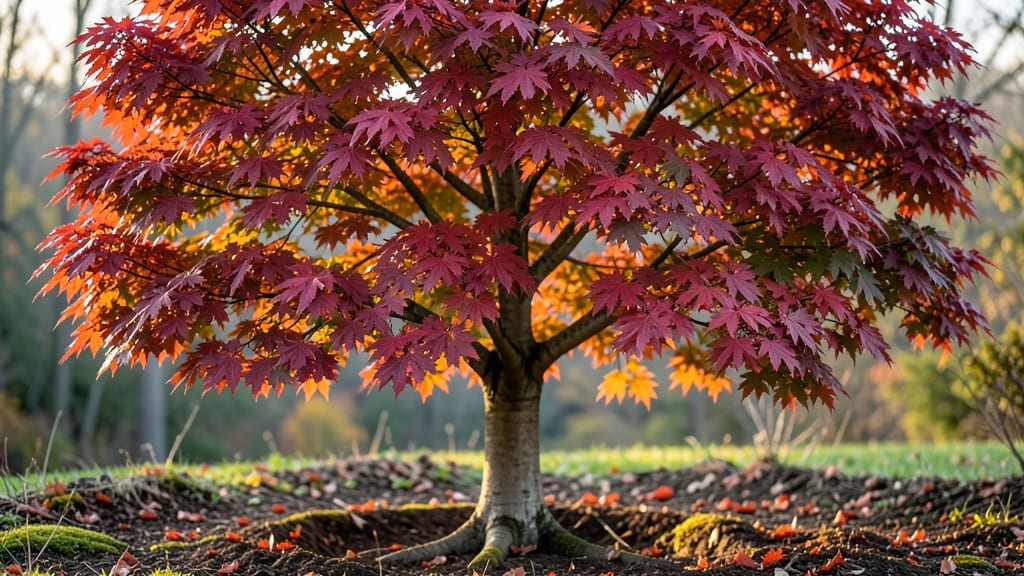
The brilliant red maple leaf color in autumn results from anthocyanins, pigments that form when sugars accumulate in leaves as chlorophyll breaks down under shorter daylight and cooler temperatures. This creates striking contrasts against remaining greens and oranges.
The red maple's autumn transformation is nature's masterpiece, where chemistry meets climate. 🍂 When summer ends, leaves stop producing chlorophyll, but sugars trapped in the leaves trigger anthocyanin production—those vibrant red pigments.
Cooler temperatures accelerate this process, while bright sunlight enhances the color intensity. This explains why some years deliver more dramatic displays than others.
What's fascinating is how genetics play a role: certain red maple varieties like 'Autumn Flame' produce deeper reds due to higher anthocyanin levels. The color shift isn't just about aesthetics—it's a survival strategy. These pigments act as sunscreen for leaves, protecting them from winter damage while they prepare to fall.
For gardeners, this means choosing the right cultivar and providing proper care can make your fall foliage truly spectacular.
💡 In This Article
- How Anthocyanins Create Red Maple’s Stunning Fall Colors
- Best Red Maple Varieties for Vibrant Autumn Foliage
How anthocyanins create red maple’s stunning fall colors
The red maple's autumn spectacle begins when chlorophyll—a green pigment essential for photosynthesis—starts breaking down as daylight shortens. This degradation exposes other pigments hidden in the leaf's cells, including carotenoids (yellows and oranges) and xanthophylls.
But what makes red maples stand out is their ability to produce anthocyanins, water-soluble pigments that form in the leaf's vacuoles when sugars accumulate. These sugars act as a substrate for anthocyanin synthesis, triggered by cooler temperatures and shorter days.
Anthocyanins aren't just randomly produced—they're a strategic response to environmental stress. When temperatures drop to 50-60°F and daylight shrinks to 12 hours or less, the leaf's metabolic processes shift.
The trapped sugars (from photosynthesis) combine with amino acids and specific enzymes to create anthocyanins, which range in color from red to purple depending on pH levels.
In red maples, the leaves' slightly acidic environment favors the red spectrum, creating that signature fiery hue. 🌿 For comparison, blueberries contain similar anthocyanins but appear blue due to their alkaline environment.
Genetics play a crucial role in how intense the red becomes. Some red maple cultivars, like 'Autumn Flame', produce 30-50% more anthocyanins than others due to specific gene expressions that regulate pigment production. These genes control enzymes like UDP-glucose flavonoid 3-O-glucosyltransferase, which directly influences anthocyanin synthesis.
Cooler nights (below 45°F) further enhance color development by slowing chlorophyll breakdown while accelerating sugar accumulation—a perfect storm for vibrant fall displays.
Light exposure also fine-tunes the color show. Leaves receiving direct sunlight develop richer reds because sunlight boosts sugar production through photosynthesis, while shaded leaves produce more muted tones. This explains why the top and outer leaves on trees often appear more vivid.
The interplay between genetics, temperature, and light creates the stunning variations we see in autumn—from deep crimson to fiery orange-red. 🍁 What's less obvious is how these pigments protect the leaf: anthocyanins act as antioxidants, shielding cell structures from damage during the transition to winter.
Interestingly, the timing of color change varies by region. In northern climates, red maples may peak in late September to early October, while southern trees often wait until November due to milder autumns. This regional difference highlights how temperature gradients influence the biochemical timeline of leaf coloration.
For gardeners, understanding these factors means selecting cultivars suited to your climate and providing optimal growing conditions to maximize fall foliage impact.
One often-overlooked detail is how leaf thickness affects color intensity. Thicker leaves, like those on mature red maples, contain more vacuoles where anthocyanins can accumulate, resulting in deeper hues. Younger leaves or those on stressed trees may produce less vibrant colors due to reduced sugar reserves.
This biological nuance explains why some years deliver more spectacular displays than others—it's not just about the weather but also the tree's overall health and energy reserves. 💫