
Diseases
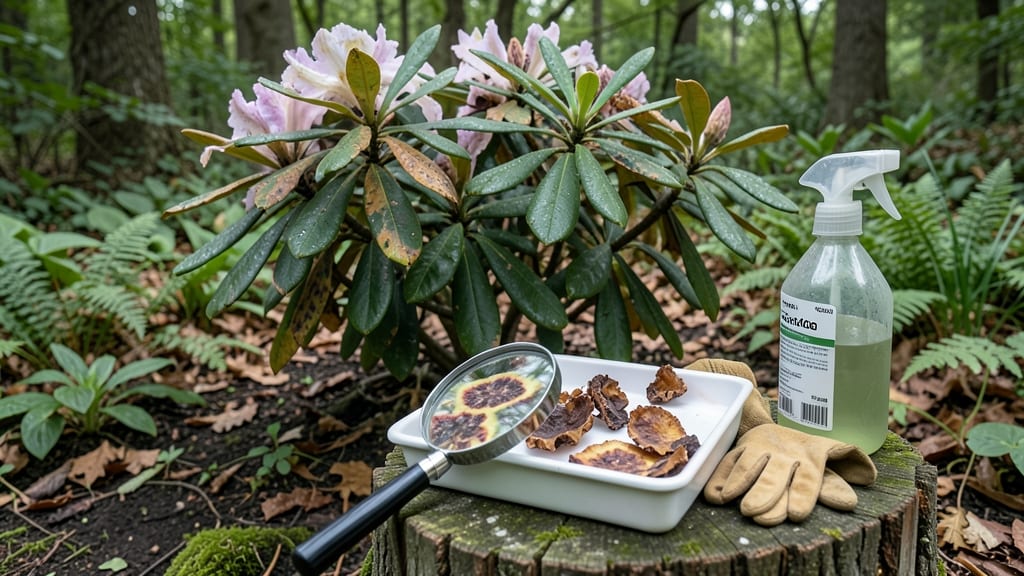
That first brown spot on your rhododendron leaves is a sign of rhododendron diseases: leaf spot, and if ignored, it could turn your shrub into a leaf-litter disaster. 🌿 I’ve battled leaf spot on my own rhodies, and the difference between a quick fix and a full-blown crisis comes down to knowing the right steps—starting with proper identification and acting fast.
The culprits are usually Lophodermium or Kabatiella fungi, thriving in damp, shady conditions where airflow gets trapped. You’ll spot them as dark, irregular patches with yellow halos, often on older leaves first.
The good news? This isn’t a death sentence—it’s a call to action. Prune out infected leaves immediately, and you’ll stop the spread before it reaches the stems.
Once you’ve cleaned up the damage, focus on prevention: water at the base (not overhead), mulch to improve airflow, and space plants properly so they’re not crowded.
A copper fungicide spray applied in early spring gives extra protection, and within a season, your rhododendron can bounce back with fresh, spot-free foliage.
If the spots keep coming back year after year—or if the plant looks weak beyond just the leaves—it might be time to call in a local arborist. Some fungal infections weaken roots over time, and professional help ensures you’re not treating symptoms while the real problem festers underground.
Why it happens
Leaf spot diseases on rhododendrons aren’t just random bad luck—they’re the result of a perfect storm of environmental conditions, plant stress, and microbial opportunists. Understanding why these spots appear is the first step to preventing them. Let’s break down the key culprits behind this common woody shrub woe.
🌡️ Overly Humid or Wet Conditions
Fungal pathogens like Lophodermium or Septoria (common leaf spot culprits) thrive in moisture.
When rhododendrons sit in damp soil or endure prolonged leaf wetness—especially from rain, overhead irrigation, or poor airflow—their leaves become a fungal buffet. Why? Fungal spores germinate and penetrate leaf tissue when surfaces stay wet for more than 6–12 hours. Even morning dew can be problematic if it lingers.
- Actionable insight: Space plants 3–5 feet apart for airflow, and water at the base (never overhead).
- Pro tip: Mulch with pine needles (acid-loving rhododendrons love this!) to improve drainage and reduce soil moisture retention. 🌲
🍃 Poor Air Circulation in Dense Foliage
Rhododendrons with thick, bushy growth trap humidity. When leaves rub together or stagnant air pools, spores spread like wildfire. Why? Stagnant air slows evaporation, keeping leaves damp longer—and fungal spores love that environment. Lophodermium (a needle-like leaf spot) often flares up in tight, shaded canopies.
- Actionable insight: Prune to open the center of the plant by 1/3 to boost airflow.
- Pro tip: Avoid planting rhododendrons where they’ll be constantly shaded by trees or structures. 🌳➡️💨
🌱 Nutrient Deficiencies or Over-Fertilization
Leaf spots often signal underlying stress. Why? When rhododendrons lack magnesium (Mg) or iron (Fe), their leaves weaken, making them vulnerable to infection. Conversely, excess nitrogen promotes lush, soft growth that’s highly susceptible to fungal invasion. Symptom clue: Yellowing between veins (Mg deficiency) or dark, water-soaked spots (over-fertilized stress).
- Actionable insight: Test soil pH (ideal: 4.5–6.0) and amend with chelated iron or Epsom salt (magnesium sulfate) if needed.
- Pro tip: Use slow-release organic fertilizers (like fish emulsion) in early spring—avoid late-season feeding, which encourages tender new growth. 🌱⏳
🦠 Fungal Spores Already in the Environment
Fungal spores are everywhere—in soil, air, and even on healthy plants. Why do they suddenly cause problems? Spores lie dormant until triggered by the right conditions (like those above).
Once active, they latch onto wounds (from pruning, hail, or pests) or stomata (leaf pores) to infect tissue. Septoria leaf spot, for example, overwinters in fallen leaves and re-emerges when spring rains arrive.
- Actionable insight: Remove and dispose of (not compost!) fallen leaves in fall to break the spore cycle.
- Pro tip: Apply copper fungicide as a preventive spray in early spring to disrupt spore germination. 🛡️🍂
🐛 Insect Damage Weakens Defenses
Pests like lace bugs, scale, or spider mites create entry points for fungi. Why? Their feeding disrupts the leaf’s protective waxy cuticle, and their honeydew (a sugary byproduct) attracts sooty mold, which further stresses the plant. Lophodermium often follows lace bug infestations.
- Actionable insight: Inspect undersides of leaves for pests in early summer and treat with neem oil or horticultural oil.
- Pro tip: Use a strong stream of water to dislodge pests from leaves before applying treatments. 💦🐜
Quick Fixes for Leaf Spot Woes
Leaf spot diseases can turn your rhododendron’s vibrant foliage into a sad, spotted mess—but don’t worry! With the right approach, you can revive your plant and keep future outbreaks at bay.
Below are targeted solutions for the most common causes of leaf spot, along with preventive tips to protect your rhododendrons long-term.
Fungal leaf spots (like Lophodermium or Septoria) thrive in damp, shaded conditions. Here’s how to tackle them:
🔪 Step 1: Remove Infected Leaves
- 🌿 Cut out all leaves with dark spots, brown edges, or holes—don’t compost them (they’ll spread spores).
- Use sterilized pruners (wipe with rubbing alcohol between cuts) to avoid cross-contamination.
- Pro tip: 💡 If the disease is severe, trim back 1/3 of the plant to improve airflow and sunlight exposure.
💧 Step 2: Adjust Watering Habits
- Water at the base (not overhead) to keep leaves dry.
- Water early in the day so foliage has time to dry before nighttime humidity sets in.
- 🌡️ Raise the soil pH slightly (aim for 5.0–6.0)—fungi prefer acidic, soggy soil.
Mix in lime (follow package instructions) if needed.
🛡️ Step 3: Apply Organic Fungicides
- Neem oil spray (1 tsp neem oil + 1 tsp mild soap per quart of water) – spray undersides of leaves where spores hide.
- Baking soda solution (1 tbsp baking soda + 1 quart water + a few drops of dish soap) – reapply every 7–10 days for prevention.
- Copper fungicide (organic options like Copper Soap) – use as a last resort if spots persist (follow label rates).
🌿 Step 4: Boost Plant Health
- Fertilize lightly with balanced organic fertilizer (10-10-10) in early spring to strengthen roots.
- Mulch properly – Use 2–3 inches of pine bark or wood chips (not fresh mulch, which can trap moisture).
If aphids, spider mites, or scale insects are sucking the life out of your rhododendron, it’ll be more susceptible to leaf spot. Act fast!
👨🍳 Step 1: Blast Off Pests
- Spray with soapy water (1 tsp mild castile soap per quart of water) – focus on undersides of leaves.
- Introduce beneficial insects like ladybugs or lacewings to eat aphids naturally.
- 🔥 For severe infestations, use horticultural oil (apply in early morning or late evening to avoid burning leaves).
🛡️ Step 2: Strengthen the Plant
- Avoid over-fertilizing with nitrogen (too much = soft, pest-magnet leaves).
- Prune for airflow – Thin out dense branches to reduce hiding spots for pests.
Leaf spot loves shady, humid spots. Adjust your rhododendron’s habitat to make it less inviting:
☀️ Step 1: Optimize Sunlight & Airflow
- Move the plant to partial shade (3–6 hours of morning sun).
- Space plants 3–5 feet apart to prevent crowding and improve airflow.
- 🌡️ If possible, plant in a raised bed to improve drainage.
💧 Step 2: Drainage is Key
- Check the soil – If it stays soggy for more than a day after watering, amend with perlite or sand.
- Avoid planting in low spots where water pools after rain.
🌿 Step 3: Mulch Smartly
- Use coarse mulch (like pine straw or bark chips) to allow water to evaporate.
- Keep mulch 2–3 inches away from the stem to prevent rot.
Once you’ve treated the issue, lock in your wins with these ongoing habits:
✅ Inspect leaves weekly – Catch spots early before they spread. ✅ Clean up fallen leaves – Rake and dispose of debris after each rain. ✅ Sterilize pruners – Dip in rubbing alcohol between cuts. ✅ Avoid overhead watering – Use drip irrigation or soaker hoses. ✅ Plant resistant varieties – Try ‘Nova Zembla’ or ‘PJM’ rhododendrons (more disease-resistant). ✅ Rotate organic fungicides – Don’t rely on just one treatment; switch between neem, copper, and baking soda every few weeks.
Final Thought: 🎯 With proactive care, your rhododendron can bounce back—and stay spot-free! Start with pruning and airflow, then strengthen its defenses with proper watering and organic treatments. Healthy plants = happy gardens!
Frequently asked questions
What do rhododendron leaf spots look like, and how can I tell if it's fungal?
Fungal leaf spots on rhododendrons typically appear as dark brown or black irregular patches with yellow halos around them. Look for tiny black specks (fungal spores) in the center of spots or along leaf veins. Unlike insect damage, fungal spots won't move or leave sticky residue. Check the undersides of leaves first—this is where spores often hide.
Can I still save my rhododendron if most leaves have spots?
Yes, but act quickly! Prune out all infected leaves (don't compost them) and focus on improving airflow by thinning dense branches. Apply a neem oil spray (1 tsp oil + 1 tsp soap per quart of water) every 7-10 days for 3 weeks. If more than 50% of leaves are affected, your plant may need time to recover—expect new growth in 6-8 weeks with proper care.
Is copper fungicide safe for rhododendrons, or will it harm them?
Copper fungicides are safe for rhododendrons when used correctly, but follow label instructions precisely. These plants are acid-loving, so avoid over-application which can raise soil pH. Organic options like Copper Soap are gentler than synthetic versions. Always apply in early morning on dry foliage to prevent leaf burn. For prevention, a baking soda spray (1 tbsp baking soda + 1 quart water) works just as well.
Why do my rhododendrons get leaf spot every year, even after treatment?
Year-after-year infections usually mean underlying conditions aren't addressed. Check for: poor drainage (amend with perlite), overcrowding (space plants 3-5 feet apart), or excess nitrogen (switch to balanced organic fertilizer). Fungal spores overwinter in fallen leaves—remove and dispose of them (don't compost). Rotate treatments between neem oil, copper, and baking soda to prevent resistance.
Should I remove entire branches with leaf spot, or just individual leaves?
For mild infections, remove only individual leaves with spots. But if you see multiple spots on a branch or signs of Lophodermium (tiny black specks), prune the entire branch back to healthy growth. Always use sterilized tools (wipe with rubbing alcohol) to prevent spreading spores. Thin out 1/3 of dense growth to improve airflow—this helps prevent future outbreaks.