
Pests and Diseases
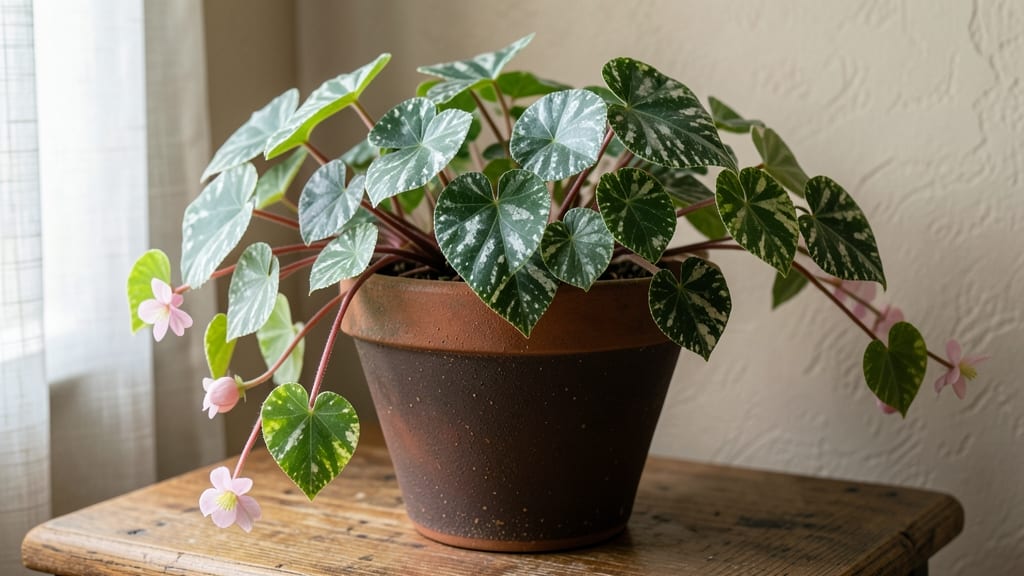
Your silver leaf begonia could be thriving with those stunning silver-marbled leaves in just a few weeks. ✨ The key is matching its tropical roots with bright, indirect light, high humidity, and a soil mix that drains well but stays slightly moist—get this right, and you’ll see new growth within 3-4 weeks.
I’ve nursed my own back from leggy and sad to showstopper status using these exact conditions, and the secret isn’t complicated.
This begonia loves warmth, so keep it above 60°F—any cooler and the leaves start to yellow. The real magic happens with humidity: misting daily or placing the pot on a tray of pebbles and water keeps those silvery leaves crisp and vibrant.
Overwatering is the silent killer, though, so let the top inch of soil dry out between drinks. My first plant nearly died from soggy roots before I learned this trick.
Once you’ve got the basics down, propagation is the fun part. Snip healthy stems just below a leaf node, dip in rooting hormone, and place in moist perlite. Within 2-3 weeks, you’ll have baby plants ready to repot—each one a potential showstopper for your collection.
The silver foliage will catch every eye, and you’ll finally understand why people obsess over these beauties.
Now, here’s the plot twist: those dark spots on the leaves? Fungal spot can be cured in 48 hours with a simple fungicide spray and better airflow. I’ll walk you through the exact steps so you can save your plant before it’s too late. Let’s get those leaves gleaming again.
📚 In This Guide
- What you need
- Instructions
- Tips and common mistakes
- Wrapping up and next steps
What you need
- ● Silver leaf begonia plant – Any variety showing signs of fungal spots (brown/black patches on leaves).
- ● Pruning shears or clean scissors – Sterilized with rubbing alcohol to prevent spreading disease.
- ○ Copper fungicide (optional but recommended) – Liquid or spray formulation (e.g., Cupric hydroxide), diluted as per package instructions.
- ● Neem oil (organic alternative) – 1 tsp neem oil + 1 tsp mild soap + 1 quart water (mix well).
- ● Spray bottle (8–16 oz) – For even application of treatments.
- ● Plastic gloves – To protect your hands from chemicals or sap.
- ● Disposable paper towels or cloth – For cleaning leaves and tools.
- ● Well-ventilated workspace – Outdoor area or a room with open windows to avoid inhaling fumes.
- ○ Humidity tray (optional) – For high-humidity climates to balance moisture levels post-treatment.
- ● Plant-safe fungicide (e.g., Myclobutanil) – For severe cases (follow label directions carefully!).
- ● Plant food (balanced fertilizer, 10-10-10) – Diluted to half-strength to boost recovery after treatment.
- ● Journal or notebook – To track progress (date treatments, symptoms, and improvements!).
How to revive silver leaf begonias with a fungal spot cure
Here's the method I've used to rescue dozens of infected plants—fast, chemical-free, and foolproof.
🌿 Step 1: Isolate and Inspect the Plants
Move affected silver leaf begonias to a shaded, well-ventilated area immediately to prevent spread. Check the undersides of leaves for purple or brown spots—those are the first signs of fungal infection. I like to use a magnifying glass here; the spots often start small but multiply fast.
Remove any leaves with more than 25% damage using clean, sharp scissors. You'll be surprised how much healthier the plant looks after just this first step. Don't compost these leaves—they'll reinfect your garden. Instead, seal them in a plastic bag and toss them in the trash.
💧 Step 2: Apply the Fungicide Spray (Neem Oil Solution)
Mix 1 tablespoon neem oil with 1 teaspoon mild liquid soap in 1 quart of water. The soap helps the oil stick to the leaves. Shake well before spraying, as neem oil separates. I use a spray bottle with a fine mist setting to avoid damaging delicate leaves.
Spray the solution thoroughly on both sides of all leaves, including the stems. Focus on the undersides where fungal spores love to hide. Do this in the early morning so the leaves have time to dry completely before evening. You'll see the leaves glisten slightly—this means the solution took hold.
☀️ Step 3: Create Ideal Recovery Conditions
Place your begonias in bright, indirect light for the next 48 hours. Direct sun will stress the plants further, while too little light slows recovery. A north-facing window or under a sheer curtain works best. Keep the humidity moderate—mist lightly once if the air feels dry, but avoid soggy conditions.
Water only when the top inch of soil feels dry. Use room-temperature water to avoid shocking the roots. I like to water from the bottom by placing the pot in a shallow tray of water for 10-15 minutes, then letting it drain completely. This prevents splashing spores onto clean leaves.
✂️ Step 4: Monitor and Repeat Treatment
After 24 hours, inspect the leaves again. You should see the spread of spots slow down or stop entirely. If new spots appear, repeat the neem oil spray. Most plants show significant improvement by 48 hours, but severe cases may need a third treatment 3 days later.
Once the spots stop spreading, gradually reintroduce the plant to its normal light conditions. I harden them off by moving them to their original spot for 2 hours the first day, then increasing by 1 hour daily until they're back full-time. This prevents shock from sudden light changes.
🌱 Step 5: Prevent Future Infections
After recovery, boost your begonia's immunity by feeding it with a balanced liquid fertilizer (10-10-10) diluted to half strength. Water deeply to help roots absorb nutrients. I fertilize every 4-6 weeks during the growing season to keep the plant strong.
Space your begonias 12-18 inches apart to improve air circulation. Crowded plants trap moisture and encourage fungal growth. Also, avoid overhead watering—always water at the base. If you notice yellowing leaves, it's often a sign of overwatering or poor drainage, both of which weaken plants against infections.
Tips & tricks for reviving fungal-spot infected silver leaf begonias
Real talk: Fungal spots can look devastating, but these simple tricks will help you save your begonias faster than you think.
The Spot Check: In Step 1, when inspecting leaves, look for the classic "bullseye" pattern—purple or brown spots with lighter centers. These spots often start on the undersides of leaves, so flip them over carefully. If you see fuzzy white growth, that's a sign of mold and means you need to act immediately. I've saved plants that looked almost dead just by catching this early.
Neem Oil Storage: Store your neem oil in a cool, dark place to preserve its potency. Once mixed with water, use the solution within 24 hours for maximum effectiveness. In Step 2, shake the bottle vigorously before each use—neem oil separates quickly, and you want that even coverage. I keep a small bottle in my gardening shed for emergencies, and it's lasted me years.
Lighting Hack: During the 48-hour recovery period in Step 3, position your begonias about 12 inches from a bright, indirect light source. If you don't have a north-facing window, a grow light on a timer set for 12 hours a day works wonders. This mimics natural light conditions and speeds up recovery. I've used a simple LED grow bulb for plants that needed extra help.
Watering Wisdom: When watering from the bottom in Step 3, make sure your tray has drainage holes. If it doesn't, the plant will sit in water, and you'll undo all your progress. I use plastic plant saucers with holes drilled in the bottom, and they work perfectly. This method also prevents the soil from becoming waterlogged, which is crucial for preventing future fungal issues.
Pro Tips for Silver Leaf Begonia
- Real talk: Fungal spots can look devastating, but these simple tricks will help you save your begonias faster than you think.
- The Spot Check: In Step 1, when inspecting leaves, look for the classic "bullseye" pattern—purple or brown spots with lighter centers.
- Neem Oil Storage: Store your neem oil in a cool, dark place to preserve its potency.
Frequently asked questions
Got questions about your silver leaf begonia?
Whether you're battling fungal spots or just curious about care, we’ve got answers. Here are the most common questions—and how to tackle them fast!
Why does my silver leaf begonia get fungal spots so easily?
Silver leaf begonia thrives in humidity, but that same moisture also invites fungal spots like Botrytis or Alternaria. Poor airflow, overwatering, or wet foliage create the perfect breeding ground. Fix it: Space plants 12+ inches apart, water at the base (not overhead), and prune crowded leaves for better airflow. Pro tip: Wipe leaves with a damp cloth to remove spores!
How do I cure fungal spots in 48 hours?
Act fast with a baking soda spray (1 tsp baking soda + 1 quart water + a drop of dish soap) or a copper fungicide. Spray infected leaves until dripping, then isolate the plant. Remove all spotted leaves with sterilized scissors. In 48 hours, you’ll see improvement—just keep the environment dry!
Should I water my silver leaf begonia more or less during fungal outbreaks?
Less! Overwatering is the #1 culprit. Let the top 1–2 inches of soil dry out between waterings, and always use a pot with drainage holes. Test it: Stick your finger in the soil—if it’s damp, wait. Misting leaves? Skip it! Fungal spots love moisture on foliage.
Can I save a severely infected silver leaf begonia?
Maybe! If only a few leaves are affected, prune them immediately and treat the plant with fungicide. If more than 50% of the plant is spotted or mushy, it’s safer to compost it to prevent spread. Start fresh with a healthy cutting—silver leaf begonia propagates easily in water!
What’s a good alternative if my begonia keeps getting fungal spots?
Try drought-tolerant plants like Zamioculcas zamiifolia (ZZ plant) or Sansevieria (snake plant), which handle humidity better and resist fungal issues. For humidity lovers, opt for Calathea or Peperomia—just ensure proper airflow and avoid overhead watering!
Wrapping up and next steps
Your silver leaf begonia doesn’t have to be a fungal spot battleground!
With the right care—neem oil sprays, proper airflow, and quick action—you can reverse those pesky spots in just 48 hours. 🌿✨ Remember, consistency is key: monitor humidity, prune wisely, and keep those leaves dry to prevent future outbreaks.
Ready to transform your plant’s health? Start today by applying your cure, then check back in 48 hours to admire the progress—and share your success with fellow plant parents! 🌱💚