
Trees
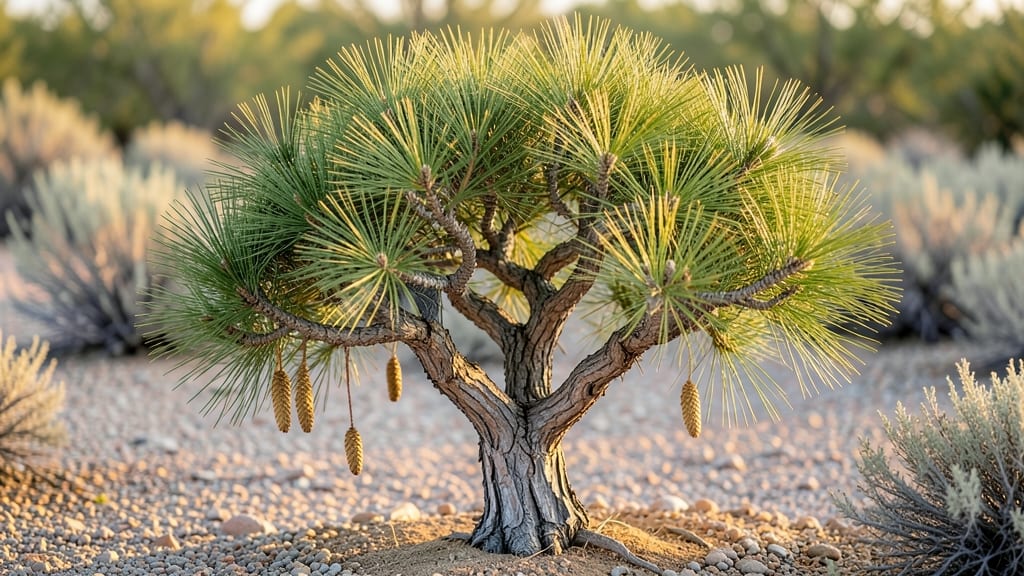
Planting a singleleaf pinyon pine means adding a rugged, drought-proof evergreen that thrives where others fail. 🌵 These pines—native to the Southwest's rocky hills—bring desert charm to landscapes with minimal fuss. Their silvery-blue needles and sturdy branches create year-round texture, even in dry climates.
The secret to success is mimicking their natural habitat: well-draining soil, full sun, and almost no watering once established. They tolerate poor soil and heat better than most pines, making them perfect for low-maintenance gardens. Just avoid heavy clay or soggy spots—they’ll struggle there.
You’ll love how they age gracefully, developing twisted trunks and gnarled branches that tell a story. Mature trees provide shade while supporting local wildlife, from birds to pollinators. Their nuts even attract squirrels and jays, turning your yard into a mini ecosystem.
For best results, plant in fall or early spring when temperatures are mild. Prune lightly to shape, but avoid heavy cuts—they stress the tree. With patience, your pinyon will grow into a stunning focal point that outlasts trends (and droughts).
📚 In This Guide
- What you need
- Instructions
- Tips and common mistakes
- Wrapping up and next steps
What you need
- ● Singleleaf pinyon pine: Seedlings: 1–3 (depending on desired spacing, 15–25 ft apart)
- ● Nursery-grown saplings: 1–2 (3–5 ft tall, containerized or bare-root)
- ● Mature trees (for transplanting): 1 (ensure root ball is intact)
- ● Soil amendments: Composted pine bark fines (1–2 bags, 2–3 cubic feet each)
- ● Gritty sand or perlite (1 bag, 40 lbs) for drainage
- ● Mulch: 2–3 cubic yards of wood chips or gravel (avoid organic mulch near the trunk)
- ● Drip irrigation system: 1–2 emitters (0.5–1 GPM flow rate) or soaker hose
- ● Required: Shovel (round-point or digging spade)
- ● Hoe or mattock (for breaking up compacted soil)
- ● Garden gloves (heavy-duty, cut-resistant)
- ● Measuring tape (25 ft)
- ● Wheelbarrow (for hauling soil/amendments)
- ○ Optional (but helpful): Post-hole digger (if staking young trees)
- ● Soil pH test kit (to check alkalinity, ideal: 6.0–7.5)
- ● Tree tie straps (1–2, ½" wide) for support
- ● Pruning shears (for shaping or removing dead branches)
- ● Location: Full sun (6+ hours daily), well-draining soil, and protection from strong winds (young trees are vulnerable).
- ● Climate: Native to USDA Zones 5–9; thrives in arid, hot conditions (drought-tolerant once established).
- ● Timing: Planting seeds: Late fall or early spring
- ● Transplanting saplings: Late winter to early spring (avoid extreme heat)
- ● Permits: Check local regulations—some areas require approval for large tree planting.
Step-by-step guide to planting and caring for singleleaf pinyon pine
This drought-tolerant beauty thrives with minimal fuss once you nail these key steps.
🌱 Step 1: Select the Right Planting Site and Prepare the Soil
Choose a location with full sun exposure—at least 6-8 hours daily—and well-draining soil. Singleleaf pinyon pines despise soggy roots, so avoid low spots where water pools. If your soil is heavy clay, amend it with 2-3 inches of coarse sand or gravel mixed into the top 12 inches to improve drainage.
Dig a hole twice as wide as the root ball but only as deep as the container. Loosen the sides of the hole to encourage root spread. Here's the thing—pinyon pines have shallow but extensive root systems, so avoid compacting the soil around the edges. I like to rough up the native soil with a garden fork to create air pockets for those roots to explore.
🪴 Step 2: Plant with Proper Spacing and Watering Techniques
Space your pinyon pines 15-20 feet apart to allow for mature growth. These trees grow slowly but can reach 20-30 feet tall with a spread of 10-15 feet. Remove the plant from its container and gently tease the roots if they're circling. Place it in the hole so the top of the root ball sits 1-2 inches above ground level—this prevents water from pooling around the trunk.
Backfill with native soil, tamping lightly in 2-inch layers to eliminate air pockets. Water deeply immediately after planting to settle the soil and encourage root contact. Here's what I do: pour 5 gallons of water slowly around the base, letting it soak in completely. Avoid watering from above—direct streams can dislodge the plant. Mulch with 2-3 inches of gravel or bark (but keep it 6 inches away from the trunk) to conserve moisture and suppress weeds.
☀️ Step 3: Establish Watering Routine and Monitor Growth
For the first 6-12 months, water deeply every 2-3 weeks during dry spells, aiming for 5-10 gallons per tree. You'll know you're on track when the soil 1-2 inches below the surface feels dry to the touch. After the first year, these trees become drought-tolerant, but establishing a strong root system early prevents long-term stress.
Watch for new growth in spring—this is your signal the tree is settling in. If you notice yellowing needles, it's usually a sign of overwatering or poor drainage. Pinyon pines are tough, but they won't tolerate soggy conditions. Real talk: if your area gets less than 10 inches of rain annually, you can reduce watering to once every 4-6 weeks after the first year.
✂️ Step 4: Prune and Maintain for Long-Term Health
Pruning isn't usually necessary for singleleaf pinyon pines, but you can remove dead, diseased, or crossing branches in late winter or early spring. Use clean, sharp pruners to make cuts just outside the branch collar. Avoid heavy pruning—these trees grow slowly, and aggressive cuts stress them. I only prune to shape the tree naturally or remove branches that rub against each other.
Fertilizing is rarely needed, but if your soil is particularly poor, apply a low-nitrogen, slow-release fertilizer in early spring. A 10-10-10 or 5-10-10 blend at half the recommended rate is plenty. Over-fertilizing encourages weak, fast growth that's more susceptible to pests and disease. Keep an eye out for pinyon ips beetles—small holes in the bark are their calling card. If you see them, treat with neem oil or insecticidal soap as a preventative measure.
⏰ Step 5: Plan for Long-Term Care and Landscape Integration
Singleleaf pinyon pines are low-maintenance once established, but they do benefit from occasional deep watering during prolonged droughts. These trees are fire-resistant and deer-resistant, making them ideal for Southwest landscapes. Pair them with yucca, agave, or desert shrubs for a cohesive, water-wise design.
As they mature, their blue-green needles and nutritious pine nuts add ecological value. Here's the thing—pinyon pines have symbiotic relationships with mycorrhizal fungi, so avoid disturbing the soil around their roots. If you're planting near other trees, give them space—they compete poorly with aggressive root systems like mesquite or palo verde.
Tips & tricks for perfect singleleaf pinyon pine planting
Here's what nobody tells you about making these drought-resistant trees thrive in your landscape.
Soil Preparation Secret: When amending heavy clay soil with 2-3 inches of coarse sand or gravel, mix it into the top 12 inches of soil—not just the bottom. This creates a proper drainage layer where those shallow roots can spread horizontally. I've seen pinyon pines fail when planted in amended pockets rather than fully integrated soil. Use a garden fork to break up compacted layers before planting—this mimics natural soil conditions and prevents root stress.
Watering Wisdom: The 5-gallon immediate post-planting watering is crucial, but here's the trick: split it into two sessions. Water 2 gallons right after planting, let it soak in for 10 minutes, then add the remaining 3 gallons. This prevents water from running off before it can penetrate to the roots. For the first 6-12 months, always water at the base using a soaker hose or drip irrigation—never overhead. This keeps needles dry and reduces fungal risks while ensuring water reaches the roots.
Planting Depth Caution: Positioning the root ball 1-2 inches above ground level isn't just about drainage—it's about preventing crown rot. The trunk should be the only part above soil level. If you bury it too deeply, moisture will pool around the base and suffocate the tree. I've had to replant several pinyon pines where the nursery had over-potted them, so always check before planting. Use a level to ensure proper positioning, especially on sloped terrain.
Mulching Strategy: While 2-3 inches of gravel or bark mulch is perfect, keep that mulch ring 6 inches away from the trunk to prevent moisture buildup. For extra protection in windy areas, create a windbreak using burlap or native shrubs during the first year. This helps young trees establish without transplant shock. In established trees, mulch actually competes with the tree for moisture—so only use it around newly planted specimens.
Pro Tips for Singleleaf Pinyon Pine
- Here's what nobody tells you about making these drought-resistant trees thrive in your landscape.
- Soil Preparation Secret: When amending heavy clay soil with 2-3 inches of coarse sand or gravel, mix it into the top ...
- Watering Wisdom: The 5-gallon immediate post-planting watering is crucial, but here's the trick: split it into two se...
Frequently asked questions
Got questions about the singleleaf pinyon pine? You’re not alone! This hardy tree is a favorite for arid landscapes, but it’s smart to know the basics before planting. Here are answers to the most common queries—from care tips to troubleshooting—so you can enjoy its beauty with confidence.
How much water does a singleleaf pinyon pine need once established?
Once mature, this drought-resistant tree thrives on very little water—about 1 inch per month during dry spells. Overwatering is the real risk! Native to desert regions, it stores moisture efficiently. Pro tip: Water deeply but infrequently (every 2–4 weeks) the first year to encourage deep root growth, then let nature take over.
Can singleleaf pinyon pines survive freezing temperatures?
These trees are cold-hardy (USDA Zones 4–9) and handle frost and snow like a champ. Their needle-like leaves reduce water loss, and their thick bark protects against temperature swings. Bonus: They’re ideal for high-elevation or alpine gardens where other pines might struggle.
How fast does a singleleaf pinyon pine grow, and when will it produce nuts?
Growth is slow but steady—expect 12–24 inches per year under ideal conditions. Nuts (pinyon pine seeds) typically appear after 10–20 years, with mature trees yielding 20–50 lbs of nuts annually. Patience pays off, but the wait is worth it for wildlife and culinary uses!
Are singleleaf pinyon pines prone to pests or diseases?
Generally resilient, but watch for pinyon ips beetles (during drought) or canker diseases if stressed. Preventative tip: Keep the tree healthy with proper spacing (15–20 ft apart) and avoid wounding the trunk. Most issues arise from overwatering or poor drainage—stick to its low-maintenance needs!
Is this tree suitable for small yards, or does it need lots of space?
While it can reach 15–30 feet tall, its slow growth and compact form make it workable for medium-sized yards (½ acre or larger). For tighter spaces, opt for the ‘Globe’ cultivar—a dwarf variety staying under 10 feet. Just ensure it gets full sun and well-draining soil!
Wrapping up and next steps
The singleleaf pinyon pine is a resilient, drought-resistant evergreen that brings beauty and sustainability to Southwest landscapes. Its adaptability, low-maintenance needs, and stunning foliage make it a standout choice for homeowners and gardeners alike.
Ready to transform your outdoor space? Start by assessing your soil and sunlight conditions, then plant with care—your future shade tree awaits! 🌱🌞