
Shrubs
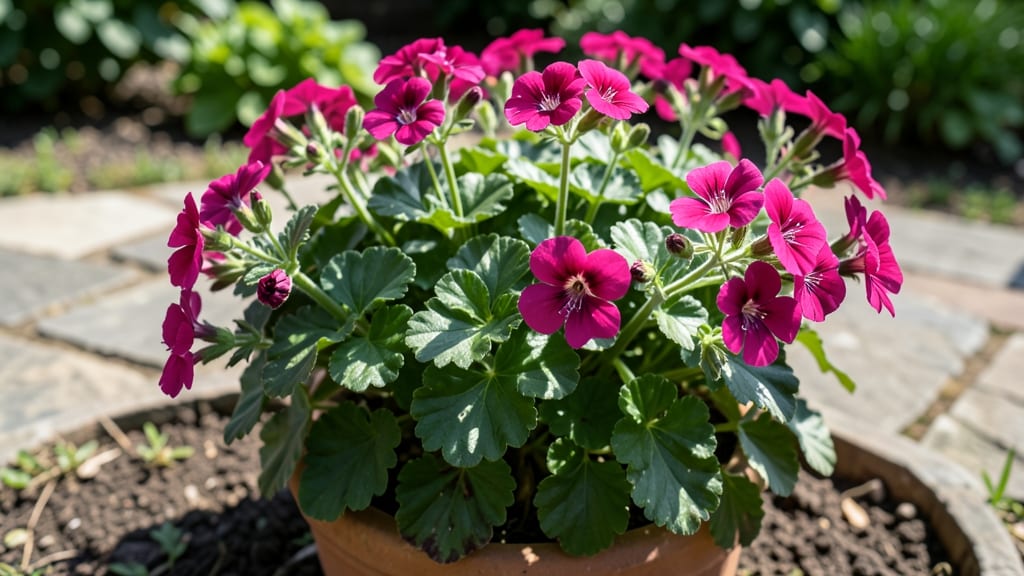
My small leaf geraniums spill over hanging baskets with shockingly lush purple blooms that last from spring until frost. 🌿 These trailing beauties thrive where other plants struggle—dry soil, hot afternoons, and even windy patios—because they’re built to survive.
The secret lies in their roots, which crave good drainage and a spot where they won’t compete with thirsty neighbors.
Start with well-draining potting mix (never garden soil) and a container with drainage holes—terracotta works best for heat retention. Water when the top inch feels dry, but avoid soggy roots, their biggest enemy.
A morning splash keeps them hydrated without inviting fungal diseases. Prune lightly after blooms fade to encourage more flowers, but don’t overdo it—they bloom best with minimal fuss.
By midsummer, your baskets will be bursting with color, drawing hummingbirds and butterflies while staying virtually pest-free. The trailing stems create a waterfall effect perfect for porches, trellises, or even window boxes. Even my black thumb can’t kill these—just give them sun, space to breathe, and occasional deadheading.
For year-round vibrancy, overwinter them indoors near a bright window or bring containers inside before frost. They’ll reward you with fresh blooms come spring, proving that low-maintenance doesn’t mean low-impact. Now go spill some color!
📚 In This Guide
- What you need
- Instructions
- Tips and common mistakes
- Wrapping up and next steps
What you need
- ● Small leaf geranium plants: 3–5 healthy nursery-grown plants (check for sturdy stems and lush foliage).
- ● Well-draining potting mix: 1–2 bags (look for a blend labeled for annuals or herbs—avoid heavy garden soil).
- ● Containers or garden space: For pots: 6–12-inch diameter containers (at least 1 plant per 6-inch pot). Ensure drainage holes are present!
- ● For garden beds: Full sun to partial shade (4–6+ hours of sunlight daily).
- ● Slow-release fertilizer: 1–2 tablespoons per plant (or follow package instructions for granular options).
- ● Watering can or hose with a gentle spray nozzle: For even moisture without damaging delicate leaves.
- ● Pruning shears: Sharp, clean pair (sterilize with rubbing alcohol between cuts to prevent disease).
- ○ Gloves (optional): Protect your hands from thorns or soil splatters.
- ○ Mulch (optional but recommended): 1–2 inches of organic mulch (e.g., shredded bark or straw) to retain moisture and suppress weeds.
- ○ Sunlight meter (optional): Helps confirm your planting spot gets the ideal 4–6 hours of sun.
- ○ Support stakes (optional for trailing varieties): Lightweight stakes or a trellis if your geraniums tend to sprawl.
How to grow small leaf geraniums for year-round color
These hardy plants thrive with minimal fuss—here’s how to coax their vibrant blooms all season long.
🌱 Step 1: Select the Perfect Planting Location
Small leaf geraniums (Pelargonium peltatum) adore full sun to partial shade, with at least 6 hours of direct light daily. I plant mine in south-facing containers where they bask in morning sun but escape afternoon intensity in hot climates. If growing in zones with 90°F+ temperatures, afternoon shade prevents leaf scorch—you’ll notice crisp, brown edges if they’re getting too much midday heat.
For containers, choose pots with drainage holes and at least 6 inches of depth. The roots need room to spread, but these plants stay compact, so you won’t need oversized planters. I use terra cotta because it breathes—geraniums hate soggy roots, and unglazed pots prevent that. Amend the soil with perlite or sand to improve drainage, especially if your mix feels dense.
🪴 Step 2: Plant With Proper Spacing and Soil Prep
Dig a hole twice as wide as the root ball but only as deep—geraniums dislike being buried too deeply. Space plants 12-18 inches apart in garden beds or 8-10 inches apart in containers to allow airflow. Crowding leads to mildew, and these plants reward good circulation with bushier growth. I always loosen the roots slightly before planting to encourage outward spread rather than circling.
Use a well-draining potting mix with a slightly acidic to neutral pH (6.0-7.0). A blend of 50% potting soil, 30% perlite, and 20% compost works perfectly. Avoid garden soil—it compacts and suffocates roots. Water the plant deeply after transplanting to settle the soil and eliminate air pockets. You’ll know it’s right when water drains freely from the bottom without pooling.
☀️ Step 3: Water Deeply but Infrequently
Small leaf geraniums are drought-tolerant once established, but they need consistent moisture during their first growing season. Water deeply every 7-10 days until the top 2 inches of soil feel dry. Stick your finger in—if it’s damp at 1 inch, wait a few more days. Overwatering causes root rot, and you’ll spot it as yellowing leaves that stay mushy even when dry.
Water at the base of the plant in the morning to reduce evaporation and fungal risks. Avoid wetting the foliage, which invites powdery mildew. I use a soaker hose or drip irrigation for container plants to keep leaves dry. Mulch with 1-2 inches of gravel or pine bark to retain moisture and regulate soil temperature. This step cuts watering by 30% in summer.
✂️ Step 4: Prune Strategically for Continuous Blooms
Here’s the secret to year-round flowers: prune lightly after each flush of blooms. When spent flowers fade, pinch back stems to the nearest leaf node (where leaves attach). This encourages branching and more blooms. I deadhead every 2-3 weeks—you’ll see new buds forming within 10-14 days. Avoid heavy pruning in fall if you’re overwintering indoors; just trim back 1/3 of the plant to tidy it up.
For leggy growth, cut back overlong stems to just above a set of leaves. The plant will bush out fuller. I never prune more than one-third of the plant at a time, or it goes into shock. Use clean, sharp shears and sterilize them with rubbing alcohol between cuts to prevent disease spread. Pruned stems can be propagated in water—rooting takes 2-3 weeks in warm conditions.
🌿 Step 5: Overwinter for Next Year’s Growth
If you’re in a cold climate (below Zone 7), dig up geraniums before the first frost and pot them up. Place them in a cool, bright spot (50-60°F) with minimal water—they enter dormancy. I reduce watering to once every 3-4 weeks and avoid fertilizing. In spring, resume normal care when you see new growth. For milder climates, mulch heavily with straw or leaves to protect roots from freezing.
Geraniums are perennial in warm zones but often treated as annuals in colder areas. The key to overwintering success is not letting them dry out completely. Check soil moisture monthly—if it’s bone dry, give a light drink. By late winter, you’ll spot tender new shoots poking through the soil. That’s your cue to move them back outdoors after the last frost.
Tips & tricks for perfect small leaf geranium care
Mastering these vibrant plants is easier than you'd think—here's how to avoid common pitfalls and maximize their stunning displays.
Lighting Strategy: In Step 1, when selecting your planting location, remember that small leaf geraniums need that 6 hours of direct sunlight daily for optimal blooming. For containers, rotate them every 2-3 weeks to ensure even exposure—you'll notice leaves turning toward the light, which can create uneven growth. In hotter climates (above 90°F), provide afternoon shade to prevent leaf scorch, which appears as crispy brown edges on leaves facing west or south.
Soil Science: The 50% potting soil, 30% perlite, 20% compost mix in Step 2 is perfect, but here's the secret: add a handful of horticultural charcoal to prevent fungal issues. This helps break down organic matter while improving drainage. I also recommend testing your soil pH—geraniums thrive at 6.0-7.0, and you can adjust with lime (to raise pH) or sulfur (to lower it) if needed. The key is ensuring water drains freely without pooling at the bottom.
Pruning Precision: When deadheading every 2-3 weeks in Step 4, always cut just above the leaf node where leaves attach. This encourages branching and more blooms. For leggy stems, cut back to just above a set of leaves—but never remove more than one-third of the plant at once. I've learned this the hard way: aggressive pruning shocks the plant and can delay blooming. Sterilize your shears between cuts with rubbing alcohol to prevent spreading disease through open wounds.
Overwintering Insight: In Step 5, when preparing for dormancy in cooler climates, place your geraniums in a cool, bright spot (50-60°F) with minimal water. The key is to mimic their natural winter conditions—too much light without enough coolness can stress the plant. I've found that a north-facing window works perfectly. Check soil moisture monthly—if it's bone dry, give a light drink. You'll know it's ready to return outdoors when you see those first tender new shoots in late winter.
Pro Tips for Small Leaf Geranium
- Mastering these vibrant plants is easier than you'd think—here's how to avoid common pitfalls and maximize their stunning displays.
- Lighting Strategy: In Step 1, when selecting your planting location, remember that small leaf geraniums need that 6 hours of direct sunlight daily for optimal blooming.
- Soil Science: The 50% potting soil, 30% perlite, 20% compost mix in Step 2 is perfect, but here's the secret: add a handful of horticultural charcoal to prevent fungal issues.
Frequently asked questions
Got questions about keeping your small leaf geranium thriving?
Here are answers to the most common concerns—from care tips to troubleshooting—so you can enjoy lush, low-maintenance greenery year-round!
How often should I prune small leaf geraniums?
Prune lightly in early spring to encourage bushiness, then trim spent blooms regularly to promote new flowers. Avoid heavy pruning in fall—just remove dead foliage. Pro tip: Use clean, sharp shears to prevent disease!
Can small leaf geraniums survive winter outdoors?
Most varieties are tender perennials and need winter protection. In cold climates (below 20°F), dig up pots or mulch heavily. In mild zones, they may persist with a thick layer of mulch. Pro tip: Move potted plants to a sheltered spot before frost!
Why are my geranium leaves turning yellow?
Yellow leaves often signal overwatering or poor drainage. Let soil dry between waterings, and ensure pots have drainage holes. Check for pests like spider mites too—spray with neem oil if needed. Fix: Adjust watering and repot if soil is compacted.
Are small leaf geraniums deer-resistant?
Yes! While not fully deer-proof, their tough foliage and fragrance often deter browsing. For extra protection, plant near deer-resistant companions like lavender or rosemary. Bonus: Their compact size makes them ideal for borders!
How do I encourage more blooms on my geranium?
Deadhead spent flowers consistently to redirect energy to new blooms. Ensure they get 6+ hours of sun daily and fertilize lightly with a balanced formula (10-10-10) every 4–6 weeks. Pro tip: Pinch back leggy stems to promote fuller growth!
Wrapping up and next steps
Growing small leaf geraniums is a rewarding journey that brings bursts of color to your garden with minimal fuss! Their low-maintenance nature and year-round vibrancy make them perfect for busy gardeners or beginners.
Whether you're planting in containers, borders, or hanging baskets, these hardy shrubs thrive with just a little love and the right conditions.
Ready to transform your space? Grab your gloves, pick a sunny spot, and start planting—your garden will thank you! For even more blooms, share your progress or ask questions in gardening forums to connect with fellow plant lovers. 🌸