
Leaf Blower
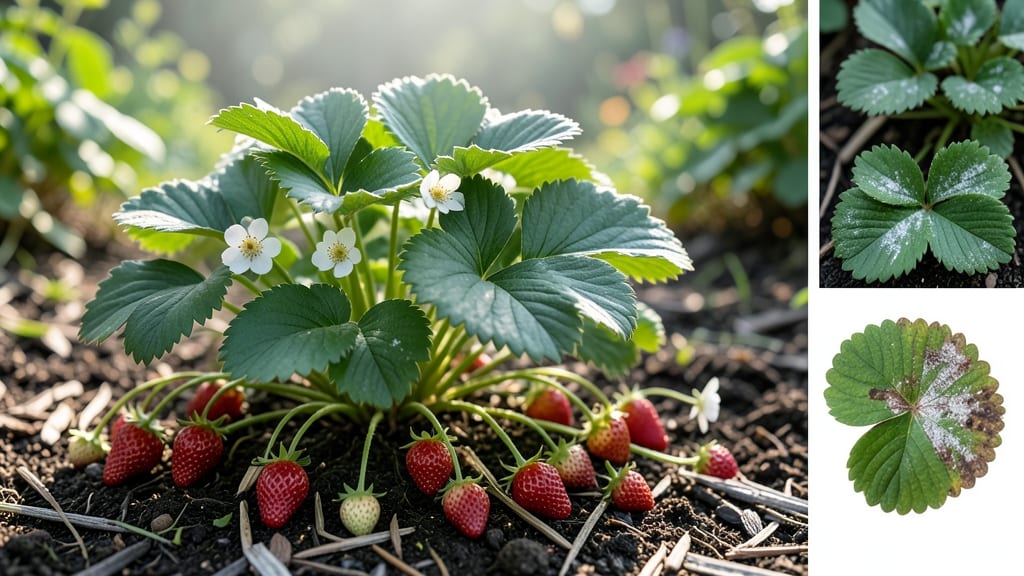
Mastering strawberry leaf identification keeps your patch thriving—and avoids heartbreak. 🌿 I’ve spent years watching my plants go from lush to limp, and the difference always comes down to spotting trouble early.
A single leaf can tell you whether your berries will be sweet or your plants will fade before fruiting season.
Start by comparing healthy leaves—deep green, slightly textured, and firm—to the suspicious ones. Yellow spots? That’s likely leaf spot fungus. Tiny webbing? Spider mites. Purple undersides? Nitrogen deficiency. Each problem has a distinct pattern, and knowing them saves your harvest before the damage spreads.
📚 In This Guide
- What you need
- Instructions
- Tips and common mistakes
- Wrapping up and next steps
What you need
- ● Fresh strawberry leaves (3–5 healthy leaves per plant for comparison)
- ● Hand lens or magnifying glass (10x magnification recommended for close inspection)
- ● Ruler or measuring tape (for leaf dimensions, in inches or centimeters)
- ● Notebook & pencil (or a digital note-taking app for recording observations)
- ● Camera or smartphone (with a macro setting for high-res photos)
- ● Field guide or identification app (e.g., PlantSnap or iNaturalist)
- ○ Gloves (optional but recommended) if handling plants in unknown areas
- ● Pruning shears (for safely collecting leaf samples without harming the plant)
- ● Clear plastic bags (to preserve leaf samples for later analysis)
- ● pH test kit (to check soil conditions if leaf issues are suspected)
- ● Reference samples of known strawberry varieties (e.g., Jewel, Albion, or Chandler) for side-by-side comparison
- ● UV flashlight (to check for fluorescence patterns in leaves)
How to identify strawberry leaves with confidence
Here's how I distinguish true strawberry varieties from lookalikes—no expert needed.
🌿 Step 1: Examine Leaf Shape and Arrangement
Strawberry leaves grow in a classic three-leaflet pattern (called trifoliate) arranged alternately along the stem. Each leaflet has a toothed or serrated edge and a pointed tip. I always check for this signature trio—anything with more or fewer leaflets is likely an imposter like wild strawberry or clover.
The middle leaflet sits on the main stem, with two side leaflets at slight angles. Run your fingers along the edges—true strawberry leaves feel softly jagged, like a saw blade with rounded teeth. Compare this to smooth-edged leaves, which are never strawberries.
🌱 Step 2: Check Stem and Venation Patterns
The stem where leaves attach should be hairy or slightly fuzzy—this is a dead giveaway. Strawberry stems have reddish hairs when young, which fade to white as they mature. The veins on the underside of leaves form a distinct V-shape where they meet the stem.
Flip the leaf and look closely—you'll see the veins branch out from the center in a pattern that's unique to strawberries. Non-strawberry plants often have parallel veins or a more random pattern. I keep a magnifying glass handy for this step because the details matter.
✂️ Step 3: Verify Growth Habit and Plant Structure
True strawberry plants grow in a low, spreading pattern with long runners (stolons) that root at nodes. The leaves grow close to the ground, forming a dense mat. If you see upright stems with leaves spaced far apart, it's not a strawberry.
Look for white flowers that appear in spring—this is the ultimate confirmation. Strawberries bloom before leaves fully develop, and the flowers grow directly from the crown. I always check for these early blooms when identifying new plants, as they're impossible to mistake for other garden plants.
💧 Step 4: Test for Strawberry-Specific Characteristics
Crush a leaf between your fingers—strawberry leaves release a faint sweet scent when damaged. This isn't always strong, but it's a subtle clue that separates them from similar-looking plants. The scent comes from the same compounds that make strawberries smell delicious.
Finally, check the leaf undersides for tiny yellowish glands along the veins. These are unique to strawberries and help distinguish them from other trifoliate plants. I've found this gland test works even when flowers aren't present, making it my go-to method for fall identification.
Tips & tricks for mastering strawberry leaf identification
Real talk: Even after years of gardening, I still catch myself second-guessing those trifoliate leaves. Here's what nobody tells you—these extra steps will give you confidence every time.
The Leaflet Count Matters: In Step 1, when you're checking for that classic three-leaflet pattern, count them twice. I've seen gardeners get fooled by clover's five-leaflet clusters—always verify that middle leaflet is clearly attached to the main stem. For extra certainty, hold the leaf up to a window and count the leaflets in bright light. The side leaflets should be at roughly 45-degree angles from the center leaflet, forming a perfect triangular shape.
Hairy Stems Are Non-Negotiable: In Step 2, don't just glance at the stems—run your fingers along them. True strawberry stems have those distinctive reddish hairs when young (they turn white as they mature). I learned this the hard way after mistaking a smooth-stemmed plant for a strawberry. If the stem feels completely smooth, it's not a strawberry. Pro tip: Check the underside of the stem where it meets the leaf—this is where the hair density is highest.
Veins Tell the Whole Story: When you're examining those undersides in Step 2, focus on where the veins meet the stem. They should form that classic V-shape, with secondary veins branching out like a feather. I keep a small magnifying glass in my gardening kit just for this step—it's worth the investment. If you see parallel veins running straight to the leaf edges, you're looking at something else entirely, like a raspberry or blackberry.
Seasonal Confirmation: In Step 3, remember that white spring flowers are your best friend for confirmation. But here's what nobody tells you: Even in fall when flowers aren't present, look for the leaf arrangement. Strawberry leaves grow in a dense, ground-hugging pattern, while imposters often have more spaced-out growth. I've used this trick to identify strawberry plants in late autumn when all other methods failed.
Pro Tips for Strawberry Leaf Identification
- Real talk: Even after years of gardening, I still catch myself second-guessing those trifoliate leaves.
- The Leaflet Count Matters: In Step 1, when you're checking for that classic three-leaflet pattern, count them twice.
- Hairy Stems Are Non-Negotiable: In Step 2, don't just glance at the stems—run your fingers along them.
Frequently asked questions
Got questions about identifying strawberry leaves? You’re not alone! Here are some of the most common queries—and straightforward answers—to help you navigate your garden with confidence.
How can I tell if my strawberry plant is healthy or diseased?
Healthy strawberry leaves are deep green, glossy, and slightly serrated. Watch for yellowing (chlorosis), spots (fungal/bacterial), or crinkling (viral). Compare your leaves to variety-specific guides—some diseases (like powdery mildew) leave white fuzz, while others cause blackened veins. Act fast: Isolate affected plants and treat with neem oil or copper fungicide if needed.
When is the best time to identify strawberry leaves for planting?
Spring and early summer are ideal! New growth (emerging leaves) is easiest to ID because it’s free of pests/diseases. Avoid fall—cool temps slow growth, and leaves may look stunted or discolored naturally. Pro tip: Morning sunlight (10 AM–12 PM) provides the clearest leaf details for accurate matching.
Can I still grow strawberries if my leaves don’t match the “perfect” variety?
Leaf shape and color vary
by variety (e.g., June-bearing vs. everbearing), but function matters most. Focus on three key traits: leaf size, serration depth, and growth habit (upright vs. trailing). If your plant produces fruit, it’s likely a viable (if not “pure”) strawberry. Save seeds from your best performers for next season!
What should I do if my strawberry leaves look like they’re being eaten?
Pests like slugs, aphids, or spider mites target leaves first. Chewed edges = slugs/snails; sticky residue = aphids; tiny webs = mites. Act fast: Handpick pests, use diatomaceous earth (for slugs), or spray soapy water (1 tsp dish soap per quart of water) for aphids. Prevent recurrence with row covers or companion planting (e.g., basil or thyme).
How do I compare my leaves to a variety guide if I don’t have a reference?
No guide? No problem! Use your phone camera to snap close-ups of undersides and tops of leaves, then search “strawberry leaf” plus your variety name on gardening forums (like Gardeners.com) or apps like PlantSnap. For physical references, check local nursery seed packets—they often include leaf sketches. Bonus tip: Join Facebook groups like “Strawberry Growers Network” for crowd-sourced IDs!
Wrapping up and next steps
Identifying strawberry leaves doesn’t have to be a puzzle—with the right knowledge, you can confidently distinguish healthy varieties from pests or diseases. 🌱 Whether you're a seasoned gardener or a curious beginner, recognizing key traits like leaf shape, serration, and color ensures your plants thrive.
Now that you’re equipped with these insights, why not take the next step? Grab your gardening gloves and head outdoors to inspect your strawberry patch—or start a new one with the confidence of a pro!