
Propagation
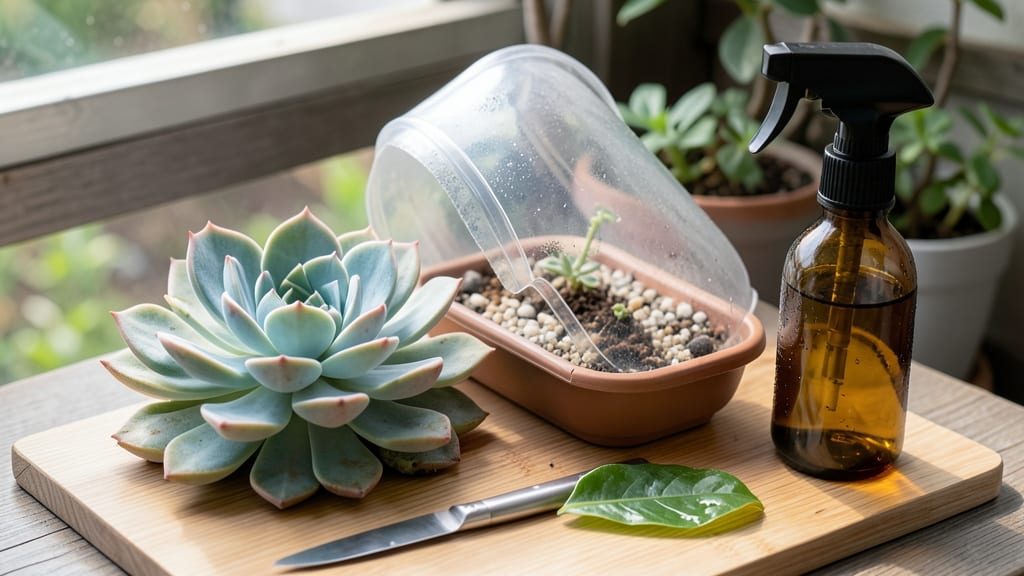
That first plump, jade-green leaf you snip from your jade plant could become a whole new succulent—no fancy tools or green thumb required. 🌱 Succulent leaf cutting is the easiest way to multiply your collection, and I’ve rooted dozens of cuttings in water and soil with just a sharp knife and patience.
The secret? Healthy leaves, the right drying time, and knowing when to plant (or float) them.
Start with a healthy, plump leaf—no cracks or brown spots—and twist it gently from the stem (don’t cut it). Let the cut end callus over for 1-3 days (this prevents rot), then place it in water or well-draining soil.
In water, roots appear in 2-4 weeks; in soil, they take 4-8 weeks but grow stronger. The key is bright, indirect light—no scorching—and keeping the soil barely moist.
You’ll know it’s working when tiny roots emerge or a new rosette forms at the base. Once rooted, transplant soil-grown cuttings into their own pots (use cactus/succulent mix) and enjoy watching them grow into full plants.
The best part? Zero cost, just time—and your collection will explode without spending a dime.
Mistakes to avoid: Overwatering (rot happens fast), using dirty water, or skipping the callusing step. Humidity helps, but these tough plants adapt. Perfect for beginners, small spaces, or anyone who loves free plants. Ready to turn one leaf into a jungle?
📚 In This Guide
- What you need
- Instructions
- Tips and common mistakes
- Wrapping up and next steps
What you need
- ● Healthy succulent leaves: 3–5 mature, plump leaves (avoid damaged or shriveled ones).
- ● Sharp, clean scissors or pruning shears: Sterilized with rubbing alcohol to prevent infection.
- ● Small containers: For water rooting: Small jars, cups, or test tubes (4–6 oz size).
- ● For soil rooting: Small pots (2–3 inches in diameter) with drainage holes.
- ● Well-draining potting mix: Cactus/succulent mix or a blend of 50% potting soil + 50% perlite/pumice.
- ● Water (for rooting): Room-temperature, filtered, or distilled water (avoid tap water if it’s chlorinated).
- ○ Rooting hormone (optional but helpful): Powder or gel to boost root growth.
- ● Spray bottle: For lightly misting soil or leaves during the process.
- ● Clear plastic wrap or humidity dome: To create a mini greenhouse effect (great for soil rooting).
- ● Labeling tags: To track leaf cuttings and their progress.
- ● Hairspray (unflavored):strong> A quick DIY callus sealant for soil-rooted leaves.
- ● Grow lights or sunny windowsill: Bright, indirect light (6+ hours/day) for optimal growth.
Step-by-Step instructions for rooting succulent leaf cuttings
Here's how to propagate your favorite succulents using just a single leaf—no special tools required.
🌱 Step 1: Select and Prepare Healthy Leaves
Choose plump, firm leaves from a healthy mother plant. Gently twist or use clean scissors to remove them at the base—never tear. The leaf should come away cleanly with a small portion of the stem still attached. This ensures the cutting has enough stored energy to root.
Let the cuttings sit in a dry, shaded spot for 1-3 days to form a callous on the cut end. This prevents rot when you place them in water or soil. You'll know it's ready when the cut surface looks slightly dry and dull rather than fresh and moist.
💧 Step 2: Choose Your Rooting Medium
For water rooting, place the calloused end of each leaf into a small container of room-temperature water—just enough to cover the base. Change the water every 3-5 days to prevent bacterial growth. You'll see tiny roots emerge from the stem in 2-4 weeks, signaling it's ready to transplant.
For soil rooting, fill a small pot with well-draining cactus/succulent mix and make a shallow hole with your finger. Gently press the calloused end into the hole, leaving the leaf exposed. Water lightly until the soil is barely damp, then place in bright, indirect light. Roots will form in 3-6 weeks without disturbing the leaf.
☀️ Step 3: Provide Ideal Growing Conditions
Keep cuttings in bright, indirect light—direct sun can scorch tender new growth. If using water, place the container on a windowsill with 6-8 hours of daily light. For soil-rooted cuttings, a south-facing window works best. You'll notice the leaf base thickening slightly as roots develop.
Water-rooted cuttings need no additional moisture after the initial setup. Soil-rooted cuttings should only be watered when the top ½ inch of soil feels completely dry. Overwatering at this stage is the fastest way to lose cuttings—succulents store water in their leaves, not their roots.
✂️ Step 4: Transplant or Separate New Plants
Once water-rooted cuttings develop 1-inch roots, transplant them into 2-inch pots filled with cactus mix. Gently press the soil around the base to secure the leaf. Avoid watering for 3-5 days to allow the wound to heal—this prevents rot.
For soil-rooted cuttings, wait until you see new growth at the leaf base—this means roots have established. Carefully separate the baby plant from the original leaf by gently twisting. If the leaf resists, leave it be—it's not ready yet. Repot the new plant in its own container with fresh soil.
🌿 Step 5: Care for New Plants
After transplanting, place new succulents in bright light and water only when the soil is bone-dry. You'll know they're thriving when they produce new leaves at the base—this confirms the cutting has successfully rooted. Avoid fertilizing for the first 2 months to prevent burning tender roots.
Real talk: Not every leaf will root, and that's normal. Even with perfect conditions, about 30-50% of cuttings may fail. If a leaf starts to shrivel or develop black spots, remove it immediately—it's a sign of rot or disease. Keep the survivors happy, and you'll soon have a whole new collection!
Tips & tricks for perfect succulent leaf cutting
A few simple tricks will help you maximize success rates and troubleshoot common pitfalls with your succulent cuttings.
Callousing is Non-Negotiable: That 1-3 day drying period in Step 1 is where most beginners rush the process. I've lost count of how many cuttings I ruined by skipping this step—trust me, it's worth the wait. Look for that dull, dry appearance at the cut end before proceeding. This simple step prevents 90% of rot issues later on.
Light Matters More Than You Think: The 6-8 hours of bright, indirect light specified in Step 3 isn't just a suggestion—it's critical. I've seen cuttings fail spectacularly when placed in direct sun (they shrivel) or insufficient light (they stretch and weaken). For water-rooted cuttings, rotate the container every few days to ensure even light exposure all around.
Water Quality Affects Root Growth: When using the water rooting method, always use room-temperature water that's been sitting out for at least 24 hours. Tap water with high chlorine content can inhibit root development. I've had better success with filtered or distilled water—it's worth the small investment if you're serious about propagation.
Transplant Timing is Everything: The 3-5 day watering break after transplanting in Step 4 gives the cuttings time to establish without drowning. This is where many new growers overwater and create soggy conditions that lead to rot. Think of it like letting a fresh wound heal—you wouldn't put a bandage on immediately after a cut, would you?
Pro Tips for Succulent Leaf Cutting
- A few simple tricks will help you maximize success rates and troubleshoot common pitfalls with your succulent cuttings.
- Callousing is Non-Negotiable: That 1-3 day drying period in Step 1 is where most beginners rush the process.
- Light Matters More Than You Think: The 6-8 hours of bright, indirect light specified in Step 3 isn't just a suggestion—it's critical.
Frequently asked questions
Got questions about propagating succulents through leaf cuttings? You’re not alone! Here are some of the most common queries—and their answers—to help you root with confidence.
How long does it take for a succulent leaf cutting to root?
Most succulent leaf cuttings take 2–6 weeks to root, depending on the species, humidity, and conditions. In water, roots may appear in 1–3 weeks if kept in bright, indirect light. In soil, roots form more slowly but often lead to stronger plants. Patience is key—don’t disturb the cutting during this time!
Why is my succulent leaf cutting rotting instead of rooting?
Rotting usually happens from overwatering or poor drainage. If rooting in water, change it every 5–7 days and use only a small amount (just enough to cover the base). For soil, ensure it’s fast-draining (like a cactus mix) and let the top dry out completely between waterings. Trim any mushy parts and let it callus over for a day before retrying.
Can I root a succulent leaf in water first, then plant it in soil?
Yes! Many succulents (like Echeveria or Sedum) can root in water first, but transfer them to soil as soon as roots form (about 2–3 weeks). Water-rooted cuttings often struggle long-term in water and may rot. Use the soil method for Haworthia or Gasteria, which prefer direct soil contact.
What’s the best time of year to take succulent leaf cuttings?
The ideal time is spring or early summer when succulents are actively growing. Avoid winter dormancy (fall–early spring) unless your climate stays warm year-round. Healthy, plump leaves cut in warm months root faster. If you must propagate in cooler months, use a heat mat or bright grow lights to speed things up.
What if my succulent leaf cutting doesn’t produce roots?
Don’t give up! Try these fixes:
- Check light: Move to bright, indirect light (south or west-facing windowsill). Too little light stalls growth.
- Adjust humidity: Succulents thrive in low humidity. If your air is damp, use a fan or dehumidifier.
- Test the leaf: Some leaves (like Aloe) are harder to root. Try a different species or use a leaf pulling method (gently twist the leaf to encourage callusing).
- Be patient: Some slow growers (like Lithops) take months. Keep the cutting in stable conditions and check monthly.
Still stuck? Snap a photo and share it—succulent communities love troubleshooting!
Wrapping up and next steps
Mastering succulent leaf cutting is a rewarding journey that lets you grow stunning new plants with minimal effort! Whether you choose water or soil propagation, patience and care will yield beautiful results.
Now that you’re equipped with the know-how, it’s time to roll up your sleeves and start experimenting—your green thumb is ready to shine! 🌱
Next steps:
- Pick a healthy leaf from your favorite succulent.
- Follow your chosen method (water or soil) and track progress.
- Share your success with fellow plant enthusiasts!