
Trees
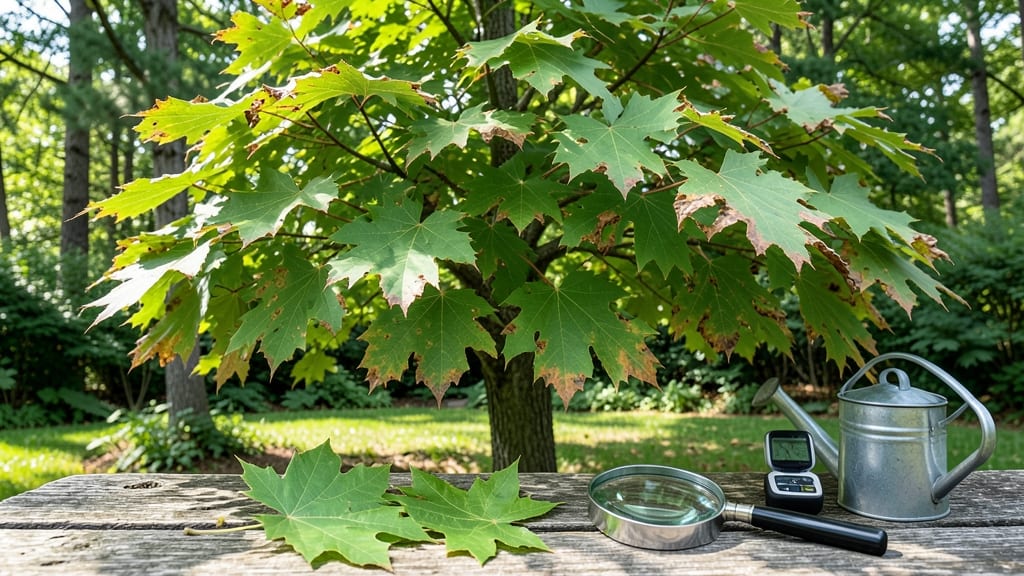
Your sugar maple’s leaf scorch—those crispy brown edges—isn’t just unsightly; it’s a sign your tree is under stress. 🌳 I’ve watched this problem turn vibrant foliage into brittle paper overnight, but copper-based treatments and targeted care can bring those leaves back to life.
The key is acting fast before the damage spreads deeper into the tree’s system.
Leaf scorch in sugar maples usually starts with drought stress or fungal/bacterial infections, often triggered by hot, dry winds or improper watering. Those crispy edges? That’s the tree’s way of saying it’s struggling to pull moisture from the soil.
I’ve seen it after just one week of neglect—don’t wait until half the canopy looks like autumn in July.
The fix starts with deep watering (2-3 inches per week) and a copper fungicide spray applied at the first sign of browning. Mulch helps retain moisture, and pruning affected branches early stops the spread.
Within 4-6 weeks, you’ll see new growth pushing out with fresh, green edges—if you catch it soon enough.
Prevention is easier than cure: water deeply but infrequently, avoid overhead sprinklers, and monitor your tree’s stress levels during heatwaves. A healthy sugar maple should have leaves that stay flexible—if they crinkle like fall leaves in summer, it’s time to act.
Here’s how to turn those crispy edges into lush, thriving foliage again.
Root Causes Behind Leaf Scorch
Sugar maples are iconic for their vibrant autumn foliage, but when their leaves develop crispy, brown edges—often called leaf scorch—it’s a sign of stress. Understanding the why behind this condition is the first step to restoring your tree’s health.
Below, we break down the most common triggers, backed by science, so you can take targeted action.
Leaf scorch often starts with water imbalance. Sugar maples thrive in moist, well-draining soil, but when they experience drought—even for short periods—their leaves react dramatically. Here’s how it works:
- Transpiration overload: When soil moisture drops, roots struggle to supply enough water to the canopy. The tree prioritizes water to younger leaves, leaving older ones to wilting and scorching at the edges.
- Root zone depth matters: Shallow roots (common in compacted or clay-heavy soil) can’t reach deep water reserves during dry spells. USDA research shows sugar maples need consistent moisture within the top 12–18 inches of soil.
- Heat amplification: High temperatures increase transpiration rates, accelerating water loss. A scorching summer day (above 90°F/32°C) can push a tree’s water needs 20–30% higher than normal.
Actionable fix: Deep watering (6–12 inches down) 2–3 times per week during droughts, paired with mulch (3–4 inches of organic material) to retain moisture.
Sugar maples are shade-tolerant, but prolonged exposure to intense sunlight + heat can overwhelm their physiology. Here’s the science:
- Chlorophyll breakdown: Excessive UV radiation and heat damage thylakoid membranes in chloroplasts (the leaf’s energy factories), causing oxidative stress. This triggers the production of brown, necrotic edges.
- Stomatal closure: To conserve water, leaves shut their pores (stomata), but this also blocks gas exchange. Without CO₂, photosynthesis grinds to a halt, leading to leaf burn.
- Urban heat islands: Pavement and buildings trap heat, raising temperatures by 5–10°F (3–6°C) in city centers. Trees near sidewalks or parking lots are 3x more likely to scorch.
Actionable fix:
- Provide afternoon shade (e.g., temporary shade cloth or nearby trees) during peak heat (12–4 PM).
- Install drip irrigation to keep leaves hydrated from below (reduces sun exposure on foliage).
- Avoid pruning in late summer, which stresses the tree when heat is highest.
While often mistaken for drought damage, pathogenic leaf scorch can mimic the symptoms. Two key culprits:
| Cause | Mechanism | How to Spot It |
|---|---|---|
| Verticillium wilt (fungus) | Clogs xylem vessels with spores, blocking water transport. The tree can’t deliver moisture to leaf edges, causing vascular collapse. |
|
| Bacterial leaf scorch (e.g., Xylella fastidiosa) | Bacteria multiply in xylem, producing slime that blocks water flow. Leaves lose turgor pressure, leading to necrosis. |
|
Actionable fix:
- Remove and destroy infected leaves/debris (do not compost).
- Apply copper-based fungicide (e.g., copper sulfate) preventively in spring.
- Improve air circulation by pruning dense branches.
Sugar maples are sensitive to airborne pollutants and soil contaminants, which disrupt cellular functions:
- Ozone damage: Ground-level ozone (from vehicle exhaust) reacts with leaf tissues, causing lipid peroxidation—a process that fries cell membranes, leading to brown, crispy edges. EPA studies link ozone to 20–50% increased leaf scorch in urban trees.
- Salt buildup: Over-fertilization (especially with synthetic salts) or de-icing salts in winter can osmotically stress roots, preventing water uptake.
- Heavy metals: Copper, zinc, or lead in soil (from old paint or industrial runoff) can disrupt enzyme activity, impairing photosynthesis.
Actionable fix:
- Test soil for pH and salinity (ideal: 6.0–7.0 pH).
- Flush soil with water if salts are suspected (apply 1–2 inches of water weekly for 4 weeks).
- Use organic mulch to bind pollutants and improve soil structure.
Pro Tip: 💡 Combine diagnostics: Scorch from drought will improve with watering, while fungal/bacterial scorch won’t. If symptoms persist after 2–3 weeks of proper care, suspect a pathogen or toxin.
Revive Your Maple’s Health
Now that you understand the root causes behind those unsightly brown edges on your sugar maple leaves—whether it’s fungal infections, environmental stress, or nutrient deficiencies—let’s tackle the solutions. The good news? With the right approach, you can nurse your tree back to vibrant green glory.
Below, we’ve mapped out practical fixes for each common cause, along with prevention tips to keep your maple thriving.
If leaf scorch is caused by fungal pathogens (like Rhizoctonia or Cercospora), act fast to prevent further damage.
🔥 Treat the Fungus
- Fungicide Application 🛡️
- Use a copper-based fungicide (like copper sulfate or copper hydroxide) as a preventive spray.
These are effective against fungal leaf spots and scorch. - When to apply: Early spring (before new growth) and again after heavy rain or stress periods. - How to apply: Spray evenly on both sides of leaves and the tree trunk, following label instructions.
- Prune Infected Branches ✂️
- Remove and dispose of (not compost) severely scorch-affected branches to stop spores from spreading.
- Sterilize pruning tools with rubbing alcohol between cuts to avoid cross-contamination.
💡 Prevention Tips
- Improve Airflow 🌬️ – Thin out dense foliage to reduce humidity, which fungi love.
- Water at the Base 💦 – Avoid overhead watering, which can splash spores onto leaves.
- Mulch Properly 🌿 – Keep mulch 2–4 inches away from the trunk to prevent moisture buildup.
If drought, heat, or wind are the culprits, your maple needs extra care to recover.
🌱 Hydrate & Protect
- Deep Watering 💧
- Water slowly and deeply (1–2 inches per week) to encourage deep root growth.
- Use drip irrigation or soaker hoses to avoid wetting leaves, reducing stress.
- Mulch Like a Pro 🌿
- Apply 2–4 inches of organic mulch (wood chips, shredded bark) around the base (but not touching the trunk).
- Mulch retains moisture and regulates soil temperature—critical in extreme heat.
- Shade Cloth for Young Trees 🌳
- If your maple is in a hot, sunny spot, drape lightweight shade cloth (30–50% coverage) during peak summer months.
💡 Prevention Tips
- Avoid Midday Watering ⏰ – Water early morning or evening to reduce evaporation.
- Group Plants for Windbreaks 🌪️ – Plant wind-resistant shrubs nearby to protect young maples.
- Monitor Soil Moisture 🌡️ – Stick your finger 2 inches into the soil; if it’s dry, it’s time to water.
Brown, crispy edges can signal low nutrients, especially magnesium, potassium, or nitrogen.
🍳 Fertilize Smartly
- Soil Test First 📊
- Before fertilizing, test your soil (kits are affordable and available at garden centers). This tells you exactly what’s missing.
- Balanced Fertilizer Boost 🌱
- Apply a slow-release, balanced fertilizer (10-10-10 or 20-20-20) in early spring.
- For magnesium deficiency (common in scorch), use Epsom salt (1 tbsp per gallon of water) as a foliar spray.
- Organic Amendments 🌿
- Mix compost or aged manure into the soil to improve nutrient retention.
- Avoid over-fertilizing—too much salt can burn roots!
💡 Prevention Tips
- Top-Dress Annually ✨ – Spread a thin layer of compost around the drip line (edge of the tree’s canopy) every spring.
- Use Rain Barrels 💧 – Collect rainwater for irrigation to avoid chlorine damage from tap water.
- Mulch Volcanos? ❌ – Never pile mulch against the trunk—this can suffocate roots.
Since copper is a natural fungicide, consider copper-infused care for long-term protection:
- Copper Spray Schedule 🛡️
- Spray copper fungicide in early spring and after heavy rains to prevent fungal outbreaks.
- Copper Soil Treatment 🌱
- Mix copper sulfate into the soil (follow package rates) to create a protective barrier against pathogens.
Final Thought: With consistent care, your sugar maple can bounce back from leaf scorch. Start with one or two fixes based on the most likely cause, then monitor progress.
A healthy tree is a resilient tree—and soon, those crispy edges will be a thing of the past! 🌿💚
Frequently asked questions
Why do sugar maple leaves turn crispy brown at the edges?
Those brown edges are your tree's stress signal—usually from drought, fungal infections, or excessive heat. Sugar maples prioritize water to new growth, leaving older leaves to dry out. Check soil moisture and watch for wilting even when watered.
Can I save my sugar maple if half the leaves are already scorched?
Yes, but act fast! Prune severely damaged branches immediately and apply copper fungicide if fungal infection is suspected. Deep watering (2-3 inches weekly) and mulching can help recovery within 4-6 weeks for new growth.
Is copper sulfate safe for my sugar maple?
When used correctly, copper fungicides are tree-safe! Follow package instructions—typically 1-2 tablespoons per gallon—and apply in early spring or after rain. Avoid overuse, as too much copper can harm beneficial soil microbes.
How do I tell if my tree has leaf scorch vs. normal autumn colors?
Scorched leaves stay crispy and brittle even when hydrated, while autumn colors soften and turn yellow/orange naturally. Check leaf flexibility—healthy leaves bend slightly, while scorched ones snap. Scorch appears first on older leaves.
Will pruning help stop the spread of leaf scorch?
Remove and dispose of (don't compost) severely affected branches to prevent fungal spread. Sterilize pruning tools with rubbing alcohol between cuts. Thin dense foliage to improve air circulation—this reduces humidity where fungi thrive.