
Vegetables
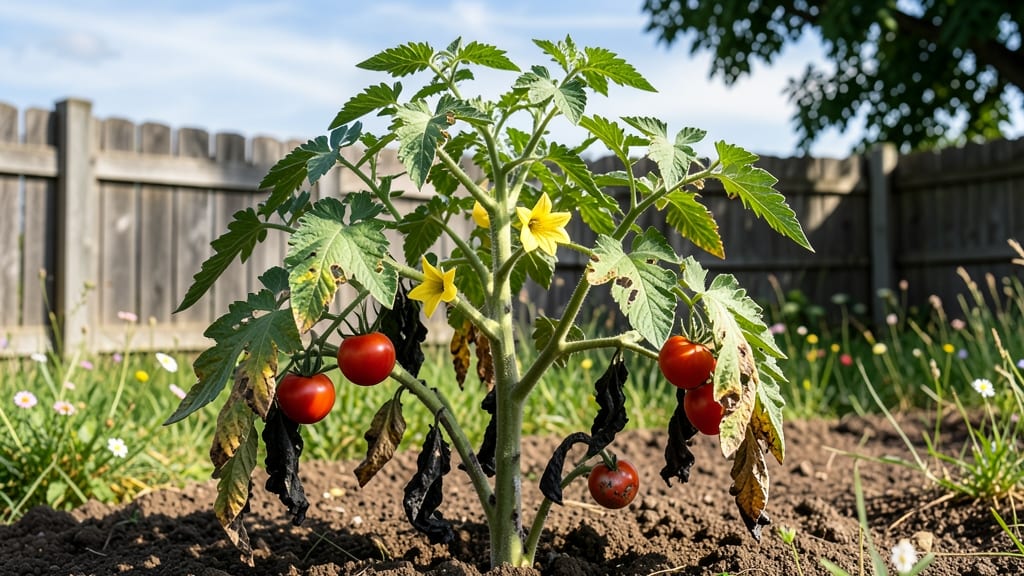
Seeing tomato leaf problems pictures like crispy edges or yellow spots? Your harvest is at risk—unless you act fast. 🌱 I’ve diagnosed every brown edge, yellow spot, and curled leaf in my garden, and I’m sharing the exact visual clues to spot problems before they ruin your plants.
The first step is matching symptoms to causes: is it blight (yellowing with brown spots), pests (tiny webs or sticky residue), or nutrient burn (crispy edges from over-fertilizing)? Each problem needs a different fix, and acting within 24-48 hours saves your tomatoes.
You’ll learn how to prune damaged leaves, adjust watering, and apply organic sprays that stop the damage without harming your fruit. The key is early action—once leaves are crispy, the plant’s already struggling. Works for cherry, beefsteak, and heirloom varieties alike.
Let’s get those leaves healthy again before the fruit suffers!
Root Causes of Tomato Leaf Troubles
Understanding why your tomato leaves develop crispy edges, spots, or other distress signals starts with identifying the real culprits behind the damage. These issues rarely appear out of nowhere—they’re usually a response to environmental stress, pests, or nutrient imbalances.
Below, we break down the most common triggers with clear explanations and actionable insights.
Tomato plants are sensitive to extreme temperatures and water fluctuations, which can cause leaves to crisp, curl, or develop brown edges. Here’s how it happens:
- Too Much Heat (Sunscald): When daytime temperatures soar above 90°F (32°C), leaves—especially younger ones—can overheat and develop crispy, brown patches along the edges. This is called sunscald, and it’s more common in full-sun climates or when plants are suddenly exposed to intense light after shade.
- Inconsistent Watering: Tomatoes thrive on consistent moisture—they hate dry soil followed by sudden watering. When roots struggle to absorb water evenly, leaves wilting and crisping at the edges. Overwatering can also lead to root rot, cutting off water supply and causing yellowing or browning of leaves.
- Low Humidity: Dry air (common in indoor growing or arid climates) causes leaves to lose moisture faster than roots can replace it, leading to brittle, crispy edges. This is especially true for cherry tomatoes and smaller varieties with delicate foliage.
✨ Pro Tip: Mulch your tomato plants with straw or wood chips to retain soil moisture and regulate temperature. If growing indoors, use a humidifier or place a tray of water near the plants.
Tomato leaves often scream for help through discoloration and crispiness when they’re starved of essential nutrients. Here’s how to decode their signals:
| Symptom | Likely Cause | How to Fix It |
|---|---|---|
| Yellowing between veins (chlorosis) | Iron or magnesium deficiency | Apply chelated iron or Epsom salt (magnesium sulfate) every 2 weeks. |
| Purple stems/leaves | Phosphorus deficiency | Use a balanced fertilizer (10-10-10) or bone meal for a phosphorus boost. |
| Brown, crispy edges | Calcium deficiency (blossom end rot’s cousin) | Add crushed eggshells or calcium nitrate to soil. |
| Stunted growth + pale leaves | Nitrogen deficiency | Feed with compost, fish emulsion, or blood meal for a quick green-up. |
💡 Quick Fix: Conduct a soil test to confirm deficiencies before guessing. Many gardeners overlook secondary nutrients like sulfur or zinc, which can also cause leaf distress.
Not all tomato leaf problems are environmental—pests and pathogens can silently sap strength from your plants, leading to crispy, weakened foliage. Here’s who’s likely to blame:
- Spider Mites (🕷️): These tiny sap-sucking pests thrive in dry, hot conditions and strip leaves of moisture, causing silver-speckled, crispy patches. They’re often found on the undersides of leaves.
- Aphids (🐜): Clusters of green, black, or white aphids suck plant juices, leaving leaves sticky, curled, and brittle. Their honeydew secretion can also attract sooty mold, further stressing the plant.
- Fungal Infections (🍄): Early blight and late blight (the latter caused by Phytophthora infestans) create brown, crispy spots with yellow halos. These spread via water splashing or humid conditions.
- Bacterial Spot (🦠): Caused by Xanthomonas perforans, this disease creates tiny, water-soaked spots that turn crispy and papery. It thrives in warm, wet weather and spreads via contaminated tools or wind.
🔥 Prevention Tip: Rotate crops annually to prevent soil-borne diseases. For pests, blast leaves with water (knocks off aphids) or use neem oil as a natural repellent.
Sometimes, the issue isn’t what’s attacking your tomatoes—it’s how you’re handling them:
- Over-Pruning: Removing too many leaves (especially lower ones) can reduce photosynthesis, causing weak, crispy new growth. Aim to prune only diseased or overcrowded leaves.
- Mechanical Injury: Rough handling (e.g., dragging vines, strong winds) can tear leaf edges, making them more susceptible to rot or pests. Use stakes or cages to support plants gently.
- Chemical Burn: Over-fertilizing (especially with high-salt fertilizers) or spraying harsh herbicides near tomatoes can damage leaf cells, leading to crispy, curled edges.
🎯 Solution: If you suspect chemical burn, flush the soil with water and avoid fertilizing for 1-2 weeks while leaves recover.
Quick Fixes for Common Tomato Leaf Issues
Tomato plants are resilient, but when their leaves start showing distress—whether it’s crispy edges, spots, or yellowing—it’s time to act fast. The good news? Most problems have simple, effective solutions.
Below, we’ve mapped out practical fixes for the most common tomato leaf issues, along with prevention tips to keep your plants thriving. 🌱💪
Cause: Overwatering, underwatering, or nutrient imbalances (especially calcium or potassium deficiency).
How to Fix It:
- Check Your Watering Routine 💦
- Overwatering? Let the top 1–2 inches of soil dry out between waterings. Use a moisture meter if needed.
- Underwatering? Water deeply at the base of the plant (not the leaves) in the early morning. Mulch with straw or grass clippings to retain moisture.
- Boost Calcium & Potassium 🥬
- Quick fix: Sprinkle crushed eggshells (for calcium) or wood ash (for potassium) around the base.
- Long-term: Use a balanced fertilizer (like 10-10-10) or a tomato-specific supplement every 2–3 weeks.
- Adjust Humidity 🌡️
- If your climate is dry, mist leaves lightly in the morning (avoid evening to prevent fungal growth) or use a pebble tray under pots.
Prevention Tips: ✔ Water consistently—don’t let soil dry out completely or stay soggy. ✔ Test your soil pH (aim for 6.0–6.8)—tomatoes need slightly acidic soil. ✔ Avoid wetting leaves when watering to prevent disease.
Cause: Too much nitrogen, lack of magnesium (chlorosis), or poor drainage.
How to Fix It:
- Flush the Soil 🚿
- If leaves are dark green with yellow veins, you’re over-fertilizing. Water the plant thoroughly for 10–15 minutes to leach excess salts.
- Add Epsom Salt for Magnesium ✨
- Mix 1 tablespoon of Epsom salt per gallon of water and spray on leaves (or water the soil). Repeat every 2 weeks.
- Balance Your Fertilizer 📊
- Switch to a low-nitrogen, high-potassium fertilizer (like 5-10-10) to encourage fruiting over leafy growth.
Prevention Tips: ✔ Follow the "feed lightly, feed often" rule—more isn’t better! ✔ Use compost or worm castings for slow-release nutrients. ✔ Avoid fertilizing in the last 30 days before harvest.
Cause: Fungal diseases (early blight, late blight), bacterial spot, or pests (aphids, hornworms, spider mites).
How to Fix It:
- Remove Infected Leaves 🔪
- Snip off spotted or chewed leaves with clean scissors and dispose of them in the trash (not compost).
- Treat Fungal Issues 🍄
- Preventative spray: Mix 1 tsp baking soda + 1 tbsp oil + 1 tbsp soap per quart of water. Spray on leaves every 7–10 days.
- Copper fungicide (like Bordeaux mixture) works for bacterial spots—follow label instructions.
- Combat Pests Naturally 🐛
- Handpick hornworms (they’re camouflaged—look for green poop!).
- Neem oil spray (1 tsp neem oil + 1 tsp soap per quart of water) for aphids and mites. Reapply every 5–7 days.
Prevention Tips: ✔ Rotate crops—don’t plant tomatoes in the same spot yearly. ✔ Space plants properly (18–24 inches apart) for airflow. ✔ Water at the base (not overhead) to keep leaves dry.
Cause: Heat stress, root rot, or verticillium wilt.
How to Fix It:
- Check the Roots 🌱
- Gently dig around the base. Healthy roots are white; rotted roots are brown/mushy.
- If rot is present, trim affected roots, dust with cinnamon (natural antifungal), and repot in fresh soil.
- Provide Shade & Hydration ☀️
- Move potted tomatoes to partial shade during heatwaves.
- Soak the soil (not just surface water) and repeat every 2–3 days in extreme heat.
- Boost Immunity 🛡️
- Compost tea or fish emulsion (diluted) can strengthen plants.
- Avoid stress—don’t prune heavily during hot spells.
Prevention Tips: ✔ Use self-watering containers or drip irrigation for consistency. ✔ Mulch heavily (3–4 inches) to keep roots cool. ✔ Choose heat-tolerant varieties like ‘Solar Fire’ or ‘Heatmaster’.
Final Pro Tip: 💡 When in doubt, observe! Healthy tomato plants have deep green leaves, strong stems, and no unusual spots. If you’re unsure of the issue, snap a picture and compare it to online tomato disease guides (like the [University of Minnesota’s extension](https://extension.umn.edu)).
With these fixes, your tomato plants should bounce back in no time—and you’ll be on your way to a bountiful harvest! 🍅🌟
Frequently asked questions about tomato leaf problems
Why do my tomato leaves get crispy edges even when I water them regularly?
Crispy edges often signal low humidity or nutrient deficiencies, especially calcium or potassium. Check if your air is dry (common indoors) and try misting leaves lightly in the morning. For nutrients, sprinkle crushed eggshells (calcium) or wood ash (potassium) around the base. Also verify your soil pH is between 6.0-6.8—tomatoes need slightly acidic soil for proper nutrient uptake.
How can I tell if my tomato plant has blight vs. just heat stress?
Blight shows as brown, crispy spots with yellow halos (early blight) or large, greasy-looking patches (late blight). Heat stress causes uniform browning along leaf edges without spots. Check the undersides of leaves—blight often appears there first. If you see spots, remove infected leaves immediately and spray with a baking soda mix (1 tsp baking soda + 1 tbsp oil + 1 tbsp soap per quart of water).
Can I save my tomato plant if the leaves are already completely crispy?
It depends on how much of the plant is affected. If only a few leaves are crispy, prune them off and focus on fixing the root cause (watering, humidity, or nutrients). However, if most leaves are damaged, the plant may struggle to recover. For severe cases, consider propagating new plants from healthy stems. Always check the roots—if they're rotted, you'll need to repot in fresh soil with cinnamon powder to prevent further spread.
What's the fastest way to diagnose tomato leaf problems without pictures?
Start by examining the leaf pattern: spots = disease/pests; crispy edges = environmental stress; yellowing = nutrient issues. Check the undersides of leaves for pests (aphids, mites) or webbing. Smell the plant—rotten odor means fungal/bacterial infection. Finally, look at the growth pattern: stunted = nutrient deficiency; excessive leafy growth = too much nitrogen. Keep a small notebook to track symptoms over 3-5 days for clearer patterns.
Will neem oil help with both pests AND fungal problems on tomato leaves?
Neem oil is excellent for pests like aphids and spider mites but has limited effectiveness against fungal diseases. For fungal issues, use copper fungicide or the baking soda spray instead. You can combine treatments: spray with neem oil in the morning for pests, then apply copper fungicide in the evening for fungal prevention. Always test sprays on a small leaf area first to check for sensitivity.