
Pruning
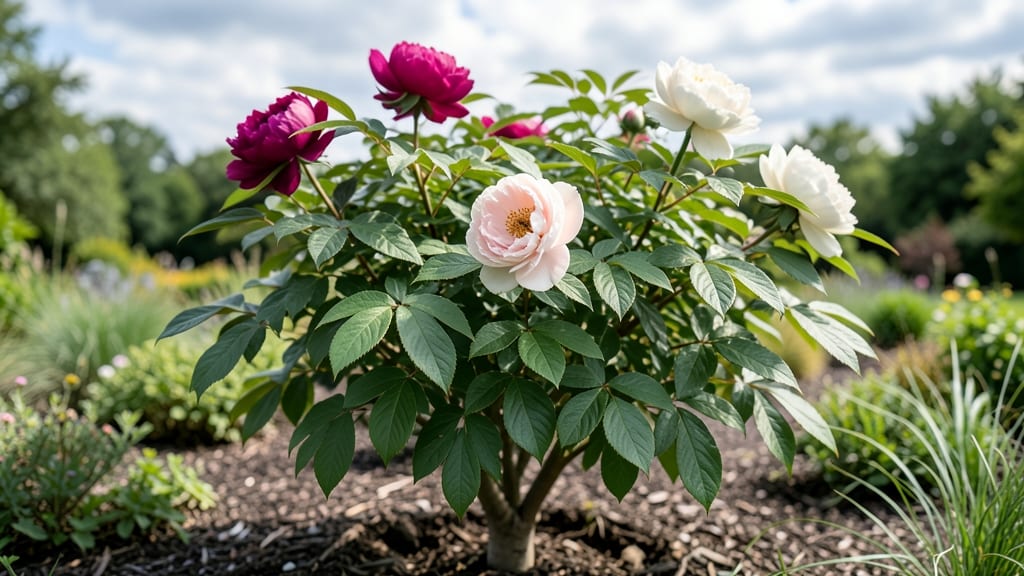
How tree peony leaf shapes differ by cultivar group
Tree peonies (Paeonia suffruticosa) are prized not just for their stunning blooms but also for their distinctive foliage. The leaf shape acts as a fingerprint for each cultivar group, revealing clues about the plant's lineage and care needs.
Unlike herbaceous peonies, tree peonies maintain their leaves year-round in mild climates, making their foliage a year-long identifier.
When identifying tree peonies, focus on three key leaf characteristics: lobing depth, serration patterns, and leaflet arrangement.
For example, Chinese tree peonies like Paeonia suffruticosa typically feature deeply lobed leaves with 3-5 leaflets, while Japanese tree peonies (P. lutea) often display shallower lobes and fewer leaflets. These differences help gardeners distinguish between varieties at a glance.
| Cultivar Group | Leaf Shape | Lobing Depth | Leaflet Count | Color Variation |
|---|---|---|---|---|
| Paeonia suffruticosa (Chinese) | Deeply lobed, broad | 3-5 lobes | 3-5 leaflets | Dark green, glossy |
| P. lutea (Japanese) | Shallow lobes, narrow | 1-3 lobes | 1-3 leaflets | Bronze-green, matte |
| Hybrid ('Duchesse de Nemours') | Moderate lobes, rounded | 3-4 lobes | 3-4 leaflets | Deep green, velvety |
| Hybrid ('Shishi Gashira') | Shallow, serrated edges | 1-2 lobes | 1-2 leaflets | Silver-green, fine texture |
| P. jishanensis (Wild type) | Deeply divided, jagged | 5+ lobes | 5+ leaflets | Grayish-green, rough |
The 'Duchesse de Nemours' cultivar stands out with its rounded leaflets and velvety texture, a trait inherited from its French heritage. In contrast, the Japanese 'Shishi Gashira' showcases shallow lobes and silver-green hues, reflecting its adaptation to cooler climates.
These visual cues help gardeners quickly narrow down varieties during spring pruning or fall planting.
Another critical clue lies in the serration patterns along leaf edges. Chinese varieties often feature coarse teeth, while Japanese types display fine, almost serrated edges. For example, 'Shishi Gashira' leaves resemble delicate fern fronds, whereas 'Duchesse de Nemours' leaves have a more robust, almost leathery appearance.
Paying attention to these details can prevent misidentification during garden tours or plant swaps.
Seasonal color shifts also play a role in identification. Young leaves of Chinese tree peonies often emerge bronze or copper-colored, gradually maturing to deep green.
Meanwhile, Japanese varieties like P. lutea may retain silver-gray tones throughout the growing season. This variation helps distinguish mature plants from seedlings or newly transplanted specimens.
For gardeners collecting rare cultivars, understanding these leaf patterns is essential. A deeply lobed leaf with glossy green coloring typically signals a Chinese parentage, while shallow lobes and matte finishes suggest Japanese lineage. Hybrid varieties often blend these traits, creating unique foliage that reflects their mixed heritage.
When examining leaves, always check the petiole length (leaf stem) and leaflet arrangement. Chinese peonies often have longer petioles (up to 6 inches), while Japanese types feature shorter stems (2-4 inches). This difference becomes especially noticeable when comparing side-by-side in a garden bed or nursery display.
To practice identification, try this exercise: Collect leaf samples from three unknown tree peony plants in your garden. Compare their lobing depth, serration patterns, and color variations against the summary table above. Matching these traits will reveal whether you're growing Chinese, Japanese, or hybrid cultivars with surprising accuracy.
Remember, leaf shape isn't just about aesthetics—it also influences the plant's hardiness and growth habit. Deeply lobed leaves often indicate a hardier specimen better suited for colder climates, while shallow-lobed types may thrive in milder regions. This knowledge helps gardeners select the right cultivars for their local growing conditions.
Next time you're admiring your tree peonies, take a closer look at their leaves. The intricate patterns and colors tell a story of lineage, climate adaptation, and horticultural history—all waiting to be discovered in your own backyard. 🌿
5 Key leaf characteristics to identify rare tree peony varieties
Tree peonies (Paeonia suffruticosa) are prized not just for their stunning blooms but also for their distinctive foliage. Rare varieties often hide their provenance in subtle leaf characteristics that seasoned gardeners can spot with a trained eye.
Whether you're admiring a bronze-foliaged cultivar in spring or comparing serration patterns in summer, these traits reveal a plant's lineage and rarity.
The secret to identifying rare tree peony varieties lies in examining five key leaf characteristics: leaflet count, petiole length, venation patterns, seasonal color shifts, and lobing depth.
Each trait acts like a fingerprint, distinguishing 'Shishi Gashira' from 'Duchesse de Nemours' or 'Luo Yang Hong'. Let’s break down what to look for in your garden.
- 🌿 Leaflet Count: Most common varieties have 3-5 leaflets per leaf, but rare hybrids like 'Yu Zhang' can display 7+ leaflets.
- 🌿 Petiole Length: Long, slender petioles (up to 8 inches) often signal Chinese provenance, while shorter petioles (4 inches) are typical of Japanese varieties.
- 🌿 Venation Patterns: Prominent white veins on dark green leaves (e.g., 'Hong Yan') are a hallmark of heirloom cultivars.
- 🌿 Seasonal Color Shifts: Bronze or purple-tinged foliage in spring (e.g., 'Shishi Gashira') fades to deep green by summer.
- 🌿 Lobing Depth: Deeply lobed leaves with serrated edges (like 'Luo Yang Hong') contrast with smooth-edged varieties.
Start with leaflet count, the most accessible trait. Most common tree peonies produce leaves with 3-5 leaflets, but rare hybrids—especially those from Chinese nurseries—often exceed this range. For example, 'Yu Zhang', a prized cultivar, frequently displays 7 leaflets per leaf, making it stand out in collections.
Count the leaflets on 3-5 leaves per plant to confirm consistency.
Next, examine the petiole length, the stem connecting the leaf to the branch. Chinese tree peonies tend to have longer petioles (up to 8 inches), while Japanese varieties like 'Shishi Gashira' typically feature shorter petioles (4 inches or less).
This trait is especially useful when comparing seedlings or young plants, where other characteristics may not yet be visible.
Pay close attention to venation patterns, which can reveal a plant’s genetic lineage. Many rare cultivars, such as 'Hong Yan', showcase bold white veins against dark green leaves, a trait inherited from wild Paeonia lutea ancestors.
In contrast, modern hybrids often have fainter venation, blending more subtly into the leaf’s surface.
Seasonal color shifts in foliage can also hint at rarity. Some bronze-foliaged varieties, like 'Shishi Gashira', emerge with deep purple or copper tones in spring, gradually transitioning to rich green by summer.
This color change is less common in mass-produced cultivars and often signals a plant’s heirloom status or hybrid vigor.
Finally, observe lobing depth and edge serration. Rare tree peonies like 'Luo Yang Hong' feature deeply lobed leaves with sharp serrations, while other varieties may have smoother, less pronounced edges.
This trait is particularly useful when identifying wild-type hybrids, as it reflects the plant’s adaptation to its native environment.