
Diseases
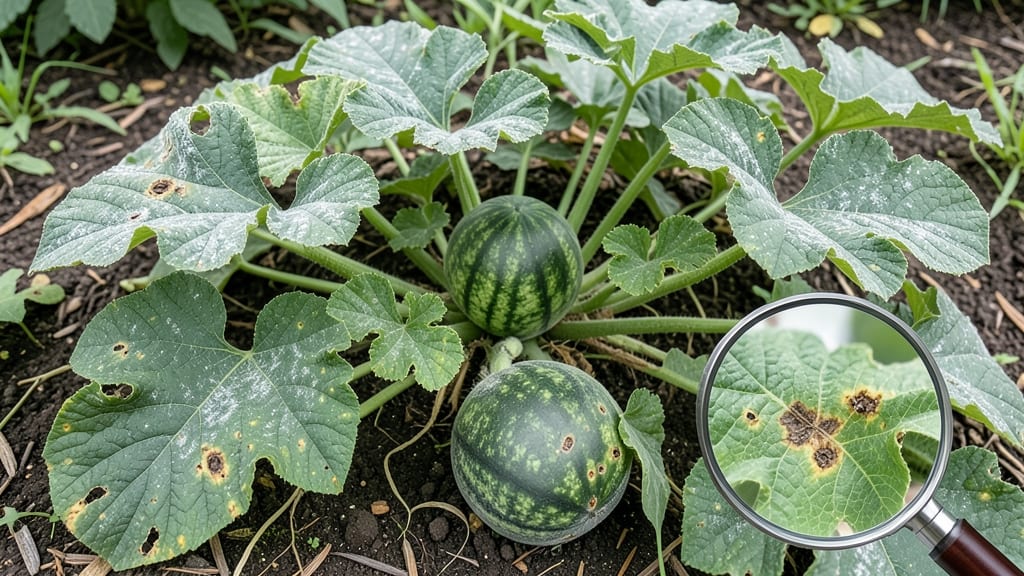
Spotting watermelon leaf diseases early saves your harvest. 🌱 I’ve seen powdery mildew turn vibrant green leaves into gray dust overnight—if you catch it before that, you can still save your plants with simple organic fixes.
The key is knowing what to look for: white powder, yellow spots, or black streaks, all signs your melons are fighting for their lives.
Most diseases thrive in hot, humid summers when watermelons are already stressed. Poor airflow, overwatering, or crowded vines create the perfect storm for fungal and bacterial invaders. The good news?
Strong circulation, proper spacing, and copper sprays can stop outbreaks before they start. I’ve used neem oil and baking soda mixes with great success—no chemicals needed.
By the time you see symptoms, it’s already too late for a full cure—but you can still slow the spread. Prune infected leaves immediately, disinfect your tools, and rotate crops next season.
Healthy plants resist disease better, so focus on soil health and balanced watering. Your next harvest could be the best yet.
This works for home gardens, small farms, and even container-grown melons. The techniques are simple, but they require consistency. Start now, and you’ll be harvesting juicy, disease-free watermelons in no time.
Root Causes Behind Leaf Troubles
Watermelon leaf diseases don’t just appear out of nowhere—they’re usually the result of a perfect storm of environmental stress, microbial invaders, or poor growing conditions. Understanding why these issues arise is the first step to prevention and organic treatment.
Below, we break down the key culprits behind watermelon leaf diseases, from fungal infections to nutrient deficiencies, so you can tackle the root cause—not just the symptoms.
Fungi thrive in warm, humid conditions, making watermelon fields prime real estate for pathogens. These microscopic organisms can spread rapidly, often starting as tiny spores in the soil or on plant debris. Once they latch onto your leaves, they weaken the plant’s defenses, leading to spots, wilting, or even death.
🍄 Anthracnose: The Overlooked Threat
- Why it happens: Caused by the fungus Colletotrichum orbiculare, anthracnose loves high humidity (80%+) and warm temperatures (75–90°F). It spreads via wind, water splashes, or contaminated tools.
- How it starts: Spores land on leaves, germinate, and create tiny lesions that expand into dark, sunken patches with yellow halos. Over time, infected leaves turn brown and crispy.
- Actionable fix: Reduce overhead irrigation (use drip systems) and space plants for airflow. Remove and destroy infected leaves immediately.
🍅 Powdery Mildew: The White Web of Doom
- Why it happens: Podosphaera xanthii (the fungus behind powdery mildew) thrives in crowded, shaded conditions with moderate temperatures (60–85°F). It doesn’t need water to spread—just spores floating in the air.
- How it starts: You’ll spot a white, powdery coating on leaves first, which later turns yellow and necrotic. Severe cases stunt growth and reduce fruit yield.
- Actionable fix: Prune for sunlight exposure and avoid late-season nitrogen-heavy fertilizers (they encourage lush, fungal-friendly growth).
🍒 Downy Mildew: The Underside Menace
- Why it happens: Pseudoperonospora cubensis needs cool nights (60–70°F) + warm days (80°F+) and high humidity to flourish. It’s most aggressive in shady or poorly ventilated areas.
- How it starts: Look for yellow spots on top leaves and a fuzzy, purple-gray mold on the undersides. Infected leaves eventually die, leaving the plant vulnerable to secondary infections.
- Actionable fix: Water at the base (never overhead) and rotate crops to break the fungus’s life cycle.
Unlike fungi, bacteria multiply rapidly in wet conditions, often hitching a ride on contaminated water or tools. They clog plant vessels, disrupting nutrient flow and causing leaf collapse.
🔥 Angular Leaf Spot: The Classic Bacterial Attack
- Why it happens: Pseudomonas syringae pv. lachrymans loves wet leaves and high humidity. It enters through wounds (like from pruning or hail) or natural openings (stomata).
- How it starts: Small, water-soaked spots with yellow halos appear, then turn brown with a distinct angular shape (hence the name). Severe cases cause defoliation.
- Actionable fix: Use copper-based sprays preventatively and sterilize pruners with rubbing alcohol between plants.
💦 Bacterial Leaf Spot: The Oozing Nightmare
- Why it happens: Xanthomonas campestris pv. cucurbitae spreads via water splashes, infected seeds, or contaminated soil. It’s worse in hot, rainy seasons.
- How it starts: Tiny, greasy-looking spots appear, then expand into raised, crusty lesions that may ooze bacteria when wet. Leaves yellow and drop prematurely.
- Actionable fix: Rotate crops every 3 years and avoid overhead watering during peak infection risk (morning hours).
Not all leaf diseases are caused by pathogens—sometimes, your watermelon’s environment is the real villain. Extreme heat, poor drainage, or nutrient imbalances weaken plants, making them susceptible to infections.
☀️ Heat Stress & Sun Scorch
- Why it happens: Watermelons in high-temperature zones (above 95°F) or intense sunlight without shade suffer from oxidative stress, leading to bleached or crispy leaf edges.
- How it starts: Leaves develop white or brown patches that look like disease but are actually sunburn. Young, tender leaves are most vulnerable.
- Actionable fix: Provide afternoon shade cloth (30–50%) and mulch heavily to retain soil moisture.
💧 Overwatering & Poor Drainage
- Why it happens: Soggy soil (from overwatering or clay-heavy soil) drowns roots, cutting off oxygen and nutrients. This stress makes plants more prone to fungal/bacterial attacks.
- How it starts: Leaves yellow uniformly (not just spots), wilt even when soil is wet, and may develop root rot (black, mushy roots).
- Actionable fix: Amend soil with compost and raise beds for better drainage. Water deeply but only when the top 1–2 inches of soil are dry.
🍽️ Nutrient Deficiencies: The Silent Sabotage
- Why it happens: Watermelons need a balanced diet—too much or too little of key nutrients (like magnesium, nitrogen, or potassium) weakens leaves, making them easy targets for diseases.
- Magnesium deficiency (interveinal chlorosis): Leaves turn yellow between veins (a classic sign of poor uptake).
- Nitrogen deficiency: Leaves yellow uniformly and stunt growth.
- Potassium deficiency: Brown, dead patches appear on leaf edges.
- Actionable fix: Test soil pH (aim for 6.0–6.8) and apply organic amendments like kelp meal (potassium) or composted manure (nitrogen).
By identifying the real cause behind your watermelon’s leaf troubles—whether it’s a fungal party, bacterial takeover, or environmental abuse—you can stop treating symptoms and start fixing the problem at its source. Next up: organic remedies to restore your plants to peak health.
Fixing Fungal Foes Naturally
Watermelon leaf diseases can feel like a losing battle, but with the right organic remedies, you can turn things around—fast. The key is acting early and targeting the root cause (literally!).
Below, we’ve mapped out practical, step-by-step solutions for each common disease, plus pro tips to keep your vines thriving.
Cause: Fungal spores thrive in humid, low-airflow conditions. Fix:1. Prune for airflow 🌬️
- Remove crowded or yellowing leaves to improve circulation.
- Space plants 2–3 feet apart (or trellis them vertically).
2. Homemade spray attack 🛡️
- Mix 1 tbsp baking soda + 1 tsp dish soap + 1 gallon water in a spray bottle.
- Apply early morning to avoid scorching leaves.
- Reapply every 7–10 days or after rain.
3. Prevent recurrence 🌱
- Water at the base (never overhead) to keep foliage dry.
- Rotate crops yearly—don’t plant watermelons in the same spot.
- Use reflective mulch (like aluminum foil) to deter spores.
1. Emergency copper treatment 🛠️
- Spray a copper fungicide (like Bordeaux mixture) at the first sign of fuzzy gray patches.
- Follow label rates—copper can burn leaves if overused!
2. Adjust watering habits 💦
- Switch to drip irrigation or soaker hoses to avoid wetting leaves.
- Water early in the day so foliage dries by nightfall.
3. Resistant varieties 🌿
- Next season, opt for downy mildew-resistant seeds (e.g., ‘Crimson Sweet’ or ‘Sugar Baby’).
1. Sterilize the garden 🧼
- Remove all infected leaves and vines; do not compost them.
- Solarize soil: Cover beds with clear plastic for 4–6 weeks to kill spores.
2. Copper + neem oil duo 🍃
- Spray copper fungicide (as above), then follow with neem oil (1 tbsp/quart water) to smother spores.
- Apply every 10–14 days until new growth appears.
3. Space plants for dryness ☀️
- Thin vines to reduce humidity in the canopy.
- Avoid mulching too close to stems (keep 6+ inches away).
1. Copper soap scrub 🧼🔥
- Mix copper fungicide + a few drops of Castile soap for better adhesion.
- Spray every 3 days until symptoms stop.
2. Sanitize tools and seeds 🧴
- Wipe pruners with 70% rubbing alcohol between plants.
- Soak seeds in hydrogen peroxide (3%) for 10 minutes before planting.
3. Crop rotation + trap plants 🌱
- Plant marigolds or nasturtiums nearby to repel pests that spread bacteria.
- Wait 3 years before replanting watermelons in the same spot.
Prevention is easier than cure! Try these low-effort habits:
- 🌡️ Monitor humidity: Aim for 40–60%; use a fan in greenhouses.
- ✨ Morning dew hack: Shake plants gently at sunrise to dry leaves faster.
- 🎯 Test soil pH: Keep it 6.0–6.8 (fungi love acidic soil).
- 🍄 Compost tea: Brew compost tea (1:5 ratio) weekly as a preventative spray.
With these fixes, your watermelon leaves will bounce back—and your harvest will be sweeter than ever! 🍉💚
Frequently asked questions
How can I tell if my watermelon leaves have powdery mildew vs. heat stress?
Powdery mildew appears as a white, powdery coating on leaf surfaces, often starting on the undersides. It spreads in shaded, humid conditions and leaves turn yellow underneath. Heat stress, however, causes bleached or crispy edges with no powder—just dry, brown patches. Check for airflow: mildew thrives where leaves touch or are crowded, while heat stress affects exposed leaves in intense sun.
Is it safe to compost watermelon leaves with fungal diseases?
No, never compost infected leaves. Fungal spores survive composting and can reinfect your garden. Instead, double-bag infected plant material and throw it in the trash. For severe cases, burn debris (if local regulations allow) or solarize your soil by covering beds with clear plastic for 4–6 weeks to kill spores naturally.
Can I use the same copper spray for both bacterial and fungal diseases?
Yes! Copper fungicides (like Bordeaux mixture) work against both bacteria and fungi because copper disrupts microbial cell walls. For bacterial spots, mix copper with Castile soap (1 tsp per quart) to improve adhesion. Apply every 3–5 days until symptoms clear, but avoid spraying when leaves are wet to prevent phytotoxicity.
Why do my watermelon leaves keep getting spots even after treatment?
Persistent spots often mean one of three things:
- Re-infection from spores still in the soil or air,
- Poor airflow (fungi/bacteria thrive in crowded plants), or
- Nutrient deficiencies weakening the plant. Double-check your spacing (2–3 feet apart), water only at the base, and test soil pH (6.0–6.8). If spots keep coming back, rotate crops next season.
Are there watermelon varieties less prone to leaf diseases?
Look for disease-resistant hybrids like ‘Crimson Sweet’ (powdery mildew-resistant) or ‘Sugar Baby’ (downy mildew-tolerant). Seed packets often label resistance—check for terms like “PM” (powdery mildew) or “DM” (downy mildew). Even resistant varieties need proper care, but they’ll give you a 20–30% better chance of avoiding outbreaks.