
Trees
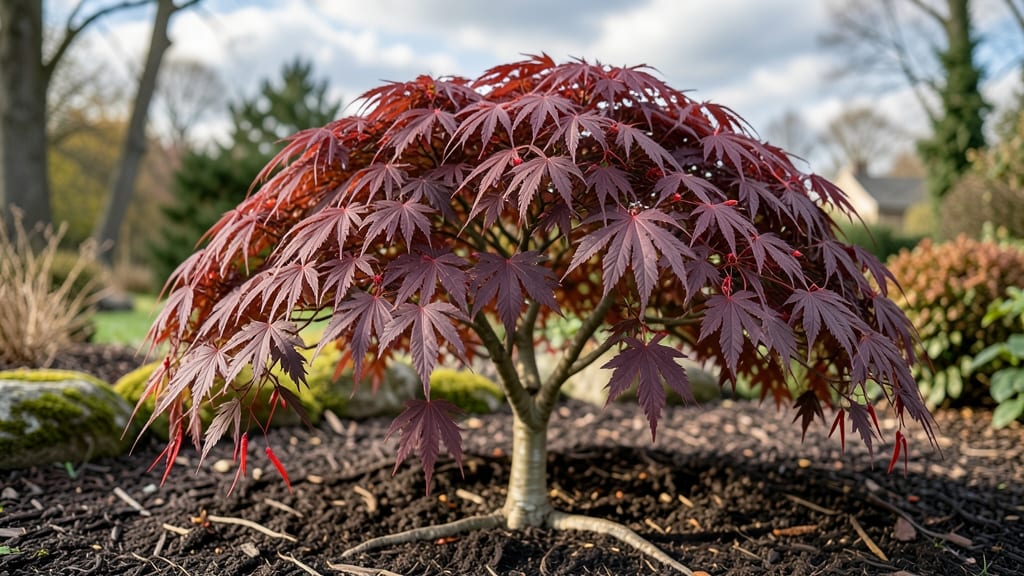
The weeping laceleaf Japanese maple transforms shade gardens into living art. 🌿 Its delicate, fern-like foliage cascades like lace curtains, creating a dreamy focal point that thrives where other plants struggle.
I fell in love with this tree after seeing one in a friend's woodland garden—it looked like a fairy had woven it from moonlight and spider silk. Plant it where morning sun warms the leaves but afternoon shade protects them from harsh light.
The soil should stay consistently moist but well-draining, mimicking its native forest floor. Mulch helps retain moisture and keeps roots cool, while regular watering (about 1 inch per week) prevents the foliage from turning crispy at the edges.
What makes this tree truly magical is how it changes with the seasons. Spring brings fresh green lace, summer deepens it to burgundy, and fall sets the leaves ablaze with fiery orange. Even in winter, the bare branches maintain their graceful weeping shape, adding structure to the garden.
For best results, prune in late winter to shape the canopy and remove any dead wood. Watch for aphids or spider mites, which can stress the tree, and treat with neem oil if needed.
With proper care, your weeping laceleaf will become the centerpiece of your garden for decades to come.
📚 In This Guide
- What you need
- Instructions
- Tips and common mistakes
- Wrapping up and next steps
What you need
- ● Weeping Laceleaf Japanese Maple (Acer palmatum 'Dissectum') – Choose a healthy 1- to 3-gallon container-grown specimen (or a bare-root sapling for budget-friendly planting).
- ● Well-draining acidic soil – Aim for a pH of 5.0–6.5. Mix in 2–3 inches of organic matter (like compost or peat moss) for optimal growth.
- ● Slow-release fertilizer – A balanced 10-10-10 or acid-loving plant fertilizer (follow package rates for application).
- ● Mulch – 2–3 inches of wood chips or pine bark (keep mulch 3–4 inches away from the trunk to prevent rot).
- ● Garden trowel or spade – For digging holes (size should be 2–3x wider than the root ball).
- ● Pruning shears – Sharp, bypass-style shears (sterilized with rubbing alcohol) for shaping and maintenance.
- ● Garden hose or watering can – With a gentle spray nozzle for post-planting hydration.
- ○ Staking kit (optional but recommended) – 2–3 flexible stakes and soft tree ties for young, top-heavy specimens.
- ● Gloves & knee pads – Because gardening magic shouldn’t come with blisters! 😉
- ● Sunlight – Partial shade (4–6 hours of dappled sunlight daily). Avoid harsh afternoon sun in hot climates.
- ● Moisture control – Consistent moisture (but never soggy soil). Drought-tolerant once established, but young trees need weekly watering.
- ● Wind protection – Shelter from strong winds (use a temporary windbreak if needed) to prevent branch damage.
- ● Patience – This beauty grows slowly (6–12 inches per year), but the lace-like foliage is worth every wait!
Step-by-Step guide to planting and caring for weeping laceleaf Japanese maple
This delicate beauty thrives with proper placement and gentle care—here's how to nurture its graceful form.
🪴 Step 1: Choose the Perfect Planting Location
Weeping laceleaf maples need partial to full shade—at least 4-6 hours of dappled sunlight daily. I always pick a spot with morning sun and afternoon shade to prevent leaf scorch. The soil should drain well but retain moisture, so avoid low-lying areas where water pools. Test your site by digging a 1-foot hole—if water sits longer than 15 minutes, amend with 2-3 inches of compost to improve drainage.
This tree’s cascading branches need 8-10 feet of horizontal space to mature gracefully. If planting near a structure, leave 6 feet of clearance to prevent winter damage from rubbing branches. I like to sketch the mature canopy shape on paper first—it helps visualize how the weeping habit will fill the space over time.
🌱 Step 2: Plant at the Right Depth and Stake for Support
Dig a hole twice as wide as the root ball but no deeper—this encourages roots to spread horizontally rather than circling. Gently remove the tree from its container and loosen any tangled roots with your fingers. Place the tree in the hole so the top of the root ball sits 1-2 inches above ground level—this prevents water from pooling around the trunk and causing rot.
Fill the hole with native soil, tamping lightly every 2 inches to remove air pockets. Install two 2-inch diameter stakes> on opposite sides of the hole, angled outward. Secure the tree with soft tree ties> (never wire or anything that can cut into the bark) and water deeply to settle the soil. The stakes should stay in place for 6-12 months> while the roots establish.
💧 Step 3: Water Deeply and Mulch for Moisture Retention
Water the newly planted tree until 6 inches of soil> are thoroughly moist—this encourages roots to grow deeply rather than staying shallow. I like to use a soaker hose> for 20-30 minutes to avoid disturbing the soil surface. After watering, spread 3 inches of organic mulch> (like shredded bark) over the root zone, keeping it 6 inches away from the trunk> to prevent rot.
Replenish mulch annually in early spring, but never let it pile against the trunk. The goal is to keep soil temperatures stable and moisture levels consistent—this tree hates drought stress. You’ll know you’re doing it right when the mulch looks evenly settled and the soil beneath stays cool to the touch even on hot days.
☀️ Step 4: Prune for Shape and Airflow in Late Winter
Wait until dormant season (February-March)> to prune, when the tree isn’t actively growing. Remove any dead, crossing, or rubbing branches first—they’re the biggest threats to the tree’s health. Then, thin out 10-20% of the canopy> to improve airflow and light penetration. I always make cuts just outside the branch collar (the swollen area where the branch meets the trunk) to promote fast healing.
For weeping varieties, avoid heavy pruning of the main branches—they create the tree’s signature cascading form. Instead, focus on shaping the lower canopy to encourage a fuller, more balanced silhouette. After pruning, apply pruning sealant> to cuts larger than ½ inch> to prevent disease entry. The tree will reward you with fresh, vibrant foliage by early spring.
⏰ Step 5: Fertilize and Monitor for Pests Yearly
In early spring, apply a slow-release, balanced fertilizer> (10-10-10) around the root zone, following package instructions. Japanese maples are light feeders, so over-fertilizing leads to weak growth and excessive foliage. I like to mix a handful of bone meal> into the soil at planting for extra phosphorus—it helps establish strong roots without burning tender new growth.
Watch for aphids or spider mites> on the undersides of leaves, especially in dry years. Treat infestations immediately with a strong spray of water or insecticidal soap—this tree’s delicate foliage can’t handle harsh chemicals. A healthy laceleaf maple should have deep green, lacy leaves> with no yellowing or curling. If you see leaf edges browning, it’s usually a sign of underwatering or too much direct sun.
Tips & tricks for perfect weeping laceleaf Japanese maple care
Between us, these small details make all the difference when nurturing your delicate laceleaf maple—trust me, I’ve seen firsthand what happens when you skip them.
Location Scouting: That 4-6 hours of dappled sunlight isn't just a suggestion—it's critical for preventing leaf scorch. I recommend testing your site by placing a white board where you plan to plant during peak afternoon sun. If it gets hotter than 85°F, you'll need to adjust your spot or provide afternoon shade with a sheer fabric screen. The tree's cascading branches also need that 8-10 feet of horizontal space, so measure twice before digging!
Root Ball Prep: When you're loosening those tangled roots in Step 2, don't just pull them apart—gently tease them with your fingers to encourage outward growth. I've found that trees with roots spread this way establish faster. And that 1-2 inch elevation above ground level? It's not just about drainage—it prevents the trunk from sitting in wet soil, which causes rot. Use a level to ensure the tree sits perfectly upright before backfilling.
Watering Wisdom: Those 20-30 minutes with the soaker hose might seem excessive, but this is how you get that crucial 6 inches of moist soil. I've learned the hard way that shallow watering creates surface roots that dry out quickly. After watering, press your finger into the soil—it should feel moist but not soggy. The mulch layer acts as a moisture blanket, so keep it consistently 3 inches thick but always maintain that 6-inch clearance from the trunk.
Pruning Precision: When you're thinning that 10-20% of the canopy in Step 4, focus on removing branches that cross or rub against each other—they'll create wounds that invite disease. For the weeping branches, I like to use hand pruners rather than loppers to make cleaner cuts. And that ½ inch rule for pruning sealant? It's not arbitrary—cuts smaller than that seal naturally, while larger ones need protection to prevent sap loss and infection.
Pro Tips for Weeping Laceleaf Japanese Maple
- Between us, these small details make all the difference when nurturing your delicate laceleaf maple—trust me, I’ve seen firsthand what happens when you skip them.
- Location Scouting: That 4-6 hours of dappled sunlight isn't just a suggestion—it's critical for preventing leaf scorch.
- Root Ball Prep: When you're loosening those tangled roots in Step 2, don't just pull them apart—gently tease them with your fingers to encourage outward growth.
Frequently asked questions
about the Weeping Laceleaf Japanese Maple—because every gardener deserves clarity!1. How fast does a Weeping Laceleaf Japanese Maple grow?
This elegant tree grows at a moderate pace, typically adding 6–12 inches per year under ideal conditions. Patience is key—it may take 10–15 years to reach its mature height of 15–20 feet. Slow growth ensures its delicate branches stay graceful over time!
2. Can I plant a Weeping Laceleaf Japanese Maple in full sun?
No!
While it tolerates partial shade, this variety thrives in dappled sunlight or full shade. Too much direct sun can scorch its lace-like foliage and stress the tree. Aim for morning sun + afternoon shade for optimal health.
3. What’s the best time to prune a Weeping Laceleaf Japanese Maple?
Prune in late winter or early spring (before buds swell) to shape the tree and remove dead branches. Avoid heavy pruning—this variety’s weeping habit is its charm! Use sterilized tools to prevent disease, and never prune in fall (risk of fungal issues).
4. Are there dwarf alternatives to the Weeping Laceleaf Japanese Maple?
Yes! If space is limited, consider these stunning compact options:
- ‘Bloodgood’ Japanese Maple – Bold red foliage, 15–20 ft tall.
- ‘Crimson Queen’ – Upright growth, 10–15 ft tall, vibrant colors.
- ‘Shishigashira’ – Dwarf weeping form, 6–8 ft tall, perfect for small gardens.
5. Why are the leaves turning brown or yellow?
Brown/yellow leaves often signal overwatering, underwatering, or stress. Check soil moisture—it should stay consistently damp but not soggy. Other culprits? Fungal diseases (like leaf spot) or nutrient deficiencies. Trim affected leaves, improve drainage, and fertilize lightly in spring for a comeback!
Wrapping up and next steps
The Weeping Laceleaf Japanese Maple is a breathtaking addition to any shade garden, offering year-round beauty with its delicate foliage, vibrant colors, and graceful form. Whether you're drawn to its ethereal lace-like leaves or its low-maintenance charm, this tree promises to elevate your outdoor space with effortless elegance.
Ready to transform your garden? Start by gathering your supplies and planning your planting spot—your future masterpiece awaits! 🌿✨