
Pests
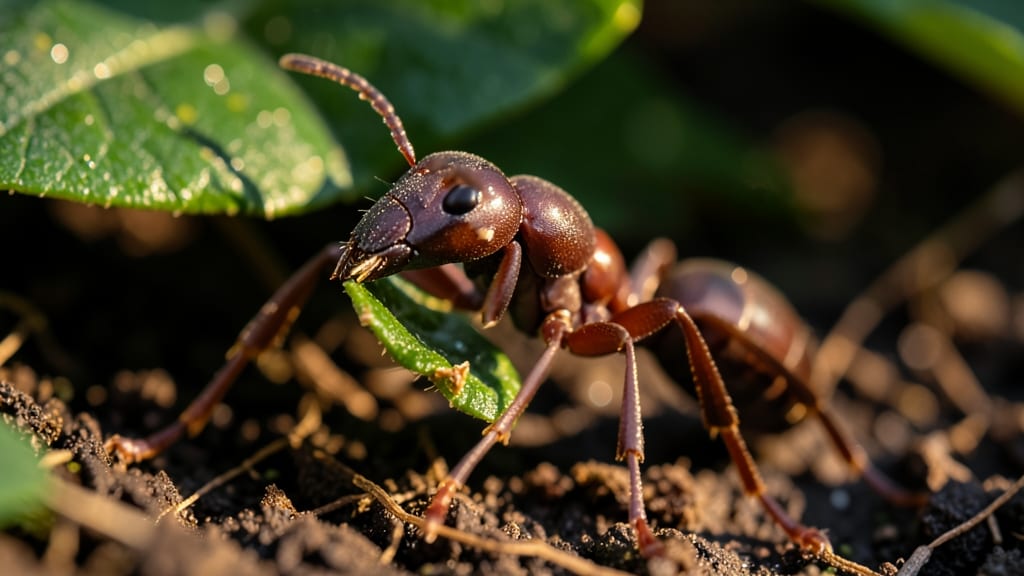
Leaf cutter ants harvest leaves to cultivate fungi in underground chambers, creating organic gardens that sustain their colonies while recycling plant material into nutrient-rich food sources for their fungal farms.
These ants are nature's master gardeners, working in organized colonies to maintain fungal farms that feed their entire society. 🌱 Their process starts with cutting leaves into precise sizes—almost like a salad service for their fungal crops—and transporting them underground, where they chew and process the plant material into compost.
This underground ecosystem is so efficient that it rivals human agriculture in complexity, with different ant castes handling specialized tasks like waste removal and fungal maintenance.
What makes this system fascinating is how it benefits the broader environment. By breaking down leaves, they accelerate decomposition, enriching the soil with nutrients that help new plants grow.
In tropical forests, their activity can even influence which plant species thrive, creating a feedback loop where their farming supports the very vegetation they harvest. For gardeners, observing these ants can reveal surprising insights into natural nutrient cycling.
💡 In This Article
- How Leaf Cutter Ants Cultivate Fungi Like Farmers
- Ecosystem Impact: Leaf Cutter Ants as Nature’s Gardeners
How leaf cutter ants cultivate fungi like farmers
Leaf cutter ants have evolved a farming system so sophisticated that scientists often call it the "oldest agriculture" on Earth. Their process begins with specialized worker ants—called "miners"—that cut leaves into 1-2 millimeter pieces using their powerful mandibles.
These leaf fragments are then carried back to underground chambers, where they're chewed into a pulp and mixed with fungal spores. The ants even remove competing fungal species to maintain a pure crop, much like how farmers rotate crops to prevent disease.
The fungal gardens thrive in controlled environments with precise humidity (90-95%) and temperature (25-30°C), maintained by the ants' labor.
Worker ants regulate airflow through ventilation shafts and remove fungal waste, creating an ecosystem that would impress any organic farmer. 🌱 Unlike human agriculture, which relies on machines and fertilizers, these ants use only their bodies and natural chemistry to cultivate food.
Their fungal gardens produce a nutrient-rich mycelium that the ants feed on, while the fungi break down the leaf material into digestible nutrients.
This relationship is a perfect example of mutualism—both species benefit. The ants gain a steady food source, while the fungi receive a constant supply of fresh organic matter. Some colonies even cultivate multiple fungal strains, similar to how farmers might grow different crops.
The ants also "prune" their fungal gardens by removing overgrown sections, ensuring optimal growth. This level of agricultural sophistication has been evolving for over 50 million years, making it one of nature's most successful experiments in cooperative farming.
What's particularly fascinating is how the ants maintain their fungal crops across generations. When a colony splits (a process called budding), the new queen carries fungal fragments with her to start fresh gardens in the new nest.
This ensures the fungal strain remains genetically compatible with the ants, preventing crop failure. 💫 The precision of their farming techniques rivals that of human societies, yet they achieve it without tools or technology—just through instinct and teamwork.
Researchers have even discovered that leaf cutter ants use antibiotics produced by their fungal gardens to protect against bacterial infections. This natural pest control method is similar to how human farmers use crop rotation to prevent soil-borne diseases.
The ants' ability to maintain sterile growing conditions in their underground chambers demonstrates an advanced understanding of microbial management that scientists are still studying today.
Consider this: A single colony can contain up to 8 million individual ants working together to maintain their fungal farms. Each ant has a specialized role—some cut leaves, others transport, and a few tend the gardens—creating a division of labor that rivals the complexity of human societies.
This level of organization is what makes leaf cutter ants one of nature's most remarkable agricultural success stories.