
Pruning
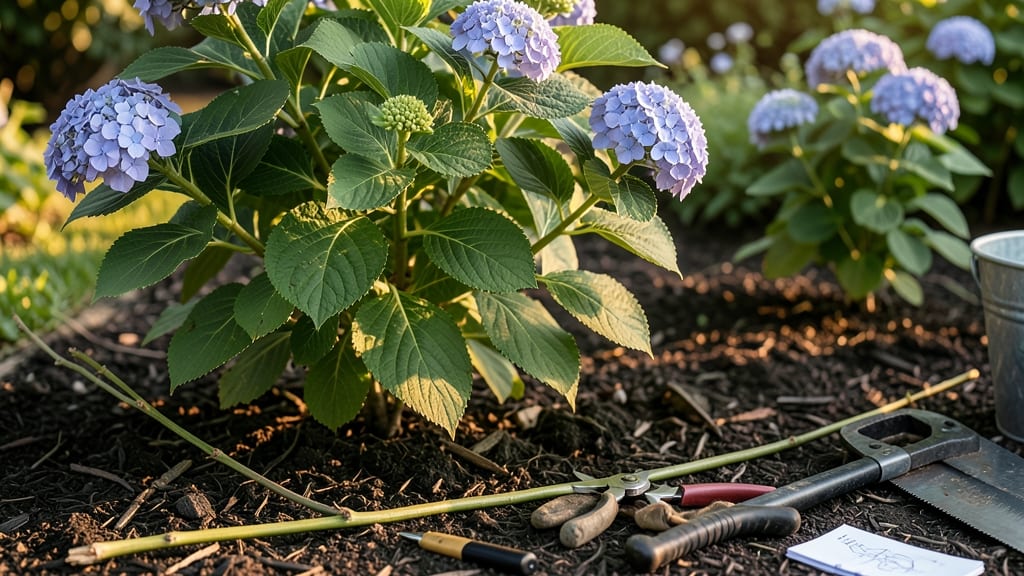
Trimming bigleaf hydrangeas at the right time determines whether you’ll get showstopping blooms or a sparse, leggy mess.
Picture this: You’ve waited all year for those lush, 🌸 hydrangea blooms, only to be disappointed by half the flowers you expected. The culprit? Pruning too early—or worse, at the wrong time.
Late winter is the sweet spot for trimming, but timing it wrong can actually kill next year’s blooms before they even start.
Bigleaf hydrangeas are finicky about when you cut them back. Prune too soon, and you risk removing the old wood that holds next season’s flower buds. Wait too long, and you’ll miss the chance to shape the plant before new growth begins.
The key is knowing exactly when to act—right after the last frost but before those first green shoots appear.
In this guide, I’ll walk you through the exact late-winter timeline for trimming, how to spot the signs that your hydrangea is ready, and the simple steps to ensure bigger, healthier blooms year after year. No more guesswork—just science-backed timing for stunning results.
The exact late-winter timeline for trimming big leaf hydrangeas
Pruning your big leaf hydrangeas (Hydrangea macrophylla) at the wrong time can mean the difference between stunning summer blooms and sparse, underwhelming flowers. The key? Late winter pruning during the dormant season when the plant is resting but before new growth begins.
This timing ensures you're cutting back last year's wood while preserving next year's flower buds hidden along the stems.
Understanding your USDA hardiness zone is critical because frost dates vary dramatically across regions. In Zones 6-7, late winter typically means February to early March, while gardeners in Zones 8-9 can wait until late March or even April.
The goal is to prune 4-6 weeks before your last expected frost—early enough to avoid frost damage to fresh cuts, but late enough to prevent stimulating premature growth.
| USDA Zone | Ideal Pruning Window | Key Cues | Avoid Pruning If... |
|---|---|---|---|
| Zones 3-5 | Late March - Early April | Dormant buds visible, no green tips | New growth appears (green tips) |
| Zones 6-7 | February - Early March | Ground thawed, no frost forecast | Frost predicted within 3 days |
| Zones 8-9 | Late March - April | Stems brown but flexible | Green shoots emerge (2+ inches) |
| Zones 10+ | February - March | Cool season, no heatwaves | Temperatures exceed 70°F |
🌡️ Pro Tip: Use your last frost date as your deadline—prune 6 weeks before to balance safety and timing.
The science behind late-winter pruning is all about bloom production timing. Big leaf hydrangeas are old wood bloomers, meaning their flowers develop on previous year's stems. When you prune in late winter, you're removing spent blooms and dead wood while leaving the dormant flower buds intact.
These buds will grow into next year's blooms if given the right conditions.
One of the biggest mistakes gardeners make is pruning too early in winter when the plant is still active. Cutting back in December or January can expose the plant to winter dieback or even frost damage to fresh cuts.
Always wait until the ground is thawed and no hard frosts are forecasted for at least 3-5 days. This gives your cuts time to callus over and heal before spring arrives.
Another critical factor is stem identification. Look for brown, woody stems with dormant buds near the base—these are your blooming stems that should be preserved. Avoid cutting back green stems or stems with swollen buds, as these indicate new growth that's already started.
If you accidentally prune these, you'll lose potential blooms for next year.
For overgrown hydrangeas, you can remove up to 1/3 of the oldest stems to encourage new, vigorous growth. Focus on thinning out crowded centers to improve airflow and reduce disease risk.
Always use clean, sharp pruners and make cuts at a 45-degree angle just above a bud or node to promote healthy regrowth.
After pruning, give your hydrangeas a light fertilizer application in early spring to support new growth. Choose a balanced 10-10-10 fertilizer and apply it 2-3 weeks after pruning when you see new green shoots emerging.
Water deeply to help the plant recover from the stress of pruning and encourage robust stem and bloom development.
If you miss the late-winter window, don't panic—you can still prune in early spring as long as no buds have swollen. However, the earlier you prune, the more blooms you'll sacrifice for that season.
For maximum results, mark your calendar for February-March and set a reminder based on your USDA zone to ensure you never miss the perfect timing again.
Remember, the goal of late-winter pruning isn't just about neatening up your shrubs—it's about setting the stage for next year's spectacular blooms. With the right timing and technique, your big leaf hydrangeas will reward you with larger, healthier flowers that steal the show all summer long. 🌸
How to prune big leaf hydrangeas for maximum blooms: step-by-step
Pruning your big leaf hydrangeas correctly is the key to those show-stopping blooms you dream about. Unlike some shrubs, these beauties bloom on old wood, meaning last year’s growth produces this year’s flowers.
Cutting at the wrong time—or in the wrong places—can mean fewer blooms or even no flowers at all. Here’s how to do it right for maximum floral impact.
First, identify old vs. new wood. Old wood stems are brown and woody, while new growth appears green and tender. Look for flower buds near the base of last year’s stems—they’re your bloom guarantee for next season. Preserve these stems, as they’ll produce your summer flowers.
⚠️ callout-warning
Pruning after the last frost (typically March-April in USDA Zone 6a) but before new growth starts ensures you don’t cut off next year’s blooms. If you prune in fall or early winter, you risk removing flower buds before they’ve formed.
🌱 Pro Tip: Wait until you see swollen buds on old stems—this confirms they’re safe to prune.
Start by removing dead or diseased stems first. These are brown, brittle, and hollow—cut them back to the ground level. Next, thin out overcrowded stems to improve airflow. Aim to keep 3-5 of the strongest, healthiest stems per plant, as this encourages larger, more vibrant blooms.
For selective pruning, focus on cutting stems back to just above a set of buds. Look for 5-7 buds from the base—this is your ideal pruning point. Avoid cutting into green growth, as this signals the plant to produce leaves instead of flowers.
Use clean, sharp pruners to make 45-degree cuts just above a bud to prevent water from pooling.
After pruning, shape your hydrangea by trimming back any long, leggy stems to maintain a balanced silhouette. This not only looks better but also reduces stress on the plant.
Once finished, clean up debris and apply a 2-inch layer of mulch around the base to protect roots and retain moisture.
Finally, feed your hydrangea in early spring with a balanced fertilizer (like 10-10-10) to support new growth. Water deeply to help the plant recover from pruning. With the right cuts, your big leaf hydrangea will reward you with bigger, brighter blooms all season long!