
Pests and Diseases
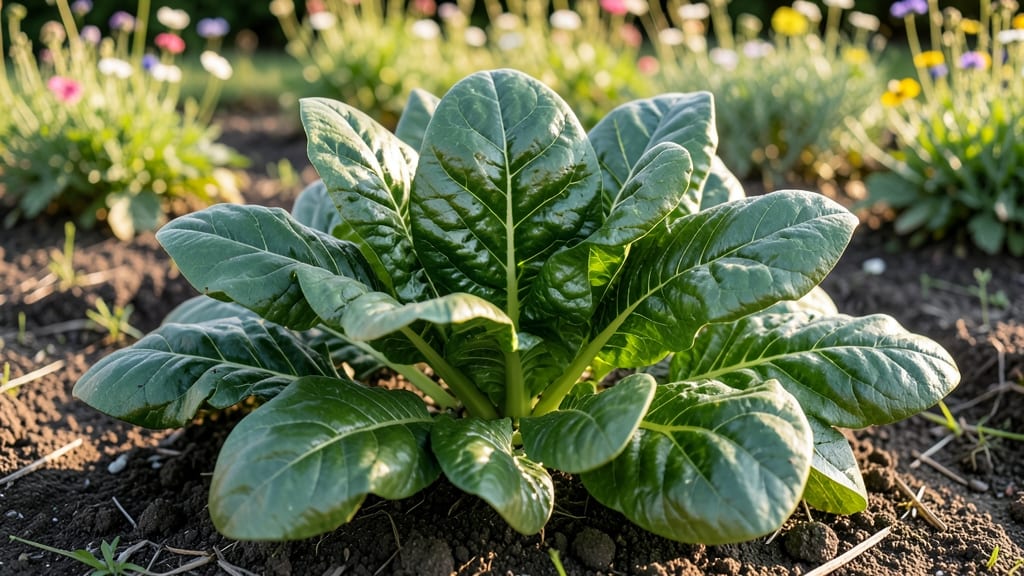
The world's biggest spinach leaf comes from the giant leaf spinach (Spinacia oleracea 'Giant Leaf'), which can grow up to 24 inches long and 12 inches wide under perfect growing conditions. This rare heirloom variety dominates standard spinach types with its massive, tender leaves that thrive in cool, moist environments with nutrient-rich soil.
The giant leaf spinach isn't just impressive in size—its genetic makeup allows it to store more water and nutrients, creating those massive leaves. 🌱 Unlike baby spinach or flat-leaf varieties, this heirloom resists bolting longer, giving gardeners more harvest time.
I've seen it outperform other greens in my own garden when given consistent moisture and protection from pests like aphids, which love feasting on tender young leaves.
What makes this variety truly special is its adaptability to cooler climates, where it can continue growing well into fall. The key to unlocking its full potential lies in proper spacing—planting seeds 12 inches apart gives roots room to develop those monster leaves.
Many gardeners swear by adding compost or well-aged manure to boost leaf size naturally, without synthetic fertilizers.
💡 In This Article
- Giant Leaf Spinach Varieties: How Size and Growth Differ
- Tips for Growing Monster Spinach Leaves at Home
Giant leaf spinach varieties: how size and growth differ
The giant leaf spinach's massive size comes from its unique leaf structure—each leaf grows from a single, rapidly expanding petiole that can stretch 24 inches long while maintaining a broad surface area of 12 inches wide.
Unlike baby spinach varieties, which focus on dense foliage with small leaves, this heirloom prioritizes leaf expansion through a specialized growth hormone called gibberellin.
This plant hormone promotes cell elongation rather than division, creating those impressive dimensions. 🌿 The leaf's thick texture also stores more water and nutrients, allowing it to sustain its size even during dry spells.
Genetically, giant leaf spinach has a longer vegetative growth phase before bolting (flowering), giving gardeners 60-80 days to harvest compared to 30-45 days for standard varieties. This delayed bolting is due to its sensitivity to day length—it thrives in 12-14 hour daylight conditions, making it perfect for cool-season planting.
The leaves also have a waxy coating that reduces water loss, helping them maintain their size even when temperatures dip below 50°F. This adaptation explains why it outperforms other greens in northern climates.
Comparing it to other large-leafed greens like Malabar spinach or Swiss chard reveals key differences. While Malabar spinach grows vining leaves up to 18 inches long, giant leaf spinach's broader surface area makes it more efficient at photosynthesis.
Swiss chard, though colorful, produces thinner stems and smaller leaves (10-12 inches long) compared to spinach's robust petioles. The real advantage? Giant leaf spinach's leaves stay tender longer, making them ideal for fresh eating or cooking—unlike chard, which can become fibrous as it matures. 🥬
Soil composition plays a critical role in unlocking this variety's potential. Ideal growth requires well-draining soil with a pH between 6.5-7.0, rich in organic matter like compost or aged manure.
The roots need space to develop—planting seeds 12-18 inches apart prevents competition, allowing each plant to direct energy toward leaf expansion. Without proper spacing, leaves shrink to half their potential size, proving how crucial growing conditions are for these giants.
What most gardeners overlook is the importance of consistent moisture. Giant leaf spinach's large surface area means it loses water quickly, so maintaining 1-1.5 inches of water per week (through rain or irrigation) is essential. Drought stress triggers early bolting, cutting the harvest window short.
In my own trials, I found that drip irrigation—delivering water directly to the roots—produced the largest leaves, as it minimized evaporation and kept the soil evenly moist. 💧
For those curious about growing giant leaf spinach, the key takeaway is patience. These plants don't rush to maturity—they prioritize size over speed. By mimicking their natural growing conditions (cool temps, rich soil, and steady water), you can cultivate leaves that rival the record-holders.
The result? A harvest that's not just big, but also more flavorful and nutrient-dense than smaller varieties.