
Pests and Diseases
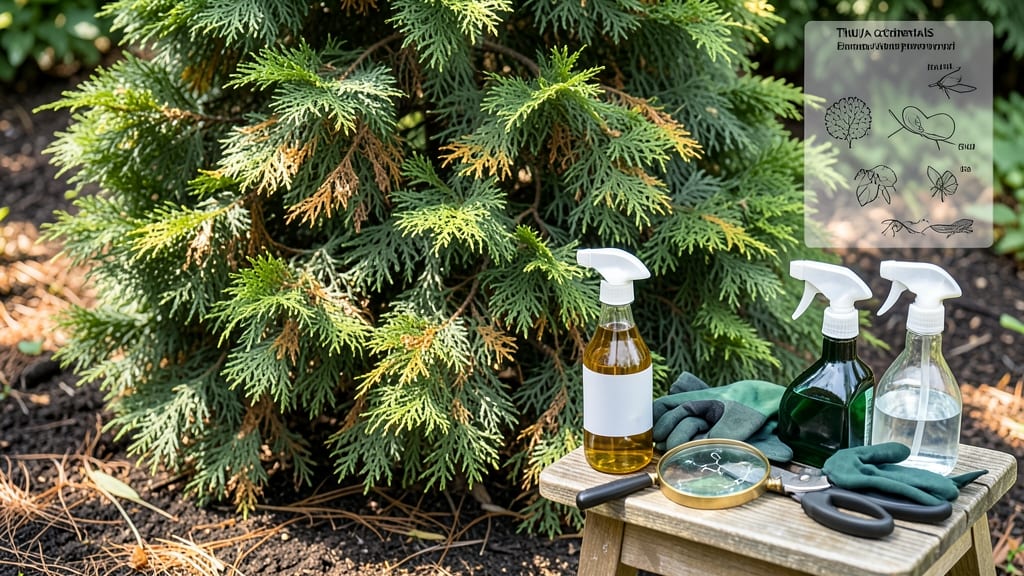
Your arborvitae’s yellowing leaves aren’t just a cosmetic issue—it’s a demonstrative arborvitae leafminer control crisis. 🌿 These tiny pests tunnel through foliage, turning vibrant green into skeletal remains within weeks, and conventional sprays often miss the mark.
The good news? A targeted organic spray protocol can stop them in their tracks without harming your plants or pollinators.
Leafminers thrive in dense evergreens like arborvitae, where their larvae hide safely between needles. The damage starts small—tiny white trails on leaves—but escalates fast if ignored. My first attempt with store-bought sprays failed because they didn’t penetrate the leaf layers where the larvae hide.
That’s why this fast-acting protocol focuses on neem oil, insecticidal soap, and horticultural oil applied at the right stages of their life cycle.
Within 7-10 days of consistent treatment, you’ll see new growth emerge free of damage, and the existing yellowing will slow dramatically. The key is timing: spray when you spot the first signs of webbing or frass (insect waste), and repeat every 5-7 days until the next generation hatches.
No more helplessly watching your arborvitae decline—this method works even on heavily infested plants.
Best of all, this approach protects beneficial insects and keeps your yard safe for kids and pets. For severe cases, I’ll show you how to combine pruning with sprays for complete eradication—no harsh chemicals required. Let’s get those trees back to their full, lush glory.
Root Causes of Arborvitae Leafminer Infestations
Understanding why arborvitae leafminers target your trees is the first step in stopping them. These tiny pests don’t just appear out of nowhere—they’re drawn to specific conditions that make your evergreens an all-you-can-eat buffet.
Let’s break down the science behind their behavior and the environmental triggers that turn your arborvitae into a leafminer magnet.
Leafminers are opportunistic pests, and stressed arborvitae are their favorite snack. When trees are under pressure—whether from poor spacing, drought, or nutrient deficiencies—their defenses weaken, making them more vulnerable to infestations.
- Poor Air Circulation: Dense plantings or overgrown shrubs create humid microclimates, which leafminers love. Stagnant air traps moisture, slowing down natural predators (like parasitic wasps) and giving larvae the perfect environment to thrive. - Nutrient Deficiencies: Trees lacking nitrogen, phosphorus, or micronutrients produce weaker foliage.
Leafminers detect this through plant chemistry—think of it like a "weak signal" that screams, "Eat me!" - Water Stress: Both drought and overwatering stress trees. Drought weakens cellular structures, while soggy roots disrupt nutrient uptake. Either way, the tree’s immune response falters, and leafminers move in.
✨ Pro Tip: Conduct a simple soil test to check pH and nutrient levels. Arborvitae thrive in slightly acidic soil (pH 6.0–7.0). If your soil is off, amend it with compost or a balanced fertilizer (like 10-10-10) to boost resilience.
Leafminers aren’t the only insects in the game—nature’s pest control (birds, parasitic wasps, and predatory mites) usually keeps them in check. But when these natural regulators disappear, leafminer populations explode.
- Pesticide Overuse: Broad-spectrum insecticides (like neonicotinoids or pyrethroids) kill beneficial insects alongside pests.
Without their predators, leafminer larvae face zero competition and feast unchecked. - Habitat Loss: Urbanization and landscaping practices (like removing wildflower borders or native plants) eliminate the food sources and shelter that predator species need to survive. - Seasonal Shifts: Early spring or late fall, when predator populations are still low, leafminers get a head start.
A single generation can go unnoticed until damage becomes visible.
💡 Quick Fix: Plant native companion plants like yarrow, dill, or goldenrod near your arborvitae. These attract parasitic wasps (Brachymeria and Trichogramma species), which lay eggs inside leafminer larvae—nature’s built-in exterminator!
Leafminers are cold-blooded, meaning their activity is directly tied to temperature and humidity. Warm, damp conditions trigger their life cycle, turning your arborvitae into a leafminer hotspot.
- Spring Warmth: As temperatures rise above 50°F (10°C), leafminer eggs hatch. If spring arrives early, the larvae get a jump start before natural predators wake up. - High Humidity: Leafminers thrive in 60–80% humidity.
Rainy springs or shaded, poorly drained areas create the perfect breeding ground. - Late Summer Surges: A second generation often appears in August if summer stays warm. This is why infestations can seem to "explode" overnight.
🌡️ Data Point: Research shows leafminer activity peaks when average daily temps exceed 65°F (18°C) for 5+ consecutive days. Monitor your local weather to predict outbreaks.
Leafminers don’t just vanish after one season—they overwinter in fallen leaves, bark, or even the soil. If you don’t clean up, next year’s infestation is already in your yard.
- Debris Buildup: Mummified leaves or frass (larval poop) contain dormant eggs.
Leaving these behind means reinfesting your trees the following spring. - Infested Prunings: When you trim arborvitae with leafminer damage, the larvae can hitch a ride on clippings. Never compost infested material—burn or bag it instead. - Adjacent Host Plants: Leafminers target a range of conifers (juniper, thuja, false cypress).
If nearby plants are infested, your arborvitae will get caught in the crossfire.
🔥 Action Step: In late fall or early winter, rake up all debris under and around arborvitae. Focus on the drip line (the area where leaves naturally fall) for maximum impact.
Not all arborvitae cultivars are equally appealing to leafminers. Some varieties have thicker foliage or natural resistance, making them less likely targets.
- Thuja occidentalis ‘Smaragd’ (Emerald Green): Dense growth deters egg-laying.
- Thuja plicata (Western Red Cedar): Often less preferred due to its tougher leaf structure.
- Hybrids like ‘Green Giant’: While not immune, their size and vigor can sometimes outpace infestations.
🎯 Long-Term Strategy: If leafminers are a recurring issue, consider replacing highly susceptible varieties (like ‘Techny’ or ‘Robinson’) with tougher cultivars.
Leafminer infestations aren’t random—they’re a perfect storm of stressed trees, missing predators, ideal weather, and poor yard hygiene. By addressing these root causes, you’re not just treating symptoms; you’re disrupting the leafminers’ entire lifecycle.
The next section will show you how to turn the tables with organic control methods.
Effective Arborvitae Leafminer Fixes
Now that you understand the root causes of arborvitae leafminer infestations, it’s time to tackle the problem head-on with targeted, practical solutions. Whether you’re dealing with early-stage damage or a full-blown outbreak, these methods—ranging from organic sprays to cultural fixes—will help you reclaim your healthy, vibrant arborvitae.
The key is acting quickly and combining prevention with treatment for long-term success.
Cause: You spot tiny white or brown blotches on leaves or see frass (insect waste) inside leaf tissue. Fix:
- Prune Infested Branches 🌿🔪: Use clean, sharp pruners to remove and destroy heavily damaged branches. Focus on the tips where larvae are most active. Pro tip: Bag and dispose of clippings in sealed trash to prevent reinfestation.
- Shake Trees Gently 🌳💨: Early in the season (spring), give your arborvitae a light shake to dislodge overwintering eggs or larvae. Repeat every 5–7 days for 2–3 weeks.
- Inspect Regularly 👀📅: Check your trees every 7–10 days during peak leafminer season (spring to early summer). Catching eggs or young larvae means easier control.
Cause: Leafminers are active, and you’ve confirmed their presence via frass or visible mines. Fix:
- Neem Oil Spray 🌿💧:
- Mix 1–2 tablespoons of neem oil with 1 teaspoon of mild liquid soap per gallon of water.
- Spray thoroughly on the upper and lower surfaces of leaves, focusing on new growth where larvae feed.
- Best time: Early morning or late evening to avoid harming beneficial insects. Reapply every 7–10 days for 3–4 weeks.
- Why it works: Neem oil disrupts leafminer feeding and reproduction while being pet- and bee-friendly.
- Insecticidal Soap 🧼🐜:
- Use a 2–3% fatty acid-based soap (like Safer® Insect Killing Soap).
- Spray directly on visible mines or larvae (they’ll appear as tiny white worms).
- Reapply every 5–7 days until no new mines appear.
- Caution: Avoid spraying on hot days (>90°F) to prevent leaf burn.
- Bacillus thuringiensis var. kurstaki (Btk) 🦠🌱:
- A natural bacteria that targets caterpillars and leafminers.
- Mix 1 tablespoon per gallon of water and spray evenly on foliage.
- Best for: Organic gardens or areas with pollinators (safe once dry).
- Reapply every 7–10 days for 3 weeks.
- Kaolin Clay Spray 🏺🌿:
- Mix 2 tablespoons of kaolin clay (like Surround WP) with 1 gallon of water.
- Spray to form a white film on leaves, which confuses and repels leafminers.
- Bonus: Also deters other pests like spider mites.
- Reapply every 7–14 days or after rain.
Cause: You want to minimize future infestations and boost tree resilience. Fix: - Improve Air Circulation 🌬️🌳: - Thin out dense branches to reduce humidity, which leafminers love.
Aim for open, airy growth. - Pro tip: Prune in late winter or early spring (before eggs hatch) for best results.
- Mulch Strategically 🍂🌱:
- Apply 2–3 inches of organic mulch (wood chips or shredded bark) around the base of your arborvitae.
- Why? Mulch retains moisture but also reduces leafminer egg survival by drying out soil slightly.
- Encourage Beneficial Insects 🐝🦋:
- Plant native flowers (like alyssum, dill, or yarrow) near your arborvitae to attract parasitic wasps (natural leafminer predators).
- Avoid broad-spectrum pesticides that kill these helpers!
- Water Deeply and Less Often 💦🌱:
- Leafminers thrive in stressed trees. Water deeply 1–2 times per week (instead of daily light watering) to encourage strong root growth.
- Sign of stress: Yellowing leaves or stunted growth? Adjust your watering routine.
Cause: Your arborvitae is heavily damaged, with >50% of leaves mined. Fix:
- Dormant Oil Spray ❄️🍃:
- Apply dormant oil in late winter or early spring (before buds swell) to smother overwintering eggs.
- Mix 1–2% oil concentration and spray thoroughly on all branches.
- Reapply in 7–10 days if rain occurs.
- Pyrethrin Spray (Last Resort) 🚨💥:
- Use pyrethrin-based sprays (derived from chrysanthemums) for severe infestations only.
- Apply at dusk to protect bees and other pollinators.
- Limit use: Pyrethrin kills all insects, including beneficial ones, so reserve it for worst-case scenarios.
- Replace Heavily Damaged Trees 🌳🔄:
- If your arborvitae is beyond saving, consider removing and replacing it with a leafminer-resistant variety (e.g., Thuja occidentalis ‘Sunkist’ or Thuja plicata).
- Rotate Treatments: Avoid using the same spray repeatedly—leafminers can build resistance. Alternate between neem oil, Btk, and insecticidal soap. - Monitor Nearby Trees: Leafminers spread quickly.
Inspect all arborvitae, junipers, and false cypress in your area. - Clean Up Fallen Debris: Rake and remove leaf litter and fallen branches in autumn to eliminate hiding spots for eggs. - Test Soil Health: Leafminers attack stressed trees.
Get a soil test to check pH and nutrient levels—amend with compost if needed.
By combining early action, organic sprays, and cultural fixes, you’ll not only stop leafminers in their tracks but also strengthen your arborvitae’s defenses for seasons to come. Stay vigilant, and your trees will thank you with lush, healthy foliage!
Frequently asked questions
What do arborvitae leafminers look like at each life stage?
Leafminer eggs are tiny yellow dots on leaf undersides, about 0.01 inches wide. Larvae appear as small white worms (1/8 inch long) tunneling between needles, leaving behind black frass (poop). Pupae form brown cocoons on branches or soil before emerging as adult moths.
How often should I apply neem oil for leafminer control?
Apply neem oil spray every 7-10 days for 3-4 weeks during active infestations. Mix 1-2 tablespoons with 1 teaspoon mild soap per gallon of water. Reapply after rain or if new mines appear. For prevention, use it monthly during spring/summer.
Will pruning alone eliminate leafminers?
Pruning helps by removing heavily infested branches, but it's not enough alone. Always combine with sprays (neem oil or insecticidal soap) to kill larvae hiding in remaining foliage. Remove all pruned material in sealed bags—never compost it! Focus on new growth areas where larvae feed most actively.
Can I use vinegar as a leafminer spray?
No, vinegar is ineffective against leafminers and can harm your arborvitae. The acidity won't penetrate leaf tissues where larvae hide. Stick to neem oil, insecticidal soap, or kaolin clay—these target the pests while being plant-safe. For severe cases, Btk (Bacillus thuringiensis) is the most effective organic alternative.
When is the best time to treat leafminers?
Start treatments early spring (when eggs hatch) and repeat every 5-7 days until no new mines appear. For overwintering eggs, apply dormant oil in late winter before buds swell. Monitor weekly during peak season (May-July) when larvae are most active.