
Propagation
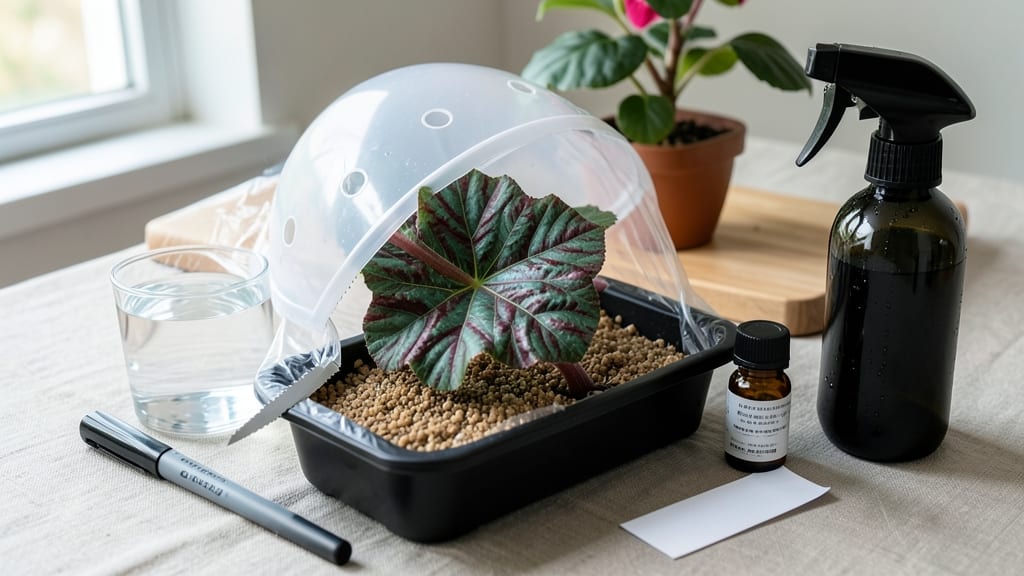
Begonia propagation using leaf cuttings is how I doubled my collection last summer—no fancy equipment, just a sharp knife and a sunny windowsill. 🌿 The key is picking healthy leaves and knowing whether to root them in water or soil, because both methods work, but they demand slightly different care. Within 2 weeks, you'll see roots forming, and by late spring, those baby plants will be ready to bloom.
Start with thick, mature leaves from healthy plants—skip anything yellowed or damaged. You'll need a clean knife or scissors, small pots or jars, and a rooting hormone (optional but helpful).
The process is simple: cut the leaf stem at an angle, let it callus for an hour, then place it in water or moist soil. Begonias like humidity, so a plastic bag over the pot speeds things up.
Roots appear first in water—you'll spot tiny white tendrils within a week—but soil-rooted cuttings establish faster once transplanted. Keep them in bright, indirect light and avoid soggy soil.
Even if some cuttings fail, you'll still end up with 5-10 new plants from a single leaf, and they'll flower just like their parents.
This works for wax, rex, and angel-wing begonias alike, and the best part? You can propagate year-round indoors. Once rooted, treat them like mature plants, and by next season, you'll have a thriving collection to share—or keep all for yourself.
📚 In This Guide
- What you need
- Instructions
- Tips and common mistakes
- Wrapping up and next steps
What you need
- ● Healthy begonia leaves: Choose mature, disease-free leaves with long stems (petioles). 3–5 leaves per plant is ideal!
- ● Sharp scissors or pruning shears: Sterilized to prevent infection. 1 pair (bonus if they’re clean and sharp!).
- ○ Rooting hormone (optional but helpful): A powder or gel to boost root growth. Small container (e.g., 1 oz).
- ● Water propagation: Clear glass or jar (e.g., 8–12 oz, like a mason jar).
- ● Room-temperature water (filtered or distilled preferred).
- ○ Optional: 1 tsp of cinnamon or activated charcoal to prevent bacteria.
- ● Soil propagation: Well-draining potting mix (e.g., 50% perlite/pumice + 50% peat moss or coco coir). 1 small container (4–6 inches) per cutting.
- ● Small pots or seed trays with drainage holes. 2–3 per batch.
- ● Plastic wrap or humidity dome: To retain moisture. 1 sheet or small cover.
- ● Spray bottle: For misting soil or cuttings. 1 (8 oz).
- ● Labeling tags: To track varieties. 5–10 tags.
- ● Bright, indirect light: East or north-facing window, or a grow light (12–14 hrs/day).
- ● Warmth: Ideal temperature: 70–75°F (21–24°C).
- ● Humidity: High humidity (70%+) speeds up rooting. A humidity tray helps!
- ● Patience: Roots may take 2–4 weeks to form—consistency is key!
- ● 🔥 Sterilize everything: Wash tools and containers with rubbing alcohol to avoid fungal issues.
- ● 🌡️ Water changes: Refresh water every 3–4 days for water propagation to prevent algae.
- ● ✨ Leaf prep: Let cuttings dry (callous) for 1–2 hours before planting to reduce rot risk.
Step-by-Step instructions for begonia leaf cuttings propagation
Here's how to turn a single begonia leaf into multiple rooted plants in just two weeks.
🌿 Step 1: Select and Prepare Healthy Leaf Cuttings
Choose a healthy, mature begonia leaf with a sturdy stem—avoid leaves with brown edges or holes. I like to pick leaves from the middle of the plant where they're fully developed. Use clean, sharp scissors to cut the stem at a 45-degree angle, about 1-2 inches long. This angled cut increases surface area for better water uptake.
The stem length matters—too short and it won't root well, too long and it'll rot before roots form. Look for stems that are thick and green, not thin or yellowed. Handle the cuttings gently to avoid damaging the leaf blade.
💧 Step 2: Choose Your Propagation Method (Water or Soil)
For water propagation, fill a clean glass with room-temperature water and place the cuttings in it so only the stem is submerged—never the leaf. I use small glasses or jars because they won't hold too much water, which can lead to bacterial growth. Change the water every 3-4 days to prevent algae and keep it fresh.
For soil propagation, mix equal parts perlite and potting mix in a small container. Moisten it until damp but not soggy, then insert the cuttings at a 45-degree angle, burying about 1 inch of the stem. Gently firm the soil around the base to keep it stable. This method works faster for some begonia varieties.
⏰ Step 3: Provide Ideal Conditions for Root Growth
Place your cuttings in a spot with bright, indirect light—direct sun will scorch the leaves. I keep mine near an east-facing window where they get morning light but stay protected from harsh afternoon rays. Maintain 70-75°F temperatures, which is ideal for begonia rooting. Avoid drafts or sudden temperature changes.
Keep the water or soil consistently moist but not waterlogged. For water propagation, roots should appear in 7-14 days. For soil propagation, you'll see new growth at the leaf base in about 2 weeks. Mist the leaves lightly if they start to look dry, but avoid soaking them.
🌱 Step 4: Encourage New Plant Development
Once roots reach about 1 inch long in water, or when you see tiny baby leaves forming at the leaf base in soil, it's time to transition. For water-rooted cuttings, plant them in small pots with well-draining soil. Gently remove the cutting, being careful not to damage the delicate roots, and plant it so the base sits just below the soil surface.
For soil-rooted cuttings, you can leave them in place or carefully separate them once they've developed 2-3 new leaves. Use your finger to gently tease apart the rooted leaves, making sure each has its own root system. Plant them in individual pots with fresh potting mix to give them room to grow.
☀️ Step 5: Care for Your New Begonias
Keep your new plants in bright, indirect light for the first week to help them adjust. Water when the top inch of soil feels dry, but avoid overwatering—begonias are prone to root rot. After two weeks, you can gradually introduce them to more direct sunlight as they strengthen.
Fertilize lightly with a balanced liquid fertilizer diluted to half-strength after 4-6 weeks. You'll know your propagation was successful when you see vigorous new growth and healthy, glossy leaves. With patience, you'll have 4-6 new begonia plants from just one leaf!
Tips & tricks for perfect begonia leaf cuttings propagation
Here’s how to maximize your success with begonia propagation—these tricks will help you avoid common pitfalls and get the best results.
Cutting Angle Matters: In Step 1, that 45-degree angle on the stem isn’t just for looks—it increases surface area for water uptake, which is crucial for root growth. Use a sharp knife or scissors to make clean cuts, and avoid crushing the stem. If you’re nervous about angles, practice on a spare leaf first to get the feel right.
Water Quality Tip: For water propagation, use filtered or distilled water if possible—tap water can contain chlorine or minerals that may inhibit root growth. If you must use tap water, let it sit out for 24 hours before using to allow chlorine to evaporate. Change the water every 3-4 days as instructed, but add a drop of hydrogen peroxide (3%) to the fresh water to prevent bacterial growth—it’s a gardener’s secret weapon.
Soil Mix Strategy: When mixing equal parts perlite and potting mix for soil propagation, don’t skip the perlite—it’s what creates that perfect air-to-moisture balance. If you’re short on perlite, you can substitute with coarse sand, but avoid fine sand as it compacts too easily. Gently press the soil around the stem to eliminate air pockets, which helps stabilize the cutting and encourages root contact with the soil.
Light Positioning: In Step 3, that bright indirect light is non-negotiable—direct sun will scorch the leaves, while too little light slows root growth. If you don’t have an east-facing window, place your cuttings under a grow light for 12-14 hours a day. Rotate the containers daily so all sides get even light exposure. You’ll notice new growth appears fastest when the leaves stay a vibrant green, not yellowing or wilting.
Pro Tips for Begonia Propagation Leaf Cuttings
- Here’s how to maximize your success with begonia propagation—these tricks will help you avoid common pitfalls and get the best results.
- Cutting Angle Matters: In Step 1, that 45-degree angle on the stem isn’t just for looks—it increases surface area for water uptake, which is crucial for root growth.
- Water Quality Tip: For water propagation, use filtered or distilled water if possible—tap water can contain chlorine or minerals that may inhibit root growth.
Frequently asked questions
Got questions about propagating begonias from leaf cuttings? You’re not alone! Here are some of the most common concerns—and their easy solutions.
How do I know if my begonia leaf cutting is ready to root?
Look for tiny white or translucent bumps along the stem where it touches water or soil—these are new roots! In water, roots may appear in 7–14 days; in soil, they’re harder to spot but should firm up the stem after 2 weeks. Avoid touching the cutting until you see growth to prevent contamination.
Can I speed up rooting in water or soil?
Yes! For water propagation, use room-temperature, filtered water and change it every 3–5 days to prevent bacteria. For soil propagation, keep humidity high (use a plastic bag or propagator) and maintain 70–75°F (21–24°C). A gentle heat mat can also boost rooting speed by 2–3 days.
Why is my begonia leaf cutting rotting instead of rooting?
Rotting usually means too much moisture or bacterial/fungal infection. If using water, trim the rotted section and replant in fresh, sterile water or soil. For soil, ensure it’s well-draining (add perlite or sand) and avoid overwatering. Let the cutting dry slightly between waterings to prevent soggy stems.
Can I propagate begonias from just a small leaf piece?
Begonias are highly forgiving. Cut a leaf into wedges (each with a vein) and place them vein-side down on damp soil or in water. Smaller pieces may root slower but still succeed. Just ensure each piece has at least one major vein for nutrient transport.
Is there a best time of year to propagate begonia leaf cuttings?
The ideal window is spring or early summer (March–June), when temperatures and humidity are naturally higher. However, begonias can root year-round indoors with grow lights and controlled warmth. Avoid winter propagation outdoors if temps drop below 60°F (15°C).
Wrapping up and next steps
Propagating begonias from leaf cuttings is a rewarding and simple way to expand your plant collection—and you’ve got all the tools to succeed! Whether you choose water or soil, consistency with moisture and warmth will give you those lush new roots in just two weeks.
Don’t let a few setbacks discourage you; even experienced gardeners face challenges, but persistence pays off.
Ready to turn those cuttings into thriving plants? Try your first batch today! Once you master this technique, experiment with different begonia varieties or even share your newfound skills with fellow plant lovers. Happy growing! 🌱✨