
Propagation
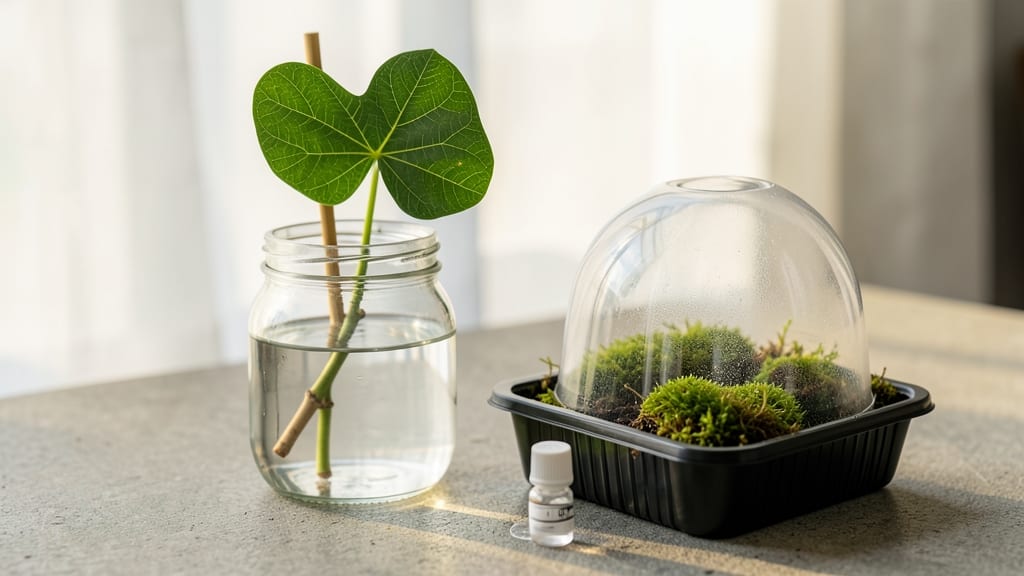
That first crisp stem cutting is where the magic happens—fiddle leaf fig propagation transforms a single leaf into a whole new plant with just a little patience. 🌱 I’ve rooted dozens of cuttings, and the key isn’t some secret trick but timing, clean cuts, and the right conditions.
Most people give up after two weeks, but roots often take 3-6 weeks to show up, depending on warmth and humidity. The beauty of this method is how simple it really is: a sharp knife, a glass of water (or a small pot), and a spot with bright, indirect light.
My first attempt failed because I used tap water that sat too long—now I always use filtered or rainwater to avoid chlorine buildup.
Even a small mistake like letting the cutting dry out can set you back, but once you get the hang of it, you’ll have multiple plants thriving where you had one. By the time those first roots peek through, you’ll be hooked on the process.
The new plants grow faster than you’d expect, and their leaves develop that classic fiddle-leaf shape within months. It’s incredibly rewarding to watch something so delicate take root and grow into a statement plant.
Whether you’re working with water propagation or soil, the principles stay the same—just adjust humidity and moisture levels. Here’s how to make it work every time without the guesswork.
📚 In This Guide
- What you need
- Instructions
- Tips and common mistakes
- Wrapping up and next steps
What you need
- ● Healthy fiddle leaf fig stem cuttings: 3–5 cuttings (each 4–6 inches long, with at least 2–3 nodes)
- ● Nodes should be unwounded (no leaves or buds removed)
- ● Sharp pruning shears or clean knife: Sterilized with rubbing alcohol (70% or higher)
- ○ Rooting hormone (optional but recommended): Powder or gel (e.g., Rootone or Clonex)
- ● Water propagation: Clean glass or jar (8–12 oz, wide-mouth preferred)
- ● Room-temperature filtered or distilled water (changed every 3–5 days)
- ● Soil propagation: Well-draining potting mix (e.g., cactus/succulent blend or perlite + peat moss)
- ● 4–6 inch pots with drainage holes
- ○ Plastic bag or humidity dome (optional): For soil-rooted cuttings to retain moisture
- ○ Spray bottle (optional): For misting cuttings to prevent stress
- ● Bright, indirect light (avoid direct sun)
- ● Warmth (70–75°F / 21–24°C)
- ● Humidity (60%+ ideal; use a humidifier or pebble tray if needed)
- ● Patience! Root growth takes 4–12 weeks depending on conditions.
How to propagate fiddle leaf figs using stem cuttings
Here's the straightforward method I use to grow new fiddle leaf figs from cuttings—whether in water or soil.
🌱 Step 1: Select and Prepare the Perfect Stem Cutting
Choose a healthy stem with at least 4-5 leaves and a node (the bump where leaves attach). Use clean, sharp pruning shears to make a clean cut just below a node—this is where roots will sprout. I like to take cuttings after pruning the parent plant, so I don’t waste healthy growth.
Remove the lower leaves, leaving only 2-3 leaves at the top. This reduces moisture loss and directs energy toward root growth. If the stem is long, you can actually take multiple cuttings from one stem—just make sure each has a node and at least a couple of leaves.
💧 Step 2: Choose Your Propagation Method (Water or Soil)
For water propagation, place the cutting in a jar of room-temperature water, ensuring the node is fully submerged but the leaves stay dry. Change the water every 3-5 days to prevent bacterial growth. You’ll see tiny white roots forming in 2-4 weeks—that’s your signal it’s ready to plant.
For soil propagation, dip the cut end in rooting hormone (optional but helpful) and plant it in a small pot with well-draining potting mix. Keep the soil lightly moist but not soggy. Cover the pot with a plastic bag to create humidity, and place it in bright, indirect light. Roots should establish in 4-6 weeks.
☀️ Step 3: Provide Ideal Conditions for Root Growth
Keep your cuttings in a warm spot with bright, indirect light—direct sun can scorch the leaves. If using water, place the jar near a window but avoid drafts. If using soil, mist the leaves occasionally to maintain humidity, but avoid overwatering, which can cause rot.
Watch for new growth as a sign of success. In water, you’ll see roots first, followed by new leaves. In soil, the leaves will perk up and may even grow slightly larger. If leaves yellow or drop, it’s usually a sign of too much moisture or low light—adjust accordingly.
✂️ Step 4: Transplant or Keep Growing Roots
Once roots are 2-3 inches long in water, you can transplant into soil. Gently plant the cutting, keeping the roots intact, and water lightly. For soil-grown cuttings, wait until you see new leaf growth before handling them—this means the roots have fully established.
After transplanting, keep the new plant in bright, indirect light for a few weeks to help it adjust. Avoid fertilizing for the first 2-3 months, as the roots need time to settle in. With patience, your cutting will grow into a full-sized fiddle leaf fig!
Tips & tricks for fiddle leaf fig propagation
Here's what I've learned after propagating dozens of fiddle leaf figs—these little details make all the difference between success and disappointment.
Node Location: The node is your golden ticket for root growth, so make absolutely sure it's submerged in water or buried in soil. I've had cuttings fail because the node was just barely touching the water line—it needs to be fully covered. If you're unsure, cut a little deeper to expose another node below.
Leaf Management: Those 2-3 leaves at the top aren't just decoration—they're what'll power your new plant's growth. Wipe them down with a damp cloth every few days to remove dust, which helps them absorb light more efficiently. And here's a trick: if your cutting starts looking leggy (stretched out), it's getting too much light—move it back a foot or two.
Water Care: When changing water every 3-5 days, I fill the jar about halfway up the stem—not just covering the node. This prevents bacterial growth at the water line where the stem meets the air. Also, use filtered or room-temperature water—cold water can shock the delicate roots starting to form.
Humidity Hack: For soil propagation, I've found that placing your plastic-covered pot on a tray of pebbles with water creates a self-regulating humidity system. The pebbles stay wet, but the pot doesn't sit in water (which causes rot). This mimics the tropical environment fiddle leaf figs love.
Pro Tips for Fiddle Leaf Propagation
- Here's what I've learned after propagating dozens of fiddle leaf figs—these little details make all the difference between success and disappointment.
- Node Location: The node is your golden ticket for root growth, so make absolutely sure it's submerged in water or buried in soil.
- Leaf Management: Those 2-3 leaves at the top aren't just decoration—they're what'll power your new plant's growth.
Frequently asked questions
Got questions about fiddle leaf fig propagation? You’re not alone! Here are some of the most common concerns—and their answers—to help you grow those lush, iconic leaves with confidence.
Can I propagate a fiddle leaf fig from just a few leaves?
Not quite! Fiddle leaf figs (Ficus lyrata) need a node (the bump where leaves and roots grow) to root successfully. Snip a stem with at least 2-3 nodes (and a few leaves) for the best chance. Single leaves won’t work—they lack the energy to root.
How long does it take for fiddle leaf fig cuttings to root?
Patience is key! In water, roots may appear in 2-4 weeks, while soil propagation can take 4-8 weeks. Keep the cutting in bright, indirect light and maintain 60-70°F humidity. Avoid touching the cutting—fiddle leaf figs hate disturbance!
Should I propagate in water or straight to soil?
Both work, but each has trade-offs. Water: Easier to monitor roots (transplant when roots hit 2-3 inches). Soil: Mimics natural conditions, reducing transplant shock. Pro tip: If using water, change it every 3-5 days to prevent bacteria.
Why is my cutting rotting or turning mushy?
Overwatering or poor airflow are the usual culprits. Fix it: Let the cutting dry slightly between water changes (if in water) or ensure soil drains well (if in soil). Trim any mushy parts with clean scissors, then let it callus for a day before re-planting.
Can I propagate a fiddle leaf fig from a leaf in soil?
Technically, yes—but success rates are low. Fiddle leaf fig leaves lack nodes, so they rarely root. If you’re determined, try air-layering (a node-rich method) or stick to stem cuttings. Save your energy for what works!
| Quick Troubleshooting Guide |
|---|
| Yellowing leaves? Too much light or stress. Move to bright, indirect light. |
| No roots after 6 weeks? Check humidity (aim for 60%+) and warmth (70°F+). |
| Cutting wilting? It may be underwatered (soil) or overcrowded (water). Adjust care! |
Wrapping up and next steps
Mastering fiddle leaf propagation through stem cuttings—whether in water or soil—is a rewarding way to expand your plant family!
With patience, the right tools, and a little care, you’ll soon be watching those roots grow and new leaves unfurl. Now’s your chance to put your green thumb to work—grab those cuttings and start your next propagation adventure today! 🌱✨
- Next step: Pick a healthy stem, follow the steps, and track your progress in a propagation journal!