
Companion Plants
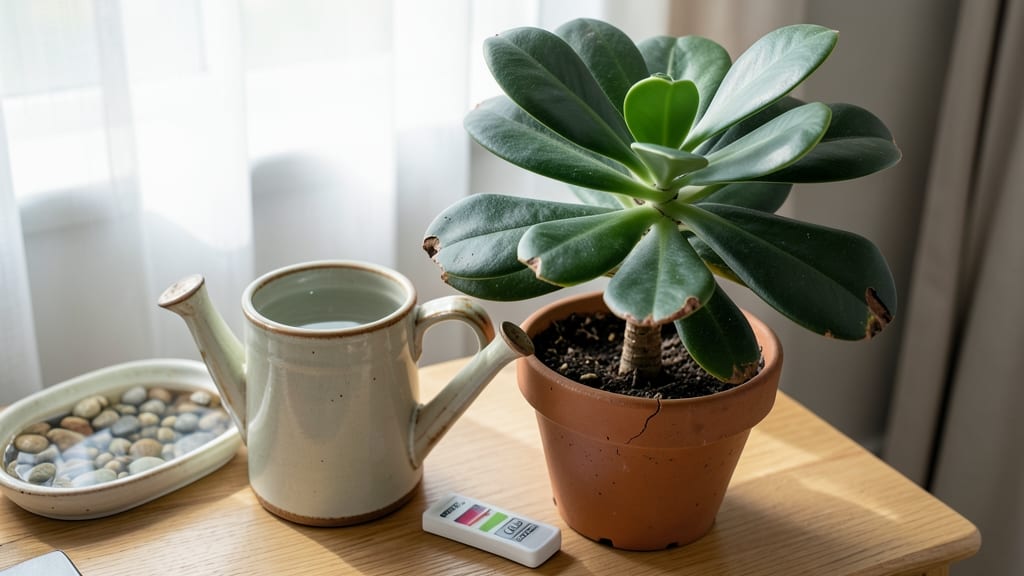
Your China Doll Plant’s crispy brown leaf tips are screaming for humidity—literally. 🌿 The second I noticed those jagged edges, I knew it wasn’t just underwatering (though that’s often the first guess).
These plants thrive in tropical conditions, and dry air turns their leaves into brittle paper faster than you can say "houseplant fail." The real culprit? A combination of low humidity and inconsistent watering.
I’ve seen these plants recover completely by fixing both—just don’t wait until half the leaves look like they’ve been sunburned. Start by misting daily and placing the pot on a pebble tray filled with water.
Within a week, new growth will soften up, and those crispy edges will start to fade. What you’ll end up with is a fuller, glossier plant that looks like it belongs in a jungle instead of your living room.
The key is consistency: check soil moisture weekly, and avoid drafts near vents or AC units. Those brown tips won’t disappear overnight, but with the right care, your China Doll will bounce back in 4-6 weeks.
If the problem persists after two months, it might be time to check for pests or nutrient deficiencies—but 90% of the time, it’s just a humidity fix. Trust me, your plant’s recovery is closer than you think.
Root Causes Of Crispy Edges
Understanding why your China Doll Plant (Hoya carnosa) develops unsightly brown leaf tips is the first step to saving its lush, trailing beauty. These crispy edges don’t appear overnight—they’re a cry for help from your plant, signaling stress from one or more environmental factors.
Let’s break down the top culprits behind this common issue, so you can diagnose and fix the problem like a pro.
China Doll Plants are tropical natives, meaning they thrive in high humidity (60-80% is ideal). When air humidity drops below 50%, the delicate leaf edges lose moisture faster than the plant can replenish it, leading to desiccation—those telltale brown, papery tips.
Why it happens:
- Transpiration imbalance: Leaves release moisture through tiny pores (stomata) to regulate temperature, but dry air accelerates this process. The leaf edges, being the thinnest and most exposed, dry out first.
- Salt buildup: If you’re using tap water (which contains minerals like chlorine or fluoride), these salts accumulate at the leaf tips over time, clogging pores and exacerbating moisture loss.
- Central heating/AC: Indoor climates with forced air (common in homes and offices) create microclimates where humidity plummets near plants, especially at night.
Actionable insight: 🔍 Test your air humidity with a hygrometer—if it’s below 50%, it’s time to intervene. Grouping plants together or using a pebble tray with water can boost local humidity by 10-20%.
While China Doll Plants love bright, indirect light, harsh sunlight—especially midday rays—can scorch their leaves. The edges burn because they absorb more UV radiation than the leaf center, leading to oxidative stress and cell death.
Why it happens:
- Photosynthesis overload: Excess light triggers an overproduction of reactive oxygen species (ROS), which damage cell membranes. The edges, being thinner, are more vulnerable.
- Water loss acceleration: Bright light increases transpiration rates, drying out leaf tips faster than roots can supply water.
- Heat stress: Direct sun heats the leaves, causing protein denaturation (think of an egg cooking—your plant’s cells aren’t faring much better).
Actionable insight: 🌿 Rotate your plant every few weeks to ensure even light exposure. If placing near a window, use a sheer curtain to diffuse light or move it 2-3 feet back from the glass.
China Doll Plants prefer moderate moisture but hate soggy roots or drought cycles. When soil dries out unevenly, the roots struggle to deliver water to the leaf edges, causing them to wilting and crisp up.
Why it happens:
- Root zone stress: Roots in dry soil can’t pull up enough water to meet the plant’s needs, especially in hot conditions. The edges, being the farthest from the vascular system, suffer first.
- Osmotic imbalance: When cells lose too much water, they shrink and plasma membranes rupture, leading to irreversible browning.
- Seasonal swings: Winter heating or summer droughts create unpredictable watering needs—what worked in June might fail in December.
Actionable insight: ⏰ Stick your finger 1-2 inches into the soil—if it’s dry, water thoroughly until it drains from the bottom. Use room-temperature water to avoid shocking the roots, and avoid letting the plant sit in saucers of water.
Over-fertilizing or using high-salinity water (like well water or tap water with high mineral content) can lead to fertilizer burn, where salt accumulates at the leaf edges and disrupts cellular function.
Why it happens:
- Salt toxicity: Excess minerals (like sodium, chlorine, or boron) disrupt the plant’s osmotic balance, causing cells to lose water and die.
- pH imbalance: Hard water (high in calcium and magnesium) can raise soil pH, making nutrients like iron and manganese unavailable. This leads to nutrient deficiency stress, which manifests as brown edges.
- Over-fertilization: Too much nitrogen or phosphorus can clog root hairs, preventing water uptake and causing the edges to dry out.
Actionable insight: 💡 Flush the soil every 2-3 months with distilled or rainwater to leach out salts. If using tap water, let it sit out for 24 hours to reduce chlorine. For fertilizing, dilute to half-strength and apply only during active growth (spring/summer).
China Doll Plants prefer stable temperatures between 65–80°F (18–27°C). Sudden drops (like cold drafts from AC vents or open windows) or heat spikes (near radiators) can shock the plant, causing leaf edges to crisp and curl.
Why it happens:
- Cold stress: Temperatures below 50°F (10°C) slow down metabolic processes, including water uptake. The edges, being non-essential tissue, sacrifice first.
- Heat shock: Rapid temperature changes (e.g., moving a plant from a warm room to a cold porch) cause protein misfolding, leading to cell death.
- Draft exposure: Air currents dry out leaves faster than roots can compensate, especially in low-humidity environments.
Actionable insight: 🌡️ Keep your plant away from drafts, heating vents, and air conditioning units. If moving it outdoors, acclimate it gradually over 1-2 weeks to avoid temperature shock. A heat mat in winter can help maintain root-zone warmth.
Reviving Your China Doll Plant
Seeing brown leaf tips on your Hoya carnosa (aka China Doll plant) can be disheartening, but the good news is that most causes have simple fixes.
Below, we’ve mapped out the most common culprits and the steps to bring your plant back to its lush, vibrant self—plus tips to keep it thriving long-term.
If your China Doll’s leaves are crispy and brown at the tips, root rot from overwatering might be the culprit. This plant prefers to dry out slightly between waterings, and soggy soil suffocates its roots.
How to Fix It:
🔥 🌱 Step 1: Check the Soil Moisture
- Stick your finger about an inch into the soil. If it’s damp, wait to water. If it’s bone-dry, water thoroughly—but only until excess drains from the bottom.
🍳 👨🍳 Step 2: Repot if Necessary
- If the soil smells foul or the roots look mushy, repot your plant in fresh, well-draining cactus or succulent mix. Add perlite or pumice (20-30%) to improve aeration.
🥘 ⏰ Step 3: Adjust Your Watering Schedule
- Water only when the top 50% of soil is dry (usually every 2-3 weeks, depending on humidity and light).
- Never let it sit in water. Use a pot with drainage holes and an empty saucer to prevent soggy roots.
💡 Prevention Tips:
- Use a moisture meter for accuracy.
- Group plants together to boost humidity naturally (they love company!).
- In winter, reduce watering—growth slows, so the soil stays moist longer.
The China Doll plant is a tropical beauty that thrives in 50-60% humidity. If your home is dry (thanks, central heating!), the leaf tips will crisp up like a forgotten snack.
How to Fix It:
🌡️ 💧 Step 1: Increase Humidity Fast
- Place the pot on a pebble tray filled with water (ensure the pot isn’t sitting in water).
- Mist the leaves 2-3 times a week (use room-temperature water to avoid shock).
- Group it with other houseplants to create a mini humid microclimate.
🎯 ✨ Step 2: Use a Humidifier
- If possible, place a small humidifier nearby (even a DIY one with a bowl of water and a fan works).
- Aim for 50%+ humidity near the plant.
💡 Prevention Tips:
- Avoid placing it near heat vents or AC units.
- Wipe leaves with a damp cloth weekly to prevent dust buildup (which worsens dryness).
- Try a terrarium or glass cloche for a high-humidity haven (just ensure airflow).
While China Doll plants love bright, indirect light, harsh afternoon sun can scorch the leaves, causing brown, crispy tips. Think of it like a sunburn for your plant!
How to Fix It:
🔪 🌿 Step 1: Move to a Brighter (But Indirect) Spot
- Place it near an east-facing window or a few feet back from a south/west window.
- If moving isn’t an option, filter the light with a sheer curtain.
🍃 🌱 Step 2: Trim Damaged Leaves
- Use clean scissors to snip off only the brown tips (never healthy tissue). This encourages new growth.
💡 Prevention Tips:
- Rotate the pot quarter-turns weekly for even light exposure.
- Watch for yellowing between veins—a sign of too much sun.
- In summer, consider dappled shade outdoors (like under a tree).
If your tap water is high in chlorine, fluoride, or minerals, it can leave residue on the soil and leaves, leading to brown tips over time.
How to Fix It:
🚰 💧 Step 1: Use Filtered or Rainwater
- Switch to distilled, rainwater, or reverse-osmosis water for watering.
- If that’s not an option, let tap water sit out for 24 hours before using to reduce chlorine.
🧼 🧴 Step 2: Flush the Soil
- Water the plant thoroughly, then let it drain completely. Repeat 2-3 times to leach out built-up salts.
💡 Prevention Tips:
- Wipe leaves with a soft cloth dipped in diluted vinegar (1:1 with water) monthly to remove mineral deposits.
- Avoid using soapy water or plant sprays with chemicals.
While less common, spider mites, mealybugs, or fungal issues can cause browning and crispiness. Check the undersides of leaves for tiny webs, cottony patches, or black spots.
How to Fix It:
🐜 🔍 Step 1: Inspect and Identify
- Hold a leaf up to light—do you see tiny bugs or webbing?
- Look for sticky residue (honeydew), a sign of sap-sucking pests.
🍎 🌿 Step 2: Treat Accordingly - For pests: Wipe leaves with neem oil solution (1 tsp neem oil + 1 tsp mild soap per quart of water).
Repeat every 5-7 days. - For fungal issues: Remove affected leaves and treat with copper fungicide or a baking soda spray (1 tsp baking soda + 1 quart water + a drop of soap).
💡 Prevention Tips:
- Quarantine new plants for 2-4 weeks before introducing them to your collection.
- Encourage beneficial insects like ladybugs to keep pests in check.
- Avoid overcrowding plants—good airflow reduces disease risk.
With these fixes, your China Doll plant should bounce back in 4-8 weeks, showing off fresh, plump leaves. The key is adjusting care based on your environment and keeping an eye on its needs. Happy growing! 🌿✨
Frequently asked questions
Why do China Doll Plant leaves turn brown only at the tips?
This is usually a sign of low humidity or mineral buildup from tap water. The delicate leaf edges dry out first when air is too dry (below 50% humidity), or salts accumulate from hard water. Check your water source and consider using filtered water or rainwater instead.
Can I save my China Doll Plant if most leaves are brown and crispy?
Yes! Trim off the damaged tips (never healthy tissue) and focus on fixing the root cause—usually humidity or watering issues. With proper care (pebble trays, misting, and adjusted watering), new growth will emerge in 4-6 weeks. Avoid overwatering while it recovers.
How often should I mist my China Doll Plant to prevent brown tips?
Mist the leaves 2-3 times per week with room-temperature water, especially in dry climates. Pair this with a pebble tray under the pot to boost local humidity. Avoid misting in direct sunlight—it can cause leaf burn. Consistency is key!
Is my China Doll Plant getting enough light if the tips are brown?
Brown tips from light issues usually appear as uneven browning or yellowing between veins. If your plant is in low light, the tips may dry out due to slow growth. Move it to bright, indirect light (east or north-facing window) and rotate the pot weekly for even exposure.
Why do new leaves still have brown tips even after fixing old ones?
This often means the root cause isn’t fully addressed. Check for hidden issues like pests (spider mites) or drafts near vents. Also, flush the soil every 2-3 months to remove salt buildup. If new growth persists, test your water quality or consider a humidifier.