
Pruning
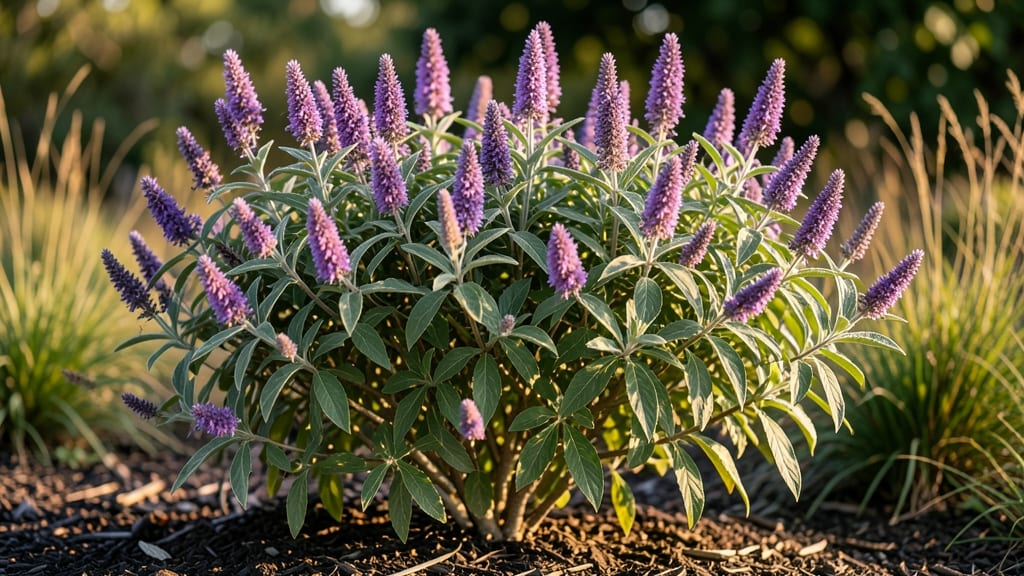
Butterfly bush leaf identification saves you from pruning the wrong shrub—and I’ve made that mistake twice. 🌿 The key is five traits: long, narrow leaves (3-5 inches), pointed tips, fuzzy undersides, and whorled arrangement where 3-6 leaves meet at a single point. These aren’t just details—they’re your ID badge for Buddleia before you even see the flowers.
Most lookalikes like lilacs or privets have opposite leaves (pairs at each node), while butterfly bush leaves grow in a circular pattern. Check the veins too—slightly visible but not prominent—and the margins, which are smooth but may have tiny serrations.
If leaves look droopy or spotted, it’s not just age; diseases like powdery mildew or pests like spider mites can mimic poor identification.
Once you confirm it’s a butterfly bush, you’ll know exactly when to prune: right after blooming or in late winter. The leaves’ fuzzy texture is your clue—they’re built to handle heat and drought, but they’ll tell you when something’s wrong long before the flowers do.
Think of them as nature’s warning system.
For troubleshooting, compare your bush to healthy reference photos and note any color changes or unusual patterns. If the leaves are yellowing or curling, it’s time to adjust watering or check for pests. Confidence in identification means better care—and more butterflies next summer.
Understanding Leaf Stress Signals
When your butterfly bush (Buddleia davidii) starts showing unusual leaf patterns, it’s often a silent SOS from the plant. Recognizing these signs helps you address the root cause before it escalates.
Below, we break down the most common reasons why butterfly bush leaves develop irregular shapes, discoloration, or damage—and what’s really going on beneath the surface.
Butterfly bushes thrive in USDA Zones 5–9, but they’re sensitive to sudden shifts in temperature, frost, or scorching heat. Here’s how weather affects their leaves:
- Cold Damage (Frost or Freeze):
If leaves turn brown, crisp, or develop water-soaked patches after a hard freeze (<32°F/0°C), the plant has suffered cold injury. Cell membranes rupture, disrupting nutrient flow. Action: Mulch the base with 2–3 inches of straw or shredded leaves in fall to insulate roots. Avoid pruning until spring—new growth is more frost-resistant.
- Heat Stress:
Wilting, yellowing edges, or scorched leaf tips in summer heat (above 90°F/32°C) signal transpiration stress. The plant loses water faster than roots can absorb it. Action:
- Water deeply early morning (1–1.5 inches per week) to reduce evaporation.
- Use mulch to retain soil moisture and cool roots.
- Avoid overhead watering—it increases fungal risks.
- Wind Burn:
Tattered or dried-out leaf edges on exposed plants? Wind desiccation strips moisture from leaves faster than they can replenish it. Action: Plant near a windbreak (e.g., fence, hedge) or use burlap screens in high-wind zones.
Butterfly bushes are drought-tolerant but hate soggy roots. Improper watering triggers leaf issues like:
| Symptom | Cause | Solution |
|---|---|---|
| Yellowing leaves (bottom-up) | Overwatering or poor drainage (root rot from Phytophthora fungi) |
|
| Dry, crispy edges | Underwatering or shallow root systems |
|
| Curling or puckering | Sudden water changes (e.g., drought followed by heavy rain) | Water evenly—aim for 1–1.5 inches weekly during growing season. |
Butterfly bushes are magnets for pests and susceptible to a few key diseases. Here’s how they manifest in leaves:
- Spider Mites (Tiny Yellow Spots + Webbing):
These pests suck sap, causing stippling (tiny white/yellow dots) and webbing on undersides. Why it happens: Dry conditions and dusty leaves create ideal conditions. Action:
- Spray leaves with water to dislodge mites (do this daily for 3 days).
- Use neem oil (1 tbsp per gallon of water) as a natural miticide.
- Increase humidity with a hose-end spray nozzle.
- Powdery Mildew (White Fuzzy Coating):
This fungal disease thrives in humid, shaded conditions and blocks sunlight, causing yellowing. Action:
- Prune for airflow (remove crowded branches).
- Apply baking soda spray (1 tsp baking soda + 1 quart water + few drops of soap).
- Avoid overhead watering.
- Aphids (Sticky Leaves + Curling):
These sap-suckers excrete honeydew, attracting sooty mold. Why it happens: Weak plants or new growth attract them. Action: Blast off with a strong stream of water or introduce ladybugs (natural predators).
Butterfly bushes are light feeders, but poor soil or over-fertilizing can distort leaves. Watch for these clues:
| Leaf Symptom | Likely Deficiency/Toxicity | Fix It |
|---|---|---|
| Yellow between veins (chlorosis) | Iron deficiency (common in alkaline soil) | Apply chelated iron or lower soil pH with sulfur. |
| Purple stems + small leaves | Phosphorus deficiency | Add bone meal (5 tbsp per plant) in spring. |
| Brown leaf tips + stunted growth | Chlorine/fluoride toxicity (from tap water) | Use rainwater or filtered water for irrigation. |
| Dark green, thick leaves | Nitrogen excess (from over-fertilizing) | Flush soil with water and reduce fertilizer to half-strength. |
Leaves can also signal mechanical stress, such as:
- Ragged Edges:
Caused by hail, lawnmower contact, or rough pruning. Action: Prune with clean, sharp shears at a 45° angle to avoid tearing.
- Blackened or Crushed Leaves:
Foot traffic or animal grazing (e.g., deer) can bruise foliage. Action: Install a protective barrier or use deer repellent sprays.
Quick Fixes for Butterfly Bush Leaf Issues
Now that you’ve identified the problem with your butterfly bush leaves—whether it’s yellowing, browning, curling, or disease—here’s how to turn things around. Each issue has a targeted solution, plus prevention tips to keep your plant thriving. Let’s dive in!
Cause: Butterfly bushes often yellow due to iron deficiency (chlorosis) or overwatering, which drowns roots and prevents nutrient uptake. Fix It:
- Test the Soil (🔍)
- Grab a small soil sample and check moisture. If it’s soggy, your plant is getting too much water.
- Use a soil pH test kit (ideal pH: 6.0–7.0). Chlorosis thrives in alkaline soil.
- Adjust Watering (💧)
- Let the top 1–2 inches of soil dry out before watering again. Butterfly bushes prefer moderate moisture but hate wet feet.
- Improve drainage by adding compost or perlite to heavy clay soil.
- Fertilize Smartly (🌱)
- For iron deficiency, use an iron chelate fertilizer (follow label instructions).
- In early spring, apply a balanced slow-release fertilizer (10-10-10) to boost overall health.
Prevention Tips: ✅ Mulch around the base (2–3 inches of organic mulch) to retain moisture and regulate temperature. ✅ Water deeply but less frequently—early morning is best to reduce fungal risks. ✅ Avoid compacted soil—loosen soil annually with a garden fork.
Cause: Brown, dry leaves usually mean underwatering or excessive heat/sun exposure, especially in drought-prone areas. Fix It:
- Check Moisture Levels (💦)
- Stick your finger 1–2 inches into the soil. If it’s bone-dry, water immediately.
- For potted butterfly bushes, soak the pot until water drains from the bottom.
- Provide Shade Relief (☀️)
- If leaves are scorched, move the plant to a spot with morning sun and afternoon shade, especially in hot climates.
- Use shade cloth (30–50%) if outdoor conditions are extreme.
- Revive with a Deep Watering (🚿)
- Water slowly and deeply to encourage roots to grow downward. Avoid light, frequent watering.
- For potted plants, bottom-watering (placing the pot in a tray of water for 20–30 minutes) helps.
Prevention Tips: 💡 Group plants together to create a microclimate with shared humidity. 💡 Use drip irrigation for consistent moisture, especially in dry spells. 💡 Prune damaged leaves to redirect energy to healthier growth.
Cause: Curling leaves often signal spider mites, aphids, or fungal diseases like powdery mildew. Fix It:
- Inspect for Pests (🔎)
- Flip leaves over—look for tiny webs (spider mites), sticky residue (aphids), or white powder (mildew).
- Blast off pests with a strong spray of water or use neem oil (mix 1 tbsp neem oil + 1 tsp mild soap per quart of water).
- Treat Fungal Issues (🍄)
- For powdery mildew, spray with a baking soda solution (1 tsp baking soda + 1 quart water + a drop of dish soap).
- Fungicides (like copper-based sprays) work for severe cases—follow package directions.
- Improve Airflow (🌬️)
- Prune nearby plants to increase airflow around your butterfly bush.
- Avoid overhead watering, which spreads fungal spores.
Prevention Tips: ✨ Encourage beneficial insects (ladybugs, lacewings) by planting marigolds or dill nearby. ✨ Space plants 3–5 feet apart to prevent crowding and disease spread. ✨ Clean up fallen leaves regularly to reduce fungal spores.
Cause: Sudden leaf drop often means root rot (from overwatering) or transplant shock. Fix It:
- Assess Root Health (🌱)
- Gently dig up the plant and check roots. Healthy roots are firm and white; rotten roots are mushy and brown.
- If roots are rotting, trim the affected parts with sterilized scissors and repot in fresh, dry soil.
- Repot or Relocate (🏺)
- If the plant is in a pot, move it to a larger container with well-draining soil.
- For in-ground plants, amend the soil with compost and ensure the hole is not waterlogged.
- Adjust Care Routine (📝)
- Reduce watering significantly until the plant shows signs of recovery (new growth).
- Avoid fertilizing until roots have healed (wait 4–6 weeks).
Prevention Tips: 🔥 Use pots with drainage holes—never let butterfly bushes sit in saucers of water. 🔥 Water only when the topsoil is dry—overwatering is the #1 killer of butterfly bushes. 🔥 Transplant in early spring to give roots time to establish before summer heat.
Final Pro Tip: 🌟 When in doubt, prune strategically! Butterfly bushes are resilient—cut back 1/3 of the plant in early spring to encourage fresh, healthy growth. This also helps remove dead or diseased foliage before it spreads.
By following these fixes, your butterfly bush should bounce back with vibrant, lush leaves in no time. Happy gardening! 🌿✨
Frequently asked questions
1How do I tell if my butterfly bush leaves are healthy?
Healthy butterfly bush leaves should be 3–5 inches long, narrow and lance-shaped, with a pointed tip. The undersides are slightly fuzzy, and leaves grow in whorls (3–6 leaves at a single node). Check for bright green color and smooth edges—any yellowing, browning, or curling signals stress or disease.
2What’s the difference between butterfly bush leaves and lilac leaves?
Butterfly bush leaves grow in whorled clusters (3–6 leaves per node), while lilac leaves are opposite (pairs at each node). Butterfly bush leaves are also longer and narrower, with fuzzy undersides, whereas lilac leaves are broader and smoother.
3Why are my butterfly bush leaves turning yellow?
Yellowing leaves usually mean overwatering or iron deficiency (chlorosis). Check soil moisture—if soggy, reduce watering. For chlorosis, test soil pH (ideal: 6.0–7.0) and apply chelated iron fertilizer if needed.
4Can I use butterfly bush leaves for anything besides identification?
While not commonly used, butterfly bush leaves can be dried and used in potpourri for their subtle fragrance. However, avoid consuming them—they’re not edible and may cause stomach upset. Stick to admiring their beauty or using them for natural pest-repellent tea blends (steep dried leaves in hot water).
5What should I do if my butterfly bush leaves have white spots?
White spots likely mean powdery mildew, a fungal disease. Prune affected leaves, improve airflow by spacing plants 3–5 feet apart, and spray with a baking soda solution (1 tsp baking soda + 1 quart water + soap). Avoid overhead watering to prevent spread.
- Test the Soil (🔍)