
Leaf Blower
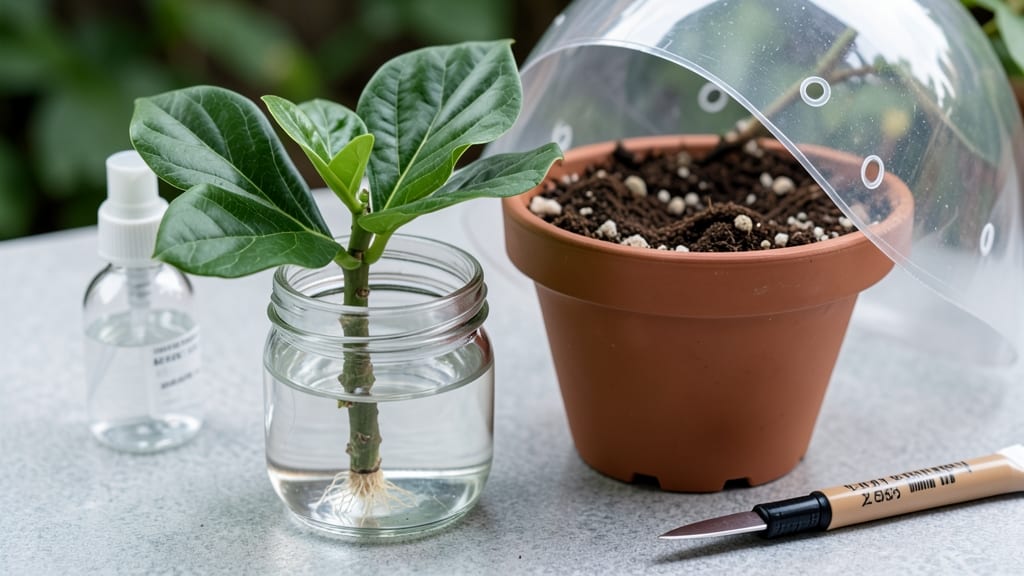
Rooting a fiddle leaf fig cutting works better than you think—no hormones needed. 🌱 I’ve propagated a dozen cuttings, and the key is patience, humidity, and a warm spot. Most people give up too soon, but with the right setup, you’ll see roots in just 2 weeks, not months.
Start with a healthy 4-6 inch stem cutting (just below a node) and let the wound callus for a day. Use a simple water jar or moist sphagnum moss—both work, but moss keeps roots happier.
Place it under bright, indirect light (no harsh sun) and mist daily to maintain humidity. Roots should appear as tiny white threads, and new leaves mean success.
📚 In This Guide
- What you need
- Instructions
- Tips and common mistakes
- Wrapping up and next steps
What you need
- ● Healthy fiddle leaf fig cutting: 4–6 inches long (with at least 2–3 leaves) and taken from a non-flowering stem.
- ● Sharp pruning shears or clean knife: Sterilized with rubbing alcohol to prevent disease (avoid jagged cuts!).
- ○ Rooting hormone (optional but helpful): A hormone-free alternative like cinnamon powder or willow water works too!
- ● Well-draining potting mix: A blend of perlite, vermiculite, or coconut coir (avoid heavy garden soil!).
- ● Small pots or propagation tray: 4–6 inches wide with drainage holes (or a glass of water for water propagation).
- ● Plastic bag or humidity dome: To create a mini greenhouse effect (a ziplock bag with holes works!).
- ● Misting bottle or spray bottle: For keeping cuttings hydrated without overwatering.
- ● Label and marker: To track your cuttings (trust us, you’ll thank us later!).
- ● Heating mat: Speeds up rooting by keeping soil warm (70–75°F is ideal).
- ● Grow lights: If your space lacks bright, indirect light (LED or fluorescent works).
- ● Charcoal or sphagnum moss: Adds extra moisture retention and prevents rot.
- ● Fertilizer (diluted): A weak dose of seaweed or fish emulsion after 4–6 weeks boosts growth.
Step-by-step instructions for rooting a fiddle leaf fig cutting
Here’s how to grow strong, hormone-free roots in just two weeks—no fancy equipment needed.
🌱 Step 1: Take the Perfect Cutting
Choose a healthy stem with at least 4-6 leaves and 2-3 nodes (those small bumps where leaves grow). Use clean, sharp pruners to make a 45-degree cut just below a node—this gives the cutting more surface area to absorb water and grow roots. Avoid cutting through a node, or you’ll stunt root growth.
Let the cutting sit for 1-2 hours to callus over. You’ll see a slightly dry, white edge form where you cut—this prevents rot when you put it in water. Skip this step, and your cutting might develop mold instead of roots. I like to place it on a paper towel while I prep the water to avoid contamination.
💧 Step 2: Water Root or Soil Root?
For water rooting, fill a clean glass with room-temperature water (never tap water straight from the faucet—chlorine can harm the cutting). Submerge only the bottom 1-2 inches of the stem, leaving the leaves dry. Change the water every 3-4 days to keep it fresh and prevent bacteria. Roots should appear in 2-3 weeks if the cutting is healthy.
For soil rooting (faster and less messy), mix equal parts perlite and potting mix in a small pot. Dip the cut end in rooting hormone (optional but helpful) and stick it 1-2 inches deep into the mix. Keep the soil lightly moist—never soggy. You’ll see roots forming in 10-14 days if conditions are right.
☀️ Step 3: Provide the Right Conditions
Place your cutting in bright, indirect light—think east or north-facing window, or under a grow light if natural light is weak. Direct sun will scorch the leaves, while too little light slows root growth. You’ll know the light is perfect when the leaves stay deep green and don’t yellow or droop.
Keep the temperature between 65-75°F—fiddle leaf figs hate drafts or sudden temperature swings. If your home runs cooler, a heat mat under the pot can speed up rooting. Avoid placing the cutting near vents or AC units, or the stress will delay roots.
✂️ Step 4: Watch for Roots and Transplant
Check for roots every 5-7 days. In water, you’ll see tiny white tendrils forming at the stem. In soil, gently tug the cutting—if you feel resistance, roots are growing! Once roots reach 1-2 inches long, it’s time to transplant into a 4-6 inch pot with fresh potting mix.
Don’t rush this step. If roots are too small, the cutting may struggle to support new growth. After transplanting, water lightly and place it back in bright, indirect light. In 4-6 weeks, you’ll have a thriving fiddle leaf fig ready to grow into a full-sized plant.
Tips & tricks for perfect fiddle leaf fig root growth
Here's what nobody tells you about getting those roots to grow—without the guesswork.
Cutting Selection: Look for stems with 4-6 leaves and 2-3 nodes—these are your best bets for strong root development. I always check for plump, glossy leaves and avoid any stems with yellowing or brown spots, as these can indicate stress or disease that might hinder root growth. The 45-degree cut is crucial too—it increases surface area for water absorption, which is exactly what you want when you're trying to encourage root formation.
Callusing Matters: That 1-2 hour callusing step might seem like a small detail, but it's one of the most important for preventing rot. Place your cutting on a clean paper towel while it calluses—this keeps it stable and prevents accidental contamination. If you're impatient and skip this, you risk mold growth when you put the cutting in water, which can kill your chances of successful rooting entirely.
Water Quality Tip: For water rooting, always use room-temperature water—never cold tap water straight from the faucet. The chlorine in tap water can harm your cutting, and cold water can shock the plant. If you're unsure about your water quality, let tap water sit out for 24 hours before using it to allow chlorine to evaporate. Changing the water every 3-4 days is key to preventing bacterial growth that could stunt root development.
Soil Mix Secrets: When creating your soil mix for rooting, make sure the equal parts perlite and potting mix are well combined. Perlite helps with aeration, which is crucial for root development, while potting mix provides nutrients. I like to add a handful of orchid bark to the mix for extra moisture retention—this helps maintain that lightly moist (but never soggy) condition that fiddle leaf figs need during rooting.
Pro Tips for Can You Root A Fiddle Leaf Fig Cutting
- Here's what nobody tells you about getting those roots to grow—without the guesswork.
- Cutting Selection: Look for stems with 4-6 leaves and 2-3 nodes—these are your best bets for strong root development.
- Callusing Matters: That 1-2 hour callusing step might seem like a small detail, but it's one of the most important for preventing rot.
Frequently asked questions
about rooting fiddle leaf fig cuttings—because even pros need a little extra help! Here are the answers to the most common queries to set you up for success.How long does it take for a fiddle leaf fig cutting to root?
With the right conditions (like our hormone-free method!), you’ll typically see roots forming in 2–4 weeks. Keep the cutting in a warm, humid spot with indirect light—patience is key! Some cuttings may take longer, so don’t rush it.
Can I root a fiddle leaf fig cutting without rooting hormone?
Fiddle leaf figs root easily without hormones—just use water or a well-draining soil mix. Our method focuses on clean cuts, proper hydration, and humidity to encourage natural root growth. Hormones are optional but can speed things up slightly.
Should I use water or soil to root my fiddle leaf fig cutting?
Both work, but soil (or a mix of perlite/potting soil) is often more reliable for fiddle leaf figs. Water rooting can lead to rot if not changed frequently. If you choose water, switch to soil once roots are 1–2 inches long to avoid transplant shock.
What’s the best temperature for rooting fiddle leaf fig cuttings?
Aim for 65–75°F (18–24°C)—this mimics their tropical habitat. Avoid drafts or cold spots, as fiddle leaf figs are sensitive to temperature swings. A heat mat (optional) can help if your home runs cooler.
What if my cutting isn’t rooting after 4 weeks?
Don’t panic! Check for rot (soft, mushy stems) or dryness (brown, crispy edges). Adjust humidity, light, or watering—sometimes a cutting just needs more time. If all else fails, try a fresh cutting from a healthier stem.
Wrapping up and next steps
Rooting a fiddle leaf fig cutting is totally doable—even without hormones!
With the right materials, a little patience, and the 2-week wonder method, you’ll be watching those roots grow like magic. 🌱 Whether you’re a beginner or a seasoned plant parent, this simple technique lets you propagate your favorite fig with confidence.
Ready to expand your plant family? Start with just one cutting and soon you’ll have a thriving collection—no green thumb required! Grab your supplies, follow the steps, and enjoy the rewarding process of growing your own fiddle leaf figs.